 Blaine Siding
 Metal Roofing Built for Sumas' Weather, Not Just Any Roof
Sumas homeowners deal with a specific mix of weather that not every roofing crew plans for correctly. Salt-laden air moving in off the water, long stretches of driving rain, and a moss season that seems to start earlier every year all put real demands on a roof. A metal roof can handle all of that better than almost any other roofing material available — but only if it's specified and installed with this exact climate in mind. A generic install, done the same way it would be done in a dry inland climate, will not hold up the same way out here.
This page is about metal roofing specifically for homes in the Sumas area of Whatcom County. Not a general overview of metal roofing everywhere — what it actually takes to get a metal roof right on a home that sits in this particular stretch of weather, year after year.
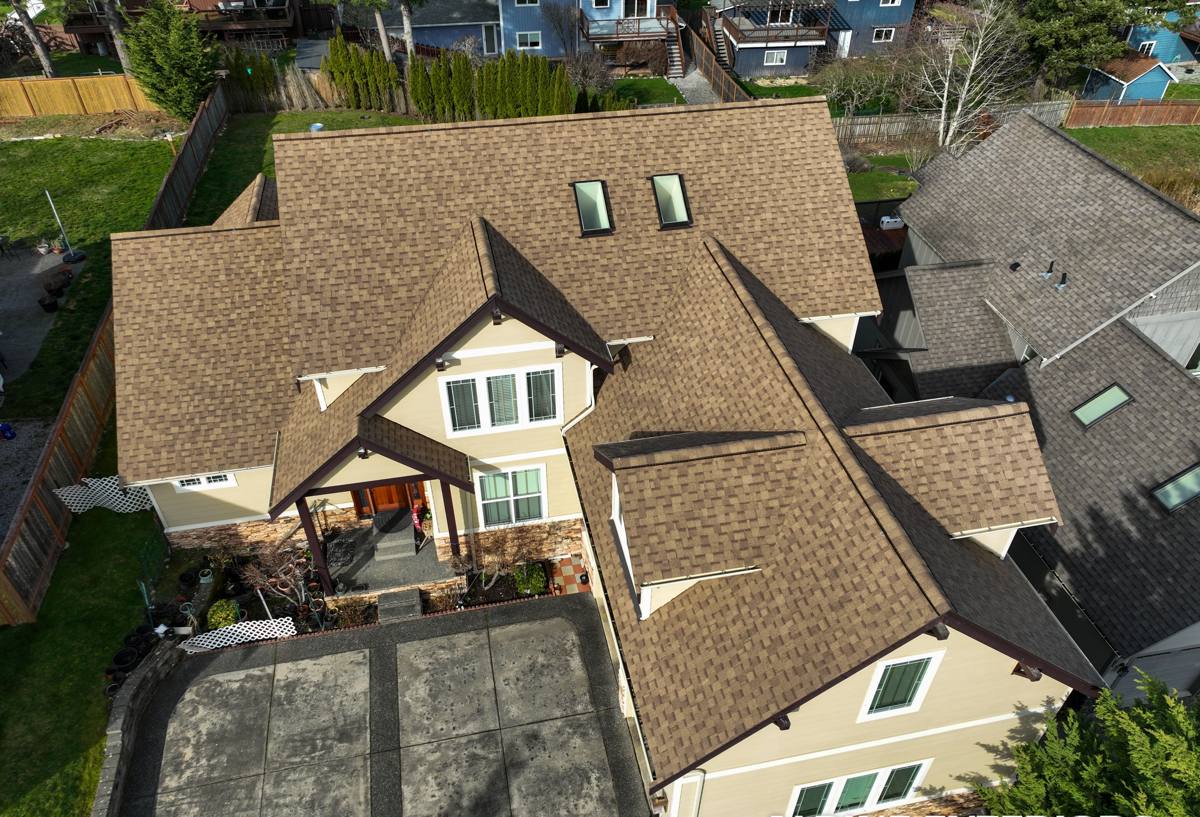
What Salt Air, Driving Rain, and Moss Actually Do to a Roof Here
Salt Air and Corrosion
Airborne salt doesn't just affect homes sitting right on the waterfront. It travels with the wind and settles on roofing metal, fasteners, and flashing over time. On a roof that isn't specified for it, that means faster corrosion at cut edges, fastener heads, and any place where the protective coating has been scratched or worn through during installation. The fix isn't complicated, but it has to be deliberate: the right coating system, the right fastener material, and careful handling during install so the panel's finish isn't compromised before it's even on the roof.
Driving Rain and Wind-Driven Water
This part of Whatcom County gets rain that doesn't just fall straight down — wind pushes it sideways and up under laps, flashing, and trim. A roof that only handles vertical rain well will eventually leak at penetrations, valleys, and wall transitions. Correct lap dimensions, properly sealed seams, and flashing details that account for wind-driven water are not optional upgrades here — they're the baseline for a roof that's actually going to keep a house dry through a real Pacific Northwest winter.
Moss Season and Long-Term Wear
Moss doesn't attack metal the way it does asphalt shingles or wood shakes, but it still matters. Moss and organic debris that collect in valleys, around penetrations, or on lower-slope sections can trap moisture against the roof surface and against fasteners for extended periods. Over a long moss season, that trapped moisture is what accelerates corrosion at weak points rather than the metal itself failing. A roof designed with proper slope, clean drainage paths, and the right fastener spacing sheds debris instead of collecting it.
What a Correct Metal Roofing Job Actually Involves
Metal roofing looks straightforward from the ground, but a correct install is a system, not just a set of panels screwed to the roof deck. Every layer underneath and around the panels matters just as much as the metal itself.
Underlayment and Moisture Barrier
A quality synthetic or self-adhered underlayment goes down first, and in a climate with this much sustained rain, it needs to be treated as a real backup water barrier — not an afterthought. If wind-driven water ever gets past a seam or fastener, the underlayment is what keeps it from reaching the roof deck.
Fasteners and Flashing
Fastener material and coating have to match the panel system and be rated for coastal/marine-influenced conditions. Mismatched metals cause galvanic corrosion — a slow, hidden problem that shows up years later as staining and fastener failure. Flashing at valleys, walls, chimneys, and penetrations has to be formed and layered correctly so water is directed out and away, not just covered up.
Ventilation
Proper attic and roof ventilation keeps moisture from condensing on the underside of the roof deck. In a damp climate, poor ventilation is one of the most common causes of hidden rot that has nothing to do with the roofing material itself — it's trapped indoor moisture with nowhere to go.
Choosing the Right Panel Style for a Sumas Home
There isn't one "best" metal roofing style for every home — it depends on roof pitch, budget, and how the home is built. Here's how the common options compare for this climate:
| Panel Type | Best For | Climate Considerations |
|---|---|---|
| Standing Seam | Most roof pitches, long-term low maintenance | Concealed fasteners resist wind-driven rain and salt exposure best |
| Exposed Fastener Panel | Budget-conscious projects, outbuildings, simpler rooflines | Lower upfront cost, but fastener seals need periodic inspection in this climate |
| Metal Shingle/Shake Profile | Homes wanting a traditional look with metal's durability | More seams and laps than standing seam; flashing detail matters even more |
For most homes in the Sumas area, we lean toward standing seam because the concealed fastener system removes one of the biggest long-term weak points — exposed screws that sit directly in the path of wind-driven rain and salt air. That said, exposed fastener panels done correctly, with the right sealing washers and inspection schedule, are a reasonable option for secondary structures or tighter budgets.
Our Installation Process
We approach every metal roofing project on a Sumas home the same structured way:
- On-site inspection of the existing roof deck, ventilation, and any signs of past moisture damage
- Review of roof pitch, wall transitions, and penetrations to plan flashing details before ordering material
- Removal of old roofing material and repair of any compromised decking underneath
- Installation of a full synthetic or self-adhered underlayment system
- Installation of panels, flashing, and trim using fasteners rated for this climate
- Final walk-through covering valleys, penetrations, and edge details before we consider the job complete
We don't skip the inspection step, even on roofs that look fine from the ground. What's happening under an old roof — deck condition, ventilation, hidden moisture — determines whether a new metal roof performs the way it's supposed to for the next several decades.
What Metal Roofing Costs in This Area
Every home is different, but these are the main factors that move the price of a metal roofing project up or down. We give exact numbers after an on-site look, not before.
| Cost Factor | Why It Matters |
|---|---|
| Panel type | Standing seam runs higher than exposed fastener due to labor and material |
| Roof complexity | Valleys, dormers, and multiple pitches add flashing work and labor time |
| Deck condition | Rot or damage found during tear-off adds repair cost before new roofing goes on |
| Underlayment choice | Full self-adhered systems cost more than standard synthetic but add protection against wind-driven rain |
| Access and pitch | Steep or hard-to-access roofs require more time and safety equipment |
Metal roofing costs more upfront than asphalt shingles, but it's a longer-term investment — properly installed, it should outlast several shingle roof replacements over the life of the home.
Why a Crew That Already Works in Sumas and Blaine Matters
A roofing crew that works this specific part of Whatcom County regularly already knows what this climate does to a roof over time, because they've seen it firsthand — not read about it. That means they're not guessing at fastener specs, flashing details, or underlayment choices; they've already worked out what holds up against the salt air and driving rain typical of this area, and what fails. Local experience also means faster response for follow-up service, warranty questions, or seasonal maintenance, without a crew having to relearn the area's conditions each time.
Keeping Your Metal Roof in Good Shape
A well-installed metal roof needs very little maintenance, but a little attention goes a long way in this climate. Homeowners should:
- Clear moss, needles, and debris from valleys and low-slope areas, especially after moss season
- Check that gutters and downspouts are clear so water isn't backing up under the roof edge
- Have flashing around chimneys, vents, and walls visually checked every couple of years
- Watch for any staining or streaking near fasteners, which can signal an early sealing issue
- Trim back overhanging branches that keep sections of roof shaded and damp longer than the rest
None of this is difficult, but skipping it is how small issues turn into repairs a few years down the road.
If you're weighing a metal roof for a home in the Sumas area, we're glad to take a look and give you an honest read on what your roof actually needs — no pressure, no obligation. Fill out the form below and we'll set up a free estimate.