 Blaine Siding
 Deck Repair for Ferndale Homes
Ferndale sits close enough to the water and to Blaine's marine weather patterns that decks here take a beating most inland homes never see. Salt-laden air corrodes hardware faster, driving rain off the Strait pushes moisture into every seam and fastener hole, and a moss season that can run from fall through spring keeps deck surfaces damp far longer than the calendar suggests. A deck that would hold up fine in a drier part of Whatcom County can develop soft spots, rusted connectors, and slick moss growth within a few seasons here if it wasn't built or maintained with that reality in mind.
We work on decks throughout the Blaine and Ferndale area regularly, so we're not guessing at what local wood and hardware go through — we see the same failure patterns on house after house. This page covers what actually goes wrong with decks in this climate, what a proper repair involves, and how we approach the work.
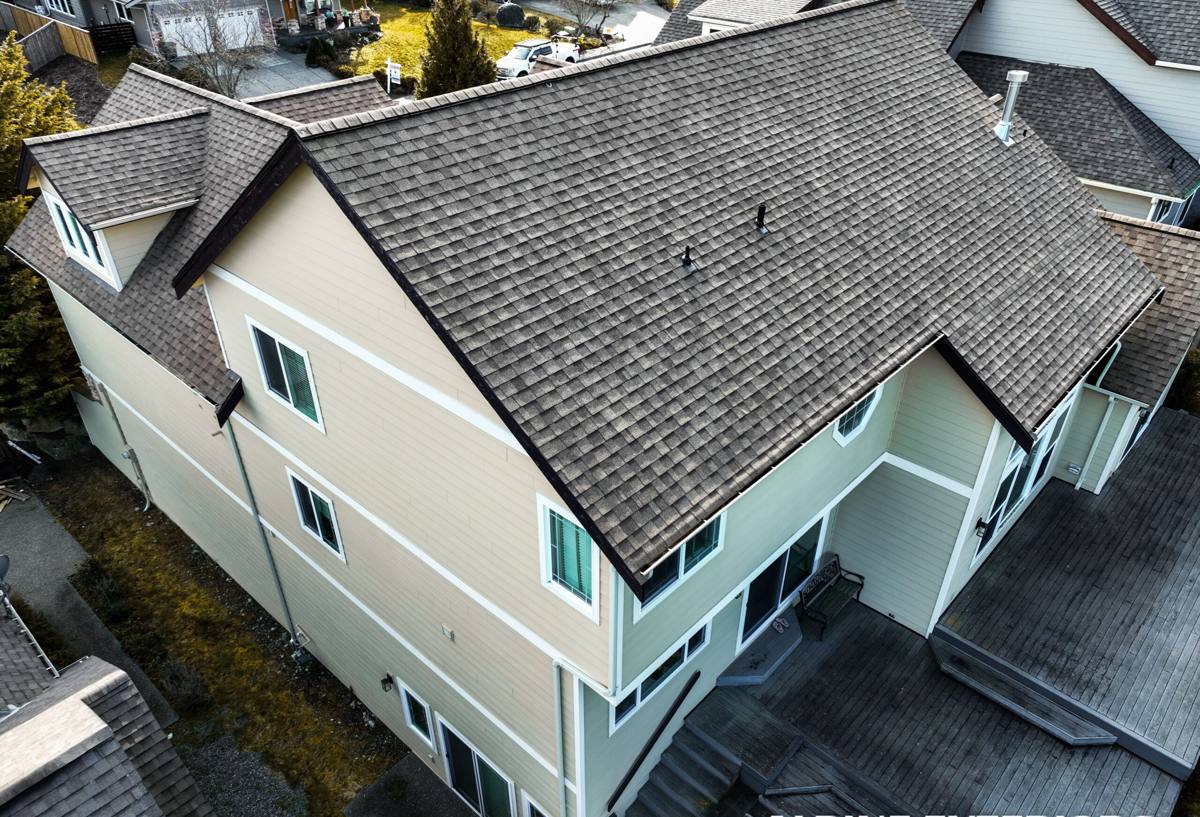
Why Ferndale Decks Wear Differently
Three things drive most of the deck damage we see in this area:
- Salt air corrosion. Metal fasteners, joist hangers, and structural screws corrode faster near the coast. Once a fastener rusts, it loses grip strength and can stain the surrounding wood, even before the wood itself shows damage.
- Driving rain and wind-blown moisture. Storms off the water don't just fall straight down — wind pushes rain sideways into ledger boards, under railings, and into any gap where flashing is missing or failing. Water that gets trapped rather than shed is what actually rots wood, not rain itself.
- Extended moss and algae season. Shaded or north-facing decks stay damp for months at a stretch. Moss holds moisture directly against the decking surface, which accelerates rot underneath even when the top of the board still looks intact.
None of these alone destroys a deck quickly. Combined, and left unaddressed, they shorten the useful life of decking, framing, and hardware well below what a homeowner would reasonably expect.
Signs Your Deck Needs Repair, Not Just Cleaning
A pressure wash or a coat of sealer can hide problems for a season, but it won't fix them. Before booking any deck work, walk your deck and check for these:
- Soft, spongy, or springy spots when you walk across boards
- Boards that have visibly cupped, split, or pulled away from joists
- Rust streaks running down from screws, nails, or metal connectors
- Persistent moss or dark green-black staining that returns quickly after cleaning
- Wobble or give in the railing when you lean on it
- Gaps or separation where the deck ledger meets the house wall
- Stair stringers that flex or feel uneven underfoot
- Visible daylight or water staining underneath the deck at the ledger connection
Any one of these is worth a closer look. Several at once usually means the damage has spread past the surface and into the framing.
What a Correct Deck Repair Involves
Structural Framing First
Before anything cosmetic happens, we check the joists, beams, and posts underneath the deck. A deck can have brand-new-looking boards on top and still be unsafe if the framing underneath has rotted or if fasteners have corroded to the point of losing holding strength. Repair work that skips this step and just replaces surface boards is a cosmetic fix on a structural problem — it looks better and doesn't last.
The Ledger Board and Flashing
The ledger board — where the deck attaches to the house — is the single most common failure point we find on decks in this climate. If flashing behind the ledger is missing, undersized, or improperly lapped, driving rain works its way behind it year after year. By the time staining or softness shows up on the visible face, the framing behind it has often been wet for a long time. Correcting this properly means removing enough of the ledger area to install flashing that actually sheds water away from the house, not just caulking over the symptom.
Decking Boards and Fasteners
Individual board replacement makes sense when the framing underneath is sound and only the surface material has failed — split boards, cupping, or fastener pull-through. We match fastener hardware to the decking material and to this environment specifically; using standard interior-grade screws on a coastal-exposure deck is a common shortcut that leads to rust staining and failure within a few years.
Railings and Stairs
Railing posts often loosen before anything else on a deck, because they take direct lateral load every time someone leans on them, and their base connections are frequently under-built to begin with. Stairs take constant foot traffic combined with the same moisture exposure as the rest of the deck. Both get evaluated for connection strength, not just tightened and left.
Repair vs. Replace: How We Decide
Not every deck problem calls for a full rebuild, and not every deck is worth patching. The honest answer depends on how far the damage has spread and how the deck was originally built.
| Condition | Repair Usually Makes Sense | Replacement Usually Makes Sense |
|---|---|---|
| Framing (joists, beams, posts) | Isolated rot at one or two members, otherwise sound structure | Widespread soft framing, undersized original construction |
| Ledger connection | Flashing failure caught before framing rot spreads | Long-term water intrusion has damaged rim joist or house framing |
| Decking surface | Scattered split or cupped boards, framing intact | Majority of boards showing rot, splitting, or fastener failure |
| Age and code | Deck is reasonably current with fastening and railing standards | Older deck built to outdated spacing, fastening, or railing codes |
We'll always tell you honestly which side of that line your deck falls on, including when a repair is the right call even though a replacement would be more work for us.
Materials: What We Recommend and Why
Homeowners in the Ferndale area usually choose between wood and composite decking when boards need replacing, and both have a place depending on the deck and the budget.
| Factor | Wood Decking | Composite Decking |
|---|---|---|
| Upfront cost | Lower | Higher |
| Maintenance in this climate | Needs regular sealing and moss treatment to hold up against driving rain and shade | Lower maintenance, but still needs periodic cleaning to prevent moss buildup |
| Moisture sensitivity | More sensitive to trapped moisture if not sealed and maintained | More stable in damp conditions, though fastener and framing choices still matter |
| Appearance over time | Natural look, will gray and needs refinishing to maintain color | Consistent color and texture with minimal upkeep |
We don't push one material over the other as a default. What matters more than the brand is correct installation — proper spacing for drainage, the right fastener for the material, and flashing details that account for this area's rain and moss exposure. A quality material installed without those details in mind will still fail early.
Our Deck Repair Process
- On-site inspection. We check framing, ledger, decking, railings, and stairs — not just the spots you flagged, since related problems often hide nearby.
- Honest scope and estimate. You get a clear explanation of what's failing, why, and what repair or replacement actually requires — no upsell to a full rebuild if a targeted repair will hold.
- Repair work. Framing and flashing issues get corrected first, then decking, railings, and stairs as needed.
- Hardware matched to the environment. Fasteners and connectors are chosen for coastal exposure, not generic interior-grade hardware.
- Walkthrough. We show you what was done and flag anything worth watching going forward.
Why a Local Crew Matters Here
Deck repair isn't a one-size-fits-all trade. A crew that mostly works drier, inland areas won't automatically think to check ledger flashing first, or default to corrosion-resistant hardware, because they don't see coastal failure patterns often enough for it to become habit. We work in Blaine, Ferndale, and the surrounding Whatcom County area regularly, so those checks are standard practice for us, not an afterthought. It also means we're not a stranger showing up once — if something needs a follow-up look after a season of moss and rain, we're a local call, not a search for someone new.
After the Repair: Keeping Moss and Moisture From Coming Back
A repaired deck still needs some seasonal attention in this climate, especially through the moss months:
- Sweep leaves and debris off the surface regularly, especially in shaded corners
- Clean moss and algae buildup before it has a chance to hold moisture against the boards
- Check that gaps between boards stay clear so water can drain rather than pool
- Re-seal or refinish wood decking on the schedule appropriate to the product used
- Glance underneath the deck once a year for early staining or soft spots near the ledger
Catching a small issue during a quick seasonal check is far cheaper than waiting for it to become a framing repair.
Get a Straight Answer on Your Deck
If your deck has soft spots, rust staining, a wobbly railing, or moss that keeps coming back no matter how often you clean it, it's worth having someone look at what's actually causing it. We offer free, no-pressure estimates for deck repair in Ferndale and the surrounding Blaine area — use the form below to get a straightforward look at what your deck needs.