 Blaine Siding
 Building Decks That Actually Hold Up in Point Roberts
Point Roberts sits in a spot most decking products were never designed for. It's a small peninsula wrapped in marine water on three sides, tucked into Whatcom County but geographically separated from the rest of Washington. That location means near-constant exposure to salt-laden air, long stretches of driving rain off the water, and a moss season that can run most of the year on anything that doesn't get sun or airflow. A deck built the way it would be built forty miles inland simply won't last the same amount of time out here.
We've replaced decks up and down this stretch of coastline and in Blaine proper, and the pattern is consistent: the decks that fail early aren't failing because homeowners didn't maintain them. They're failing because they were built, or previously rebuilt, without accounting for what this specific climate does to fasteners, framing, and decking surfaces over time. This page is about what a deck replacement should involve here, specifically, not decking in general.
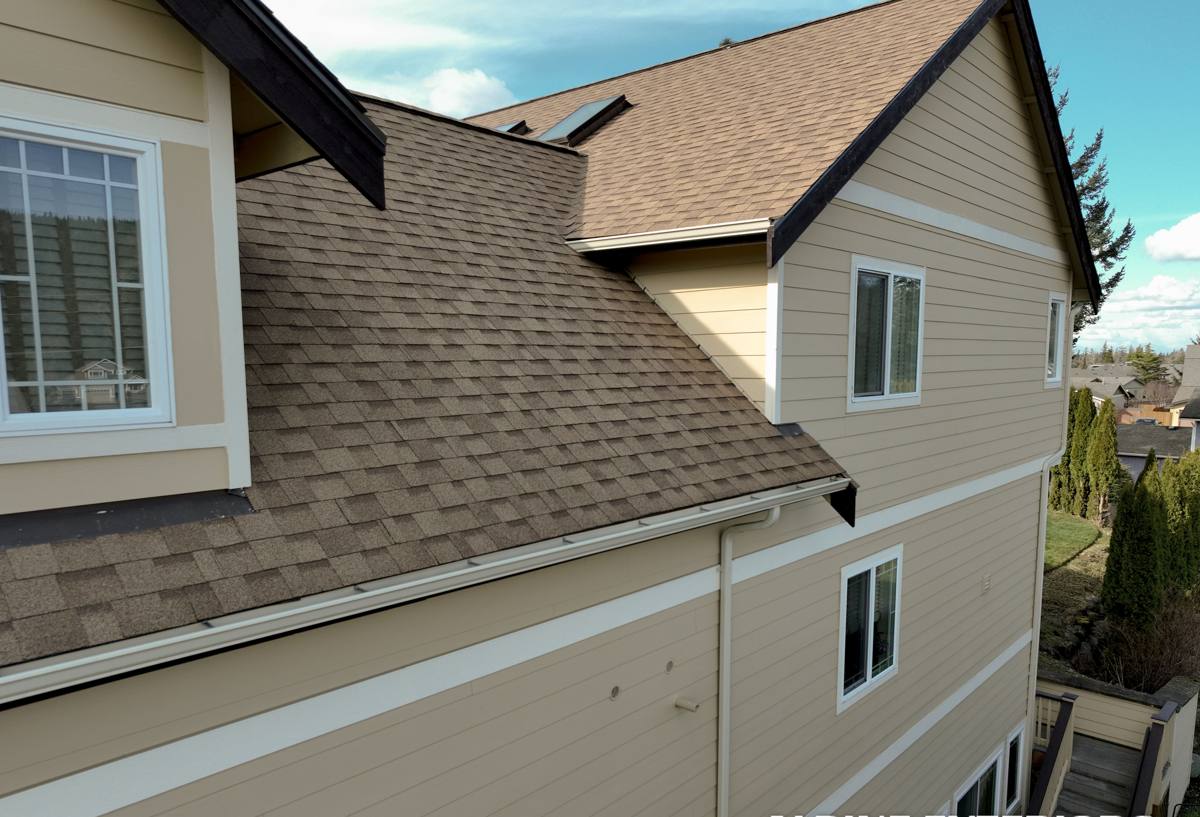
Why This Climate Is Harder on Decks Than Most People Realize
Salt Air and Metal Fatigue
Airborne salt doesn't need direct ocean spray to do damage. It travels on wind and settles on every exposed surface, including the metal fasteners, joist hangers, and structural connectors holding your deck together. Standard galvanized hardware corrodes faster here than it would even twenty minutes inland. Once a hanger or bolt starts rusting, it loses holding strength long before the rust is visible from the top of the deck.
Driving Rain and Water Intrusion
Rain here doesn't fall straight down as often as it drives sideways, pushed by wind off the water. That matters because sideways rain gets up under railings, behind ledger boards, and into any gap in flashing that would stay dry in a calmer climate. Over years, that's how rot starts in framing members that look fine from underneath.
Moss, Shade, and Slow Drying
Between tree cover and the region's long damp season, many decks here simply don't get enough sun to dry out between rains. Moss and algae take hold on wood decking and on composite boards with textured surfaces, making the deck slippery and holding moisture against the boards longer than the material was designed to tolerate.
Signs a Deck Needs Replacement, Not Another Repair
Not every deck problem calls for a full replacement. But there's a point where patching individual boards or re-sealing the surface stops being a real fix and starts being a way to delay a bigger job. Some signs it's time to talk replacement rather than repair:
- Soft or spongy spots in the decking surface, especially near the house or at board ends
- Rust staining bleeding through around fasteners or connector hardware
- Visible gaps or separation where the ledger board meets the house
- Persistent moss or dark staining that returns within weeks of cleaning
- Railing posts that flex or feel loose when pushed
- A deck older than 15-20 years that has never had structural components inspected or replaced
If you're only seeing one or two of these, a repair may genuinely be enough. If you're seeing several at once, especially soft framing combined with rusted hardware, the structure underneath has usually been compromised for longer than the surface symptoms suggest.
What a Correct Deck Replacement Actually Involves
A deck replacement done right is a structural project first and a surface project second. The decking boards are the part homeowners see and touch, but the framing underneath is what determines whether the deck is safe and how long it lasts. For this climate, that means paying close attention to a few things that get skipped on cheaper jobs:
Ledger Attachment and Flashing
The ledger board, where the deck attaches to the house, is the single most common point of hidden rot on older decks in wet coastal climates. Correct flashing here isn't optional trim, it's the difference between water running off the house and water running into the house framing.
Fastener and Hardware Grade
Given the salt exposure in Point Roberts, standard hardware isn't our default. We spec corrosion-resistant fasteners and connectors rated for coastal or treated-lumber exposure, because replacing a deck's surface every ten years while the frame silently corrodes underneath isn't a real solution.
Joist Spacing and Load
Older decks were often framed to the minimum standard of their era. When we replace a deck, we also check whether the joist spacing and beam sizing meet current code and actually support how the space is used today, including hot tubs or larger gatherings, which older framing was rarely sized for.
Drainage and Airflow Underneath
A deck that can't shed water and dry out underneath will grow moss and rot faster no matter what surface material sits on top. We grade and ventilate the space below the deck as part of the replacement, not as an afterthought.
Choosing a Decking Material That Fits This Climate
There's no single "best" decking material for every home, but some materials are a better professional fit for salt air, driving rain, and heavy moss exposure than others. Here's how the common options compare for a Point Roberts property specifically:
| Material | Moisture & Moss Behavior | Maintenance | Typical Lifespan Here |
|---|---|---|---|
| Pressure-treated wood | Absorbs moisture readily; needs regular sealing to resist moss and graying | High — annual cleaning and periodic sealing | 10-15 years with upkeep |
| Cedar | Naturally moisture-resistant but still needs sealing in this much rain | Moderate to high | 15-20 years with upkeep |
| Capped composite | Sheds water well; textured surfaces can still hold moss without airflow | Low — periodic washing | 25-30 years |
| PVC decking | Does not absorb moisture; most resistant to moss staining | Low | 25-30+ years |
We'll walk through these trade-offs honestly during an estimate rather than pushing one product. Wood costs less up front but asks more of the homeowner every year in a climate like this. Composite and PVC cost more initially but hold up with far less intervention, which matters if you don't want to be re-sealing a deck every summer in between rain windows.
Our Deck Replacement Process
- On-site assessment. We inspect the existing deck's framing, ledger connection, and footings before quoting anything, so the estimate reflects what's actually underneath, not just the visible surface.
- Removal. Full removal of decking, railings, and any framing that doesn't meet current structural standards, while confirming footings and posts that are sound and reusable.
- Framing and flashing. New or reinforced joists and beams sized to current code, corrosion-resistant hardware throughout, and proper ledger flashing where the deck meets the house.
- Decking and railing installation. Installed to the material manufacturer's spacing and fastening specs, which matters for warranty coverage on composite and PVC products.
- Final grading and drainage check. Confirming water sheds away from the house and the space underneath the deck can dry out between rain events.
- Walkthrough. We go over the finished deck with you, including what maintenance it actually needs, if any, going forward.
Permits, Access, and the Practical Side of Working in Point Roberts
Point Roberts has a logistical quirk that most contractors don't plan for: it's a U.S. exclave, physically separated from the rest of Washington and typically reached by road through Canada. That affects how material deliveries, crew scheduling, and disposal hauling get planned. It's not a barrier to a well-run project, but it is something a contractor needs to actually account for in scheduling rather than treat as a surprise midway through the job. Whatcom County permitting requirements still apply the same as they would in Blaine, and we handle that process as part of the job rather than leaving it to the homeowner.
A Practical Checklist Before You Replace Your Deck
- Get the framing inspected, not just the surface boards — surface wear rarely tells the whole story
- Ask what hardware grade is being used and whether it's rated for salt exposure
- Confirm how the ledger-to-house connection will be flashed
- Decide how much annual maintenance you're realistically willing to do, and let that guide the material choice
- Ask whether joist spacing and load capacity will be brought up to current code, especially if you plan to add a hot tub or large furniture
- Confirm who is pulling the permit and handling inspection scheduling
Why Local Experience on This Specific Coastline Matters
A deck built for a dry inland lot and a deck built for a peninsula surrounded by saltwater aren't the same project, even if they look identical from the driveway. The hardware, the flashing details, the drainage planning, and even the delivery logistics differ. A crew that already works regularly in Point Roberts and the greater Blaine area isn't guessing at how salt air and moss season affect a deck over the following decade, they've already seen it happen on other homes nearby and built the fix into how they frame and finish the next one.
If your deck is showing signs of age, softness, or hardware corrosion, it's worth having it looked at before another wet season adds to the damage. We offer free, no-pressure estimates for deck replacement in Point Roberts and throughout the Blaine area — use the form below to get a time on the calendar.