 Blaine Siding
 Cherry Point Roofs Take a Different Kind of Beating
Cherry Point sits out on open, exposed shoreline north of Blaine, right where Whatcom County's weather comes straight off the Strait of Georgia with nothing much to slow it down. That open exposure means wind loads on a roof here are often higher than what a home just a few miles inland deals with, and it means salt-laden air is a constant, low-grade attacker on every metal component on the roof — flashing, fasteners, gutters, vents. Add in the driving, sideways rain that comes with winter storms off the water, and you've got a roof system that has to shed water horizontally, not just downhill.
Then there's moss. Whatcom County's long, wet, mild winters give moss an almost year-round growing season, and Cherry Point's mix of tree cover and damp shoreline air makes it worse than average. Moss isn't just cosmetic — it holds moisture against roofing material, works its way under shingle tabs, and slowly lifts and degrades the surface it's growing on. A storm doesn't have to be dramatic to cause damage here; it just has to hit a roof that's already been softened up by months of moss and salt exposure.
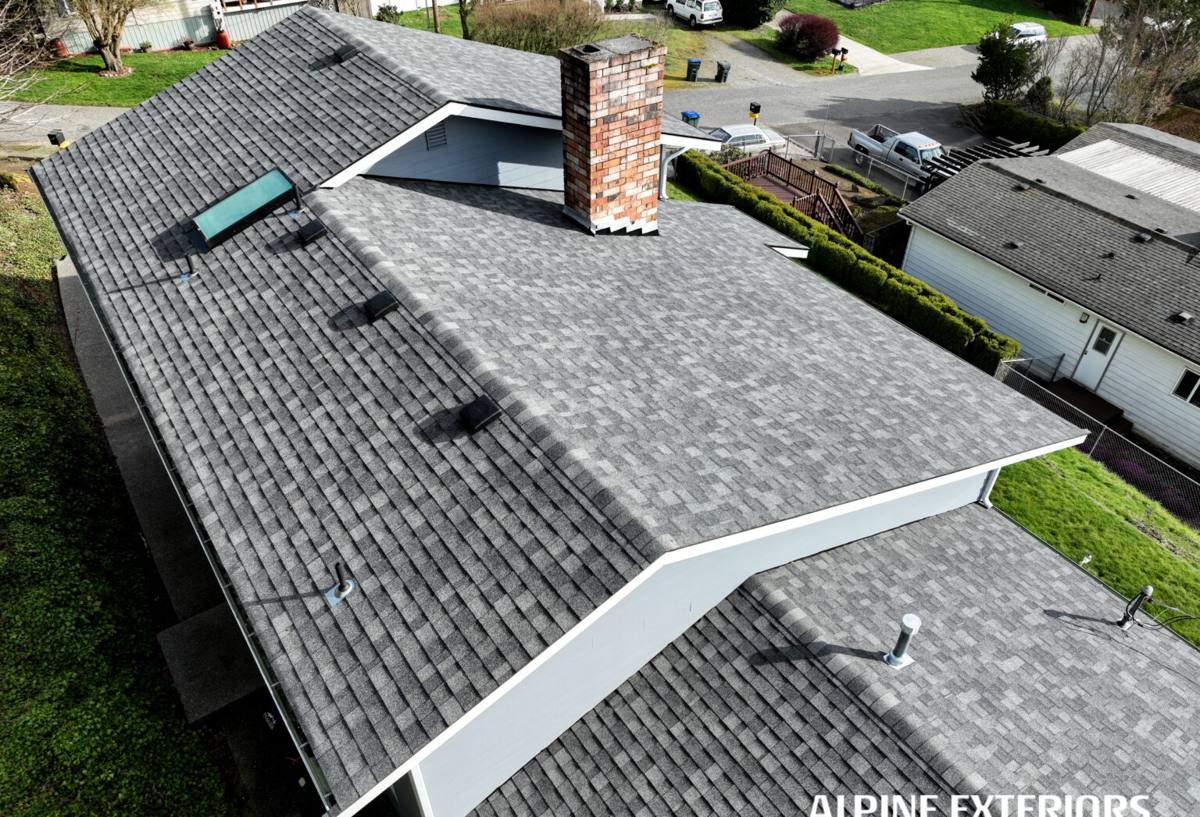
What Storm Damage Actually Looks Like on a Cherry Point Roof
Homeowners often expect storm damage to be obvious — a missing shingle, a hole, a tree limb through the roof. Sometimes it is. More often, the damage that causes real problems is quieter and shows up weeks or months after the storm that caused it.
Wind Damage
Sustained coastal wind and gusts during a storm can lift shingle tabs, break the seal strip that holds shingles flat, or fully tear shingles loose. Lifted-but-not-missing shingles are actually the more common and more dangerous case — the roof looks intact from the ground, but water is getting underneath during every rain after that.
Flashing and Penetration Failures
Flashing around chimneys, vents, skylights, and roof-to-wall transitions is where storm damage most often turns into interior leaks. Salt air accelerates corrosion in these metal details, and a storm that flexes the roof deck or drives rain sideways can open a gap that was already weakened.
Moss-Driven Rot and Granule Loss
Moss mats hold water against the roof surface long after a storm has passed. Over time this strips protective granules off asphalt shingles, softens the decking underneath, and creates soft spots that a follow-up storm can turn into an actual leak or structural sag.
Gutter and Drainage Overflow
Heavy, wind-driven rain overwhelms gutters that are even partially clogged with moss debris or fir needles, sending water behind fascia boards and into the roof edge — a slower kind of damage that's easy to miss until trim starts to rot.
What a Correct Storm Damage Repair Actually Involves
A lot of storm repair work in this area gets done as a surface patch: swap the visibly damaged shingles, caulk the obvious gap, call it done. That approach misses the underlying reasons the damage happened in the first place, and on a Cherry Point property, it usually means calling the same contractor back within a year or two.
A repair done right starts with figuring out why that section of roof failed, not just what's visibly broken. That means:
- Checking the roof decking underneath damaged shingles for soft spots, rot, or moisture staining — not just replacing what's on top
- Inspecting and, where needed, replacing underlayment in the affected area so the water barrier is continuous, not patched around
- Re-flashing penetrations and transitions with corrosion-resistant metal rather than re-sealing old flashing with caulk
- Matching shingle type, color, and exposure to the surrounding roof so the repair doesn't stand out or create a mismatched water path
- Checking attic ventilation in the repaired section — poor ventilation traps moisture and accelerates the next round of moss and rot
- Clearing and assessing gutters and drip edge in the repair zone, since drainage problems are often what let storm water find its way in
Skipping any of these steps doesn't save the homeowner money — it just moves the cost of a full repair into the future, usually with additional interior damage by the time it resurfaces.
Our Process, From First Call to Finished Roof
1. Inspection and Documentation
We start with a full inspection of the affected area and the roof as a whole, since storm damage in one spot is often a sign of stress elsewhere — especially on roofs that have had moss buildup for a while. We document what we find with photos so there's a clear record of pre-existing wear versus storm-caused damage, which matters if an insurance claim is involved.
2. Honest Scope of Work
We walk the homeowner through exactly what needs to happen and why — which sections are a straightforward patch, which need decking or underlayment replaced, and which are showing signs that point to a bigger issue than the storm itself. No upselling a full re-roof when a targeted repair will genuinely hold.
3. Materials Selected for This Environment
Fasteners, flashing, and underlayment are chosen with Cherry Point's salt air and moss exposure specifically in mind, not just whatever is standard elsewhere in the county.
4. The Repair Itself
Work is sequenced so the roof is never left more exposed than it has to be — tear-off and rebuild happen in workable sections, with the area protected against weather at the end of every work day.
5. Cleanup and Final Check
Nails, debris, and old material are cleared from the roof, gutters, and ground, and we do a final walk-through so the homeowner knows exactly what was done and what to watch for going forward.
Repair or Replace? How We Help You Decide
Not every storm-damaged roof needs a full replacement, and not every roof that looks fine after a storm is actually fine underneath. The right call depends on the roof's age, how widespread the damage is, and what condition the decking is in once we can see it.
| Factor | Points Toward Repair | Points Toward Replacement |
|---|---|---|
| Roof age | Under 12–15 years, otherwise in good condition | Nearing or past typical service life for the material |
| Extent of damage | Isolated to one slope or section | Spread across multiple slopes or the whole roof |
| Decking condition | Solid, dry decking under the damaged area | Soft, rotted, or stained decking found during inspection |
| Moss/granule history | Minimal prior moss buildup or granule loss | Long-term moss staining and heavy granule loss across the roof |
| Prior repair history | First storm-related repair on this roof | Multiple past patches in different areas |
We give you our honest read on where your roof falls on that spectrum rather than defaulting to the more expensive option.
Insurance Claims and Storm Damage
Many storm repairs in this area involve a homeowner's insurance policy. We're glad to provide the photo documentation and a clear written scope of damage to support a claim, and we'll talk through what we're seeing in plain terms. What we won't do is inflate a scope of work to match what an adjuster might approve, or promise a claim outcome that isn't ours to guarantee — that's between the homeowner and the insurance company. Our job is to make sure the repair itself is done correctly, regardless of how it's paid for.
Materials That Actually Hold Up at Cherry Point
Given the salt air and wind exposure, we lean toward roofing components with better corrosion resistance and better wind ratings than roofing installed to a bare minimum spec. That includes stainless or heavier-gauge coated fasteners in exposed flashing work, drip edge and flashing metals chosen for coastal durability rather than the cheapest option available, and shingle products with wind ratings suited to open, unshielded exposure rather than a standard inland rating. None of this is exotic — it's simply matching the material spec to the environment the roof actually has to survive, which matters more here than in a sheltered inland neighborhood.
After a Storm: A Quick Homeowner Checklist
- Look for shingles on the ground or in the yard — a sign of wind damage even if the roof looks fine from below
- Check ceilings and attic spaces for new water stains, especially after the first heavy rain following a storm
- Note any new sagging, staining, or granule buildup in gutters or downspouts
- Avoid climbing onto the roof yourself — storm-damaged decking may not safely bear weight
- Get an inspection soon after the storm rather than waiting for a leak to appear — early damage is cheaper and simpler to fix
Why It Matters to Hire a Crew That Already Works Cherry Point
Roofing crews who mostly work sheltered, inland neighborhoods aren't necessarily used to sizing flashing, fastening, and materials for open shoreline wind exposure and near-constant salt air. A crew that regularly works Cherry Point and the Blaine shoreline knows what actually fails first out here versus a few miles inland, and specs the repair accordingly rather than treating it as a standard job. That local pattern recognition is often the difference between a repair that holds through the next few winters and one that needs revisiting.
If you've got storm damage, a nagging leak, or just want an honest read on how your roof is holding up against Cherry Point's weather, we're happy to take a look. Reach out for a free, no-pressure estimate using the form below.