 Blaine Siding
 Building Decks That Actually Hold Up in Custer
Custer sits close enough to the water and to the open farmland of Whatcom County that its decks take a different kind of beating than decks built twenty miles inland. Salt-tinged air rolling in off the Strait, long stretches of driving rain through fall and winter, and a moss season that can run from October through April all work against wood, fasteners, and finishes in ways that catch a lot of homeowners off guard. A deck built with generic, one-size-fits-all methods will show it within a couple of seasons — soft spots near the ledger board, green film on the walking surface, rust bleeding from screw heads, gaps opening up between boards.
We build custom decks for homes in and around Custer with that climate in mind from the first sketch, not as an afterthought. This page covers what that actually means: the materials that make sense here, the parts of the job that determine whether a deck lasts 10 years or 30, and how we run the project from first call to final walkthrough.
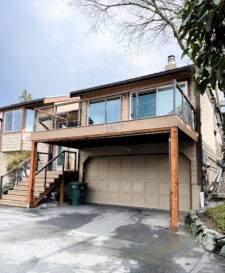
What Custer's Climate Does to an Outdoor Deck
Whatcom County's marine-influenced climate is generally mild, which is exactly why moss and mildew thrive here — mild temperatures plus near-constant moisture is the ideal recipe for organic growth on any horizontal wood surface. A few specific factors matter for deck design and material choice in this area:
Salt Air and Metal Fasteners
Properties nearer the water pick up airborne salt that accelerates corrosion on standard fasteners, joist hangers, and hidden deck clips. Once a fastener starts rusting, it weakens and can stain the surrounding wood or composite. This is a material-selection issue, not a labor shortcut — it has to be planned for at the framing stage.
Driving Rain and Wind-Driven Moisture
Rain in this region rarely falls straight down. Wind pushes it sideways into ledger connections, under railings, and into any gap where flashing wasn't done correctly. A deck that isn't flashed and sloped properly at the house connection will let water track back into the rim joist and siding — a slow, hidden problem that's expensive to fix once it's found.
Moss, Algae, and Extended Shade
Many Custer lots have mature trees or sit close enough to tree lines that parts of a deck stay shaded and damp for long stretches of the year. Moss and algae take hold fastest in those low-light, low-airflow spots — under railings, in board grooves, and near the house where sun rarely reaches. Board spacing, gap width, and even deck orientation all affect how much of this you'll deal with long term.
Choosing Decking Material for This Climate
There's no universally "best" decking material — the right choice depends on your budget, how much upkeep you want to do, and how exposed the deck site is. Here's how the common options actually perform in a Custer-type climate:
| Material | Moisture Behavior | Maintenance | Typical Lifespan |
|---|---|---|---|
| Pressure-treated wood | Resists rot when properly sealed; can cup or warp if finish is neglected | Needs re-staining/sealing every 1-3 years | 15-20 years with upkeep |
| Cedar | Naturally rot- and insect-resistant; still needs a finish to hold color and shed water long-term | Periodic cleaning and refinishing | 20-25 years with upkeep |
| Composite decking | Doesn't absorb water or rot; some early-generation boards trapped moisture at fastener points | Occasional washing; no staining or sealing | 25-30+ years, manufacturer-dependent |
| PVC/capped composite | Fully sealed surface, best resistance to moss staining and moisture uptake | Lowest maintenance of the group | 25-30+ years |
We don't push one product line as the answer for every homeowner. What we do insist on is matching the material to the site — a shaded, damp corner of a Custer lot is a poor place for an untreated softwood deck, and a full-sun open yard doesn't need the most moisture-resistant (and most expensive) composite on the market. We'll walk your specific site with you and explain the honest trade-offs before you commit to a material.
What a Correctly Built Deck Includes
A deck that's going to hold up to a Whatcom County winter isn't just boards screwed to a frame. The parts that matter most are usually the ones you can't see once the project is finished.
Ledger Board Flashing
Where the deck attaches to the house is the single most common failure point in this climate. Proper flashing — installed correctly under the siding or house wrap, not just caulked over the top — keeps wind-driven rain from working its way into the wall assembly. This is not optional detail work; it's the difference between a deck that protects your home and one that slowly damages it.
Joist Framing and Fastener Selection
We use corrosion-resistant fasteners and hardware rated for exterior and coastal-adjacent exposure, sized correctly for the load the deck will actually carry. Joist hangers, structural screws, and post bases all need to match the treated lumber they're fastened to — mismatched metals accelerate corrosion in a damp climate.
Footings for Whatcom County Soil
Soil around Custer varies from sandy to heavier clay-influenced ground that holds water. Footings need to be sized and set at the correct depth for frost and load, with drainage considered so water doesn't pool against the post base year-round.
Board Spacing and Airflow
Gap width between boards affects how fast a deck dries out after rain. Too tight, and debris packs in and holds moisture against the board edges — a direct contributor to moss growth. We set spacing based on the material and the site's sun exposure, not a single default number applied everywhere.
Railings, Stairs, and Code Compliance
Whatcom County has specific requirements for railing height, baluster spacing, and stair geometry. We build to code as a baseline, not a minimum to sneak past — these details matter for safety and for resale down the line.
Permits and Local Requirements
Deck projects in unincorporated Whatcom County, which covers the Custer area, generally require a permit once the structure exceeds certain size or height thresholds, and permit requirements can also depend on your specific property and any applicable setbacks. We handle the permit conversation as part of the project — figuring out what's required for your specific site, preparing what's needed for the application, and building to the approved plan. You shouldn't have to sort out county requirements on your own.
Our Process, Start to Finish
Every custom deck project follows the same basic sequence, though the details shift based on your site and goals.
- On-site consultation. We walk your property, look at sun exposure, drainage, and how the deck will connect to the house, and talk through how you actually want to use the space.
- Design and material selection. We put together a layout and material plan based on that walkthrough, with honest pros and cons for each option rather than a single upsell.
- Permitting. We determine what Whatcom County requires for your project and handle the application process.
- Site prep and footings. Correct footing depth and placement for your soil conditions, set before framing begins.
- Framing and flashing. Ledger attachment, joist layout, and flashing — the structural work that determines the deck's lifespan.
- Decking, railings, and finish work. Board installation, railings, stairs, and any finish or sealant the material calls for.
- Final walkthrough. We go over the completed deck with you, including any maintenance recommendations specific to your material and site.
Maintaining a Deck Through a Custer Winter
Even a well-built deck needs some seasonal attention in this climate. A short checklist worth keeping in mind:
- Clear leaves and debris out of board gaps before the fall rains set in — trapped debris holds moisture against the wood.
- Sweep off moss growth early rather than letting it establish; a stiff brush and a deck-safe cleaner handle most of it.
- Check ledger flashing and any caulked joints once a year for cracking or gaps.
- Inspect fasteners and hardware for early rust staining, especially on decks closer to the water.
- Reseal or restain wood decking on the manufacturer's recommended schedule — don't wait until the finish has fully worn through.
- Keep gutters and downspouts near the deck clear so roof runoff isn't dumping extra water onto or under the structure.
Why It Matters That We Already Work in Custer
A crew that builds decks across a wide range of climates tends to default to generic methods. A crew that works Custer and the surrounding Blaine area regularly knows which lots sit in year-round shade, which soil types need extra footing attention, and how much wind-driven rain a given exposure actually sees through the winter. That local pattern recognition shows up in small decisions — flashing details, fastener choice, board spacing — that add years to a deck's life without adding much to the cost.
We're not asking you to take a generic sales pitch at face value. Ask any contractor bidding your deck how they handle ledger flashing, what fasteners they spec for this area, and how they account for drainage in your specific soil. The answers tell you a lot about whether they've actually built decks that hold up here.
Get a Free, No-Pressure Estimate
If you're planning a new deck or replacing one that's showing its age, we're happy to come take a look, walk the site with you, and put together a straightforward estimate — no pressure, no pushy upsells. Use the form below to get started.