 Blaine Siding
 Roof Repair for the Dakota Creek Area of Blaine
Dakota Creek sits close to the water, close to the border, and squarely in the path of everything Whatcom County's marine climate throws at a roof. Homes here deal with a combination most inland neighborhoods never see at the same intensity: salt-laden air off the coast, driving rain that comes in sideways during winter storms, and a moss season that runs longer than most homeowners realize. A roof repair in this area isn't just patching a leak — it's addressing why that leak happened in the first place, in conditions that will keep pushing on the same weak points year after year.
This page is about roof repair specifically, not full replacement. If your roof still has useful life left in it, a correctly done repair can add years of protection without the cost of a tear-off. The trick is knowing when a repair is the right call, and doing it in a way that actually holds up out here.
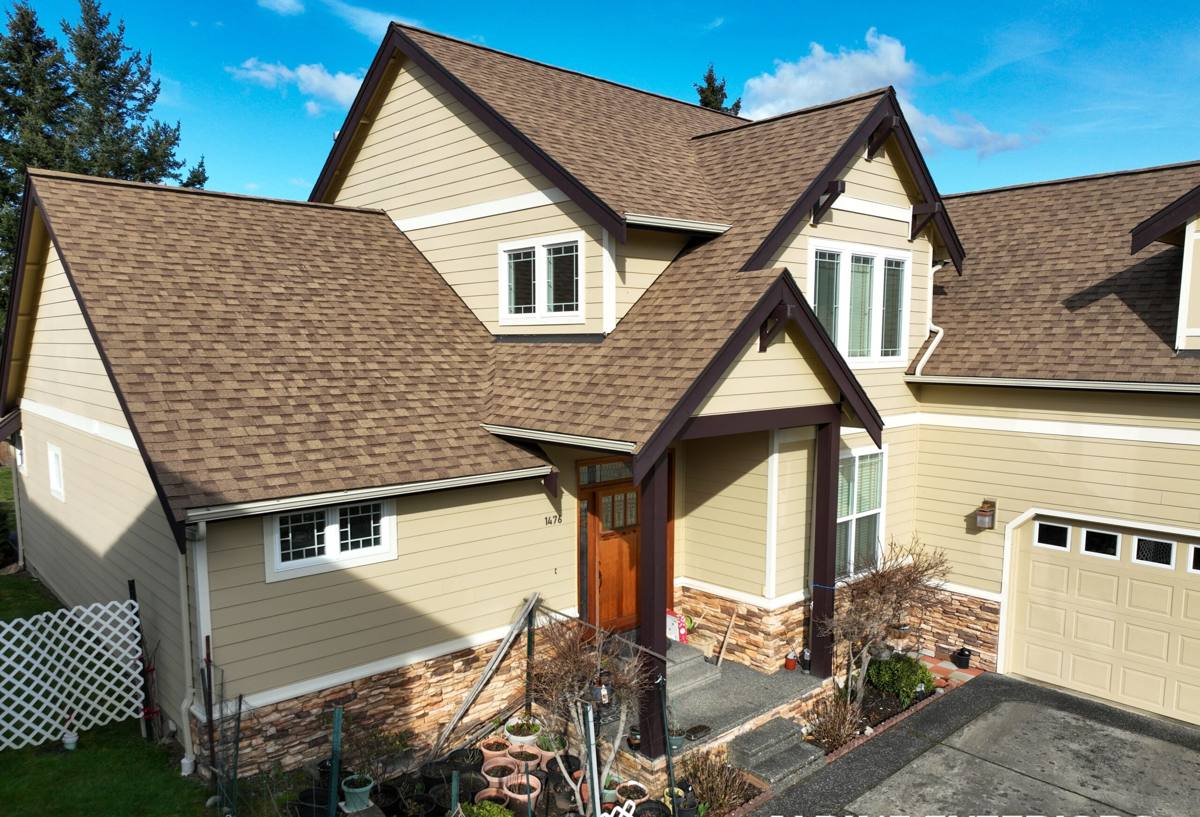
What Dakota Creek Roofs Are Up Against
Salt Air and Corrosion
Proximity to the water means airborne salt settles on roofing materials and, more importantly, on the metal components — flashing, fasteners, vent caps, and gutter hardware. Salt accelerates corrosion on anything that isn't rated for a marine or coastal environment. A fastener or flashing piece that would last decades a few miles inland can start failing years earlier out here, and once a fastener backs out or a flashing seam corrodes through, water has a direct path into the roof deck.
Wind-Driven Rain
Storms rolling in off the Strait of Georgia don't just drop rain straight down — they push it sideways, under shingle edges, up against vertical walls, and into any gap in the flashing around chimneys, skylights, and roof-to-wall transitions. A roof that would shed rain fine in a calm, straight-down storm can still leak under wind-driven conditions if the flashing details weren't built for it. This is one of the most common reasons we get called out to homes that "never had a problem" until one specific storm.
A Long Moss Season
Cool, damp weather for much of the year, combined with tree cover common in this part of Whatcom County, gives moss a long window to establish itself. Moss holds moisture against the roofing material far longer than the material is designed to handle, and as it spreads it can lift shingle edges and work its way into seams. Left alone, a light moss coating becomes a thick mat that traps water against the deck year-round.
Common Roof Repair Issues We See in This Area
| Issue | Typical Cause Out Here | What Happens If Ignored |
|---|---|---|
| Leak around chimney or skylight | Corroded or improperly lapped flashing | Water tracks into interior ceilings, often far from the actual entry point |
| Granule loss / thinning shingles | Age combined with constant damp and moss growth | Reduced UV and water protection, faster deterioration |
| Moss mats on north-facing slopes | Shade, poor airflow, long wet season | Lifted shingles, trapped moisture, premature failure |
| Rusted or loose fasteners | Salt air corrosion | Shingles or metal panels working loose in wind |
| Clogged or sagging gutters | Debris from surrounding trees plus heavy rain volume | Water backing up under the roof edge (ice-dam-style damage without the ice) |
What a Correct Roof Repair Actually Involves
A roof repair done right starts with figuring out where the water is actually getting in — not just where the stain shows up. Water can travel along the underside of the deck or down a rafter for several feet before it appears on a ceiling, so a repair that only addresses the visible spot often misses the real source and the leak comes back.
Once the entry point is confirmed, a proper repair typically includes:
- Removing and replacing damaged or compromised shingles, not just sealing over them
- Replacing corroded flashing rather than caulking over rusted metal
- Checking the roof deck underneath for soft spots or rot before closing the area back up
- Re-fastening with hardware rated for coastal/marine exposure
- Confirming the repair ties in properly with surrounding courses so water sheds correctly, not just at the patch itself
Caulk and roof cement have a place in roofing work, but they're not a substitute for correcting the underlying flashing or shingle problem. Used as a permanent fix instead of a temporary measure, they tend to fail within a season or two out here, especially once salt air and UV exposure start breaking them down.
Our Roof Repair Process
- Inspection. We get on the roof (not just a look from the ground) to trace the leak or damage back to its actual source, and check the surrounding area for related wear.
- Straight assessment. We tell you what we found, what's causing it, and whether a targeted repair makes sense or whether the roof is past the point where repair is the more expensive option long-term.
- Written scope. Before any work starts, you know exactly what's being repaired, with what materials, and roughly what it involves.
- The repair itself. Damaged materials come out, the deck gets checked, and new materials go in matched as closely as possible to your existing roof.
- Walk-through. We show you what was done and what to watch for going forward, particularly if moss or drainage was part of the original problem.
Repair or Replace? Factors Worth Weighing
Not every roof problem calls for the same solution. Here's a general breakdown of how we think about it — every roof is different, so this is a starting point for the conversation, not a substitute for an actual inspection.
| Factor | Leans Toward Repair | Leans Toward Replacement |
|---|---|---|
| Age of roof | Well within expected service life | At or past typical lifespan for the material |
| Extent of damage | Isolated to one area (flashing, a section of shingles) | Widespread granule loss, multiple leak points |
| Deck condition | Solid, no rot found during inspection | Soft spots or rot discovered in more than one area |
| Moss/algae history | Recently cleaned, isolated regrowth | Long-term moss damage affecting multiple slopes |
| Cost over time | Repair cost is a small fraction of replacement cost | Repeated repairs are adding up close to replacement cost |
If a roof only needs targeted attention, we'll say so — a repair that genuinely holds up is a better outcome for you than an unnecessary replacement, and it's also better for us long-term, since Dakota Creek is a neighborhood we plan on continuing to work in.
Materials and Why We Use Them Out Here
Given the salt air and moisture, we're selective about the materials used in repairs, not just matching whatever is already on the roof for the sake of convenience:
- Flashing: corrosion-resistant metal appropriate for coastal exposure, properly lapped rather than relying on sealant to do the flashing's job
- Fasteners: rated for marine/coastal environments so they don't become the next failure point in a few years
- Shingles or roofing material: matched to the existing roof where possible, with attention to algae-resistant options on north-facing or shaded slopes where moss is a recurring issue
- Underlayment: upgraded in the repaired area where the existing underlayment shows wear, since wind-driven rain punishes weak underlayment first
We won't push a product or upgrade that isn't warranted by what we actually find on your roof. If a standard shingle and flashing repair is the right call, that's what we'll recommend — the goal is a repair that lasts, not the most expensive option available.
A Practical Roof Checklist for Dakota Creek Homeowners
- Look at north-facing and shaded slopes each fall for moss buildup before it thickens over winter
- Check gutters after storms — clogged gutters push water back under the roof edge
- After any major windstorm, do a visual check (from the ground, or ask us) for lifted or missing shingles
- Watch for ceiling stains near chimneys, skylights, and any roof-to-wall transitions — these are the most common leak points in this area
- Don't wait on small leaks — a small, isolated repair now is almost always cheaper than the deck damage a delayed repair causes
- Have flashing and fasteners checked periodically, since salt-air corrosion isn't always visible from the ground
Why a Crew That Already Works Dakota Creek Matters
Roofing knowledge that works for a dry-climate roof doesn't automatically transfer to a roof a few hundred yards from the water in Whatcom County. Flashing details, fastener selection, and moss management all need to account for salt air and driving rain, not just general best practice. A crew that regularly works this specific area already knows which failure points show up first here, what materials actually hold up, and how local drainage and tree cover tend to affect a roof over time — that's the difference between a repair that's cosmetic and one that's structural.
We're not guessing at what a coastal Whatcom County roof needs. We've seen how salt air, wind-driven rain, and a long moss season play out on roofs in and around Blaine, and we bring that directly into how we diagnose and repair yours.
Get a Straight Answer About Your Roof
If you're dealing with a leak, moss buildup, or damage after a storm, we're happy to take a look and give you an honest assessment — repair, monitor, or replace, whichever actually fits your roof. Reach out for a free, no-pressure estimate using the form below.