 Blaine Siding
 Building Decks in Birch Bay's Marine Climate
Birch Bay sits right on the water, and that location shapes everything about how a deck should be built here. Homes along the bay and back into the surrounding Blaine area deal with salt-laden air blowing off the Salish Sea, long stretches of driving rain through the fall and winter, and a moss season that can run half the year in shaded, north-facing yards. A deck built with generic, one-size-fits-all methods will show problems within a few seasons: rusting fasteners, soft spots at the ledger board, slick green boards by January. A deck built for this specific environment holds up for decades instead.
We build decks throughout Whatcom County, and Birch Bay projects get treated differently from the start. The material choices, the hardware, the flashing details, and even the framing layout all account for what salt air and standing moisture do to wood and metal over time. This page covers what that actually looks like, so you know what to expect and what to ask for.
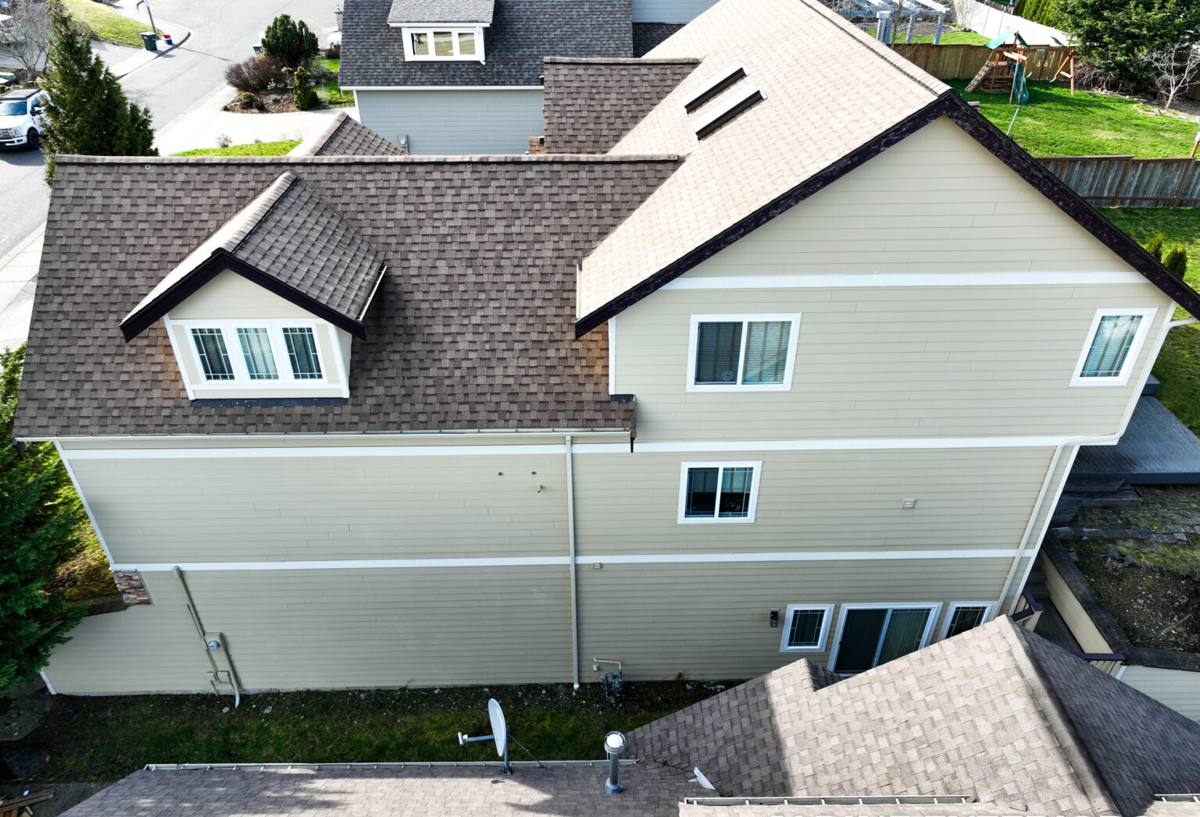
What Birch Bay's Climate Does to a Deck Over Time
Salt Air and Metal Hardware
Airborne salt accelerates corrosion on anything metal, and a deck has a lot of metal in it: joist hangers, structural screws, bolts at the ledger, post bases, and railing hardware. Standard galvanized fasteners that would be fine twenty miles inland can start rusting within a few years this close to the water. Once a fastener corrodes, it loses holding strength long before it looks obviously bad from the surface, which is part of why corrosion failures catch homeowners off guard.
Driving Rain and Ledger Rot
The point where a deck attaches to the house — the ledger board — is the single most common failure point on decks in wet climates, and Birch Bay's wind-driven rain makes it worse. Rain doesn't just fall straight down here; it gets pushed sideways into siding and ledger connections. Without the right flashing and a water-shedding gap behind the ledger, moisture works its way into the house framing where you can't see it until there's a soft spot or a stain on the ceiling below.
Moss, Shade, and Slippery Surfaces
Whatcom County's wet, mild winters are ideal moss-growing conditions, and decks in shaded yards or under tree cover get hit hardest. Beyond the cosmetic issue, moss and algae hold moisture against the decking surface and turn boards slick and dangerous underfoot. Material choice, board spacing, and sun exposure all factor into how much of a problem this becomes.
Decking Material Options for This Area
There's no single "correct" material for every deck — it depends on budget, how much upkeep you want to do, and how shaded the site is. Here's how the common options actually perform in a salt air, high-moisture environment like Birch Bay.
| Material | Moisture & Salt Air Performance | Moss Resistance | Maintenance |
|---|---|---|---|
| Pressure-treated wood | Good if properly sealed and re-sealed on schedule; end grain and fastener holes are the weak points | Needs regular cleaning; moss takes hold quickly if neglected | Annual inspection, re-sealing every 1-3 years |
| Cedar | Naturally rot-resistant, but still needs sealing near salt air to hold its color and structure | Better than treated wood but not immune | Sealing/staining every 1-2 years |
| Capped composite | Excellent — the cap layer resists moisture absorption and won't corrode | Much better; smooth cap sheds moss and algae more easily | Periodic washing, no sealing needed |
| Uncapped composite | Decent, but exposed composite core can absorb moisture at cut edges over time | Moderate — textured surfaces can hold onto grime | Occasional cleaning |
We're honest with clients about trade-offs rather than steering everyone to the priciest option. A well-built, well-sealed wood deck is a completely reasonable choice for a lot of Birch Bay homeowners — it just requires a maintenance commitment that composite doesn't. Where we push back is on cutting corners at the structural level regardless of what decking surface goes on top, because that's where failures actually start.
What a Correctly Built Deck Includes
The decking boards are the part everyone sees, but the parts that determine whether a deck lasts are underneath and behind the scenes. In a climate like this, we don't treat any of the following as optional:
- Ledger board flashing that actually sheds water away from the house, with a drainage gap or capillary break behind it
- Joist protection tape over every joist top to keep water from soaking into end grain and fastener holes
- Stainless steel or high-corrosion-resistant coated fasteners and hardware, matched to whatever decking material is used
- Footings set below the local frost depth and sized correctly for the soil conditions on site
- Proper slope away from the house so water doesn't pool against the ledger or foundation
- Board spacing that allows drainage and airflow instead of trapping moisture between boards
- Under-deck ventilation where the design allows for it, to reduce the damp, shaded conditions moss needs to establish
None of this is unusual or specialized knowledge in the trade — it's standard best practice for wet coastal climates. The issue is that it's also the kind of work that's easy to skip and impossible to see once the decking boards go down, which is why the contractor doing it matters as much as the plan itself.
Our Process From Estimate to Finished Deck
1. On-Site Assessment
We look at the site itself — sun and shade patterns, existing drainage, soil conditions, how exposed the location is to wind and salt air off the water, and how the deck will attach to the house. This is also when we talk through material options honestly, including what upkeep each one actually requires.
2. Design and Written Estimate
You get a clear layout and a written estimate that spells out materials, hardware, and scope before any work starts. No vague allowances that turn into surprise change orders once the project is underway.
3. Permitting
Deck projects in this area typically require a building permit, and we handle that process as part of the job rather than leaving it for the homeowner to sort out.
4. Framing and Structural Work
This is where the flashing, joist tape, footings, and fastener choices described above get done. It's the least visible part of the project and the part we're most careful about.
5. Decking, Railings, and Finish Work
Surface material goes down, railings get installed to code, and everything gets a final check for level, drainage, and finish quality before we walk it with you.
Permits and Local Considerations
Most deck construction in the Blaine and Birch Bay area requires a building permit, particularly for decks attached to the house, decks above a certain height, or projects that involve new footings. Requirements can also touch on setbacks from property lines, especially on the smaller and more tightly spaced lots common in parts of Birch Bay. If your property is part of an association with its own design or exterior rules, that's worth checking on your end early, since it can affect material or railing choices. We pull the required permits as part of our process, but it's still worth knowing this is a permitted project in most cases, not a weekend add-on.
Maintenance in a Salt Air, Moss-Prone Environment
Whatever material you choose, a Birch Bay deck needs a maintenance rhythm built around the local climate, not a generic schedule pulled from a manual written for a drier region.
- Rinse salt residue and debris off the surface periodically, especially after storms with onshore wind
- Clean moss and algae buildup before it stains or gets slick, particularly on shaded sections
- Check and re-seal wood decking on the schedule appropriate to the product — don't wait until it looks obviously weathered
- Inspect fasteners and hardware yearly for early signs of corrosion, especially near the ledger and stair connections
- Keep gutters and downspouts near the deck clear so runoff isn't dumping extra water onto or under the structure
None of this is a huge time commitment, but skipping it is exactly how a well-built deck starts showing problems early. A deck built correctly the first time makes this maintenance easier, too — proper drainage and airflow mean less moss to begin with.
Why Hire a Crew That Already Works Birch Bay
A contractor who mostly works inland, in drier parts of Whatcom County or further from the water, doesn't necessarily think about salt air corrosion or wind-driven rain as a default part of the job. Those are details you have to specifically know to account for, and they don't show up as problems until years after the crew is gone. Working Birch Bay regularly means we're used to building for the exposure this area actually gets — not applying a standard build and hoping it holds up.
It also means fewer surprises during the estimate. We already have a working sense of typical lot conditions, soil, and permitting expectations in the area, which makes the process faster and the pricing more accurate from the start.
If you're planning a new deck or need to know whether an existing one is holding up the way it should, we're happy to take a look. Reach out for a free, no-pressure estimate using the form below — we'll walk the site, answer your questions honestly, and give you a straightforward plan.