 Blaine Siding
 Building Decks That Hold Up in Nooksack
Nooksack sits in a part of Whatcom County where the weather doesn't do a homeowner any favors. Long stretches of driving rain, humid air off the river corridor, and short, low-angle winter sun add up to a lot of days each year when wood stays damp longer than it should. Add in tree cover that's common on rural and semi-rural lots in this area, and you get conditions where moss and algae can take hold on horizontal surfaces almost year-round. A deck built without that reality in mind will look fine for a season or two and then start showing problems — soft spots, green film on the boards, rust streaks around fasteners, and railings that wobble because the posts never had a real chance to dry out.
A deck built for this area is built differently from the start: better drainage under and around it, hardware that won't corrode in persistent moisture, and material choices that match how much sun and airflow the specific spot on your property actually gets. That's the difference between a deck that needs real work in five years and one that's still solid in twenty.
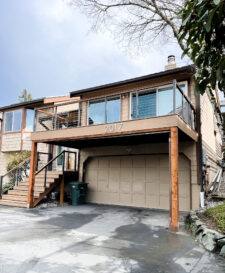
What Nooksack's Climate Demands From a Deck
Whatcom County gets a lot of rain spread across many months, not just a few heavy storms. That means wood framing and decking spend more cumulative time wet than they would in a drier climate, even if no single storm is extreme. A few things matter more here than they would somewhere drier:
- Drainage under the deck. Standing water or poor grading beneath a low deck keeps the underside of the joists damp long after the surface has dried, which is where rot usually starts unseen.
- Airflow around ledger boards and posts. Tight-to-the-house framing without a gap or flashing traps moisture right where it does the most structural damage.
- Gap spacing between boards. Boards installed too tight don't shed water or dry between rains, which accelerates both rot in wood decking and moss buildup on any material.
- Shade and tree cover. Lots with more overhead canopy stay damp longer after rain and need decking and finishes chosen with that in mind.
None of this is exotic — it's just attention to detail that matters more in a wet climate than a dry one, and it's easy to skip if a crew is used to building somewhere with a shorter rainy season.
Footings and Framing
Footings need to be sized and set to the depth required by local code so the structure doesn't shift with seasonal ground moisture changes. Framing lumber should be rated for ground contact where it's within a few inches of soil or mulch, and every ledger connection to the house needs proper flashing so water is directed away from the band joist rather than into it. This is the part of a deck nobody sees once it's finished, which is exactly why it's the part most often shortcut on a rushed job.
Choosing the Right Decking Material
There's no single "best" decking material — the right choice depends on how much sun and shade the deck gets, how much maintenance the homeowner wants to do, and budget. In a climate like this one, moisture resistance and moss resistance matter as much as looks.
| Material | Moisture & Moss Behavior | Maintenance | Typical Cost Range |
|---|---|---|---|
| Pressure-treated wood | Resists rot when properly maintained; can still host surface moss/algae in shaded, damp spots | Needs periodic cleaning and re-staining/sealing | Lowest upfront cost |
| Cedar | Naturally rot-resistant, ages to gray if unsealed; still needs cleaning to prevent moss in shade | Regular sealing to maintain color and moisture resistance | Mid-range |
| Composite decking | Doesn't rot, but can still grow surface algae/moss film in shaded, low-airflow areas | Occasional washing; no staining or sealing | Mid to upper range |
| PVC/capped decking | Best moisture resistance; least hospitable surface for moss but not immune in deep shade | Lowest maintenance | Highest upfront cost |
Every one of these materials will grow moss or algae eventually if a deck sits in constant shade with poor airflow — the material affects how fast it happens and how easy it is to clean off, not whether it can happen at all. We walk through these trade-offs honestly rather than pushing whatever has the best margin, because the right call really does depend on your specific lot.
Hardware and Fasteners That Actually Last
This is one of the most overlooked parts of deck construction, and it's where a lot of premature failures start. In a climate with consistent moisture, standard fasteners can corrode from the inside out, staining the wood around them and weakening the connection long before the boards themselves fail. We use fasteners and structural hardware rated for the type of wood and the exposure the deck will actually see — stainless steel or heavy hot-dip galvanized hardware in areas with sustained dampness, matched correctly to pressure-treated lumber's chemical makeup so the metal and the wood aren't working against each other. Railings and structural connectors get the same attention, since those are the components most tied to safety.
Permits and Code in Whatcom County
Most decks above a certain height or attached to the house require a building permit in Whatcom County, and guardrails, baluster spacing, and stair requirements are all governed by code once a deck reaches certain heights. Requirements can vary depending on your specific parcel and whether you're inside city limits or in an unincorporated area, so we confirm what applies to your project before design work goes final rather than guessing. Skipping permitting on a deck that requires one can create real problems later — at resale, at insurance claim time, or if the structure is ever inspected for an addition or remodel.
Moss, Mildew, and the Long Wet Season
Whatcom County's moss season runs long compared to drier parts of the state, and a deck is one of the easiest surfaces for it to take hold on because it's horizontal, often partially shaded, and exposed to rain for months at a stretch. The fixes are mostly about design decisions made before the first board goes down:
- Correct board spacing so water drains through instead of pooling on the surface
- Slight slope away from the house built into the framing, not just the decking
- Keeping vegetation and overhanging branches trimmed back where the deck meets the yard
- Choosing a finish or material suited to how much shade that specific deck gets
- Cleaning on a regular schedule rather than waiting until moss is visibly established
A deck that's designed with drainage and airflow in mind from the start needs far less scrubbing and pressure-washing over its life than one that wasn't.
Our Deck Building Process
We keep the process straightforward and communicate at each step:
- Site visit and assessment. We look at sun exposure, drainage, grade, and how the deck will connect to the house before recommending materials.
- Design and material selection. We walk through the trade-offs above so you're choosing based on how the deck will actually perform on your property, not just how it looks in a showroom.
- Permitting. We handle the paperwork with Whatcom County where a permit is required, so nothing gets built that has to be redone.
- Construction. Footings, framing, flashing, decking, and railings — built in that order, with attention to the moisture-management details covered above at every stage.
- Final walkthrough. We go over the finished deck with you, including basic care guidance for whatever material you chose.
Why a Crew That Already Works in Nooksack Matters
A crew that regularly builds in this part of Whatcom County already knows what the county requires for permitting, how local soil and drainage patterns tend to behave, and which material and hardware combinations actually hold up through a full wet season here rather than just on paper. That local familiarity shows up in fewer surprises during construction and a deck that's designed around the conditions it will actually face, not generic assumptions imported from a drier climate.
Signs an Existing Deck Needs Attention
- Boards that feel soft, spongy, or spring back slowly when stepped on
- Persistent green or black film that returns quickly after cleaning
- Rust streaking around screws or bolts
- Railings or posts that flex or wobble
- Gaps opening up around the ledger board where the deck meets the house
- Standing water that doesn't drain within a few hours of rain stopping
Any of these are worth a professional look before they turn into a larger repair or a safety issue.
If you're planning a new deck or need an honest assessment of one that's showing its age, we're happy to take a look and walk you through the options for your property. Use the form below to request a free, no-pressure estimate.