 Blaine Siding
 Decks Along Cherry Point Take a Different Kind of Beating
Cherry Point sits on open, exposed shoreline north of Blaine, right where marine air off the Strait of Georgia meets whatever weather Whatcom County is having that week. That's a different environment than a deck built a few miles inland. Salt-laden air corrodes hardware faster, wind-driven rain gets pushed into joints and seams that would stay dry elsewhere, and the long, damp Pacific Northwest winter gives moss and algae months to take hold on any horizontal wood surface. None of this means a deck out here is destined to fail — it means it needs to be built and repaired with that exposure in mind, not treated like a deck in a dry inland subdivision.
We've repaired enough decks in this stretch of Whatcom County to know the failure patterns are predictable. The same handful of problem areas show up again and again, and most of them are fixable if they're caught before they become structural.
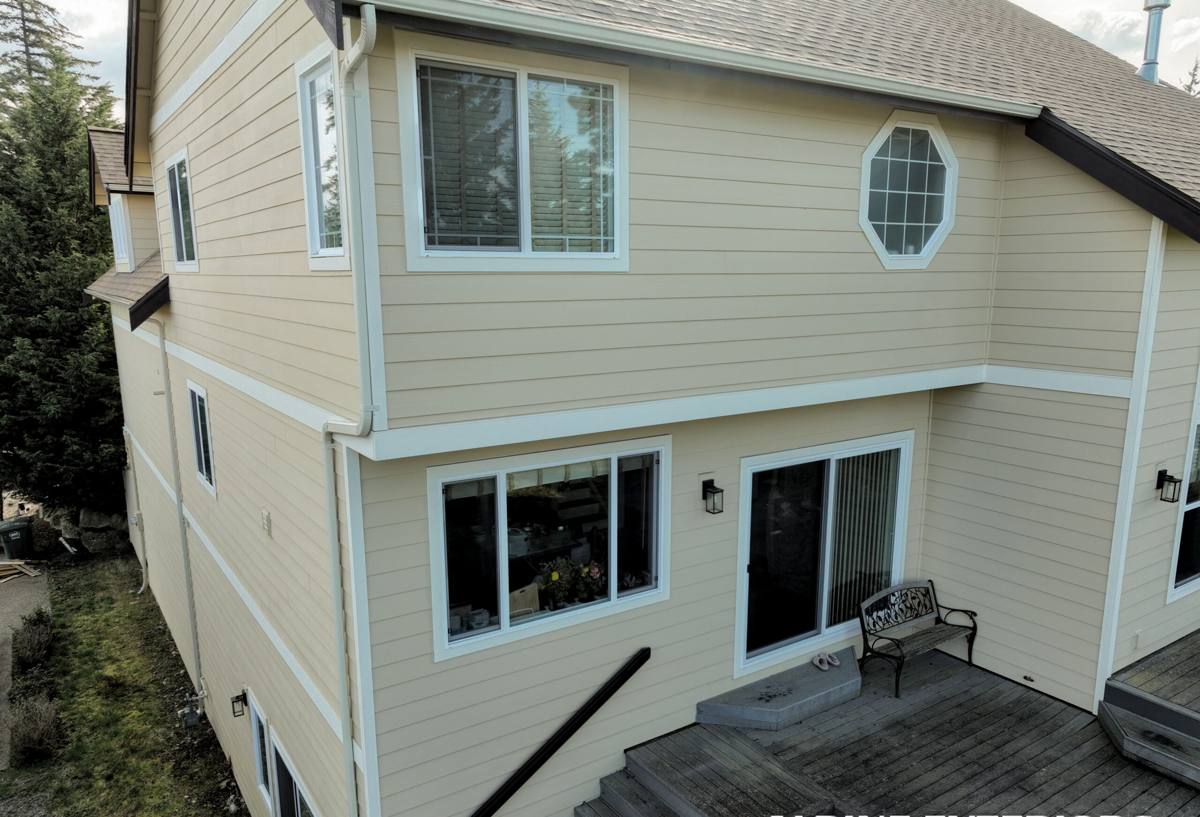
The Deck Problems We See Most Often Out Here
Ledger Board Separation and Hidden Rot
The ledger board — where the deck attaches to the house — is the single most common failure point on any deck, and salt air combined with driving rain makes it worse in Cherry Point. Water gets behind the ledger through old or missing flashing, soaks the rim joist, and rots the wood from the inside while the surface still looks fine. This is a structural issue, not a cosmetic one, and it's the reason a deck can seem sturdy right up until it isn't.
Corroded Fasteners and Hardware
Nails, screws, joist hangers, and bolts that aren't rated for coastal exposure corrode faster near the water than they would inland. Rust streaks bleeding down decking boards, hardware that's pitted or flaking, or fasteners that back out on their own are all signs the original hardware wasn't matched to this environment.
Moss, Algae, and Trapped Moisture
Whatcom County's moss season runs long, and a deck with poor drainage, tight board spacing, or shade from nearby trees will grow a slick green film on top and hold moisture underneath. Beyond being a slip hazard, that trapped moisture is what feeds rot in the boards and framing below.
Post and Footing Movement
Repeated freeze-thaw cycles are mild here compared to inland climates, but saturated soil around undersized or shallow footings still shifts over time. A deck that feels bouncy, or has a rail post that's noticeably loose, often traces back to a footing problem rather than the visible wood.
Repair or Replace? How We Make the Call
Not every deck problem means starting over, and not every deck is worth patching. The honest answer depends on what's actually failing — surface wear is a very different situation than a compromised ledger or footing.
| Condition | Usually Repairable | Usually Needs Replacement |
|---|---|---|
| Decking boards | Isolated cupping, splintering, or a few rotted boards | Widespread soft spots across most of the surface |
| Ledger connection | Missing/failed flashing caught early, sound wood underneath | Rotted rim joist or sill behind the ledger |
| Railings and posts | Loose connections, corroded hardware, minor wobble | Rotted post bases or railings that fail code height/spacing |
| Framing and footings | One or two damaged joists, hardware upgrade | Undersized footings or multiple rotted structural members |
| Surface finish | Moss, graying, worn stain or sealer | N/A — this is maintenance, not repair |
As a general rule: if the problem is at the surface, it's a repair. If the problem is behind the surface — at the ledger, in the footings, or through most of the framing — a partial or full rebuild is usually the more honest recommendation, even if it costs more up front, because a repair on top of a failing structure doesn't hold.
What a Correct Deck Repair Actually Involves
A repair that's done right in this climate isn't just swapping a rotted board for a new one. It addresses why that board rotted in the first place.
- Pulling decking near any suspected problem area to inspect the framing underneath, not just patching what's visible from the top
- Replacing or properly installing ledger flashing so water sheds away from the house rather than behind it
- Using fasteners and structural hardware rated for exterior, corrosion-prone environments — not standard interior-grade hardware
- Sealing cut ends of any pressure-treated lumber, since factory treatment doesn't penetrate a fresh cut
- Checking post bases and footings for movement or rot, not just the boards people can see
- Re-establishing proper board spacing and drainage so water and debris don't collect and feed future moss growth
Skipping any of these steps is how a deck ends up needing the same repair again in three or four years instead of lasting.
Material Choices for a Coastal, Wet Climate
When we're replacing decking boards or framing as part of a repair, the material choice matters more here than it would in a dry climate.
Pressure-Treated Lumber
Still a solid, cost-effective choice for framing and for homeowners who want to match existing wood decking. It requires more upkeep in this climate — regular cleaning and resealing — but it's straightforward to repair again later since it's easy to match and work with.
Cedar
Naturally rot- and insect-resistant and common on older decks in this area, but it still needs a breathable finish maintained on a regular schedule, or moss and gray weathering set in fast under this much rain.
Composite Decking
Resists moss growth and moisture absorption better than wood on the walking surface, which is a real advantage given how long this region stays damp. The trade-off is cost and the fact that the framing underneath still needs to be real, treated wood — composite doesn't solve a ledger or footing problem, and it still needs proper spacing and airflow underneath to perform as advertised.
We'll walk you through which option fits your existing structure, your budget, and how much maintenance you actually want to keep up with — there's no single right answer for every deck.
Our Deck Repair Process
- On-site inspection. We check the ledger, framing, posts, footings, and decking surface — not just the obvious problem, since one visible issue often points to something else underneath.
- Honest scope and estimate. You get a clear breakdown of what's structural, what's cosmetic, and what your repair-versus-replace options actually cost.
- Repair work. Framing and structural repairs happen first, using corrosion-resistant hardware and properly flashed connections, before any new decking goes down.
- Finish and seal. Cut ends sealed, surfaces finished appropriately for the material, and drainage checked before we call it done.
- Walkthrough. We show you what was found, what was fixed, and what to watch for going forward.
Signs Your Deck Needs Attention Now
Most deck failures give warning signs well before they become a safety issue. Worth checking for:
- Soft or spongy spots when you walk across the decking
- Rust or dark streaks running down boards from fasteners or hardware
- Any wobble in the railing when you push on it
- Visible gap or separation where the deck meets the house
- Green film, moss, or algae building up faster than you can clean it off
- Wood that feels soft when probed with a screwdriver, especially near posts or the ledger
- Nails or screws that have backed out or are visibly corroded
If any of these sound familiar, it's worth having someone look before winter's rain adds more water into the mix.
After the Repair: Keeping Moss and Salt Air From Winning
A repaired deck in Cherry Point still lives in the same climate that caused the original damage, so a little upkeep goes a long way. Rinse off salt spray and debris periodically, keep gutters and nearby drainage clear so water isn't pooling near posts or footings, and reseal wood surfaces on the schedule the finish actually calls for rather than waiting until it visibly fails. Trimming back overhanging branches also helps — less shade means the deck dries faster between rains, which is the single biggest factor in how fast moss comes back.
Why Hire a Crew That Already Works This Area
A deck repair done by someone unfamiliar with coastal Whatcom County conditions often uses standard hardware and standard assumptions about how fast wood dries out between storms — and those assumptions don't hold up out here. We work this stretch of coastline regularly, so we're not guessing at what salt air does to fasteners over a few winters or how long moss season really runs. That translates into hardware choices, flashing details, and finish recommendations that are matched to Cherry Point conditions rather than a generic repair job that looks fine the day it's finished and starts failing again in a year or two.
If your deck has a soft spot, a wobbly rail, or just needs an honest second opinion before you decide what to do with it, we're happy to take a look. Reach out for a free, no-pressure estimate using the form below.