 Blaine Siding
 Deck Repair Built for the Everson Area's Climate
Homes in and around Everson sit in a stretch of Whatcom County where the weather doesn't do decks any favors. Salt-laden air drifting in off the coast, long stretches of driving rain, and a moss season that can run half the year all work together to break decks down faster than most homeowners expect. A deck that looks fine from the porch door can have soft framing, corroded hardware, or a failing ledger connection underneath — problems that don't announce themselves until a board flexes underfoot or a railing feels loose.
We repair decks throughout the greater Blaine and Whatcom County area, and Everson is one of the communities we work in regularly. That matters because deck failure patterns here are consistent — we're not guessing at what's likely wrong, we're checking the specific spots that fail first in this climate.
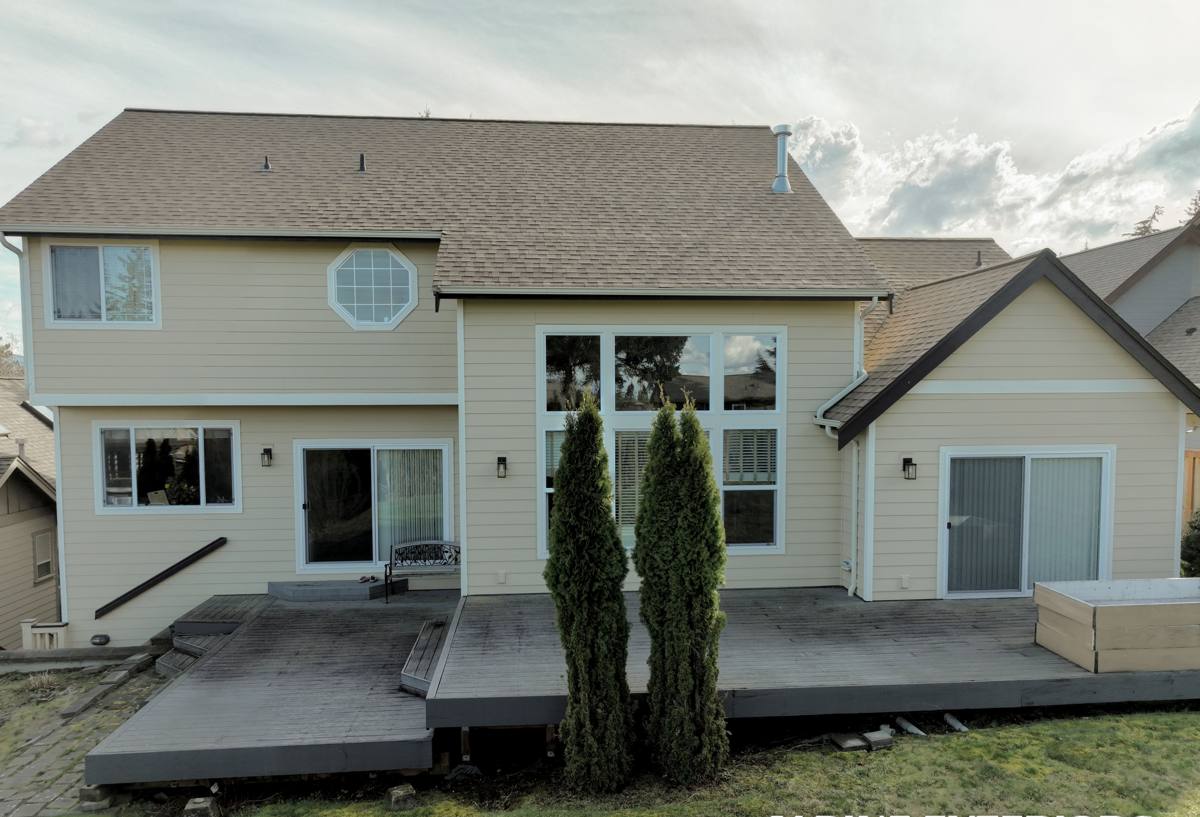
Why Local Decks Take a Beating
Three regional factors drive most of the deck repair calls we get in this part of Whatcom County:
Salt Air and Metal Fatigue
Coastal moisture in the air accelerates corrosion on any fastener, bracket, or joist hanger that isn't rated for it. Standard zinc-coated screws and nails that would last for decades further inland can start rusting and weakening within a few years out here. Once a fastener corrodes, it loses grip strength — that's how boards start to lift, squeak, or work loose from the frame.
Driving Rain and Water Intrusion
Wind-driven rain doesn't just fall on a deck, it gets pushed sideways into seams, under flashing, and behind ledger boards. The ledger — the board that attaches the deck to the house — is the single most common point of structural failure on decks in this region, because that's exactly where wind-driven moisture concentrates if the flashing was ever installed wrong or has worn out.
Moss and Prolonged Dampness
A long moss season means deck boards, stair treads, and shaded railings stay damp for extended stretches even between storms. Moss holds moisture directly against wood fiber, which speeds up rot in a way plain rain exposure doesn't. It also turns walking surfaces slick, which is a safety issue as much as a maintenance one.
Warning Signs You Shouldn't Ignore
Most deck problems are fixable if you catch them early. Left alone, they turn into full rebuilds. Walk your deck and check for these:
- Boards that feel spongy, bounce, or flex more than they used to
- Green or black staining on boards, posts, or the ledger area — a sign moss or mildew has been sitting there
- Rust streaks running down from screw heads or joist hangers
- A railing or post that wiggles when you push on it
- Gaps opening up where the deck meets the house siding
- Stair stringers that creak or feel uneven underfoot
- Fasteners backing out or popping above the board surface
- Standing water that doesn't drain within a few hours after rain
Where Deck Failures Usually Start
When we inspect a deck, we're checking specific structural points, not just the visible surface:
The Ledger Connection
This is where the deck bolts to the house, and it's almost always covered by flashing that's supposed to shed water away from that joint. If the flashing is missing, cracked, or was never properly lapped under the siding, water gets behind it every time it rains — which in this area is often. That leads to hidden rot in the ledger and the rim joist behind it, sometimes for years before it's visible.
Posts and Footings
Posts that meet the ground or a concrete footing are constantly exposed to splashback and moisture wicking. We check for soft wood at the base, post-to-footing hardware that's corroded, and any post that isn't properly isolated from direct soil or standing water contact.
Joist Hangers and Fasteners
Under the deck boards, joist hangers and structural screws take the real load. Corrosion here is often worse than what's visible on top, since the underside stays damp longer and gets less sun exposure to dry out.
Railings and Guardrails
Railing posts see constant stress from people leaning on them, and their connection points are frequently under-built even on decks that are otherwise sound. A loose railing is a safety issue we always flag, not just a repair convenience item.
Repair, Partial Rebuild, or Full Replacement?
Not every deck problem needs the same level of work. We base the recommendation on what we actually find during inspection, not on the age of the deck alone.
| Situation | Typical Approach | What Drives the Decision |
|---|---|---|
| A few soft or split boards, structure is solid | Board replacement | Framing tests solid, damage is limited to the surface layer |
| Corroded fasteners, boards loose but not rotted | Refastening with upgraded hardware | Wood is sound, connection hardware has failed |
| Ledger or flashing shows moisture damage | Ledger repair and flashing replacement | This is a structural safety point regardless of deck age |
| Rot in multiple joists, posts, or the rim joist | Partial framing rebuild | Localized rot can be cut out and sistered or replaced without a full teardown |
| Widespread rot, undersized original framing, or repeated past failures | Full deck replacement | When the cost of chasing repairs approaches the cost of rebuilding correctly |
We'll tell you honestly which category your deck falls into, including when a repair is the right call and a rebuild isn't necessary yet.
Our Deck Repair Process
- Inspection. We check the ledger and flashing, probe posts and joists for soft wood, test railings, and look at drainage and moss buildup across the whole deck, not just the area you called about.
- Assessment and plan. We explain what's structural, what's cosmetic, and what we'd prioritize first if budget matters — we don't push a full rebuild when a targeted repair will hold up.
- Structural repair. Rotted framing gets cut back to sound wood and sistered or replaced, ledger flashing gets corrected if it's failing, and any undersized or corroded hardware gets upgraded.
- Surface repair. Damaged boards are replaced and matched as closely as possible to the surrounding decking; fasteners are set with corrosion-resistant hardware suited to coastal exposure.
- Cleanup and moss treatment. We clear moss and organic buildup from boards, stairs, and framing gaps so it isn't trapping moisture against fresh work.
- Final check. Railings, stair treads, and fastener patterns get a final walk-through before we call the job done.
Materials We Use and Why
In a climate with this much salt air and moisture cycling, hardware choice matters as much as the wood or decking material itself. We use fasteners and structural connectors rated for corrosive coastal exposure rather than standard interior-grade coatings, because the cost difference is small compared to the cost of redoing a repair in a few years when the original hardware fails. For flashing, we use materials and installation methods designed to actually shed water away from the ledger board, since that single detail is responsible for more deck failures than any other point on the structure.
When it comes to decking material — whether we're replacing a few boards or discussing a larger repair — we'll walk through the honest trade-offs with you. Wood decking is straightforward to spot-repair and blends easily when only a few boards need replacing, but it needs regular sealing to hold up against this much rain and moss exposure. Composite decking resists rot and moss staining better over time, but board-for-board repairs can be harder to color-match once a section has weathered, and it carries a higher upfront material cost. Neither is universally "better" — it depends on your deck's age, your budget, and how much upkeep you want to take on.
Code and Safety Considerations
Any repair that touches structural framing, railings, or stairs gets checked against current safety standards, not just rebuilt to match what was there before. That includes guardrail height and baluster spacing on railings, proper stair rise and run, and correctly sized and spaced structural connectors at the ledger and posts. If an older deck was built to a lower standard, we'll point that out and give you the option to bring it up to current safety practice as part of the repair, rather than just replacing failed parts in place.
Maintenance After the Repair
A repaired deck still needs seasonal attention in this climate, especially heading into moss season. A few habits go a long way:
- Sweep or blow off leaves and debris regularly so moisture doesn't sit trapped against boards
- Treat or clean visible moss growth before it spreads across the deck surface
- Check that gaps between boards stay clear so water can drain instead of pooling
- Reseal or restain wood decking on the schedule appropriate for coastal exposure, not the label's generic interval
- Do a quick railing and stair check each fall before wet weather sets in
Why Hire a Crew That Already Works in Everson
A contractor who mostly works inland doesn't always catch what a coastal Whatcom County deck needs — they may not think to check ledger flashing first, or they may spec fasteners that aren't rated for salt air exposure. We work decks throughout the Blaine area and communities like Everson regularly, so we're not learning the local failure patterns on your project. We look at the ledger, the posts, and the hardware first because experience here has shown us that's where problems actually start.
If your deck has soft spots, loose railings, rust stains, or you just want an honest read on its condition, we're happy to take a look. Use the form below to request a free, no-pressure estimate.