 Blaine Siding
 Roofing for Ferndale's Specific Climate
Ferndale sits close enough to the Salish Sea that salt-laden air is a real factor in how roofing materials age here, and it's far enough north that the region's long, wet winters stretch moss season out longer than homeowners moving up from other parts of Washington usually expect. Add in driving rain that comes sideways off winter storms, and you've got three separate stresses working on a roof at the same time: corrosion on exposed metal, organic growth in shaded and north-facing sections, and wind-driven water finding any gap in the flashing or shingle seal. None of these are dramatic on their own, but stacked together year after year, they're what separates a roof that makes it to 25 years from one that starts failing at 15.
A generic asphalt shingle installation — the kind that works fine in a drier, inland climate — often skips details that matter specifically here: metal flashing rated for coastal exposure, underlayment that can handle prolonged moisture contact, and ventilation sized for a roof that rarely gets a hard, dry stretch to shed built-up condensation. Doing this job right in Ferndale means building for the actual weather, not the average weather.
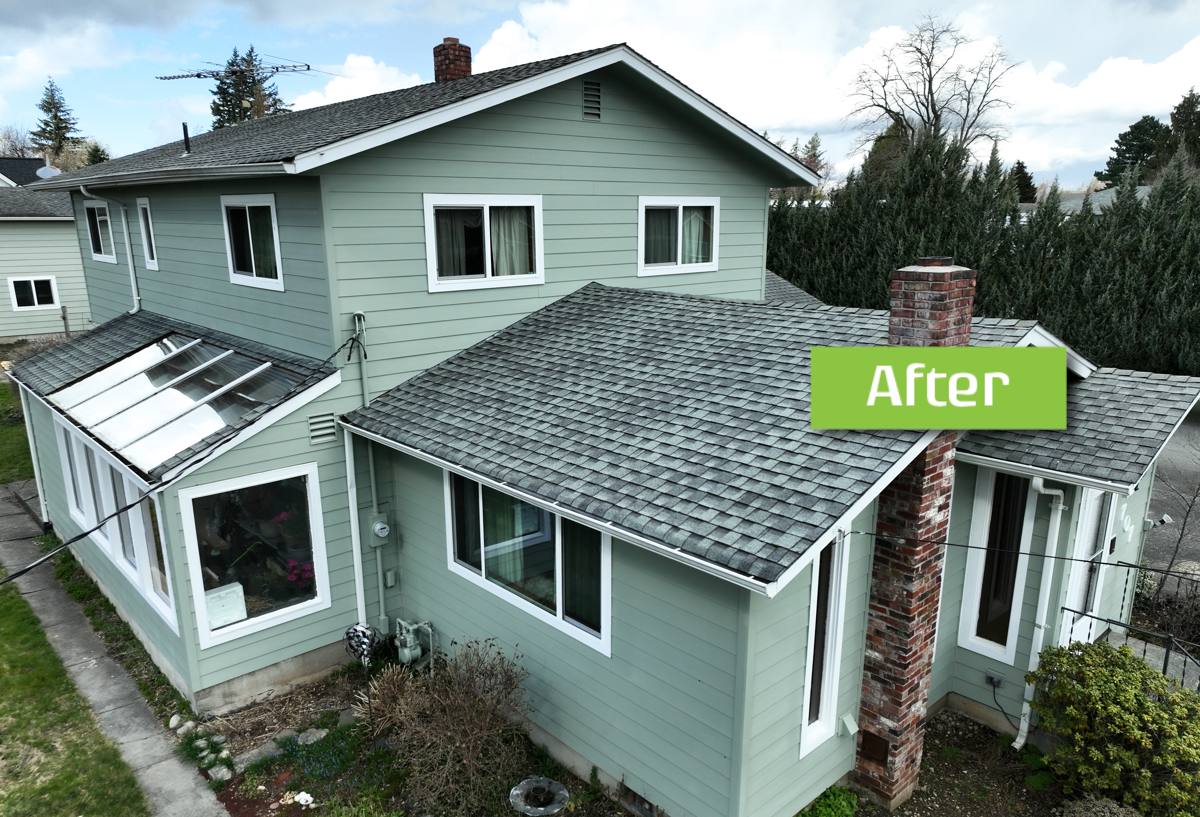
What a Correct Asphalt Shingle Roof Actually Involves
Asphalt shingles look simple from the ground, but the shingles themselves are maybe half of what determines how the roof performs. The rest is in the layers and details underneath.
The Layers That Do the Real Work
- Deck inspection and repair — any soft, delaminated, or water-stained sheathing gets replaced before anything new goes down. Shingles laid over a compromised deck will fail early no matter how good the material is.
- Ice-and-water shield at eaves, valleys, and around every penetration — this is the layer that actually stops wind-driven rain when it gets pushed uphill under the shingle tabs, which happens more here than in calmer inland climates.
- Synthetic underlayment across the field of the roof, chosen for moisture resistance rather than just cost, since this region rarely gives a roof a long dry stretch to fully vent trapped humidity.
- Corrosion-resistant flashing at chimneys, walls, skylights, and valleys — standard galvanized flashing degrades faster within a few miles of saltwater, so the metal spec matters more here than it does further inland.
- Balanced intake and exhaust ventilation so moist attic air actually leaves the attic instead of condensing on the underside of the deck, which is one of the more common causes of premature sheathing rot we see on older Whatcom County homes.
- The shingle layer itself, correctly nailed (not stapled), with the right nail placement and exposure for the wind rating of the product.
Skip or shortcut any one of these and the shingles on top can look fine for a few years while the roof is already failing underneath. This is the single biggest reason two roofs that look identical from the street can have very different lifespans.
Signs a Ferndale Roof Needs Attention
Because moss and moisture issues develop gradually, a lot of homeowners don't notice a problem until it's already inside the attic. A few checks from the ground, twice a year, catch most issues early.
- Moss or dark streaking concentrated on north-facing slopes or areas shaded by trees
- Granules collecting in gutters or downspouts, a sign the shingle surface is wearing thin
- Shingle edges that look cupped, curled, or lifted, especially after a windy storm
- Rust staining or visible gaps at chimney, vent, or skylight flashing
- Sagging or uneven roof lines, which can point to deck or structural issues underneath
- Water stains on interior ceilings, particularly near exterior walls or valleys
- Daylight visible through the roof deck from inside an unfinished attic
Any one of these on its own isn't necessarily an emergency, but they're worth a professional look before the next heavy rain season rather than after.
Repair, Overlay, or Full Replacement
Not every roof problem calls for a full tear-off. The right call depends on the age of the existing roof, how widespread the damage is, and what's happening under the surface. Here's how we generally think through it:
| Option | Best For | What It Doesn't Fix |
|---|---|---|
| Targeted repair | Isolated leaks, damaged flashing, storm damage to a section of an otherwise sound roof | Underlying underlayment or deck issues elsewhere on the roof |
| Overlay (new layer over old) | Rarely recommended here — it traps moisture against an aging layer, which is a bad match for our climate | Deck problems, ventilation issues, and it voids many manufacturer warranties |
| Full tear-off and replacement | Roofs near or past their rated lifespan, widespread granule loss, multiple leak points, or visible deck damage | Nothing structural — this is the option that lets us fully address ventilation and flashing |
We're upfront when a repair is the right call and a full replacement isn't necessary yet. We're equally upfront when an overlay would just be deferring a bigger problem — in a climate this wet, trapping an old layer under a new one tends to cost more in the long run than it saves up front.
How Our Installation Process Works
The process is straightforward, but the order and the details matter.
- On-site inspection and estimate — we walk the roof (or use a lift for steep or fragile roofs), check the attic for ventilation and moisture signs, and give you a written scope, not a verbal guess.
- Material selection — we go over shingle class, wind rating, and color options suited to coastal exposure and to the look of the home.
- Tear-off and deck inspection — old roofing is removed down to the deck, and any damaged sheathing is identified and replaced before moving forward.
- Underlayment and flashing — ice-and-water shield at vulnerable areas, synthetic underlayment across the field, and new flashing at every penetration and transition.
- Ventilation check — intake and exhaust venting is corrected or upgraded if the existing setup isn't moving enough air.
- Shingle installation — laid to manufacturer spec for nailing pattern and exposure, with attention to valleys, ridges, and any tie-ins to other roof planes.
- Cleanup and magnetic sweep — job site and yard cleared of debris and stray nails before we consider the job finished.
- Final walkthrough — we go over the completed work with you directly, not just hand you an invoice.
Moss, Algae, and Salt Air: Maintenance That Actually Helps
A well-installed roof still needs periodic attention in this climate, and most of it is simple.
What Actually Works
- Keep gutters and valleys clear so water isn't sitting against shingle edges longer than it needs to
- Trim back overhanging branches to cut down on shade and debris on north-facing slopes, where moss takes hold fastest
- Have moss growth removed by soft-washing or manual clearing rather than pressure washing, which can strip granules and shorten shingle life
- Consider zinc or copper strips near the ridge on shaded roofs, which release trace metals that discourage moss regrowth over time
- Have flashing and sealant checked every couple of years, since metal fatigue and sealant breakdown happen faster with regular salt-air exposure
None of this requires a major service contract — it's the kind of light maintenance that, done consistently, adds years to a roof's service life in a way that reactive repairs after a leak never can.
Shingle Products: What We Install and Why
We install architectural (laminate) asphalt shingles as our standard for this area rather than older 3-tab styles. The heavier, layered construction gives better wind resistance in coastal gusts and holds up better against the freeze-thaw and moisture cycling common in Whatcom County winters. Within that category, we look at three things for every job: the algae-resistant granule treatment (important given how much moss and algae pressure this climate puts on a north-facing roof), the manufacturer's wind rating relative to the home's exposure, and the warranty structure, since not all "lifetime" warranties cover the same scope of labor and materials.
We don't push a specific brand as the only right answer — the better fit depends on the home's roof pitch, sun exposure, and your budget. What we won't do is install a lower-tier product in a high-exposure area just to hit a lower number on the estimate, because that trade-off tends to show up as callbacks and early wear within a few years, and that's not a corner worth cutting on a roof.
Why a Crew That Already Works Ferndale Matters
Roofing crews that mostly work drier, inland climates sometimes carry those habits with them without realizing it — lighter underlayment specs, standard-grade flashing, ventilation sized for a climate that isn't this one. A crew that works Whatcom County regularly already knows which details can't be skipped here, has a working relationship with local permitting, and understands how a given roof's orientation and tree cover will affect moss pressure over time. That local familiarity shows up less in the sales pitch and more in the parts of the job you don't see once the shingles are down — the flashing spec, the underlayment choice, the ventilation math.
It also matters for accountability. A roof problem that shows up two winters from now is easier to address with a contractor who's still working in the area and stands behind the original install, rather than a crew that moved on to the next region.
Permits, Warranties, and What a Reputable Job Looks Like
A full roof replacement in Whatcom County typically requires a building permit, and a reputable contractor pulls it rather than skipping the step to save time. You should also expect two separate warranties on any full replacement: a manufacturer's warranty covering the shingle material itself, and a workmanship warranty from the installing contractor covering the labor. Ask what each one actually covers and for how long — this is a fair, normal question, and any contractor worth hiring will answer it plainly rather than pointing to fine print.
If you're comparing estimates, look past the bottom-line number and check whether each bid includes deck repair as needed, upgraded underlayment, and flashing replacement, not just shingles. A lower number that skips those items usually isn't actually a lower price — it's a different, incomplete scope of work.
If you're noticing moss buildup, granule loss, or you just want an honest read on where your roof stands, we're happy to take a look. Fill out the form below for a free, no-pressure estimate — we'll walk the roof, tell you what we actually see, and give you a straight answer either way.