 Blaine Siding
 Building New in Ferndale Means Building for the Coast
Ferndale sits close enough to Blaine and the Strait of Georgia that any new home going up here has to answer to the same weather the rest of northwest Whatcom County deals with: salt-laden air off the water, long stretches of driving rain, and a moss season that can run most of the year in shaded, north-facing spots. When you're framing a new house, the windows you choose and how they're installed become part of the building envelope from day one — not something you fix later. Get that wrong during construction and you're chasing leaks, stains, and premature seal failure for the life of the house. Get it right, and the windows quietly do their job for decades.
New-construction window work is a different trade than swapping out old windows in an existing wall. It happens in coordination with a builder or general contractor, on a schedule dictated by framing and weather-barrier installation, and it has to integrate with the house's drainage plane before siding ever goes on. That's the work we're describing here — not a retrofit, but windows done right the first time, for a Ferndale-area build.
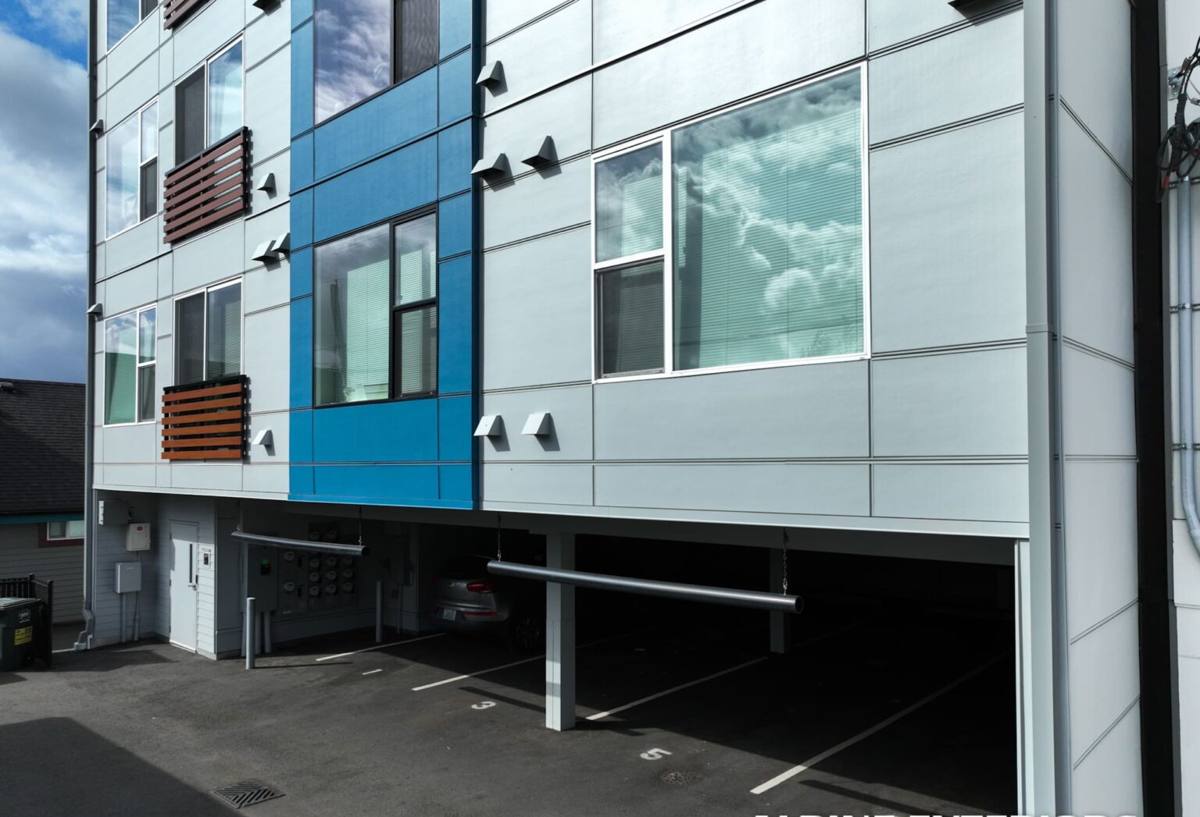
What Ferndale's Climate Actually Demands From a Window Install
Salt Air and Hardware
Proximity to Semiahmoo Bay and the Strait means airborne salt reaches homes well inland of the immediate shoreline, especially with the prevailing westerly winds this area gets. Salt air accelerates corrosion on unprotected fasteners, hinges, and cranks. It's a slow process, but over ten or fifteen years it shows up as pitted hardware, stuck locks, and streaking on light-colored trim. New-construction work is the cheapest point in a home's life to spec corrosion-resistant fasteners and hardware finishes — it costs little more up front and it's far harder to retrofit later.
Driving Rain
Whatcom County doesn't just get rain, it gets wind-driven rain that hits window assemblies at an angle rather than falling straight down. That matters for new construction because the flashing details around a window — not just the window unit itself — determine whether water gets pushed back out or finds its way behind the trim and into the wall assembly. A window with a great warranty installed with a shortcut flashing job will still leak in a Ferndale winter.
Moss and Prolonged Dampness
The long damp season here keeps north- and shade-facing exterior surfaces wet longer than homeowners moving from drier climates expect. Moss and algae don't damage window glass or frames directly, but they do hold moisture against trim, sills, and caulk lines, which shortens the service life of sealants and finishes if those details weren't built to shed water in the first place. Good flashing and sill design reduce how long water sits against those surfaces.
What a Correct New-Construction Window Install Involves
New-construction windows are installed with a nailing flange that ties directly into the house's weather-resistive barrier (WRB), rather than being face-mounted into an existing finished wall like a replacement unit. Done correctly, the sequence looks like this:
- Rough opening is checked for square, level, and correct dimensions before the window ever shows up on site.
- A sloped sill pan is installed at the bottom of the opening so any water that gets past the window has somewhere to go — out, not into the wall framing.
- The window is set, shimmed, and fastened per the manufacturer's structural and wind-load requirements.
- Flashing tape is applied around the nailing flange in the correct shingle-lap order — jambs before the head, head last — so water always drains over the layer below it, never under it.
- The WRB (housewrap or building paper) is integrated over the flashing at the top and sides, maintaining that same shingle-lap logic all the way up the wall.
- Interior and exterior sealant is applied at the specific points the manufacturer calls for — and only those points, since sealing the wrong spot can trap water instead of releasing it.
Every one of those steps matters more in a climate with sustained wind-driven rain than it does somewhere dry. Skipping the sill pan or flashing the head before the jambs is invisible once the siding goes up, and it's exactly the kind of shortcut that turns into a warranty claim two winters later.
Choosing Windows for a Ferndale-Area Build
Material and glass choice both affect how a window handles this climate long-term. There's no single "right" answer for every project — it depends on the home's design, budget, and exposure — but the trade-offs are worth understanding before you spec a new build.
| Frame Material | Coastal / Wet-Climate Performance | Trade-offs |
|---|---|---|
| Vinyl | Won't rot or corrode; handles moisture well | Lower up-front cost; frame can flex on very large openings |
| Fiberglass | Dimensionally stable, resists warping in temperature swings, strong moisture resistance | Higher cost than vinyl; fewer color options in some lines |
| Wood-clad | Exterior cladding protects the wood from weather if detailed correctly | Any breach in the cladding or sealant exposes wood to our wet season; more maintenance-sensitive |
| Aluminum | Strong and slim sightlines | Conducts cold and can condense in our damp winters unless thermally broken |
On glass, double-pane with a low-E coating is the practical baseline for this region's energy code requirements, and it also cuts down on interior condensation during our cold, wet winters — a common complaint in homes with older or budget glass packages. For homes with more direct wind and rain exposure, we also talk through impact-rated or heavier-gauge frame options where wind exposure warrants it, since parts of the Blaine and Ferndale area sit in higher wind-exposure zones than more sheltered inland lots.
How Our Process Works on a New Build
Before Framing Is Finished
We review the window schedule and rough opening sizes against the plans early, so there are no surprises when units arrive. On a new build, timing with the framer and the WRB installer matters — windows generally go in once the wall sheathing and weather barrier are up, but before siding starts.
Install Day
We check every opening before setting a single window, flash and integrate each unit into the WRB in the sequence described above, and confirm each window operates correctly — opens, closes, and locks smoothly — before moving to the next one.
After Siding Goes On
Once the siding crew finishes trim and cladding around the windows, we do a final walk to confirm the exterior detailing — trim, caulking, and drainage paths — was completed correctly and nothing was compromised during that later phase of construction.
Checklist: What to Confirm Before Windows Go In
If you're a homeowner or builder overseeing a Ferndale-area new build, these are the things worth confirming with whoever is installing your windows:
- Sloped sill pans are being used at every rough opening, not just face-caulking the sill.
- Flashing tape is applied jambs-first, then head — never head-first, which traps water.
- Window hardware and fasteners are rated for coastal or corrosion-prone environments.
- Glass package meets or exceeds current Washington State Energy Code requirements for this region.
- Rough openings were checked for square and correct size before windows were ordered, to avoid field-cutting or forcing a fit.
- There's a clear plan for how the WRB, flashing, and siding drainage plane all tie together — ask to see it, not just be told it's handled.
Mistakes We See on Builds We're Called In to Fix
Most of the window problems we get called about on newer Whatcom County homes trace back to the same handful of shortcuts: no sill pan flashing, flashing tape applied in the wrong order so it directs water inward instead of out, sealant used to compensate for a poor flashing job instead of proper flashing being installed in the first place, and hardware that wasn't rated for a marine-influenced climate showing early corrosion. None of these are dramatic mistakes — they're quiet ones, which is exactly why they're expensive. They don't show up as a leak until a wall cavity has already been wet for a season or two.
Why Hiring a Crew That Already Works Ferndale Matters
A crew that installs windows all over the country can follow a manufacturer's instructions. A crew that works Ferndale and the Blaine area regularly also knows which lots sit exposed to wind off the water versus which are more sheltered, how local building officials expect flashing details documented, and how long a given exterior product realistically holds up once moss season sets in for the winter. That local pattern recognition is what keeps a new-construction window install from becoming a callback two or three years down the road. It's also why we build in a final exterior check after siding is complete — we've seen enough Ferndale builds to know that's where problems most often get introduced.
Get a Straightforward Estimate
If you're building new in Ferndale or elsewhere around Blaine and want windows installed correctly the first time — flashed, integrated, and sealed for this area's rain and salt air, not just installed to spec — we're happy to walk through your plans and give you a clear, no-pressure estimate. Use the form below to get started.