 Blaine Siding
 Roofs in Ferndale Wear Differently Than Roofs Inland
Ferndale sits close enough to the water and the marine air moving in off the Salish Sea that its roofs age on a different clock than a roof forty miles inland. The combination that does the damage is specific to this corner of Whatcom County: salt-laden air that corrodes exposed metal faster than dry-climate fasteners were ever designed for, driving rain that comes in sideways during winter windstorms and finds every gap in flashing, and a moss season that runs longer here than in most of the state because the shade, humidity, and mild temperatures rarely let roofs fully dry out between rain events.
None of that means Ferndale roofs are doomed to constant trouble. It means repairs done here need to account for those three stresses specifically, not just patch whatever is visibly broken. A repair that would hold up fine in a drier climate can fail within a season or two on a Ferndale roof if it ignores moisture behavior, metal corrosion, or moss regrowth.
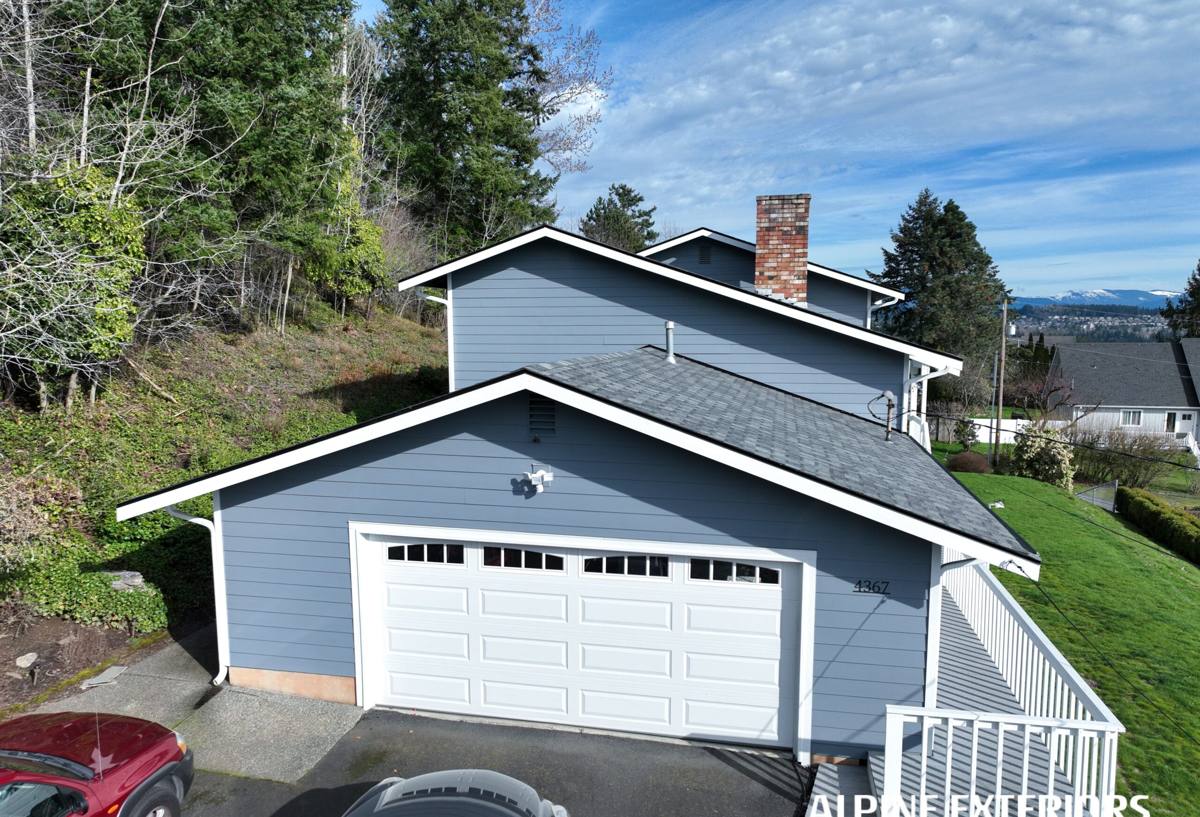
Signs a Ferndale Roof Needs Repair, Not Just a Look
Homeowners usually notice one of a handful of warning signs before calling. Knowing what they mean helps you decide how urgent the problem actually is.
- Granules collecting in gutters or at downspout outlets — a sign asphalt shingles are losing their protective surface, often accelerated by moss holding moisture against the shingle.
- Dark streaking or green-black patches — algae and moss growth that traps moisture and can lift shingle edges over time.
- Water stains on interior ceilings, especially near chimneys, skylights, or where two roof planes meet — almost always a flashing failure, not a "roof is worn out" problem.
- Curling, cracked, or missing shingles after a windstorm — common after the driving-rain wind events that move through in fall and winter.
- Rust streaks below metal flashing or vent boots — a direct result of salt air accelerating corrosion on exposed fasteners and thin-gauge metal.
- Soft or spongy spots underfoot on a walked inspection — usually decking that has absorbed water over a long period, which changes the repair from simple to structural.
Most of these are legitimate reasons to have a roof looked at, but very few of them mean the whole roof needs to come off. Distinguishing a repairable problem from a roof that has reached the end of its service life is the first real job of the visit.
What a Correct Roof Repair Actually Involves
A roof repair that lasts starts with finding the actual source of the problem, not just the spot where water is showing up inside the house. Water travels along the underside of decking and framing before it drips somewhere visible, so a leak over the hallway can easily originate several feet away, higher up the roof plane.
Diagnosis Before Any Repair Begins
That means the process should always start on the roof itself, not just in the attic. A proper inspection traces the water path, checks flashing at every penetration (chimneys, vents, skylights, valleys), and confirms whether the decking underneath has been compromised. Skipping this step and simply resealing the spot where a stain appeared inside is the single most common reason a "repaired" roof leaks again the next winter.
Matching Materials and Fastening for the Conditions
Once the cause is confirmed, the repair itself needs to use materials suited to Ferndale's exposure. That means corrosion-resistant fasteners rather than standard galvanized ones near the coast, flashing details sealed against wind-driven rain rather than just gravity-fed runoff, and underlayment that can handle repeated wet-dry cycles without breaking down. A patch that looks identical to a lower-grade repair can perform very differently over five years depending on these choices.
Addressing the Moisture Source, Not Just the Symptom
If moss or trapped debris contributed to the failure, the repair should also address why moisture was sitting there in the first place — clearing debris channels, checking that the roof still sheds water the way it was designed to, and treating or removing growth that will otherwise undermine the same repair within a season or two.
Moss and the Whatcom County Roof Life Cycle
Moss deserves its own section because it's rarely just a cosmetic issue here. In Ferndale and the rest of Whatcom County, shaded north-facing slopes and roof valleys can stay damp for days after a storm, which is exactly the environment moss needs to establish. Once it takes hold, moss doesn't just sit on top of shingles — its rhizoids work under shingle tabs and granule surfaces, holding moisture against the roofing material and gradually lifting edges that are supposed to stay flat and sealed.
A roof that's dealt with moss growth for several seasons without treatment often has more granule loss and more vulnerable shingle edges than its age alone would suggest. This is why a repair visit in Ferndale often includes moss removal and a look at whether zinc or copper control strips make sense for that particular roof, not because every roof needs them, but because on shaded, moisture-prone sections they meaningfully slow regrowth between maintenance visits.
Repair vs. Replacement: How We Help You Decide
Not every roof with damage needs a full replacement, and not every roof with a small leak is a simple fix. The honest answer depends on the roof's age, how widespread the damage is, and what condition the decking underneath is in. The table below outlines the general factors that push a decision one way or the other — every roof is still evaluated individually before a recommendation is made.
| Factor | Favors Repair | Favors Replacement |
|---|---|---|
| Roof age | Under 15 years, or well-maintained older roof | Near or past manufacturer's expected service life |
| Extent of damage | Isolated to one section or penetration | Multiple areas, or damage spread across several slopes |
| Decking condition | Solid, no soft spots found | Soft, delaminated, or water-damaged in multiple spots |
| Granule loss | Localized | Widespread and uniform across the roof |
| Prior repair history | First or second repair in this area | Repeated repairs to the same section over the years |
| Moss/algae condition | Manageable with cleaning and treatment | Long-term growth has already compromised shingle integrity |
When a roof genuinely needs replacement, we'll say so plainly and explain why, rather than stacking small repairs on a roof that's not going to hold. When repair is the right call, we'll do the repair and tell you honestly what to expect from the roof's remaining lifespan.
How Our Repair Process Works
The process is the same whether the job is small or involves multiple areas of damage, because skipping steps is how repairs fail early.
- On-roof inspection. We get up on the roof rather than relying on ground-level or attic observation alone, tracing water paths and checking every flashing detail and penetration.
- Honest diagnosis and options. You get a clear explanation of what's actually wrong, what caused it, and whether repair or replacement makes sense — with the reasoning laid out, not just a recommendation.
- Repair using materials suited to this climate. Corrosion-resistant fasteners, appropriately sealed flashing, and underlayment that holds up to repeated wet-dry cycling.
- Moss and debris addressed at the source. If growth or trapped moisture contributed to the problem, that gets cleared and treated as part of the visit, not left for a separate call.
- Verification before we call it done. We check the repair holds under close inspection and confirm there's no secondary damage we missed on the first pass.
Common Repair Situations We See Around Ferndale
A few patterns show up often enough in this area that they're worth mentioning specifically:
- Chimney and skylight flashing failures — these penetrations are the most common leak source on otherwise healthy roofs, especially after a few seasons of driving rain working at the seal.
- Valley wear — valleys collect the most water volume on any roof and, in shaded areas, hold moss and debris longer than open slopes, accelerating wear.
- Wind-lifted shingles after fall and winter storms — Whatcom County's storm season can lift shingle tabs even on roofs that are otherwise in good shape.
- Rusted or failing vent boot flashing — rubber boot seals and thin metal collars around plumbing vents are one of the shorter-lived components on a roof, and salt air shortens that lifespan further.
- Gutter and edge issues that mimic roof leaks — sometimes what looks like a roofing failure is actually water overshooting a clogged or undersized gutter system; part of an honest inspection is ruling this out before recommending roof work.
Why It Matters That We Already Work in Ferndale
A crew that regularly works Ferndale and Blaine roofs has already seen how this specific stretch of Whatcom County treats roofing materials over time — which slopes hold moss longest, which flashing details tend to fail first under the region's wind-driven rain, and which fastener and metal choices actually hold up against the salt air instead of just meeting a generic spec sheet. That local pattern recognition shortens the diagnosis time and reduces the chance of a repair that looks right on installation day but fails against conditions it wasn't built for.
It also means we're not guessing at how a roof will perform here — we're applying what we've already confirmed works on homes with the same exposure, the same weather pattern, and the same seasonal moss pressure.
What to Check Before Hiring Anyone for Roof Repair
Whether you call us or someone else, these are reasonable things to expect from any contractor doing repair work on a coastal Whatcom County roof:
- A physical, on-roof inspection — not just a quote based on photos or a description over the phone.
- A clear explanation of the cause of the leak or damage, not just where it shows up.
- An honest repair-versus-replace recommendation, with reasoning you can follow.
- Materials and fastener choices appropriate for salt air and driving rain, not just whatever is standard inland.
- A plan for any moss or moisture source that contributed to the damage, not just a patch over the symptom.
- Proper licensing and insurance, confirmed before work begins — not taken on faith.
Get an Honest Look at Your Roof
If you're dealing with a stain on the ceiling, missing shingles after a storm, or a roof that's been holding moss longer than it should, it's worth getting an honest, no-pressure look before the problem gets bigger. We'll tell you plainly what we find and what it will take to fix it right for a Ferndale roof — no upsell, no guesswork. Reach out below for a free estimate.