 Blaine Siding
 Birch Point Sits Right in the Weather's Path
Homes along Birch Point deal with a combination of exposures that inland Whatcom County properties simply don't face. You're close enough to the water to get salt-laden air moving across your siding almost daily, you're in the direct path of driving rain off the Strait, and the tree cover and shaded north sides that make this area beautiful also keep moisture sitting on exterior walls longer than it should. Any one of those factors will shorten the life of the wrong siding material. Together, they make material choice and installation quality the two biggest decisions a Birch Point homeowner makes on a siding project.
We've worked on homes throughout this corridor and seen firsthand what holds up and what doesn't. This page is about one job specifically: installing James Hardie fiber cement siding on Birch Point homes, done in a way that actually accounts for the site conditions instead of treating this like any other siding job in Blaine.
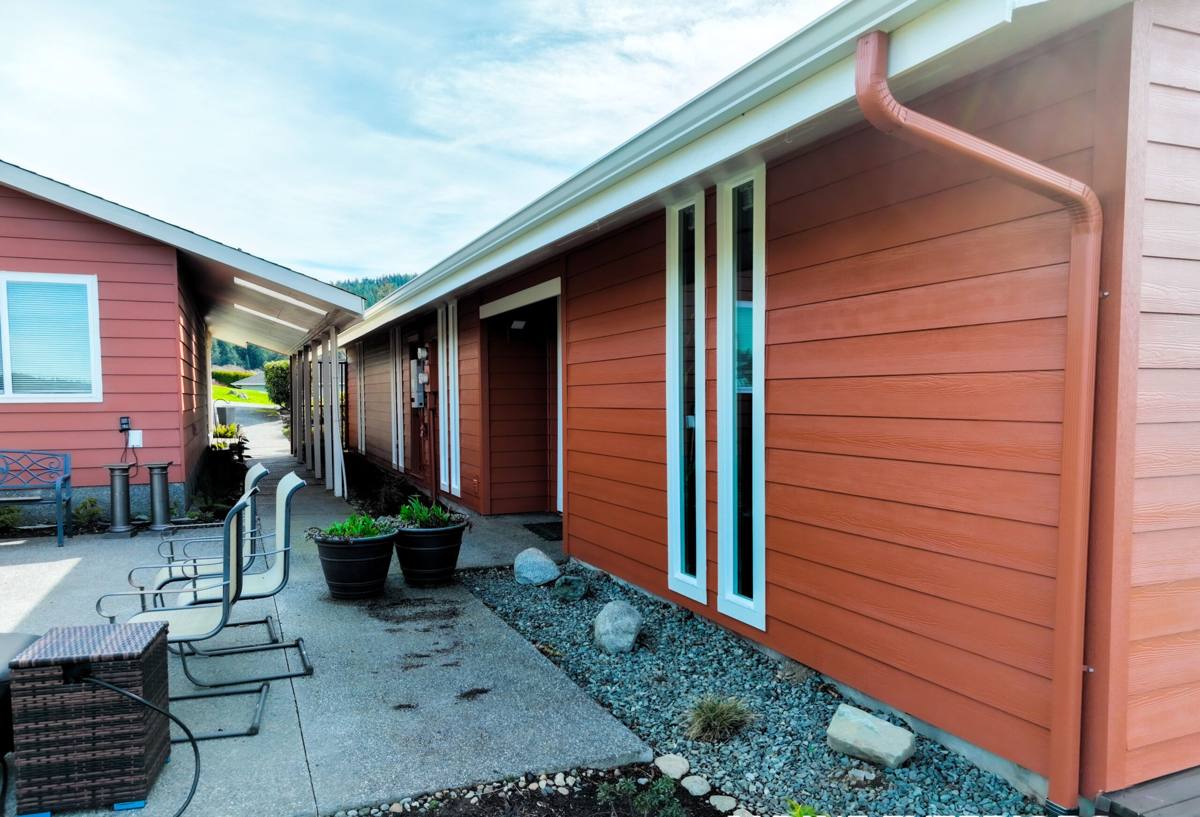
What Salt Air, Driving Rain, and Moss Season Actually Do to Siding
Salt Air
Salt-laden air doesn't just look grimy on a window — it's chemically corrosive to fasteners, trim metal, and any siding material with exposed seams or metal-dependent joinery. Over years, that corrosion works into fastener heads and panel edges, creating small failure points that let water in behind the cladding. Fiber cement doesn't corrode, but the fasteners, flashing, and trim details around it absolutely can if the wrong materials are used or installed loosely.
Driving Rain
Wind-driven rain off the water doesn't fall straight down — it gets pushed sideways and upward into laps, corners, and butt joints that a calm-weather installation might get away with. This is a wall-assembly problem as much as a siding problem: the water-resistive barrier, flashing, and drainage plane behind the siding matter as much as the panels themselves.
Moss and Prolonged Moisture
Shaded exposures and the region's long wet season mean moss and algae get a real head start here compared to sunnier inland sites. Moss holds moisture against a wall surface for extended periods, which is exactly the condition that rots wood-based sidings and degrades paint film on anything not engineered to resist it.
None of these three problems is unique to Birch Point on its own — but the combination, applied to a home for 20, 30, or 40 years, is what separates siding that still looks good from siding that's failing quietly behind a coat of paint.
Why We Only Install James Hardie Fiber Cement
We standardized on James Hardie fiber cement siding and don't install vinyl, LP SmartSide, or other engineered wood or fiber cement alternatives. That's not a marketing position — it's a practical one, built around exactly the conditions Birch Point homes face.
- It's non-combustible. Fiber cement doesn't feed a fire the way wood-based products can, which matters in a region that sees wildfire smoke and drought stress in late summer.
- It's engineered for moisture, not just painted to resist it. Hardie's HZ5 product line is specifically formulated for the Pacific Northwest's wet, marine-influenced climate, unlike general-purpose siding lines built for drier regions.
- The factory finish is the whole point. ColorPlus finish is baked on and cured in a controlled facility, which produces far more consistent, long-lasting color than field-applied paint on wood-based alternatives — especially important where salt air accelerates finish breakdown.
- The warranty is structured around real performance. Hardie backs its siding with a strong, transferable warranty that reflects confidence in the product's long-term behavior in exactly this kind of climate.
We're upfront that other products have their own strengths and lower upfront costs. But once you weigh a coastal Whatcom County site's actual demands — salt exposure, wind-driven rain, and a long damp season — against the maintenance burden and moisture sensitivity of the alternatives, Hardie is what we're willing to put our name behind and warranty.
Choosing the Right Hardie Line and Finish for a Birch Point Home
Not every Hardie product or finish is the right call for every wall on every home. Sun exposure, shade, and how directly a wall faces the water all factor into the recommendation.
| Hardie Product | Best Suited For | Why It Fits Birch Point |
|---|---|---|
| HardiePlank Lap Siding | Most wall areas, traditional and modern homes | HZ5 formulation built for wet, marine climates; wide color range in ColorPlus finish |
| HardiePanel Vertical Siding | Accent walls, gables, modern facades | Fewer horizontal laps means fewer water-catching seams on wind-exposed elevations |
| HardieTrim Boards | Corners, window and door trim, fascia | Matches the siding's moisture and fire performance instead of mixing in wood trim that behaves differently |
| HardieShingle Siding | Accent gables, Craftsman-style detailing | Gives shaded, moss-prone gable ends a textured look without wood's rot risk |
Color selection matters here too. Darker ColorPlus tones can help disguise the faint dust and salt film that coastal air deposits between washings, while lighter tones show moss growth more clearly — which some homeowners actually prefer, since it flags cleaning needs sooner rather than later.
What a Correct Installation Involves at This Site
Fiber cement siding is only as good as the wall assembly behind it. On a Birch Point home, we pay particular attention to details that matter less on a sheltered inland lot.
Water-Resistive Barrier and Drainage Plane
We install a proper weather-resistive barrier with a drainage gap behind the siding, so any moisture that does get past the cladding has a clear path to drain and dry out rather than sitting against the sheathing.
Flashing at Every Penetration
Windows, doors, hose bibs, vents, and any other wall penetration get flashed and integrated with the water-resistive barrier — not caulked as an afterthought. Wind-driven rain finds gaps that calm-weather installs never get tested against.
Fastener and Trim Material Selection
We use fasteners and trim metals rated for coastal, corrosive environments, sized and spaced to Hardie's specifications. Cutting corners here is exactly how salt air turns a small gap into a leak years down the road.
Proper Clearances
Hardie specifies minimum clearances from grade, roofing, and decks. On shaded, moss-prone elevations, we don't shortcut these — tight clearances trap moisture and give moss and algae an easy foothold right where you least want it.
Caulking and Joint Treatment
Butt joints and trim transitions get sealed with quality, flexible sealant rated for exterior use, applied per Hardie's fastening and joint guidelines rather than generic practice.
Our Process, Start to Finish
- On-site assessment. We walk the exterior, check the existing wall assembly, and identify problem areas — rot, prior moisture damage, or clearance issues — before quoting anything.
- Product and color selection. We help you choose the right Hardie line, texture, and ColorPlus finish for each elevation based on sun and moisture exposure.
- Prep and tear-off. Old siding comes off, sheathing is inspected and repaired as needed, and we address any rot or moisture damage found underneath before it gets covered up again.
- Weather barrier and flashing installation. This is the step that determines whether the siding performs for decades or fails early — we don't rush it.
- Siding installation. Panels, trim, and accessories go on to Hardie's fastening specifications, with attention to clearances and joint treatment throughout.
- Final walkthrough. We review the completed work with you, point out care and maintenance basics specific to your home's exposure, and address any questions before we consider the job done.
What Drives Cost on a Birch Point Siding Project
| Factor | Why It Matters Here |
|---|---|
| Extent of tear-off and repair | Coastal moisture exposure sometimes means hidden sheathing or framing damage under old siding, discovered once it's removed |
| Wall complexity | Gables, dormers, and multiple elevations facing different exposures each need their own flashing and trim detailing |
| Product line and texture | Lap, panel, and shingle profiles carry different material and labor costs |
| Trim and accessory scope | Full HardieTrim replacement versus reusing sound existing trim changes both cost and long-term consistency |
| Access and site conditions | Waterfront and sloped lots can affect staging, scaffolding, and material delivery |
We give straightforward, itemized estimates rather than vague lump-sum numbers, so you can see exactly what you're paying for and why.
Keeping Hardie Siding Looking Right in a Moss-Prone Climate
Even the best material and installation benefit from basic upkeep, especially with the shade and moisture Birch Point sees for much of the year.
- Rinse siding with a garden hose once or twice a year to clear salt film, dust, and early moss spores before they take hold
- Trim back vegetation and tree limbs that keep walls shaded and damp longer than necessary
- Check caulking at trim joints and penetrations annually and have any cracked or shrunken sealant redone promptly
- Avoid pressure washing directly into laps and joints — it can force water behind the siding rather than just cleaning the surface
- Address moss or algae growth early with a gentle wash rather than letting it establish and hold moisture against the finish
Why Hiring a Crew That Already Works Birch Point Matters
Siding contractors who mostly work drier, inland areas can do competent work and still miss details that matter here — under-flashed penetrations, clearances that look fine on paper but trap moisture in a shaded, salt-air environment, or a product recommendation that wasn't really built for this climate. A crew that regularly works Blaine and the surrounding Whatcom County coastline already knows which elevations need extra attention, which details fail first in this environment, and how to sequence a job around the region's wet season instead of fighting it.
That familiarity shows up less in the sales pitch and more in the parts of the job you don't see once it's finished — the flashing behind the trim, the clearance at the bottom course, the fastener choice that won't corrode in five years. Those are the details that decide whether a siding job holds up on a site like this or turns into a problem you're dealing with again sooner than you should have to.
If you'd like an honest look at your home's siding and a straightforward estimate, we're happy to walk the property with you — no pressure, no obligation, just a clear picture of what your home needs.