 Blaine Siding
 Lynden's Climate Asks More of Your Siding Than People Realize
Lynden sits inland from the salt air that batters Blaine and the rest of Whatcom County's shoreline, but that distance doesn't buy the town a break from moisture. This is farm country along the Nooksack River, close to the Canadian border, and the same marine weather system that soaks the coast pushes steady, driving rain across Lynden for much of the year. Add the humidity that settles over low-lying agricultural land, a moss season that can run eight months or longer on shaded roofs and north-facing walls, and winter freeze-thaw swings, and you get a climate that is genuinely hard on exterior siding — just not always in the way homeowners expect.
The failures we see on Lynden homes are rarely dramatic. They're slow: a seam that stays damp two days longer than it should, a shaded wall that never fully dries between rains, paint that starts chalking a few years early because the substrate underneath is absorbing moisture. None of that shows up on day one. It shows up in year six or eight, when the siding is already compromised.
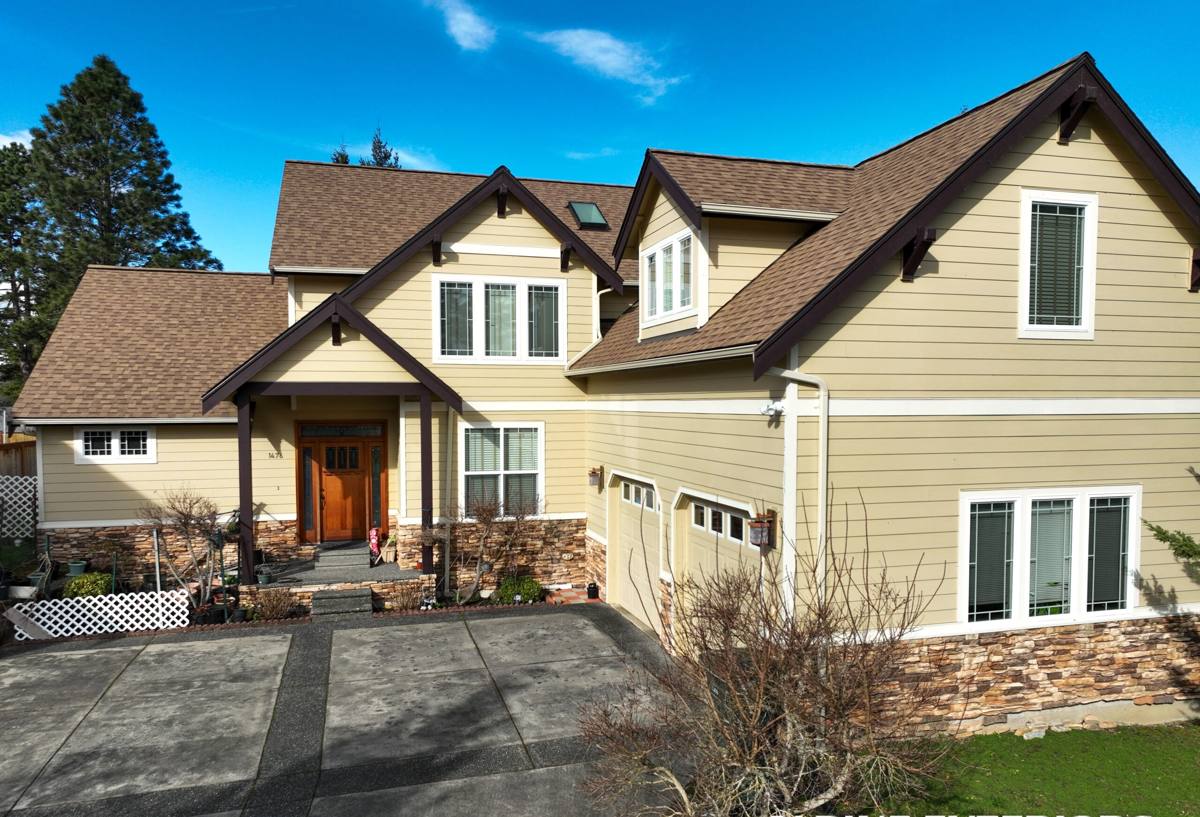
What the Wrong Siding Does in This Climate
Every siding material has a weak point, and in Lynden's conditions those weak points get tested constantly. Vinyl siding expands and contracts with our temperature swings and can warp or pull loose at the fasteners over time, and it doesn't hold paint if a homeowner ever wants to change the color. Wood-based composite products, including LP SmartSide, are engineered wood — if caulking at a seam or cut edge fails and water gets behind the surface, the substrate can swell and lose structural integrity, and once that starts it's a repair, not a touch-up. Primed wood and cedar look great new but need repainting or restaining on a cycle that most homeowners underestimate, and any lapse in that maintenance schedule in a wet climate like ours accelerates rot.
None of that means these products are junk — they work fine in the right application with disciplined maintenance. It's why, as a standard for our own crews, we stopped installing them and moved to a single material we can install to spec and stand behind on every job in Whatcom County.
Why We Only Install James Hardie Fiber Cement
Fiber cement is cement, sand, and cellulose fiber — there's no wood substrate to swell, no vinyl to warp in temperature swings, and it carries a Class A non-combustible fire rating. James Hardie is the manufacturer we standardized on, for a few specific reasons that matter in this climate:
- Climate-engineered product line. Hardie's HZ5 formulation is built for regions like the Pacific Northwest that see sustained moisture and freeze-thaw cycles, rather than a one-size-fits-all board.
- ColorPlus factory finish. The color is baked on at the factory in a controlled process, which holds up better against UV and moisture than field-applied paint, and it comes with a dedicated finish warranty separate from the product warranty.
- Transferable warranty. Hardie's limited product warranty is a real, documented warranty — useful if you sell the home before the siding's service life is up.
- Proven track record when installed correctly. Fiber cement's biggest failures almost always trace back to installation mistakes, not the material itself — which is why we treat installation as the real product.
What a Correct Fiber Cement Installation Involves
Moisture Management Comes Before the Siding Goes Up
In a climate that stays wet as long as ours does, the siding itself is the last line of defense, not the first. A correct install starts with a drainage plane behind the siding — typically a rainscreen gap that lets any moisture that gets past the cladding drain and dry out instead of sitting against the sheathing. Flashing at every window, door, and roofline intersection has to be sequenced correctly — installed shingle-style, so water is always directed outward and down, never trapped behind a joint. Kickout flashing where a roofline meets a wall is a small detail that gets skipped constantly and causes some of the worst hidden rot when it is.
Fastening and Fit Have to Match Manufacturer Spec
James Hardie publishes exact fastening patterns, gap tolerances at butt joints, and caulking requirements — and those specs exist because they're what the warranty is actually built on. Panels installed too tight with no expansion gap, or face-nailed where blind-nailing was called for, can look fine for a year or two and then start showing stress cracks or fastener pops. Caulking at joints and trim needs to be a product rated for the application, not whatever's on the truck, since it's doing real work keeping moisture out of a climate that doesn't give siding much time to dry between storms.
Our Process for Lynden Projects
- On-site assessment. We look at your existing siding, sheathing condition, moisture history, and sun/shade exposure on each wall — the north side of a Lynden home dealing with moss and shade needs different attention than a south-facing wall.
- Tear-off and sheathing check. Once the old siding is off, we inspect the sheathing for hidden water damage before anything new goes on. Covering up a problem is worse than finding it.
- Weather barrier and flashing. Drainage plane, window and door flashing, and kickout flashing get installed and inspected before a single piece of siding goes up.
- Hardie installation to manufacturer spec. Correct fastening pattern, expansion gaps, and trim details, panel by panel.
- Caulking and touch-up. Joints sealed with the right products, factory finish touched up per Hardie's guidelines where field cuts occur.
- Final walk-through. We go over the finished job with you before we consider it done.
Cost Factors for Fiber Cement Siding in Lynden
Every home is different, and we don't quote a job without seeing it, but these are the variables that actually move the price:
| Factor | Why It Matters |
|---|---|
| Home size and number of stories | More square footage and taller walls mean more material and labor, and multi-story homes require more scaffolding/staging time. |
| Existing siding removal | Tear-off and disposal of old vinyl, wood, or composite siding adds labor beyond the new install itself. |
| Sheathing or moisture repair | If tear-off reveals water damage behind the old siding, that has to be repaired before new siding goes on — common in older Lynden homes. |
| Trim and detail level | Board-and-batten accents, shake-style panels, or extensive trim work take more time than a straightforward lap siding install. |
| Color and finish | Factory ColorPlus finishes vary in cost by color line versus a primed board finished on site. |
| Site access | Tight lots, landscaping, or limited driveway access can affect staging and add time. |
Maintenance in a Moss-Prone, Rain-Heavy Climate
Fiber cement is low-maintenance compared to wood or vinyl, but "low-maintenance" isn't "no-maintenance," especially with Lynden's moss season. A few habits go a long way:
- Keep gutters clear so water isn't overflowing down the wall face during heavy rain.
- Trim back vegetation and tree limbs that keep a wall shaded and damp longer than the rest of the house.
- Rinse moss and algae off siding and trim gently — a soft wash, not a pressure washer aimed directly at joints and caulking.
- Check caulking at trim and joints every year or two, since that's the seal doing the actual moisture-blocking work.
- Watch for early paint chalking or discoloration on shaded walls, which can be an early sign moisture is lingering longer than it should.
Signs Your Current Siding May Already Be Failing
- Soft spots or visible swelling, especially near the bottom of walls or around seams
- Paint or finish that's peeling, bubbling, or chalking well ahead of schedule
- Persistent moss or dark staining that comes back within weeks of cleaning
- Visible gaps, warping, or panels that have pulled away from the wall
- Musty smell or discoloration on interior walls that back up to exterior siding
Why Hiring a Crew That Already Works in Lynden Matters
Whatcom County's building department and permitting process, the way local homes were built and sided over different decades, and the specific way rain and shade patterns hit walls in this part of the county are all things a crew learns by working here repeatedly — not from a manual. A contractor who's done fiber cement installs elsewhere in the region already knows what tear-off on a Lynden-area home tends to reveal, how the local weather affects install timing and caulk cure times, and what warranty service actually looks like when you're not driving hours to get to you. That local familiarity doesn't replace correct installation, but it's part of why the same installation practices hold up consistently, job after job, in this specific climate.
If you're considering fiber cement siding for your Lynden home, we're happy to take a look and walk you through what your specific home needs — no pressure, no obligation. Use the form below to request a free estimate.