 Blaine Siding
 Why Grandview Homes Need a Different Approach to Siding Replacement
Grandview homes sit in one of the more demanding pockets of Whatcom County when it comes to exterior wear. Blaine's location on the water means siding here isn't just dealing with rain — it's dealing with salt-laden air, wind-driven moisture that gets pushed sideways into wall assemblies, and long stretches of shade and dampness that keep moss and algae established for much of the year. A siding replacement done to a generic standard, without accounting for those conditions, tends to show its age fast. A siding replacement done right for this specific location can hold up for decades.
This page is about one job, in one place: replacing siding on homes in the Grandview area of Blaine. Not a general overview of siding, not a citywide pitch — the specific climate pressures this neighborhood faces, what a correct replacement job looks like in response, and why the crew doing the work matters as much as the material going on the wall.
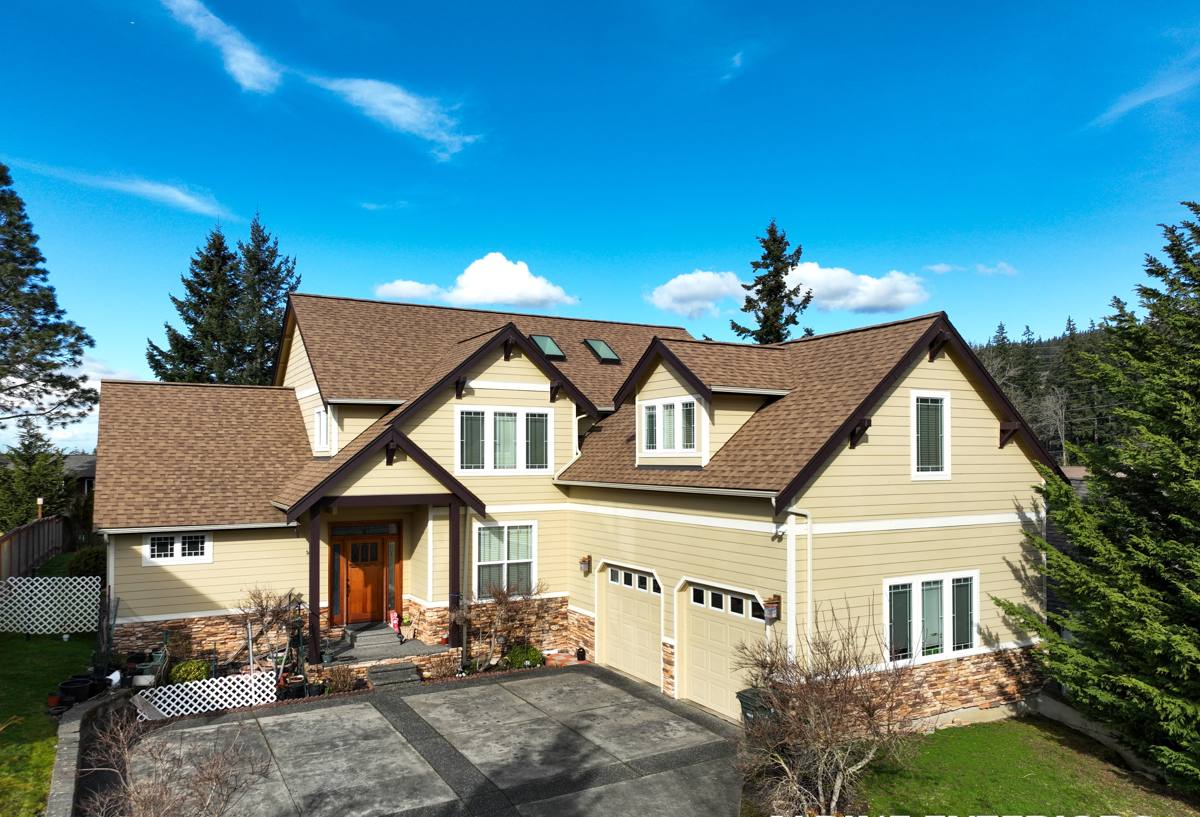
What Blaine's Coastal Climate Does to Siding Over Time
Salt Air and Metal Fasteners
Proximity to the water means airborne salt is a constant, low-level presence on exterior surfaces. Over years, that salt exposure accelerates corrosion on unprotected or under-spec fasteners, flashing, and trim hardware. Siding itself can usually tolerate salt air reasonably well if the material is right for the job — but the fasteners, flashing, and any exposed metal holding the system together are where corrosion problems tend to start, often invisibly, behind the siding itself.
Driving Rain and Wall Assemblies
Blaine gets its share of straight-down rain, but the more damaging pattern for siding is wind-driven, horizontal rain — the kind that gets pushed up under laps, around window and door trim, and into any gap in the water-resistive barrier. A siding replacement in this climate has to treat the wall as a drainage system, not just a weather-facing surface. If the layers behind the siding — the barrier, the flashing, the drainage plane — aren't installed correctly, water finds its way in regardless of how good the siding itself looks.
Moss, Shade, and Trapped Moisture
Grandview's tree cover and the region's long, mild, wet season combine to keep north-facing and shaded wall sections damp for extended stretches. That's ideal territory for moss and algae to take hold, and for siding materials that absorb or trap moisture to stay wet longer than they should. Over time, that constant damp cycle is what drives rot in wood-based products and swelling or delamination in engineered wood siding that wasn't detailed with enough drainage and drying capacity.
Signs a Grandview Home Needs Siding Replacement, Not Just Repair
Not every siding problem calls for a full replacement. But in this climate, certain signs mean patching is a short-term fix on a longer-term failure. Homeowners in Grandview should watch for:
- Soft, spongy, or crumbling siding when pressed, especially near the bottom courses or below windows
- Persistent moss or algae growth that returns within a season of cleaning
- Visible gaps, warping, or cupping boards, particularly on north- or west-facing walls
- Paint that's failing across large sections rather than isolated spots — often a sign of moisture moving through the material, not just weathered paint
- Rust staining running down from nail heads or trim fasteners
- Soft spots or discoloration on interior walls that line up with exterior siding problems
- Siding that's original to a home built more than 20-25 years ago, especially if it's wood-based or an early-generation composite
Any one of these on its own might be repairable. Several together, especially on a home that's due for a siding cycle anyway, usually points to replacement being the more cost-effective long-term call.
What a Correct Siding Replacement Job Actually Involves
Tear-Off and Sheathing Inspection
A proper replacement starts with full removal of the old siding, not installation over it. That's the only way to actually see the sheathing underneath — and in a climate like this, hidden rot or water damage behind old siding is common enough that skipping this step is a real risk. Any compromised sheathing gets identified and replaced before anything new goes up.
Weather-Resistive Barrier and Flashing
This is the layer that matters most for a home exposed to driving rain off the water. A correctly lapped weather-resistive barrier, properly integrated flashing at every window, door, and penetration, and a drainage plane that lets any moisture that does get in find its way back out — this is what actually keeps a Grandview home dry, more than the siding material itself. It's also the part of the job that's invisible once it's done, which is exactly why it's worth asking a contractor to explain in detail before they start.
Fastening Schedule and Clearances
Fastener type, spacing, and depth all affect how siding performs over time, especially with salt air in the mix. Correct ground clearance and clearance from roof lines, decks, and hard surfaces also matters — those clearances are what keep splash-back moisture and standing water away from the bottom of the wall, which is often where siding fails first.
Why We Install Only James Hardie Fiber Cement in This Climate
We install James Hardie fiber cement siding exclusively — not vinyl, not LP SmartSide, not primed spruce or cedar, not other fiber cement brands. That's a deliberate standard, not a default. In a coastal, high-moisture, moss-prone climate like Blaine's, the material choice has an outsized effect on how the job holds up ten and twenty years out.
Fiber cement is non-combustible and dimensionally stable — it doesn't expand, contract, warp, or absorb moisture the way wood-based products do, which matters directly in a climate with this much sustained dampness. Hardie's HZ5 product line is engineered specifically for climate zones with freeze-thaw cycling and moisture exposure, which fits Whatcom County's conditions. The factory-applied ColorPlus finish is baked on under controlled conditions, which gives it better fade and moisture resistance than field-applied paint — a meaningful advantage on a home that's going to spend a lot of its life damp and shaded. It also carries a strong transferable warranty, which matters to homeowners planning to sell down the road.
None of this means other products are without merit — it means that after years of servicing homes in this specific climate, fiber cement from Hardie is the material we're willing to put our name behind and warranty our labor on.
Comparing Siding Materials Against Grandview's Conditions
| Factor | Vinyl | Wood / Cedar | Engineered Wood (LP-type) | James Hardie Fiber Cement |
|---|---|---|---|---|
| Moisture absorption | Low, but seams can trap water | High — prone to swelling and rot | Moderate — edges vulnerable if not sealed | Very low, engineered for wet climates |
| Salt air / corrosion resistance | Good for the panel, fasteners still a concern | Fair, requires diligent maintenance | Fair to good depending on install quality | Strong, especially with correct fastener spec |
| Moss / algae resistance | Surface growth common, doesn't damage panel | Growth contributes to rot over time | Growth can accelerate edge deterioration | Surface growth cleanable, doesn't compromise material |
| Dimensional stability | Can warp or crack in temperature swings | Expands/contracts, prone to cupping | Moderate, sensitive to installation detail | High, minimal movement |
| Fire rating | Combustible | Combustible | Combustible | Non-combustible |
| Finish longevity | Factory color, can fade/chalk | Requires repainting/staining cycles | Factory or field finish, varies | Factory ColorPlus finish, extended fade resistance |
Our Grandview Siding Replacement Process
- On-site assessment — we walk the home, check sheathing condition where accessible, and look specifically at the walls most exposed to prevailing wind and shade
- Scope and product plan — we determine the right Hardie product line, profile, and color for the home, and flag any sheathing or trim repair needed before siding goes on
- Tear-off — full removal of existing siding, with sheathing inspected and repaired as needed
- Weather barrier and flashing install — the part of the job that determines long-term dryness, done to manufacturer and code detail
- Siding installation — installed to Hardie's fastening and clearance specifications, not shortcuts
- Final walkthrough — trim, caulking, and finish details reviewed with the homeowner before we consider the job done
Why Hiring a Crew That Already Works in Grandview Matters
Siding installation isn't uniform across climates, and it isn't uniform across neighborhoods within the same climate either. A crew that regularly works homes in Grandview already knows which walls tend to take the worst of the wind-driven rain, how much shade and moss pressure to expect on the north side of a typical lot here, and what sheathing condition tends to look like on homes of a given age in this part of Blaine. That's not something a crew coming from outside the area, or one that treats every job as generic, picks up quickly. It shows up in the details — flashing choices, fastener spec, where extra attention goes — that don't appear on a quote but do show up in how the siding performs ten years later.
It also matters for accountability. A local crew has a reputation in the area to maintain and is easy to reach if a question comes up after the job is done — not something to take for granted with exterior work that's meant to last decades.
If your Grandview home is due for new siding, we're happy to take a look and walk you through what we're seeing, with no pressure to commit. Reach out below for a free estimate.