 Blaine Siding
 Siding Built for California Creek's Weather, Not Just Any Weather
California Creek sits close enough to the water and to open farmland that homes here take a specific kind of beating: salt-laden air rolling in off the Strait, wind-driven rain that doesn't just fall but gets pushed sideways into wall assemblies, and a long, damp shoulder season every fall and winter that keeps north-facing walls shaded and wet for weeks at a time. Siding that works fine in a drier inland climate can struggle here. We install James Hardie fiber cement siding exclusively, and on homes in this part of Whatcom County that choice isn't cosmetic — it's about which material actually holds up when the weather doesn't cooperate for half the year.
This page covers what California Creek homes specifically need from their siding, what a correct James Hardie installation looks like in this environment, and how our process is built around the realities of working this neighborhood.
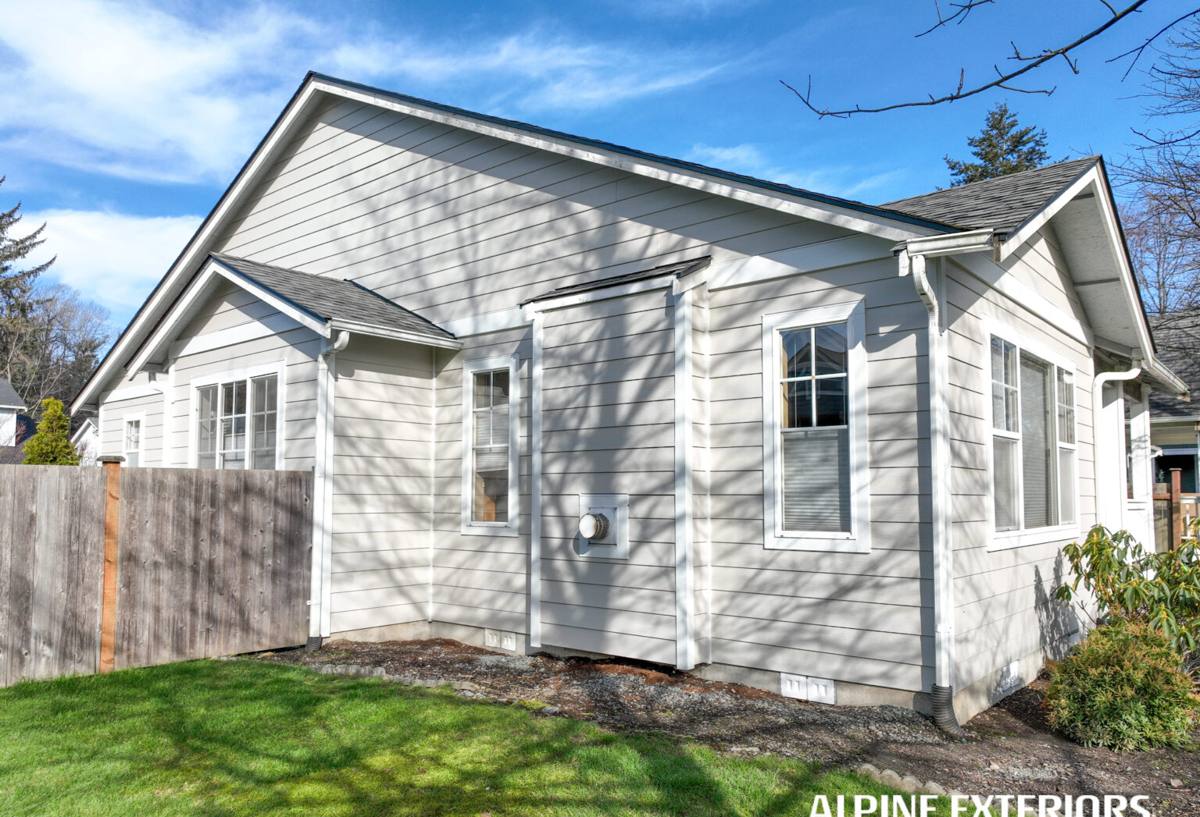
What Salt Air, Driving Rain, and Moss Season Actually Do to Siding
Salt Air and Corrosion
Proximity to Semiahmoo Bay and the Strait of Georgia means airborne salt is a real factor here, even a few miles inland. Salt accelerates corrosion on exposed fasteners, trim flashing, and metal accessories, and it can degrade lower-grade paint finishes faster than manufacturers' published fade timelines suggest. Any siding product with a weak factory finish or fasteners that aren't corrosion-rated will show it first in a coastal-adjacent neighborhood like this one.
Wind-Driven Rain
Rain that comes in at an angle, pushed by wind off open water and fields, doesn't behave like rain falling straight down. It finds horizontal laps, unsealed penetrations, and poorly flashed windows and works its way behind the cladding. Siding systems depend on correct overlap, gapping, and flashing details to shed this kind of rain — the material itself is only half the equation.
Moss and Algae Season
Whatcom County's wet season runs long, and shaded or north-facing walls in California Creek can stay damp for weeks without direct sun to dry them out. That's exactly the environment moss, algae, and mildew need to take hold on a wall surface. Porous or wood-based siding absorbs and holds that moisture, which feeds the growth cycle. Dense fiber cement doesn't give moss the same foothold, and a factory-baked finish resists the staining that comes with it.
Why We Standardized on James Hardie for Homes Like These
We don't install LP SmartSide, vinyl, Cemplank, Allura, primed spruce, or cedar. That's not brand loyalty — it's a decision made after weighing how each of those products actually performs against coastal Pacific Northwest conditions over decades, not just the first few years.
- Non-combustible core — fiber cement doesn't feed a fire the way wood-based products can, which matters for insurance and long-term risk, not just wildfire-zone requirements.
- HZ5 engineering — Hardie's HZ product lines are engineered for cold, wet climate zones like ours, with moisture and freeze-thaw performance built into the formulation rather than added after the fact.
- ColorPlus factory finish — baked-on, not field-applied, which holds color and resists the fading and chalking that salt air and UV accelerate on site-painted products.
- Dimensional stability — fiber cement doesn't swell, cup, or rot the way engineered wood products can when a seam or gap lets moisture in.
- Transferable warranty backed by a large manufacturer — meaningful if you sell the home, not just for the original owner.
We're honest that these products all have a place — vinyl is inexpensive, LP SmartSide is lighter to install, cedar has a look some homeowners love. But for California Creek's combination of salt exposure, wind-driven rain, and extended damp shade, we've found the trade-offs on those alternatives (seam sealing on vinyl, moisture sensitivity on engineered wood, ongoing maintenance on cedar) aren't worth it. We'd rather put one product on every home and get it right than juggle five and get some of them wrong.
What a Correct Installation Involves Here
James Hardie siding is only as good as the installation behind it. In a high-moisture, wind-exposed area like California Creek, the details below are where a job either holds up for decades or starts failing in five years.
| Detail | Why It Matters in California Creek |
|---|---|
| Rainscreen or proper drainage gap | Lets any water that gets behind the siding drain and dry instead of sitting against the wall sheathing |
| Correct fastener type and spacing | Corrosion-resistant fasteners driven per Hardie spec resist salt-air degradation and keep panels secured under wind load |
| Flashing at windows, doors, and penetrations | Wind-driven rain finds every gap; flashing is what actually stops water intrusion, not the siding surface alone |
| Proper caulking and joint treatment | Hardie-approved sealants at butt joints and trim keep water out without trapping moisture in |
| Manufacturer-specified clearances | Ground and roofline clearances prevent constant wicking moisture from grade or splashback |
| Panel gapping per Hardie spec | Allows for expansion without buckling, and keeps caulk joints from failing prematurely |
None of this is exotic — it's published in Hardie's own installation guidelines. But skipping any one of these steps is the single biggest reason fiber cement siding underperforms its reputation. A rushed or unfamiliar crew can install the right product the wrong way and get results no better than a cheaper material installed correctly.
A Practical Checklist for Homeowners
- Ask whether the installer uses a drainage gap or rainscreen system on your wall assembly
- Confirm fasteners are corrosion-resistant and installed per Hardie's fastening schedule
- Check that flashing is planned at every window, door, and roofline intersection before siding goes up
- Ask what clearance will be maintained at grade, decks, and roof lines
- Get the product line (HardiePlank, HardiePanel, etc.) and ColorPlus finish specified in writing
Our Process for California Creek Projects
Assessment
We start by walking the exterior and looking specifically at the walls most exposed to prevailing wind and rain, and the shaded sides most likely to hold moisture and moss. That assessment shapes flashing and drainage decisions before a single panel is ordered.
Prep and Moisture Check
Before new siding goes on, we check the sheathing underneath for existing moisture damage or rot — common on older homes in this area where previous siding may have trapped water for years without anyone knowing. Any compromised sheathing gets addressed before it's covered up again.
Installation
Panels, fasteners, flashing, and joint treatment are installed to Hardie's published specifications, not shortcuts we've picked up over time. This is what keeps the manufacturer's warranty valid and what actually determines how the siding performs in year fifteen, not just year one.
Walkthrough and Cleanup
We walk the finished job with the homeowner, confirm clearances and joint work, and clean the site before we consider the project done.
Cost Factors Specific to This Kind of Project
Every home is different, but the factors below tend to move the price of a California Creek Hardie job more than anything else.
| Factor | Impact |
|---|---|
| Extent of moisture damage found under existing siding | Sheathing repair or replacement adds cost but is not optional if found |
| Wall complexity (dormers, multiple gables, trim detail) | More cuts, more flashing points, more labor time |
| Product line chosen (lap siding vs. panel systems, trim style) | Different Hardie products carry different material costs |
| Access and site conditions | Tree cover, slope, and setback affect staging and labor time |
| Existing exterior removal | Full tear-off vs. install over existing conditions changes scope |
We don't quote a number without seeing the home — anyone who does is guessing. What we can tell you is that fiber cement's material cost is typically higher than vinyl up front, and that difference is generally offset over time by lower maintenance and a finish that doesn't need repainting on the same cycle a wood-based product does.
Maintenance in a Coastal, Moss-Prone Climate
James Hardie siding is low-maintenance, not no-maintenance. In California Creek's climate, that means:
- An annual rinse-down to clear pollen, salt residue, and early moss or algae growth before it sets in
- Periodic inspection of caulked joints and trim, since sealant is the part of any siding system that ages fastest
- Keeping vegetation and sprinklers from holding constant moisture against the wall
- Repainting only if you choose a custom color over factory ColorPlus finish — ColorPlus itself is not meant to need repainting on a normal schedule
This is a fraction of the upkeep cedar or primed wood siding demands in the same climate, where recoating and rot checks are a recurring, not occasional, task.
Why Hiring a Crew That Already Works This Neighborhood Matters
Installation details that work fine in a drier, inland part of Washington aren't automatically right for a wall exposed to salt air and driving rain a short distance from open water. A crew that regularly works California Creek and the surrounding Blaine area already knows which walls take the worst of the weather, where moisture tends to collect, and how to flash and gap accordingly — because they've seen what happens when it's done wrong on homes nearby. That local pattern recognition is hard to substitute with a generic installation checklist alone.
If you're planning a siding project in California Creek, we're happy to walk your home, point out what your specific exposure and wall conditions call for, and give you a straightforward, no-pressure estimate for a correct James Hardie installation.