 Blaine Siding
 Board & Batten Siding in Lynden: A Look With Whatcom County Roots
Board and batten has a long history in farm communities like Lynden, where barns, outbuildings, and farmhouses have worn vertical wood siding for generations. That heritage is exactly why the look still fits so well on homes here today — whether it's a newer build on the edge of town or a remodel of an older farmhouse-style property. The vertical lines read as clean, tall, and a little more distinctive than standard horizontal lap siding, which is a big reason it keeps showing up on new construction and renovation projects throughout the Lynden area.
But board and batten is not a "one size fits all" product, and it is not forgiving of shortcuts. Done right, in a material engineered for this climate, it holds up for decades. Done with the wrong material or the wrong detailing, it is one of the faster siding styles to fail — because of how the panels and battens are joined, not because the look itself is flawed.
What Whatcom County's Climate Does to Vertical Siding
Lynden sits inland from Blaine and the Salish Sea, but it still shares the same marine-influenced weather pattern that defines this corner of Washington: long stretches of damp, overcast weather, driving wind-blown rain off the water, and a moss and algae season that can run most of the year in shaded, north-facing spots. Add in the salt-laden air that moves inland off Semiahmoo Bay and the Strait of Georgia, and you have conditions that are tough on any exterior building material, siding included.
For board and batten specifically, the concern is moisture getting behind the battens at the vertical seams. Every seam is a potential entry point, and there are more seams per square foot on a board and batten wall than on a horizontal lap wall. If the panel material swells, wicks moisture, or isn't backed by a proper drainage plane, water finds its way behind the cladding and starts working on the sheathing and framing long before anything looks wrong from the street. Moss and algae growth compound the problem — they hold moisture against the surface longer, which is exactly what accelerates rot in moisture-sensitive materials.
Why This Matters More on Vertical Profiles
Horizontal lap siding is designed so gravity does most of the work shedding water. Board and batten runs vertically, so water runs the full height of the wall along the battens before it reaches the bottom. That's a longer path for water to travel, more opportunity for capillary action to pull moisture into a seam, and more reason the underlying material and the flashing details need to be right the first time.
Why the Batten Joints Are the Whole Job
The battens are where a board and batten installation succeeds or fails. Underneath every batten there should be a gap and a drainage path, not a sealed, face-nailed joint packed with caulk. Caulk is not a waterproofing system — it's a cosmetic finish that degrades in UV and temperature cycling, and in this climate it will fail years before the siding does if it's asked to do the structural job of keeping water out.
A correct assembly relies on the panel material itself, a water-resistive barrier behind it, proper flashing at every horizontal transition (windows, doors, trim boards, roof lines), and fastening that doesn't crack or split the substrate over time. That's a very different outcome depending on whether the material underneath is fiber cement, engineered wood, or a softer wood product — which is the core reason we're selective about what goes on the wall in the first place.
The James Hardie Board & Batten System
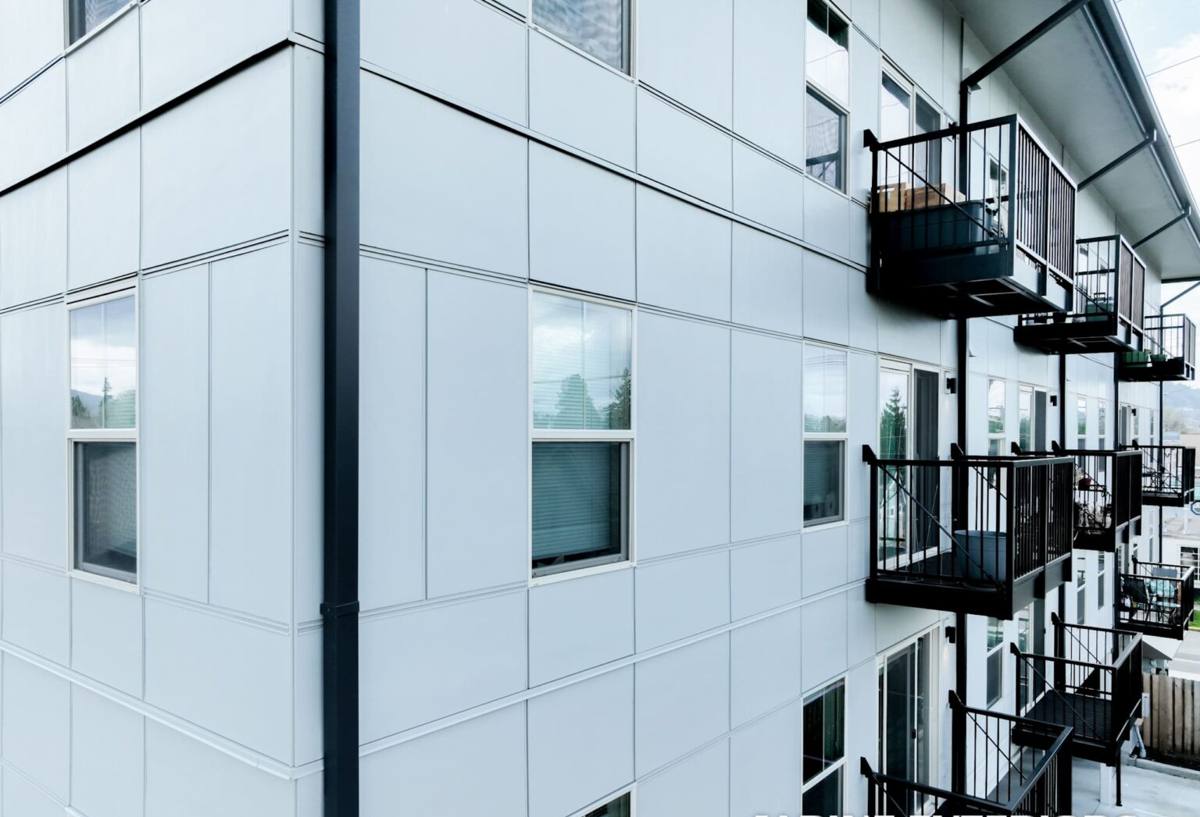
We install James Hardie fiber cement exclusively, and for a vertical board and batten look that means HardiePanel vertical siding paired with Hardie trim boards as the battens, finished in a factory-applied ColorPlus finish. Fiber cement is dimensionally stable — it doesn't swell, cup, or split the way wood-based products can when they take on moisture, which matters enormously on a profile where every batten seam is a potential moisture point.
Hardie's HZ5 product line is engineered for wetter, harsher climates like Western Washington, with formulations built to resist moisture damage and hold paint and finish over the long term. The ColorPlus finish is baked on in a controlled factory environment rather than sprayed on site, which gives a more consistent, more fade-resistant, and more moisture-resistant top coat than field-applied paint — an important detail on a wall that gets driving rain and salt-laden air for months at a stretch.
Because it's non-combustible fiber cement, it also doesn't carry the same fire-risk conversation that wood-based board and batten does, which matters for insurance considerations as much as for peace of mind.
Why We Don't Offer This Look in Other Materials
Vinyl board and batten exists, and so do engineered wood and cedar versions. We don't install any of them. Vinyl expands and contracts significantly with temperature swings, which stresses the very joints that need to stay tight on a vertical profile. Engineered wood and cedar are more moisture-sensitive by nature, and in a climate with this much sustained dampness and moss pressure, that sensitivity shows up as maintenance burden and shortened lifespan. Fiber cement doesn't carry those same trade-offs, which is why it's the only material we put behind a Lynden client's name.
What a Correct Installation Involves
A board and batten job done to spec is more labor-intensive than it looks from the curb. The key steps we hold to on every project:
- A water-resistive barrier installed continuously behind the panels, with all seams properly lapped and taped
- A drainage gap behind the battens so any moisture that does get past the surface can escape rather than pool
- Flashing at every window, door, and horizontal trim transition — not caulk standing in for flashing
- Fastener placement and spacing that follows Hardie's published installation instructions, which is also what keeps the manufacturer warranty valid
- Proper clearance at the base of the wall and at grade, so splashback and standing water don't sit against the bottom course
- Factory-cut and factory-sealed panel edges wherever possible, since a cut edge is more vulnerable to moisture absorption than a factory edge
Skipping any one of these doesn't usually show up as a visible problem for a year or two. It shows up later, as trapped moisture, soft trim, or streaking that keeps coming back no matter how many times it's cleaned.
Our Process on Lynden Projects
We start with a walk-around assessment of the home — checking the existing wall assembly, any signs of past moisture intrusion, and how the property sits relative to prevailing wind and rain direction, since orientation changes which walls take the brunt of Whatcom County's weather. From there we scope the tear-off (if replacing existing siding), confirm trim and batten layout with the homeowner, and order factory-finished materials to spec rather than field-cutting and painting on site.
Installation follows the sequence above — barrier, drainage plane, flashing, then panels and battens — with inspection at each stage rather than just at the end. We clean up daily rather than leaving job sites in a half-finished state for extended stretches, which matters in a place where an unplanned rain event is never far off.
Board & Batten Compared to Other Siding Approaches
| Factor | Hardie Board & Batten | Vinyl Board & Batten | Cedar / Engineered Wood |
|---|---|---|---|
| Moisture resistance | High — non-combustible fiber cement, HZ5 formulated for wet climates | Moderate — doesn't rot, but seams can trap moisture behind panels | Lower — natural material absorbs and releases moisture, more prone to swelling |
| Moss & algae resistance | Good with ColorPlus finish; surface doesn't feed organic growth | Fair, but plastic surface can still host film in shaded areas | Poor — organic material is a natural host for moss and algae |
| Dimensional stability | Very stable across temperature and moisture swings | Expands/contracts noticeably with heat and cold | Prone to cupping, splitting, and warping over time |
| Fire rating | Non-combustible | Combustible | Combustible |
| Typical warranty | Long-term, transferable manufacturer warranty on the material | Varies widely by manufacturer | Limited or none on wood durability |
| Maintenance | Occasional wash; factory finish holds color | Low, but seams/joints can be a weak point | Regular sealing, staining, and moss treatment |
This is why board and batten in fiber cement makes sense as a long-term investment in this climate, while the same look in a moisture-sensitive material tends to become a recurring maintenance line item instead.
Living With Board & Batten in a Moss-Prone Climate
Even the right material benefits from basic upkeep, especially on shaded, north-facing walls that stay damp longer after Whatcom County's frequent wet weather. A simple annual checklist keeps a board and batten wall performing the way it should:
- Rinse walls (especially shaded sides) once a year to clear early moss and algae growth before it establishes
- Keep gutters clean and downspouts directed away from the wall base to reduce splashback onto the lowest courses
- Trim back landscaping and tree cover that keeps a wall section shaded and damp longer than the rest of the house
- Check caulking at window and door trim yearly — it's a cosmetic seal, not a structural one, and it does wear over time
- Look for streaking or discoloration that returns quickly after cleaning, which can signal a moisture issue behind the surface rather than just surface grime
Why a Crew That Already Works Lynden Matters
Board and batten's failure points are almost always installation details, not material defects — and those details change based on how a specific wall faces the weather, how exposed it is to wind-driven rain, and how much moss pressure it's likely to see year-round. A crew that already works throughout Whatcom County has seen how these homes perform after a few wet seasons, not just how they look on installation day. That experience shows up in where we add extra flashing attention, how we handle grade clearance on older properties, and how we sequence a job around this region's weather windows rather than fighting them.
It also means straightforward accountability — a local crew with a track record in the area, not a traveling install team that's moved on by the time a detailing issue would show up.
If you're weighing board and batten for a home in the Lynden area, we're happy to walk the property, talk through what the wall orientation and existing conditions call for, and give you a straightforward, no-pressure estimate using the form below.