 Blaine Siding
 Window Installation Built for Lynden's Climate
Lynden sits inland from the water but still lives inside the same wet, salt-touched weather system that defines Whatcom County. Homes here deal with long stretches of driving rain, humid air that never fully dries out, and a moss season that can run most of the year on north-facing walls. Windows take the brunt of that. A window that's a little bit off — flashed wrong, caulked instead of properly sealed, or fitted with the wrong glass package — will show it within a year or two as fogging, drafts, soft trim, or staining on the siding below the sill.
Window installation in Lynden isn't a different product than window installation anywhere else. It's the same window, installed with more discipline around water management, because the margin for error is smaller here than it is in a dry climate.
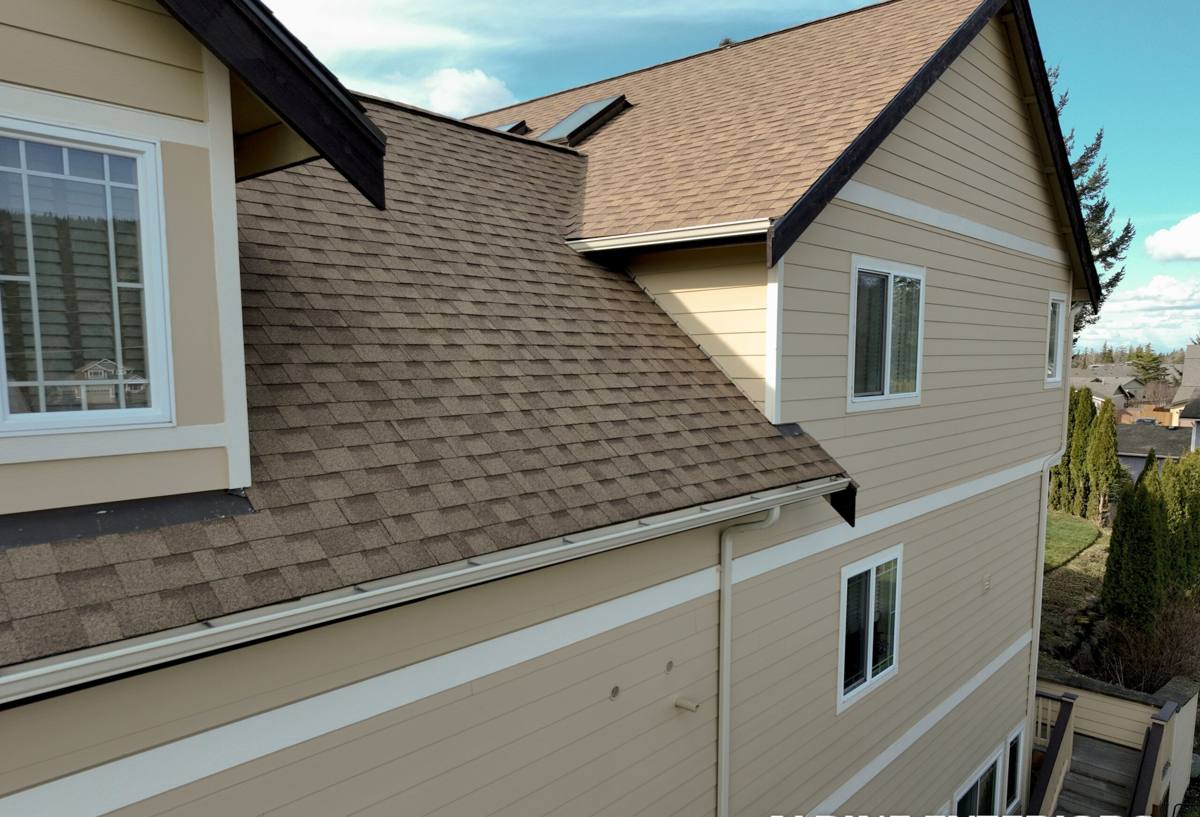
What This Climate Actually Does to Windows Over Time
Driving rain and wind-driven moisture
Storms coming off the Strait of Georgia and Puget Sound don't just drop rain straight down — wind pushes it sideways into wall assemblies. A window installed without proper flashing and a sloped sill pan will let that wind-driven water collect at the bottom corners, which is the single most common failure point we see on older installs in this area.
Salt-influenced air
Blaine and the surrounding Whatcom County coastline carry salt content in the air that travels further inland than most homeowners expect. It accelerates corrosion on exposed hardware, fasteners, and lower-grade metal components. It's a slow effect, but it adds up over a couple of decades on windows that weren't specified with corrosion-resistant hardware.
Moss and sustained moisture
Moss doesn't grow on the glass, but it grows on the trim, siding, and sills around a window — and once it takes hold, it holds moisture against the wood or composite trim far longer than open air would. That constant damp contact is what actually rots trim, not the rain itself. Good window installation accounts for this by keeping water moving away from the frame instead of letting it pool or wick.
Signs a Lynden Home Needs New Windows
- Condensation or fogging between the panes (a failed seal, not a cleaning issue)
- Soft or discolored trim and siding directly below or beside the window
- Visible daylight or a draft you can feel with your hand along the frame
- Windows that are difficult to open, close, or lock — often a sign the frame has shifted
- Moss or persistent green staining building up on the sill or casing
- A noticeable jump in heating costs with no other explanation
- Paint or finish failing on the interior frame, which usually means moisture is getting in from outside
Any one of these on its own isn't an emergency. Several of them together, especially on the same wall, usually means water has been getting past the window for a while.
What a Correct Window Installation Actually Involves
The window itself is often the least important variable in how well an installation performs. Installation quality is what determines whether that window lasts 10 years or 30. A correct job includes:
- Removing the old window and inspecting the rough opening and sheathing underneath for hidden rot before anything new goes in
- Installing a sloped sill pan so any water that does get past the window sheds outward, not inward
- Proper flashing sequence — sill, jamb, then head flashing — integrated with the home's existing weather-resistive barrier, not just taped over it
- Shimming the frame level, plumb, and square so the window operates correctly and seals evenly for its full life
- Sealing with the correct materials at the correct layers — not a single bead of caulk asked to do a flashing membrane's job
- Insulating the gap between the frame and the rough opening without overpacking it, which can bow the frame
- Finishing the exterior trim and siding tie-in so water is directed away from the wall, not funneled toward it
Skipping or rushing any one of those steps is how a brand-new window ends up with the same rot problem as the 30-year-old one it replaced — just faster.
Choosing the Right Window for a Whatcom County Home
There's no single "best" window for every house. The right choice depends on the wall's sun and rain exposure, the home's age and structure, and what you're trying to solve — energy loss, drafts, noise, or appearance. Here's how the common frame materials compare for a climate like Lynden's:
| Frame Material | Moisture Tolerance | Maintenance | Typical Trade-Off |
|---|---|---|---|
| Vinyl | Very good — won't rot, resists moss and staining | Low — occasional cleaning | Fewer color/finish options; can expand and contract with temperature swings |
| Fiberglass | Excellent — dimensionally stable in wet, humid conditions | Low | Higher upfront cost than vinyl |
| Wood (unclad) | Poor without diligent upkeep — the material most affected by this region's rain and moss | High — regular painting/sealing required | Best look for some homes, but a real maintenance commitment near the coast |
| Wood-clad (exterior aluminum or vinyl shell) | Good — cladding protects the wood core from direct weather | Moderate | Interior wood warmth with better exterior durability; still needs the cladding sealed correctly at install |
For most homes in and around Lynden, vinyl and fiberglass hold up the best with the least upkeep. Wood-clad windows are a reasonable choice when the interior look matters, as long as the installer treats the exterior cladding and flashing details with the same care as a full-vinyl unit. Glass package matters too — double-pane with a low-E coating covers most homes here, while triple-pane is worth discussing on north- or west-facing walls that take the worst of the weather.
Our Window Installation Process
We keep the process straightforward and communicate at each stage rather than disappearing until the job's "done."
- Assessment — We look at the existing windows, the wall assembly where visible, and any signs of past water intrusion before recommending anything.
- Product selection — We walk through frame material, glass package, and style options based on that specific wall's exposure, not a one-size answer for the whole house.
- Removal and inspection — Old windows come out carefully, and we check the rough opening and sheathing for hidden damage before installing anything new.
- Flashing and installation — Sill pan, flashing sequence, shimming, and sealing done in the correct order, not shortcuts layered on top of each other.
- Exterior finish and siding tie-in — Trim and siding are re-integrated so water sheds properly, matching the surrounding material as closely as possible.
- Final walkthrough — We check operation, seals, and finish with you before calling the job complete.
Why Hiring a Crew That Already Works Lynden Matters
A window installer who mostly works in drier parts of the state can still build a technically fine window box — until the first real Whatcom County storm season tests it. Crews who work Lynden and the Blaine area regularly already know which details can't be skipped here: sill pan slope, flashing integration on lap and panel siding alike, and hardware that won't corrode prematurely in salt-tinged air. That's not a marketing point, it's just what repeated exposure to this specific weather teaches a crew over time.
It also means faster, more accurate estimates. We're not guessing at how a wall assembly typically performs in this area — we've opened up enough of them to know what's common and what to check for before we ever quote the job.
What Window Installation Typically Costs
Costs vary based on window size, frame material, glass package, and whether the job is a straightforward swap or involves repairing rot or resizing an opening. As a broad range, homeowners in this area typically see per-window installed costs from the low hundreds for a basic vinyl replacement up to several thousand dollars for larger, higher-performance, or custom units. The only way to get an accurate number is a look at the actual windows and walls involved — we won't quote a whole-house number over the phone without seeing the job.
Get a Straight Answer on Your Windows
If you're dealing with drafts, fogged glass, or trim that's starting to look rough around your windows, it's worth having someone take a real look before deciding what to do. We offer free, no-pressure estimates for window installation in Lynden and the surrounding Blaine area — fill out the form below and we'll get back to you with an honest assessment, not a sales pitch.