 Blaine Siding
 New-Construction Windows in Sumas: Getting It Right the First Time
Building a new home or a major addition in Sumas gives you one real advantage over a remodel: you get to install windows correctly the first time, before siding, trim, and interior finishes cover up the details that matter most. New-construction windows are a different job than replacement windows in almost every way — they use a nailing fin instead of a frame that tucks into an existing opening, they integrate directly with the weather-resistive barrier (WRB) and flashing system, and they're set before the exterior cladding goes on. Get that sequence wrong, and the mistake gets buried behind the siding for the life of the house.
We install new-construction windows on homes and additions throughout Blaine and Whatcom County, including the Sumas area near the Canadian border. That work has taught us where new-construction jobs actually go wrong — and it's rarely the window unit itself. It's almost always the flashing, the sequencing, or a rough opening that wasn't built quite square.
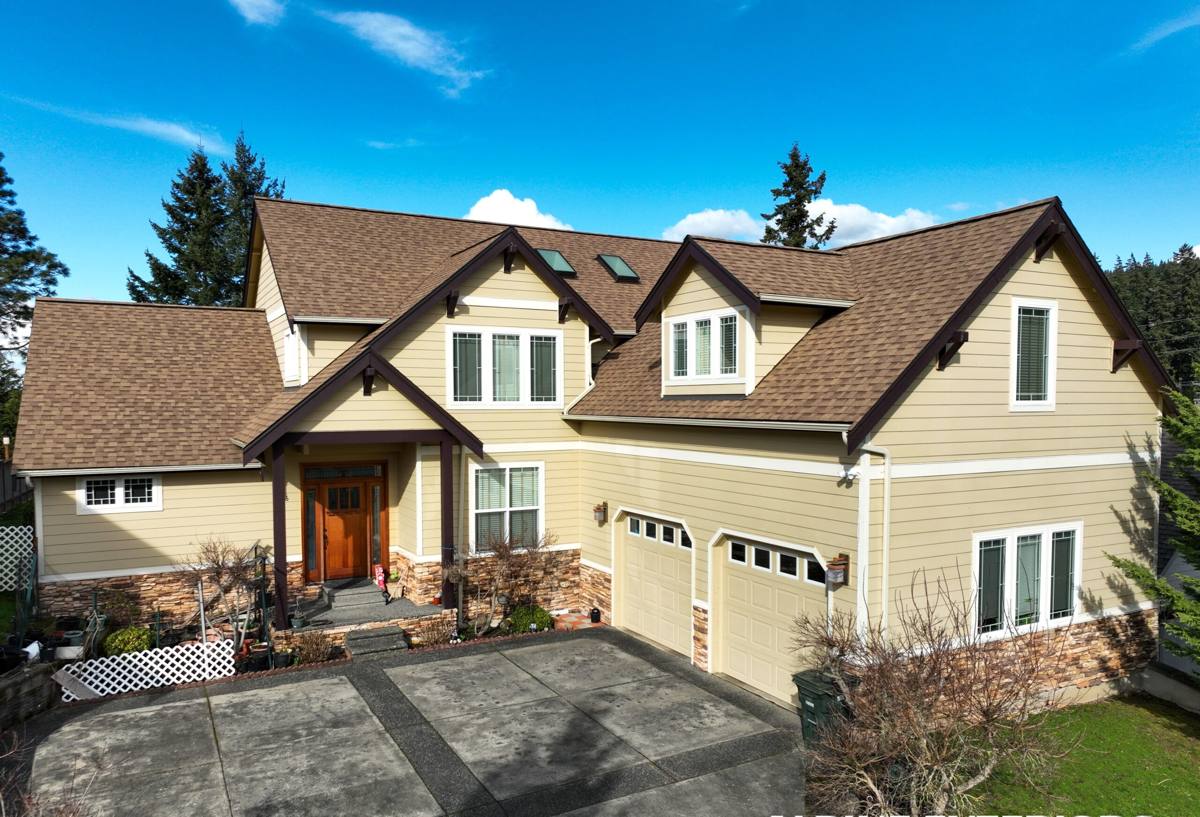
Why Local Climate Shapes This Job
Whatcom County's weather doesn't spare Sumas just because it sits inland from Blaine's shoreline. The same Pacific storm systems that push salt-laden air and driving rain across the coast also settle over the rest of the county for months at a time, and a long moss season follows right behind the wet weather. New-construction windows have to be detailed to handle that from the day they're installed, because there's no second chance once the siding is on.
Driving Rain and Wind-Driven Moisture
Wind-driven rain doesn't fall straight down — it gets pushed sideways into window openings, which is exactly the condition that flashing details are designed to defeat. A window that's flashed with a simple bead of caulk instead of a proper layered system will eventually let water behind the WRB, and you won't see it until there's a stain on drywall or soft trim years later.
Long Wet Season, Slow Drying
Whatcom County doesn't get long dry stretches to let a marginal detail off the hook. If moisture does get behind a window, it has months of damp weather to work on the sheathing and framing before a dry summer ever gives it a chance to dry out. That's why we treat every rough opening as if it will eventually see water, and build the drainage path accordingly rather than relying on sealant alone.
Moss, Algae, and UV on Frames and Sills
The same damp, shaded conditions that grow moss on roofs and north-facing walls also affect window sills and frames over time, especially on units with horizontal ledges where organic growth and standing water can collect. Sill design and drainage matter as much as the glass package for long-term appearance and function.
What a Correct New-Construction Window Install Involves
A properly installed new-construction window is really a system, not a single product. Getting it right means every layer works with the ones around it.
The Rough Opening
Before a window ever goes in, the rough opening needs to be square, plumb, and sized correctly for the unit — with enough shim space to allow for adjustment without compromising the seal. On new builds we check this ourselves rather than assuming the framing crew hit it exactly, because a slightly out-of-square opening is one of the most common causes of operational problems (windows that stick, don't latch, or leak at a corner) down the road.
The Weather-Resistive Barrier and Flashing Sequence
New-construction windows rely on a shingle-lapped flashing sequence: sill pan first, then the WRB integrated over the nailing fin in the correct order (sides, then head), so water is always directed outward and downward, never trapped behind a layer. This is the single most important part of the job and the part that's completely invisible once siding is installed.
The Sill Pan and Back Dam
A sill pan with a back dam gives any water that does get past the exterior seal somewhere to go besides into the wall framing. This detail is inexpensive to build correctly during new construction and very expensive to add after the fact, which is exactly why it belongs in the original install.
Fastening and Air Sealing
Nailing fins need to be fastened per the manufacturer's schedule — not just at the corners — and the interior gap between the window frame and rough opening needs a proper air seal, typically a low-expansion foam or backer rod and sealant rather than a can of standard foam that can bow the frame.
Choosing the Right Window Product for a Sumas Build
Product selection matters, but it's secondary to installation quality — a premium window installed poorly will underperform a mid-range window installed correctly. That said, for this climate we steer builds toward vinyl or fiberglass frames with a good multi-point locking system, dual or triple-pane glazing appropriate to the home's exposure, and a drainage-capable sill design. We're honest with clients about trade-offs rather than pushing one brand: aluminum-clad wood looks great but demands more exterior maintenance in a wet climate; all-vinyl is low-maintenance but has more limited color and finish options; fiberglass costs more upfront but handles temperature swings with less expansion and contraction.
New-Construction vs. Retrofit Windows: Why the Distinction Matters
| Factor | New-Construction Window | Retrofit / Replacement Window |
|---|---|---|
| Frame type | Nailing fin, set into open framing | Flush-fin or block-frame, fits inside existing frame |
| Flashing access | Full access to WRB and sheathing | Limited — existing siding stays in place |
| Best used when | New build, addition, or full siding tear-off | Existing siding stays and only the window is changing |
| Moisture control | Built from the sheathing out — most durable long-term | Relies more heavily on sealant at the perimeter |
| Typical schedule position | Installed before siding and exterior trim | Installed as a standalone retrofit |
If you're building new in Sumas, you're already in the best position possible to get durable, correctly flashed windows — don't let a rushed schedule turn a new-construction opportunity into a retrofit-quality install.
Our Process on a New-Construction Job
- Rough opening check. We verify square, plumb, and sizing before a window is ever set, and flag any framing corrections needed.
- Sill pan and flashing plan. We install a sloped sill pan with a back dam and confirm the WRB sequence before the window goes in.
- Window set and fastening. The unit is shimmed, leveled, and fastened per the manufacturer's schedule — not just tacked at the corners.
- Head and side flashing integration. Flashing tape and WRB are lapped in the correct shingle order so water always sheds outward.
- Interior air seal. The gap between frame and rough opening is sealed with an appropriate low-expansion product, avoiding bowed frames.
- Operation and quality check. Every window is opened, closed, and locked to confirm it operates correctly before we move on.
- Documentation for the next trade. We leave the opening in a state that siding crews can flash into cleanly, so nothing gets improvised later.
Energy Code and Efficiency Considerations
Washington's energy code sets minimum performance requirements for new-construction glazing, and those requirements are stricter than what many older homes in the region were built to. On a new build, window selection and installation both affect whether the home meets code and how it actually performs once occupied — a code-compliant window installed with air gaps at the rough opening will still leak conditioned air, regardless of what the glass rating says. We size and detail windows with both the code requirement and the real-world air-sealing in mind.
What Affects Cost on a New-Construction Window Job
| Cost Factor | Why It Matters |
|---|---|
| Number and size of openings | More and larger windows mean more flashing detail work and material |
| Glazing package | Dual-pane vs. triple-pane, and coatings for solar/heat control, shift unit price |
| Frame material | Vinyl, fiberglass, and clad-wood carry different upfront and maintenance costs |
| Wall assembly complexity | Rainscreen or advanced WRB assemblies take more time to integrate correctly |
| Access and scheduling | Coordinating with framing and siding crews on a tight build schedule affects labor |
We don't quote a job without walking the openings and understanding the wall assembly — broad ranges without that information tend to be wrong in one direction or the other.
A Practical Checklist Before Windows Go In
- Rough openings are square, plumb, and correctly sized for the specified window units
- Sill pan flashing with a back dam is planned for every opening, not just the vulnerable ones
- The WRB and flashing tape sequence is confirmed before the crew starts setting windows
- Window schedule matches the glazing and frame material specified for code compliance
- Fastening schedule and shimming plan are understood by whoever is setting the units
- A clear handoff plan exists so the siding crew can flash into the window correctly
Why It Matters to Hire a Crew That Works the Sumas Area
New-construction window installation depends on understanding how a specific region's weather behaves against a wall assembly over years, not just how a window performs on a spec sheet. A crew that regularly works Blaine and the surrounding Whatcom County communities, including Sumas, has already seen how driving rain, long wet winters, and moss growth affect different sill designs and flashing choices in this specific area. That's a different kind of knowledge than general installation experience, and it shows up in the small decisions made on-site — where to add extra flashing, which sill details to avoid, and how to sequence the job so nothing gets rushed before a rain event.
If you're planning a new build or addition in Sumas and want windows installed correctly from the rough opening out, we're happy to walk the project with you and provide a free, no-pressure estimate. There's a form below to get started.