 Blaine Siding
 Why Point Roberts Roofs Wear Differently
Point Roberts sits on its own peninsula at the edge of Boundary Bay and the Strait of Georgia, and that location shapes everything about how a roof ages here. Salt-laden air moves off the water and settles on exposed metal, fasteners, and flashing year-round, accelerating corrosion in ways homes further inland in Whatcom County never experience. Add in wind-driven rain that comes in sideways off the water during winter storms, and you have conditions that test every seam, lap, and fastener in a roofing system, not just the shingles themselves.
Then there's moss. Point Roberts has a long, cool, wet season and plenty of tree cover, which means shaded roof sections stay damp for extended stretches. Moss doesn't just look bad — it holds moisture against the roofing material, lifts shingle edges, and works its way under improperly sealed laps. A roof built for a drier, sunnier climate simply doesn't hold up the same way out here, which is why a new roof installation in this area needs to be planned around these specific stressors rather than installed from a generic checklist.
Because Point Roberts is a U.S. exclave reached by land only through Canada, material delivery and crew scheduling also take more planning than a typical Whatcom County job. That's a logistics detail, not a climate one, but it directly affects how smoothly a roof replacement goes — more on that below.
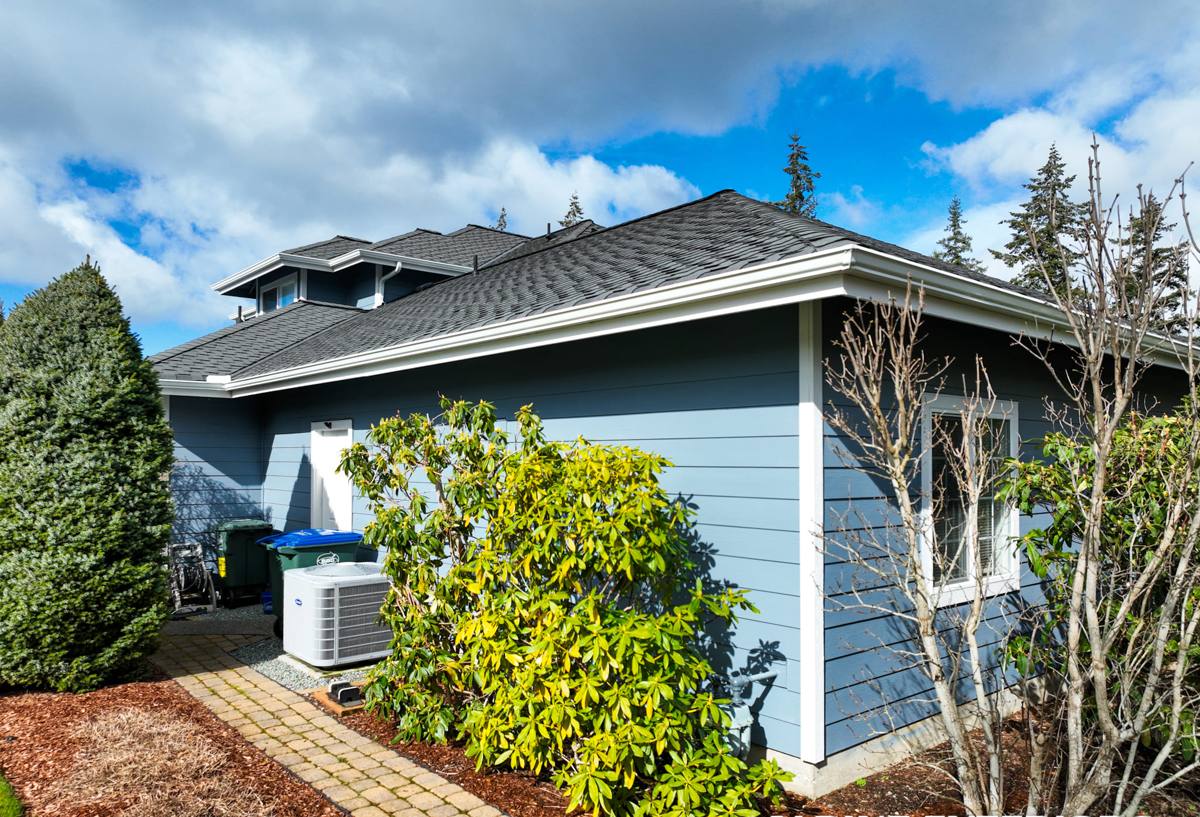
Signs Your Roof Has Reached the End of the Road
Roofs rarely fail all at once. They give warning signs, and catching them early is the difference between a planned replacement and an emergency one after a winter storm.
- Granules collecting in gutters or downspouts, or shingles that look bald and shiny in patches
- Shingle edges curling, cupping, or lifting, especially on the sides facing prevailing wind and rain
- Thick moss mats, particularly on north-facing or shaded slopes, rather than light surface growth
- Soft, spongy spots when walked on, or visible sagging along the roofline
- Daylight, water stains, or damp insulation visible in the attic
- Rusted or heavily corroded flashing, vents, or fasteners
- Needing a repair more than once a year, or a roof older than its expected service life
One or two of these on their own might mean a targeted repair is enough. Several at once, or a roof already near the end of its rated life, usually means repair costs are about to outpace what a full replacement would run.
What a Correct New Roof Installation Actually Involves
A new roof is only as good as what happens underneath the shingles. The visible layer gets all the attention, but in a climate like this, the details you can't see after the job is done are what determine whether the roof lasts.
Tear-Off and Deck Inspection
We remove the old roofing down to the deck rather than installing over it. That lets us inspect the sheathing for soft spots, rot, or delamination caused by years of moisture exposure — problems that are invisible from above but will undermine even a well-installed new roof if left in place. Any damaged decking gets replaced before anything else goes down.
Underlayment and Ice-and-Water Protection
Given how much wind-driven rain this area sees, underlayment choice matters more here than in drier parts of the state. We use self-adhered ice-and-water membrane at eaves, valleys, and around penetrations — the areas most prone to wind-driven water intrusion — paired with a synthetic underlayment across the rest of the field for a secondary water barrier beneath the roofing material.
Flashing Details
Flashing around chimneys, skylights, vents, and wall intersections is where most roof leaks actually start, not in the open field of shingles. We use corrosion-resistant flashing material and proper step-and-counter-flashing techniques at every penetration and wall transition, since salt air will find and exploit any weak point in cheaper or improperly installed flashing within a few seasons.
Ventilation
Balanced intake and exhaust ventilation keeps the attic dry and temperature-regulated, which protects the roof deck from the inside out and reduces the moisture buildup that feeds moss and mildew growth on the underside of the roofing system.
Choosing Roofing Materials for This Climate
There's no single "best" roofing material — the right choice depends on your home, your budget, and how much maintenance you want to take on. Here's how the common options compare for salt air and moss exposure specifically.
| Material | Salt Air Durability | Moss Resistance | Typical Lifespan | Maintenance |
|---|---|---|---|---|
| Architectural asphalt shingle | Good with corrosion-resistant fasteners and flashing | Moderate; benefits from algae-resistant granules | 25-30 years | Periodic moss/debris removal recommended |
| Standing seam metal | Very good when coated and properly grounded | High; sheds moisture quickly, little surface for moss to grip | 40-50+ years | Low; occasional inspection of seams and fasteners |
| Composite/synthetic shake | Good; resists corrosion since it's non-metallic | Moderate to high depending on product | 30-50 years | Low to moderate |
We don't push one product over another as a rule — we walk you through what fits your roof's slope, shading, and your long-term maintenance preference, and explain the honest trade-offs (upfront cost versus lifespan, maintenance versus material cost) so you can make the call with real numbers.
Our Installation Process, Point Roberts to Finish
Because of where Point Roberts sits, a new roof job here takes a bit more coordination than a typical mainland Whatcom County project, and we plan for that upfront rather than letting it become a delay mid-job.
- Inspection and estimate. We walk the roof, check the attic, and note the specific stressors affecting your home — shading, exposure to prevailing wind, existing moss, flashing condition — before quoting anything.
- Material planning and delivery scheduling. Since Point Roberts is reached by land only through Canada, we plan material deliveries and crew mobilization in advance so the job isn't held up mid-tear-off waiting on supplies.
- Permitting. We handle the roofing permit process through Whatcom County so you don't have to track paperwork.
- Tear-off and installation. Old roofing comes off, the deck is inspected and repaired as needed, and the new system goes on in the sequence outlined above — underlayment, flashing, roofing material, ventilation components.
- Final walkthrough and cleanup. We do a full site cleanup, including a magnetic sweep for stray fasteners, and walk the finished roof with you before calling the job done.
Ventilation and Moisture Management for a Long Moss Season
A new roof's biggest long-term enemy in this climate isn't a single storm — it's sustained dampness. Balanced ridge-and-soffit ventilation is part of that defense, as noted above, but so is keeping tree cover managed near the roofline. Overhanging branches keep shaded areas of the roof from ever fully drying out between rain events, which is exactly the condition moss needs to establish. Trimming back branches that touch or overhang the roof, and keeping gutters clear so water isn't pooling against the roof edge, both go a long way toward extending the life of whatever material you choose.
Keeping a New Roof Moss-Free
A properly installed roof still needs some basic upkeep in a climate like this. A short seasonal routine prevents most of the moss and moisture problems we get called out to fix on roofs that were otherwise installed correctly.
- Clear gutters and downspouts at least twice a year, more often under heavy tree cover
- Trim back branches that shade or touch the roof surface
- Have visible moss or algae growth treated before it thickens into mats
- Check attic ventilation isn't blocked by insulation or debris
- Walk the roofline visually after major windstorms for lifted shingles or displaced flashing
- Schedule a professional inspection every year or two, even without visible problems
Why Hiring a Crew That Already Works Point Roberts Matters
A roofing crew that regularly works in Point Roberts already understands the logistics of getting materials and equipment onto the peninsula, has a working relationship with Whatcom County permitting for this area, and knows how salt exposure and moss actually behave on roofs here versus roofs elsewhere in the county. That familiarity shows up in fewer surprises during the job — no mid-project delivery delays, no permit back-and-forth, no guessing at flashing and ventilation choices for a climate the crew hasn't dealt with before. It also matters afterward: a local crew is easy to reach if a warranty question comes up down the road, rather than being a one-time outfit that mobilized out for a single job and is hard to track down later.
If your roof is showing its age or you're planning ahead for a replacement, we're happy to take a look and give you a straightforward, no-pressure estimate — just fill out the form below and we'll get in touch.