 Blaine Siding
 Semiahmoo's Roofs Work Harder Than Most
Semiahmoo sits right where the marine air off the Salish Sea meets the wet, moss-heavy climate that defines Whatcom County. That combination is tougher on a roof than most homeowners realize until they're dealing with the consequences. Salt-laden air corrodes exposed metal fasteners and flashing faster than it would a few miles inland. Driving rain, especially in wind events off the water, gets pushed sideways into laps and seams that a calmer climate would never test. And the long, damp moss season here — often running from fall through spring — means organic growth has months to take hold on any roof that isn't shedding water and drying out efficiently.
None of this means Semiahmoo homes need exotic materials or gimmicks. It means the installation details that get glossed over in drier parts of the country — flashing sequencing, underlayment choice, ventilation balance, fastener selection — are the difference between a roof that holds up for its full service life and one that starts showing problems in year eight or ten.
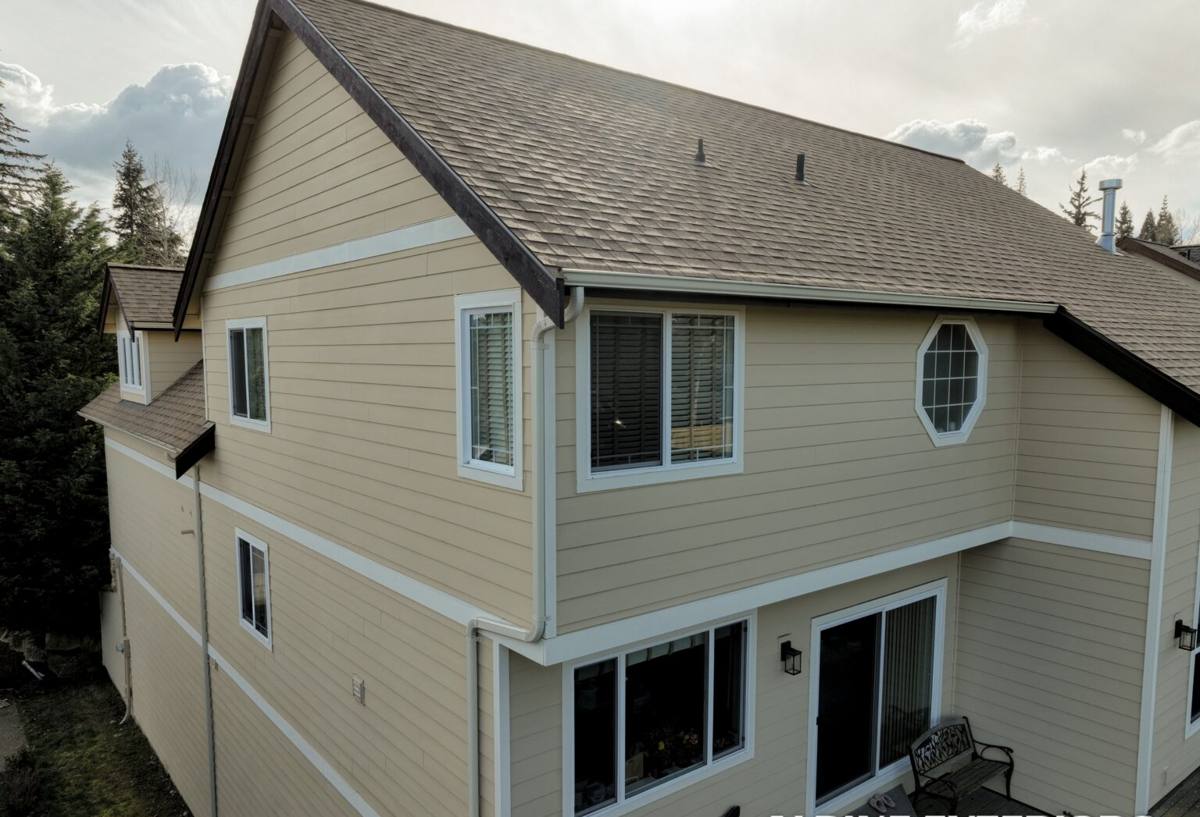
Signs a Semiahmoo Roof Needs Replacing, Not Patching
Not every roof problem calls for a full replacement, and we'll tell you honestly if a repair is the smarter move. But there are signs that point toward replacement being the more cost-effective path over time:
- Granule loss heavy enough that you're finding shingle granules in gutters or at downspout outlets
- Multiple layers of moss or algae that keep returning within a season or two of cleaning
- Soft or spongy decking felt underfoot during an attic or roof inspection
- Daylight visible through the roof deck from inside the attic
- Curling, cracking, or missing shingles concentrated on the west or south-facing slopes that take the brunt of weather off the water
- Interior staining on ceilings or in the attic that recurs after storms
- A roof already past 20-25 years old, regardless of how it looks from the ground
If a roof is showing two or more of these at once, patch repairs usually become a cycle of chasing new leaks rather than solving the underlying problem.
What a Correct New Roof Installation Actually Involves
A new roof is more than laying down new shingles over what's there. Done right, it's a full system, and skipping steps is exactly how a roof in a place like Semiahmoo ends up with premature leaks or moss regrowth within a couple of years.
Tear-Off and Deck Inspection
We remove the old roofing down to bare decking rather than layering over it. That's the only way to actually see what's underneath — soft spots, rot around old penetrations, or fastener issues that a layover would hide and eventually let fail. Any damaged decking gets replaced before anything new goes down.
Ice and Water Protection at Vulnerable Points
Eaves, valleys, and any low-slope transitions get self-adhering waterproof membrane, not just standard felt. In a climate with as much sustained rain as Whatcom County sees, this is the layer that keeps wind-driven water from working its way under the shingles at the points where it's most likely to try.
Underlayment Across the Field
The rest of the deck gets a synthetic underlayment sized to the pitch and exposure of the roof. Synthetic underlayments handle the extended wet-dry cycling of a marine climate better than old-style felt, which can absorb moisture and wrinkle over time.
Flashing Done Right
Flashing around chimneys, skylights, sidewalls, and vents is where most roof leaks actually originate — not in the field of the shingles. We use new flashing, properly stepped and sequenced with the underlayment and roofing material (not caulked over old flashing), and we pay particular attention to corrosion-resistant materials given the salt air this close to the water.
Ventilation Balance
Intake at the eaves and exhaust at the ridge need to be balanced so air actually moves through the attic space. Poor ventilation traps moisture, which accelerates deck rot from underneath and creates the damp, shaded conditions moss loves. This is one of the most commonly overlooked parts of a roof job and one of the most consequential in this climate.
Fastening and Material Installation
Correct nail placement, pattern, and count matter more in high-wind coastal exposure than in sheltered inland areas. We follow manufacturer specifications for fastening in high-wind zones rather than standard-exposure guidelines, since Semiahmoo's waterfront exposure sees stronger sustained wind than much of the county.
Choosing a Roofing Material for a Marine Climate
There's no single "best" roofing material for every home — the right choice depends on budget, roof pitch, home style, and how much long-term maintenance a homeowner wants to take on. Here's how the common options stack up for a Semiahmoo property specifically:
| Material | Moisture & Salt Air Behavior | Moss Resistance | Typical Lifespan |
|---|---|---|---|
| Architectural asphalt shingles | Good when installed with proper flashing and ventilation; algae-resistant granule options help | Moderate — benefits from periodic cleaning and good airflow | 25-30 years |
| Standing seam metal | Excellent shedding of driving rain; needs corrosion-resistant fasteners and coatings near salt air | High — smooth surface gives moss little to grip | 40-50+ years |
| Synthetic/composite shingles | Very good; resists moisture absorption better than wood-based products | Moderate to high depending on product | 30-50 years |
| Cedar shake | Requires diligent maintenance in constant damp exposure | Low without regular treatment | 20-30 years with upkeep |
For most Semiahmoo homes, we lean toward architectural asphalt with algae-resistant granules or standing seam metal, because both handle the combination of salt exposure and sustained moss season with the least ongoing maintenance burden. We'll walk through the honest trade-offs — upfront cost, appearance, maintenance, and warranty structure — for your specific roof rather than pushing one product across the board.
How Our Process Works, Start to Finish
- On-site inspection: We walk the roof and attic, check decking condition, ventilation, and flashing points, and take photos to document what we find.
- Written estimate: A clear scope of work and price, with material options laid out so you can compare, not a vague number.
- Scheduling around weather: Whatcom County rain patterns mean we plan tear-off days around forecasts and keep the deck protected if conditions shift mid-job.
- Tear-off and deck repair: Old roofing removed, decking inspected and repaired as needed before anything new goes on.
- Underlayment, flashing, and ventilation installed: The system layers described above, installed in the correct sequence.
- Roofing material installation: Installed to manufacturer spec for wind exposure and pitch.
- Final walkthrough and cleanup: Site cleared of debris and nails, with a final inspection alongside the homeowner before we consider the job done.
Moisture Control and Moss Prevention After Installation
A correctly installed roof is the foundation of moss resistance, but Semiahmoo's damp climate means some ongoing homeowner awareness helps too. Overhanging tree branches that shade sections of the roof and keep them from drying out are one of the biggest contributors to moss regrowth we see locally. Gutters clogged with needles and leaves back water up under the shingle edge, which both promotes moss and stresses the roof edge over time. We're glad to point out any of these conditions during an estimate walkthrough, even on roofs we didn't install.
What Drives the Cost of a New Roof in This Area
Every roof is priced on its own specifics, but these are the factors that most commonly move the number up or down for Semiahmoo homes:
| Factor | Why It Matters |
|---|---|
| Roof size and complexity | More valleys, dormers, and penetrations mean more flashing work and labor time |
| Number of existing layers | Tear-off of multiple old layers adds disposal cost and labor |
| Decking condition | Rot or soft spots found during tear-off require plywood or board replacement |
| Roof pitch and access | Steep or hard-to-access roofs require more safety setup and time |
| Material choice | Metal and premium synthetic products cost more upfront than standard asphalt |
| Ventilation upgrades | Adding proper intake/exhaust venting where none exists is worth the investment |
We'll break these out clearly in any estimate so you know what you're paying for, not just a bottom-line number.
Why a Blaine-Based Crew Matters for a Semiahmoo Job
A roofing crew that works Whatcom County regularly already knows how the wind comes off the water at Semiahmoo, how long moss season really runs here compared to drier parts of Washington, and which flashing and fastener choices hold up to the salt air rather than failing early. That local familiarity shows up in the small decisions made on the roof deck — not just in the sales pitch. It also means we're a short drive away if a warranty question or storm-related concern comes up after the job is done, not a crew that installed a roof and then moved on to the next region.
Questions Worth Asking Before You Hire
Whether you go with us or another contractor, these are worth confirming before signing anything for a new roof installation:
- Is the estimate itemized by material, labor, and any deck repair, or just a single lump sum?
- Does the contractor carry current Washington state contractor licensing and liability insurance?
- Will decking be inspected and repaired as needed, or only replaced if visibly damaged from the outside?
- What underlayment and ice/water shield products are specified, and where will they be used on the roof?
- Is ventilation being assessed and addressed, or is the job just a shingle swap?
- What does the workmanship warranty cover, separate from the manufacturer's material warranty?
- Can they provide references for roofs installed in this specific area, given the marine exposure?
If your Semiahmoo roof is showing its age or you just want an honest read on where it stands, we're happy to take a look. The estimate is free, there's no pressure to commit on the spot, and you'll get a straight answer about whether you need a full replacement or just targeted repair. Use the form below to get started.