 Blaine Siding
 Building New in Nooksack Means Getting the Windows Right the First Time
When you're framing a new home or addition in the Nooksack area, the windows aren't a retrofit problem — they're a design and installation problem you get to solve correctly from the start. That's the good news. New-construction windows install into a bare rough opening with a nailing flange, which means the flashing, the weather-resistive barrier, and the window itself can be sequenced and layered the way manufacturers actually intend. Done right, that assembly should outlast the siding around it. Done wrong, it's the kind of mistake that doesn't show up until there's already water inside a wall cavity.
Whatcom County builders and homeowners don't get the luxury of a forgiving climate. Between salt-laden air moving in off the water, wind-driven rain that doesn't fall straight down, and a moss season that stretches most of the year, new windows here get tested constantly. We install new-construction windows for builds in and around Nooksack and Blaine with that reality in mind — not as an afterthought, but as the starting point for material choice, flashing detail, and sealant selection.
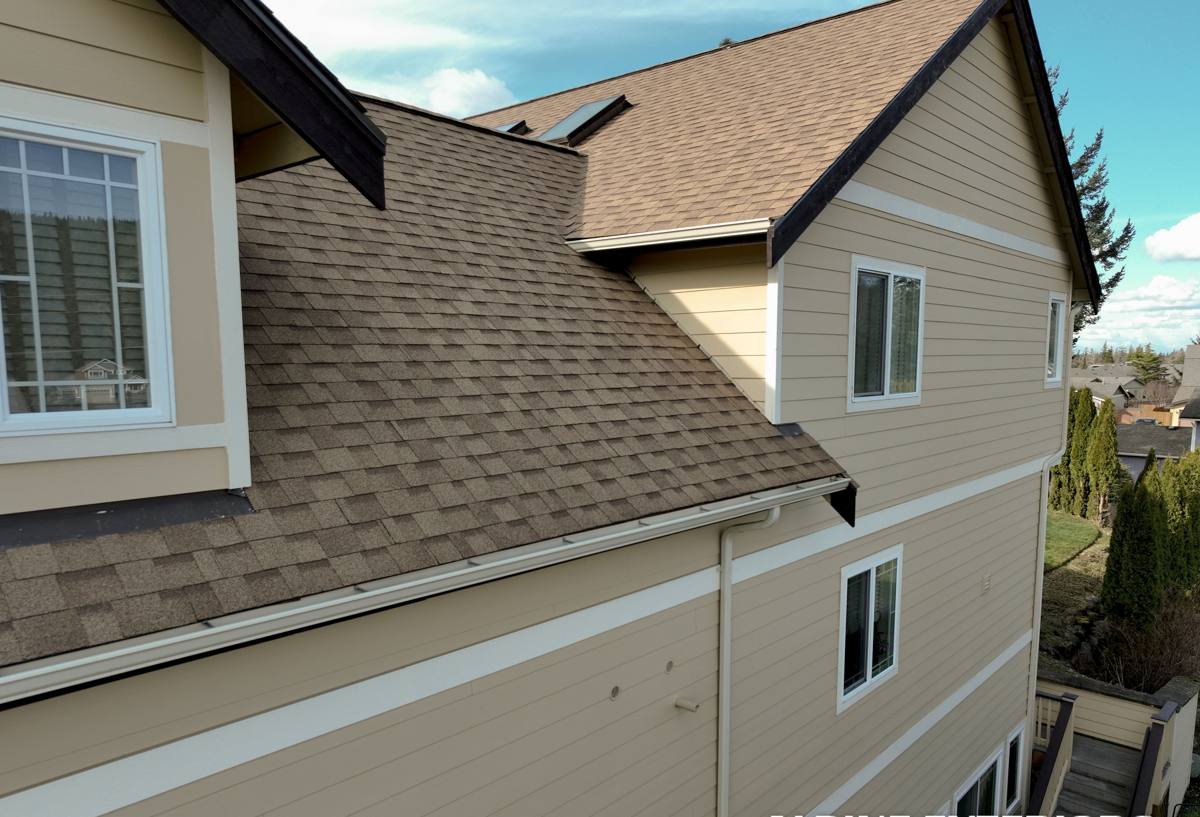
What Nooksack-Area Homes Actually Need From Their Windows
Every region has its own version of "normal" weather stress, and this one is defined by three things working against a building envelope at the same time.
Salt Air
Proximity to the water means airborne salt reaches farther inland than most people expect, especially during winter storms. Salt accelerates corrosion on unprotected metal hardware, pits certain finishes over time, and can degrade lower-grade weatherstripping faster than it would inland. It doesn't mean every window needs marine-grade everything — it means hardware and finish choices matter more here than they would in a dry, inland climate.
Driving Rain
Rain that comes in sideways during a windstorm doesn't behave like rain falling straight down. It pressurizes against the wall, finds gaps at the head flashing, the sill, and the jambs, and it will find a poorly lapped weather-resistive barrier before it ever shows up as a stain on drywall. This is the single biggest reason new-construction window failures in this region are almost always installation failures, not product failures.
A Long Moss Season
Damp, shaded, mild — that's a moss and algae growth pattern's favorite combination, and it's exactly what much of Whatcom County offers for a large chunk of the year. Moss on a roof gets attention because it's visible, but the same moisture-loving growth shows up around window sills, in corners of trim, and anywhere water sits instead of draining. Sill design and slope matter more here than in a climate where things actually dry out between storms.
Window Materials for New Builds in This Climate
New construction gives you a real choice of frame material, since you're not constrained by an existing opening. Here's how the common options hold up under Nooksack and Blaine conditions specifically.
| Frame Material | How It Handles Salt Air & Moisture | Maintenance | Typical Fit |
|---|---|---|---|
| Vinyl | Won't corrode; UV-stable finishes hold up well long-term | Low — occasional rinse | Most cost-effective, wide style range |
| Fiberglass | Very stable dimensionally; handles humidity swings without warping | Low | Higher upfront cost, longer service life |
| Wood-Clad (exterior clad in vinyl, fiberglass, or metal) | Good if the cladding and flashing details are done correctly; the wood core is protected, not exposed | Moderate — depends on cladding integrity at joints | Higher-end look, interior wood warmth |
| Bare Aluminum | Prone to corrosion in salt air unless it's a marine-rated, properly finished product | Higher | We steer most clients away from unclad aluminum here |
We're not going to tell you a product is "bad" — that's not a useful way to make a decision. What we will tell you honestly: in a marine-influenced climate, we favor materials and finishes with a track record of shrugging off moisture and salt without needing constant upkeep, because a window you have to babysit every season isn't doing its job.
The Installation Sequence Is What Actually Keeps Water Out
The window itself is rarely the point of failure. The flashing sequence around it is.
Sill Pan and Drainage First
Before a new-construction window ever sets into the opening, the rough sill should have a sloped, sealed pan — not just flat sheathing with tape over it. Any water that gets past the window (and over time, some always does) needs a built-in path back out, not a place to pool against framing.
Shingle-Lap Flashing Order
Sill flashing goes in first, then jamb flashing laps over it, then head flashing laps over the jambs, and the weather-resistive barrier laps over the head flashing last. Every layer sheds water onto the layer below it, the same way roof shingles work. Reverse that order anywhere in the sequence and you've built a funnel instead of a barrier.
Sealant Selection and Placement
Not every gap should be sealed solid — the bottom of the frame typically needs a way to drain, not a bead of caulk trapping water inside. We use sealants rated for the temperature swings and moisture exposure this climate actually produces, placed where they help drainage instead of blocking it.
Fastening and Shimming
A window that's out of square or under-shimmed will rack over time, stressing the seal at the corners first — which is exactly where driving rain concentrates. Correct shimming at the manufacturer's specified points keeps the frame true for the life of the window.
Energy Performance: What Actually Matters Here
Whatcom County isn't a brutal-heat or brutal-cold climate compared to much of the country, but it is a persistently damp, moderate one, which changes what glass package makes sense.
- Low-E coatings help manage heat loss during the cool, wet months that make up most of the year here — not just summer cooling.
- Double- or triple-pane options with argon fill reduce condensation risk on the interior glass surface, which matters in a humid climate where interior condensation can lead to sill damage over time.
- U-factor (heat loss) generally matters more for this climate than solar heat gain coefficient, since the region doesn't see the intense direct-sun exposure that drives cooling-focused glass choices elsewhere.
- Warm-edge spacers at the glass perimeter reduce cold spots that otherwise attract condensation right where moisture can reach the frame.
We'll walk through glass package options against your specific build — orientation, roof overhangs, and room use all affect what actually makes sense, and we'd rather explain the trade-offs than upsell a package you don't need.
How We Handle New-Construction Window Jobs in Nooksack
New-construction window work means coordinating with a build schedule, not working around an occupied house, and that changes how the job runs.
Working With Your Builder or GC
We coordinate directly with the framer and general contractor on rough opening sizes, header heights, and flashing responsibilities before windows ever arrive on site, so there's no guesswork about who's doing what when the crew shows up.
Timing in the Build Sequence
Windows go in after the weather-resistive barrier is up and before siding starts — that window (no pun intended) is when the flashing details actually get set correctly. Rushing this stage to keep a broader schedule moving is where corners get cut on other jobs. We don't move faster than the flashing sequence allows.
Inspection Points Along the Way
We check sill pan integrity before the window sets, confirm level and square once it's shimmed and fastened, and verify the full flashing lap sequence before the weather-resistive barrier gets taped over it. Each step gets checked before it's covered by the next one, because once siding goes up, those details aren't visible again.
Maintenance Checklist for New Windows in This Climate
A correctly installed new-construction window is close to maintenance-free, but "close to" isn't "zero" in a salt-air, moss-prone climate. A little seasonal attention goes a long way.
- Rinse accumulated salt film off exterior frames and hardware a couple of times a year, especially after winter storm systems.
- Check that weep holes at the sill (if your window design has them) stay clear of debris, moss, or paint overspray.
- Look for any green growth starting at sill corners or trim joints — catching it early is easier than removing established moss.
- Test that operable hardware (locks, cranks, latches) still moves freely; salt air can stiffen mechanisms before it visibly corrodes them.
- Inspect exterior caulk lines annually for cracking or separation, particularly on south- and west-facing elevations that take the most weather.
Cost Factors for New-Construction Window Packages
Every new build is different, so we're not going to quote a number that doesn't apply to your project — but these are the variables that actually move the price, in order of typical impact.
| Factor | Why It Matters |
|---|---|
| Frame material | Vinyl, fiberglass, and clad-wood span a wide cost range before you even get to size or glass |
| Number and size of openings | More glass area and more units both add labor and material cost |
| Glass package | Low-E coatings, gas fills, and triple-pane options add cost but reduce long-term energy loss |
| Custom shapes or sizes | Anything outside standard stock dimensions requires special ordering and typically longer lead times |
| Flashing and sill detailing | Doing the sill pan and flashing sequence correctly takes real labor time — it's not a place to shortcut for a lower bid |
| Site access and build stage | Coordinating install timing with framing, siding, and other trades affects scheduling and efficiency |
The cheapest bid on a new-construction window package is almost always cheap because it's skipping labor on the flashing and sill work — the parts nobody sees once siding goes up, and the parts that matter most in this climate.
Why It Matters That We Already Work in Nooksack and Blaine
A crew that's worked new construction across Whatcom County has already seen how this specific climate treats window installations over years, not just at the walkthrough. That experience shapes real decisions — which sill details hold up, which hardware finishes actually resist salt exposure, where driving rain concentrates on a given elevation, and how much slope a sill needs to shed water instead of holding it. It's the difference between following a generic install manual and installing windows that are built for what Nooksack and Blaine actually throw at a house.
If you're framing new construction or planning an addition in the Nooksack area and want windows installed correctly from the rough opening forward, we're glad to walk your plans and give you a free, no-pressure estimate — just fill out the form below.