 Blaine Siding
 Board & Batten Siding on Point Roberts: A Different Kind of Exposure
Point Roberts sits on its own little peninsula, cut off from the rest of Washington by water on three sides and reachable by land only through Canada. That geography is part of what makes the community feel distinct — and it's also why the siding on Point Roberts homes takes a harder beating than siding just a few miles inland. Wind off the water carries salt spray onto exterior walls year-round, driving rain comes in sideways during winter storms, and the mix of shade, tree cover, and near-constant damp air in the cooler months keeps moss and algae established on north- and west-facing walls long after other parts of Whatcom County have dried out.
Board and batten is a popular choice out here for good reason — the vertical lines suit the mix of cottages, newer builds, and coastal-style homes in the area, and it reads as clean and modern without looking out of place next to older properties. But board and batten is also a style that punishes a bad installation faster than standard lap siding does, because of how the batten strips and the panel joints behind them are supposed to shed water. Done right, in the right material, it holds up beautifully in a marine climate. Done wrong — or done in the wrong material — it's one of the faster ways to end up with hidden rot behind a wall that looks fine from the curb.
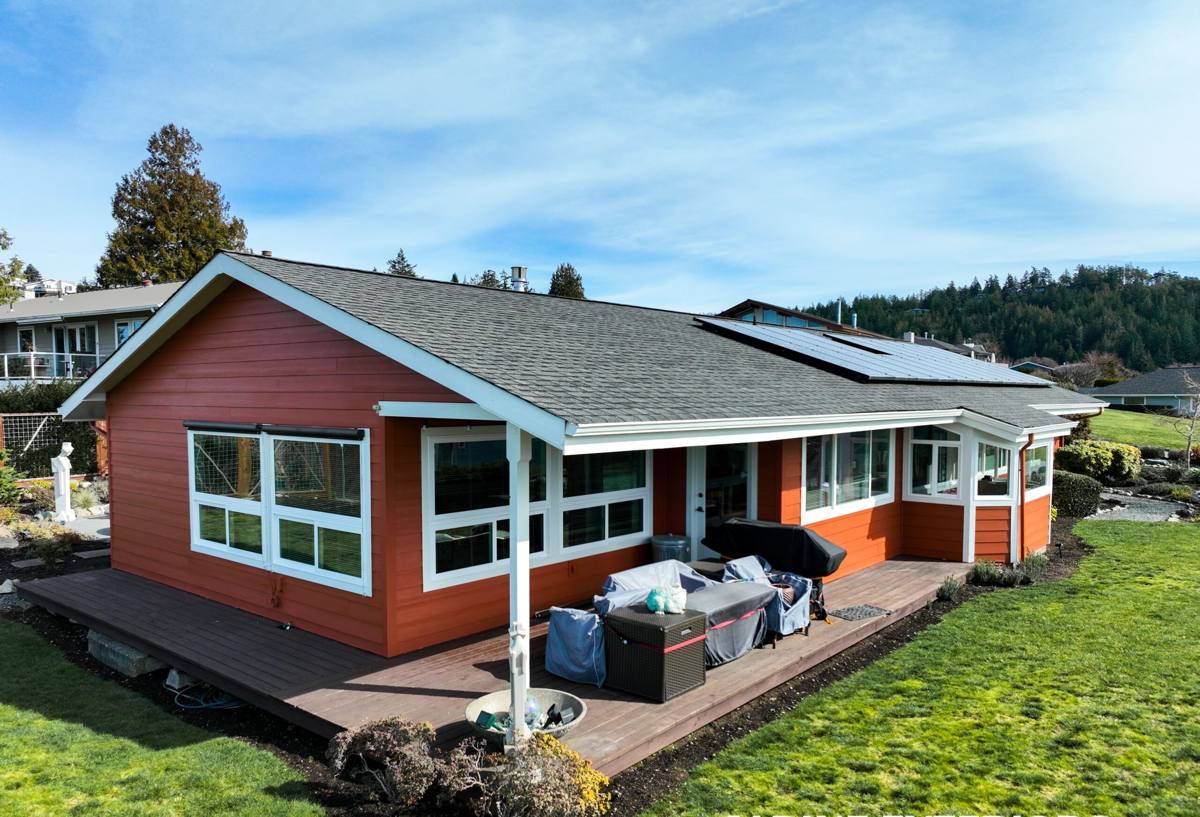
What Point Roberts' Climate Actually Does to Siding
Salt Air
Airborne salt is corrosive to fasteners and hard on paint film and factory finishes. Over years, it accelerates fading, chalking, and finish breakdown on lower-grade materials, and it will find and exploit any exposed, unprotected fastener or cut edge.
Driving Rain
Storms coming off the water don't just fall straight down — they push rain sideways into wall assemblies, which means seams, laps, and butt joints have to be detailed to shed water actively, not just sit there and hope gravity does the work.
Moss and Algae Season
Shaded, north-facing, and tree-covered walls on Point Roberts stay damp for long stretches of the fall, winter, and spring. That moisture is exactly what moss and algae need to get established, and once they're growing on a wall they hold even more moisture against the surface underneath.
What a Correct Board & Batten Job Actually Involves
Board and batten isn't just "vertical planks with strips over the seams." The performance of the whole system comes down to details most homeowners never see once the job is finished:
- Drainage plane behind the siding — a proper water-resistive barrier and, ideally, a rainscreen gap so any moisture that does get past the siding can drain and dry instead of sitting against the sheathing.
- Batten spacing and fastening — battens have to be fastened into framing or blocking, not just into the panel, and spaced correctly so they're doing their job of covering the seam, not just decorating it.
- Fastener choice — corrosion-resistant fasteners matter everywhere, but they matter more here, where salt air is working on every exposed screw or nail head year-round.
- Flashing at every horizontal transition — window heads, trim boards, roof-to-wall intersections, and any place a horizontal surface meets the siding needs flashing detailed to kick water out and away from the wall.
- Factory-finished panels — a finish applied and cured under factory conditions holds up to salt air and UV far better than a field-applied coating, especially on end grain and cut edges.
Skip any one of these and the siding can still look right for a year or two. The problems that show up from cutting corners on a board and batten install tend to be slow and hidden — trapped moisture behind the wall — rather than obvious.
Why We Only Install James Hardie for Board & Batten
We build board and batten with James Hardie fiber cement panels and Hardie trim battens, factory-finished in ColorPlus. We don't offer vinyl board and batten, LP SmartSide, primed spruce, cedar, or other fiber cement brands, and on a site like Point Roberts, that's not a marketing preference — it's a response to what the climate does to each of those materials over time.
Why Not Wood
Real wood board and batten — cedar or primed spruce — can look great going in, but it depends on paint film to keep moisture out, and paint film is exactly what salt air and driving rain break down fastest. Repainting on a schedule tight enough to actually protect the wood underneath is a real, recurring cost, and the battens themselves — thin strips of wood — are often the first pieces to show rot at the ends and fastener points.
Why Not Vinyl
Vinyl board and batten is affordable and low-maintenance in the sense that it doesn't need painting, but it's a thin material that fades and can become brittle with sustained UV and salt exposure, and it relies on loose-fit installation to handle expansion and contraction — which means it's not doing much to actively manage the water hitting it. It also isn't fire-resistant, which matters more each wildfire season across Washington.
Why Not Other Fiber Cement Brands
Products like Cemplank or Allura compete on price against Hardie, but James Hardie engineers its HardieZone system by climate — our region calls for the HZ5 formulation, built for freeze-thaw cycling and sustained moisture rather than desert or subtropical heat — and backs it with a strong, transferable non-prorated warranty on both the substrate and the ColorPlus finish. That combination of climate-specific engineering and warranty structure is why we standardized on one manufacturer instead of installing whatever's cheapest that week.
Comparing Board & Batten Materials for This Climate
| Material | Salt Air / Moisture Behavior | Moss & Algae Resistance | Maintenance Burden |
|---|---|---|---|
| James Hardie fiber cement | Non-combustible, dimensionally stable, factory ColorPlus finish resists UV and salt-driven fading | Dense, engineered surface resists moisture uptake better than wood | Occasional wash; no repainting on the standard cycle other materials need |
| Cedar / primed spruce | Absorbs moisture at end grain and battens; paint film degrades faster in salt air | Organic surface is more hospitable to moss and algae growth | Repainting/resealing on a recurring cycle; batten ends need regular inspection |
| Vinyl | Doesn't rot, but fades, chalks, and can become brittle with sustained UV and salt exposure | Smooth surface sheds some growth, but grooves and seams still trap grime | Low, but replacement (not repair) is usually the only fix once it's damaged or badly faded |
| LP SmartSide / engineered wood | Engineered strand product is moisture-resistant but still wood-based; edge sealing is critical | Better than raw wood but still an organic substrate | Periodic caulk and paint maintenance at seams and cut edges |
How We Approach a Board & Batten Job in Point Roberts
Working on the peninsula comes with logistics most contractors elsewhere in Whatcom County don't think about. Getting a crew and materials to Point Roberts means routing through Canada, which affects how we schedule and stage a job — we plan deliveries and crew days in efficient blocks rather than making repeat trips, and we build that into the estimate up front so there are no surprises. A crew that already knows the drive, the border crossing logistics, and the general building patterns on the peninsula moves through a job more efficiently than one encountering all of that for the first time.
On site, our process is the same discipline we use everywhere, applied with extra attention to the details that matter most in this climate:
- Inspect the existing wall assembly and remove failing siding down to sound sheathing.
- Repair or replace any water-damaged sheathing or framing found underneath — this is common on older board and batten walls near the water and gets addressed before anything new goes up.
- Install a proper water-resistive barrier and drainage plane.
- Flash every window, door, and horizontal trim transition before siding goes on.
- Install Hardie panels and battens to manufacturer spec, with corrosion-resistant fasteners throughout.
- Caulk and finish per Hardie's published installation requirements — not more, not less, since over-caulking can trap moisture as easily as under-caulking lets it in.
Living With Board & Batten Siding on the Peninsula
Even the right material in the right installation benefits from a little seasonal attention out here. None of this is intensive, but it's worth building into a routine:
- Rinse salt residue and grime off exterior walls once or twice a year, especially on sides facing open water.
- Keep gutters and downspouts clear so roof runoff isn't dumping extra water onto siding and battens below.
- Trim back vegetation and tree branches that keep a wall shaded and damp longer than the rest of the house.
- Watch shaded, north-facing walls for early moss or algae growth and address it before it spreads.
- Check caulking at trim and window transitions periodically — caulk is a maintenance item on any siding system, and it's the first line of defense at penetrations.
James Hardie panels and ColorPlus finishes are built to make this list short. You're not on a repainting schedule, and the material itself isn't feeding moss the way organic siding can. But no siding is fully maintenance-free in a marine climate, and the homeowners who get the longest life out of their siding are the ones who do this handful of simple checks rather than ignoring the wall until something looks wrong.
Signs It's Time to Replace Board & Batten Siding
A few things worth watching for, particularly on older wood or engineered-wood board and batten walls:
- Soft spots or visible swelling at batten ends or panel bottoms
- Persistent moss or dark staining that returns quickly after cleaning
- Peeling or bubbling paint, especially at seams and fastener points
- Visible gaps opening up between battens and panels
- A musty smell or soft drywall on an interior wall behind the siding
Any of these are worth a professional look before they turn into a larger repair. Catching moisture intrusion early is almost always cheaper than fixing what it did to the framing underneath.
Get a Free Estimate for Your Point Roberts Home
If you're weighing board and batten siding for a Point Roberts property, we're happy to come take a look, walk the exterior with you, and give you a straight, no-pressure estimate — including what we find on the existing wall assembly, not just a number for new siding. Use the form below to get started.