 Blaine Siding
 Why Point Roberts Roofs Wear Differently
Point Roberts sits on its own peninsula at the tip of Whatcom County, surrounded by water on three sides and exposed to weather moving in off the Salish Sea. That geography matters more for a roof than most homeowners realize. Salt-laden air corrodes exposed metal faster than it would a few miles inland, wind-driven rain finds its way under poorly lapped flashing and shingles, and the shade from mature trees combined with a long, cool, wet season gives moss every advantage it needs to take hold. A roof built or replaced without accounting for all three of those factors tends to show problems years before it should.
None of this means a roof in Point Roberts needs to be exotic or over-built. It means the details — fastener choice, underlayment coverage, ventilation, and moss-resistant materials — have to be right the first time, because this isn't a climate that's forgiving of shortcuts.
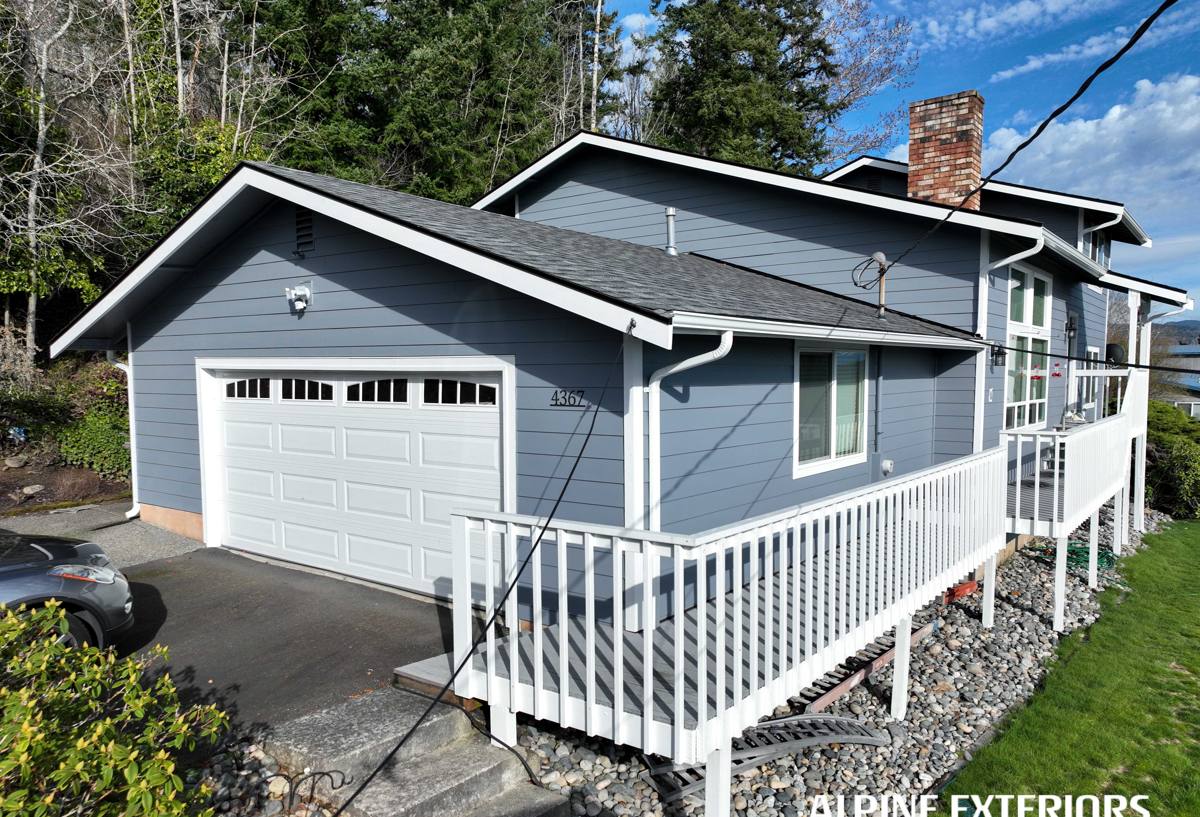
Salt Air, Driving Rain, and Moss: The Three Things That Age a Roof Here
Salt Air
Airborne salt accelerates corrosion on any unprotected or lower-grade metal — nail heads, flashing, gutter fasteners, and vent boots all take the hit over time. Standard electro-galvanized fasteners can start showing rust streaks well before a typical asphalt shingle warranty runs out. In a marine-exposed area like this, we treat corrosion-resistant fasteners and flashing as a baseline requirement, not an upgrade.
Driving Rain
Storms coming off the water often bring rain sideways, not straight down. That kind of wind-driven moisture exploits any gap in flashing around chimneys, skylights, and valleys, and it can drive water up under shingle tabs that aren't sealed or fastened correctly. A roof assembly built for a calmer climate simply isn't built for what Whatcom County's coastal edge sees several times a winter.
Moss
Cool temperatures, consistent moisture, and shade are exactly what moss needs, and Point Roberts has all three for a good part of the year. Moss doesn't just look bad — it holds water against the roofing surface, lifts shingle edges as it grows, and can work its way under laps over time. Left unmanaged for years, it shortens the life of an otherwise sound roof.
Signs a Roof Needs Replacing, Not Just Repairing
Not every roof problem in this climate calls for a full replacement, but there's a point where patching stops making financial sense. Signs worth taking seriously include:
- Granule loss heavy enough that you're finding grit in gutters every time you clean them
- Shingles that are cupping, curling, or cracking across large sections rather than one isolated spot
- Moss coverage thick enough that it's lifting shingle edges instead of just staining the surface
- Soft spots in the decking, visible sagging, or staining on interior ceilings
- Flashing that's rusted through or separating at chimneys, valleys, or wall intersections
- A roof that's already had multiple repairs in the same areas within a few years
If a roof is past the point of spot repair, we'll say so plainly — and if it isn't, we'll say that too. Replacing a roof that has years of life left doesn't serve anyone.
What a Correct Roof Replacement Involves
Full Tear-Off and Deck Inspection
We remove the existing roofing down to the deck rather than layering over it. That's the only way to actually see what's underneath — soft or delaminated sheathing, hidden water staining, or old flashing that's been failing quietly for years. Any damaged decking gets replaced before anything new goes down.
Underlayment That Matches the Exposure
Given how much wind-driven rain this area sees, we pay particular attention to ice-and-water barrier at eaves, valleys, and around every roof penetration — the spots most likely to take on water in a sideways storm. A synthetic underlayment across the full deck adds a second line of defense the older felt products don't provide as reliably.
Ventilation
Balanced intake and exhaust ventilation keeps the underside of the roof deck drier and closer to outdoor temperature, which does two things: it reduces the condensation that can rot sheathing from below, and it helps limit the cool, damp microclimate under the roof that moss and algae thrive on. A roof replacement that skips ventilation is leaving a known problem in place.
Flashing and Fasteners Rated for Marine Exposure
Every flashing detail — chimney, sidewall, valley, vent — gets rebuilt with corrosion-resistant materials, and fasteners are chosen with the salt air in mind rather than whatever is cheapest at standard grade. This is one of the areas where cutting corners doesn't show up as a problem for a year or two, then costs far more to fix once it does.
Comparing Roofing Materials for This Climate
There's no single "best" roofing material for every home — it depends on budget, roof pitch, tree cover, and how much long-term maintenance a homeowner wants to take on. Here's how the common options stack up against Point Roberts' specific conditions:
| Material | Salt Air / Corrosion | Moss Resistance | Typical Lifespan | Trade-Offs |
|---|---|---|---|---|
| Standard asphalt shingle | Good, if fasteners/flashing are upgraded | Moderate; benefits from algae-resistant granules | 20–30 years | Lowest upfront cost; needs moss upkeep in shaded areas |
| Algae/moss-resistant shingle | Good, same fastener considerations apply | Better; copper- or zinc-infused granules slow regrowth | 25–30 years | Modest cost premium; still benefits from periodic cleaning |
| Standing seam metal | Excellent with proper coating/fastener spec | Very good; smooth surface sheds debris and moisture | 40–50+ years | Higher upfront cost; installation quality matters a lot |
| Cedar shake | Fair; needs regular treatment near salt exposure | Poor without diligent maintenance | 20–25 years with upkeep | Highest maintenance burden in a wet, shaded climate |
We'll walk through these options against your specific roof — pitch, sun exposure, tree cover, and budget all factor in — rather than defaulting to one product for every house.
Moss Prevention Doesn't End at Installation
A new roof, correctly installed, resists moss far better than an aging one — but no roofing material in a climate like this is entirely maintenance-free. Zinc or copper flashing strips near the ridge, periodic gentle cleaning (never pressure washing, which damages granules), and keeping overhanging branches trimmed back all extend the life of the investment. We'll explain what your specific roof and setting will actually need, rather than selling a one-size-fits-all maintenance plan.
Our Process, Start to Finish
- On-site inspection — we assess the current roof, decking condition, ventilation, and any problem areas specific to your home's exposure and tree cover.
- Written estimate — clear scope, material options, and pricing, with the reasoning behind our recommendation spelled out.
- Scheduling — we plan around weather windows, since a multi-day tear-off needs a reasonable stretch of dry conditions.
- Tear-off and deck repair — old roofing removed, decking inspected and repaired as needed before anything new goes on.
- Installation — underlayment, flashing, ventilation, and the roofing material installed to spec, not rushed.
- Cleanup and walkthrough — magnetic sweep for debris, and a final walkthrough so you know exactly what was done.
Why Local Experience in Point Roberts Specifically Matters
Point Roberts is a Whatcom County community, but it's physically cut off from the rest of Washington — reaching it by road means crossing through Canada and back into the U.S. That's not a minor detail for a construction project. Material deliveries, crew scheduling, and timing all have to account for that border crossing, and a crew unfamiliar with it can end up with delays that have nothing to do with the actual roofing work.
A contractor who already works in Point Roberts has that logistics piece figured out — how to schedule deliveries, how to plan crew days so the crossing doesn't eat into work time, and what permitting looks like for the area. That familiarity translates directly into a project that runs on the timeline you were quoted, instead of one that stalls on logistics nobody planned for.
What Drives the Cost of a Roof Replacement Here
| Factor | Why It Matters Locally |
|---|---|
| Roof size and pitch | Steeper roofs and larger square footage mean more material and labor time |
| Decking condition | Hidden moisture damage found during tear-off can add repair scope |
| Material choice | Standard shingle, algae-resistant shingle, and metal carry different upfront costs and lifespans |
| Flashing and fastener upgrades | Marine-grade materials cost more than standard grade but avoid early corrosion |
| Ventilation work | Adding or correcting intake/exhaust venting is easier to do during a full replacement |
| Access and logistics | Scheduling around the border crossing and site access can affect timeline, not just price |
A Practical Checklist Before You Commit
- Get a written scope that specifies underlayment type and coverage, not just "new roof installed"
- Ask what fastener and flashing materials will be used, given the salt air exposure
- Confirm whether ventilation will be assessed and corrected, not just left as-is
- Ask how the contractor handles material delivery and scheduling for Point Roberts specifically
- Get manufacturer warranty terms in writing, including what voids them
- Make sure decking repair, if needed, is priced as a contingency up front rather than a surprise later
If you're weighing repair versus replacement, or just want an honest read on what your roof actually needs, we're happy to take a look and walk you through the options. The estimate is free, there's no pressure, and you can use the form below to get started.