 Blaine Siding
 Roof Repair Built for Point Roberts' Exposure
Point Roberts sits on its own peninsula, cut off from the rest of Whatcom County by the international border, and that geography puts homes here under a heavier, more constant dose of coastal weather than most towns in the county ever see. Wind off the Strait of Georgia, salt-laden air on every side, and a wet season that lingers longer than it does further inland all add up to roofs that age faster and fail differently than roofs built the same way in a sheltered, inland location. Repairing a roof out here isn't the same job as repairing one a few miles inland, and treating it that way is how small leaks turn into rot.
We work siding, roofing, windows, and decks across Whatcom County, and Point Roberts is regular territory for our crew despite the drive and border crossing it takes to get there. That matters for roof repair specifically, because a lot of what makes a repair hold up out here comes down to details a crew only learns by working this exposure repeatedly, not by reading a spec sheet once.
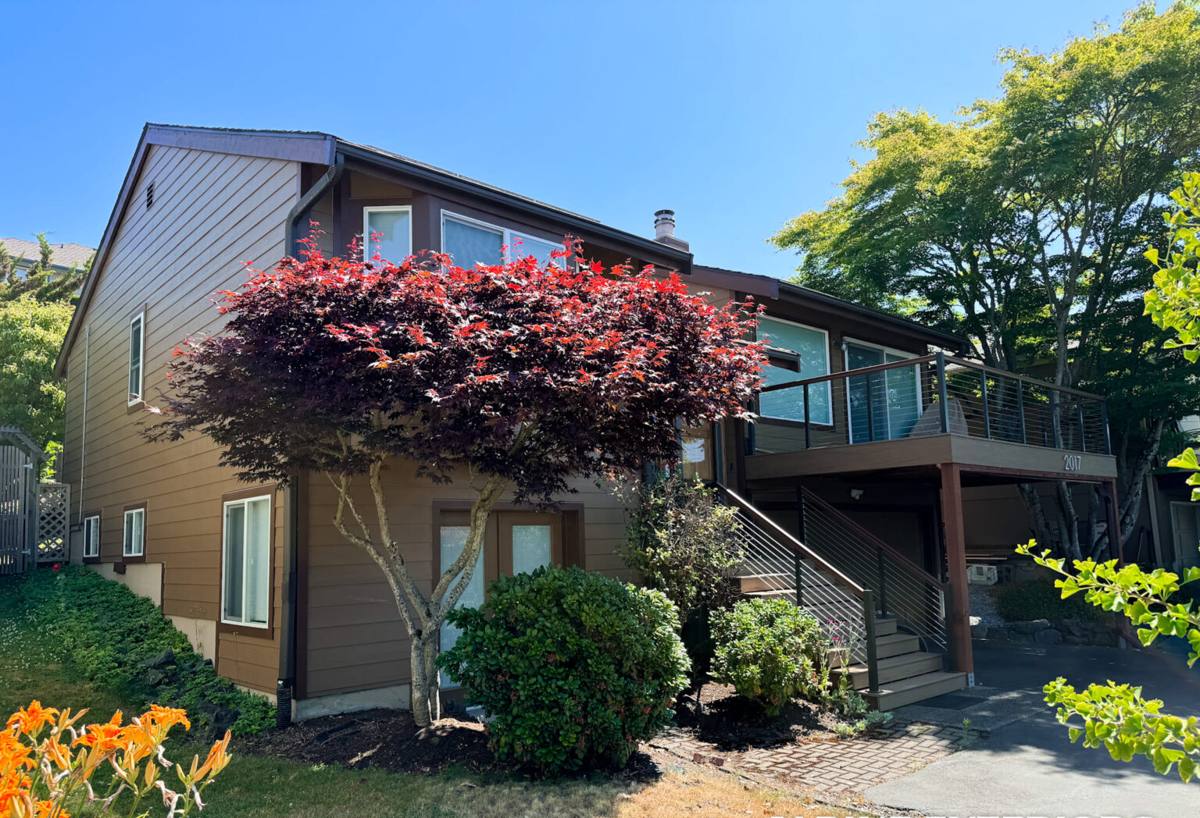
What Point Roberts' Climate Does to a Roof
Salt Air on an Exposed Peninsula
With water on three sides, Point Roberts homes take in salt-laden air more consistently than towns set further back from the coast. Salt accelerates corrosion on exposed fasteners, flashing, and any metal roofing components, and it breaks down lower-grade coatings and sealants faster than a dry inland climate would. On a roof, that shows up first at nail heads, valley metal, and any exposed hardware that wasn't specified with corrosion resistance in mind.
Driving Rain Off the Strait
Storms coming off the water don't fall straight down here — wind drives rain sideways into roof valleys, up under shingle tabs, and into any gap around a vent pipe, chimney, or wall-to-roof transition. That sideways-driven moisture is harder on a roof than the same rainfall total would be in a calm climate, because it finds entry points a straight-down rain never would. Point Roberts' open exposure to the Strait means this pattern is more frequent and more forceful than it is in more sheltered pockets of the county.
A Long Moss Season
Mild temperatures and near-constant moisture give moss a growing season that can run most of the year on shaded or north-facing roof planes. Moss holds moisture against the roofing material long after the surrounding air has dried out, and it works its way under shingle edges over time, lifting them and giving wind-driven rain a path underneath. Roofs with heavy tree cover, which describes a good share of Point Roberts properties, tend to see moss return quickest after cleaning if the underlying moisture problem isn't addressed too.
What a Correct Roof Repair Actually Involves
Not every roof problem needs a full replacement, and a good repair should fix the actual failure rather than patch over the symptom. On Point Roberts homes, that generally means:
- Finding the real entry point, not just the visible stain: Water often travels along rafters or sheathing before showing up as a ceiling stain, so the leak's source can be several feet from where the damage appears indoors.
- Replacing damaged decking, not just shingles over it: Soft or delaminated sheathing under a leak needs to come out; shingling over compromised decking just hides the problem until it gets worse.
- Correct flashing at every penetration: Vent pipes, chimneys, skylights, and wall-to-roof transitions are the most common leak points on any roof, and they're where wind-driven rain off the water finds gaps first.
- Matching underlayment and shingle specs to the repair area: A patch that doesn't tie into the surrounding roofing correctly, with proper laps and fastener patterns, can leak worse than the original problem.
- Ventilation checked as part of the repair: Poor attic ventilation traps moisture against the roof deck from underneath, which can cause or worsen the exact kind of rot and shingle failure a repair is meant to fix.
None of this is exotic work. It's the difference between a repair that holds through the next few storm seasons and one that needs to be redone within a year or two.
When Repair Makes Sense vs. When It Doesn't
A roof repair is the right call when the damage is localized — a failed section of flashing, a handful of wind-damaged shingles, a leak around one penetration — and the rest of the roofing material still has useful life left. Repair stops making sense once damage is spread across multiple areas, the roofing material is broadly past its service life, or repeated repairs in the same spots suggest the underlying roof system is failing rather than one isolated component. We'll tell you honestly which situation your roof is in rather than defaulting to whichever recommendation is more profitable for us.
How Our Roof Repair Process Works
- Inspection: We get up on the roof, not just look at it from the ground, and trace visible damage back to its actual source. This is also when we check flashing, valleys, vent boots, and attic ventilation, since a leak's real cause is often somewhere other than where it shows up indoors.
- Honest assessment: We tell you what we found, what's driving the problem, and whether repair or replacement is the more sensible option given the roof's age and condition — with the reasoning explained, not just a number.
- Written scope and estimate: Before any work starts, you get a clear description of what's being repaired and why, so there's no ambiguity about what the price covers.
- The repair itself: Damaged decking, flashing, and roofing material get replaced to match manufacturer specs, with attention to the details — fastener type, flashing laps, sealant placement — that matter most in a coastal, wind-driven-rain climate.
- Cleanup and walkthrough: We clear debris and old material from the property and walk the repair with you so you know what was done and what to watch for going forward.
Roof Repair Cost Factors on Point Roberts
| Factor | What Drives Cost | Point Roberts Consideration |
|---|---|---|
| Scope of damage | Size of the affected area and whether decking needs replacement | Wind-driven rain often spreads moisture damage beyond the visible leak point |
| Roof access | Pitch, height, and how the roof can be safely staged | Standard for most homes, but steeper or taller roofs add time |
| Material match | Availability of matching shingle or roofing material for the repair area | Older roofs may need a close color/style match rather than an exact one |
| Flashing and penetrations | Number of vents, chimneys, or wall transitions near the repair | Each penetration is a likely leak point in driving, wind-blown rain |
| Underlying rot or ventilation issues | Whether sheathing or framing needs repair before new roofing goes on | Moss and shaded roof planes make hidden moisture more common here |
These are general drivers, not a quote. Every roof on Point Roberts sits under a slightly different mix of tree cover, wind exposure, and age, so we walk the roof and, when needed, check the attic before putting a real number on the work. What looks like a small patch from the ground sometimes turns into a larger repair once we're actually up there — and occasionally the opposite, where a leak that looked bad indoors turns out to be a straightforward flashing fix.
Signs a Point Roberts Roof Needs Repair
- Water stains on ceilings or upper walls, especially after a windy storm off the water
- Shingles that are missing, curling, cracked, or shedding granules
- Moss buildup that returns quickly after cleaning, particularly on shaded or north-facing slopes
- Rust staining or visibly corroded flashing and fasteners
- Sagging or soft-feeling sections of roof deck when walked
- Daylight visible through the attic where there shouldn't be any
- Granules collecting in gutters faster than normal wear would explain
Timing a Roof Repair Around Point Roberts' Weather
The wettest, windiest stretch of the year in this part of Whatcom County typically runs from late fall through winter, and Point Roberts' open exposure to the Strait can make that stretch harder on both the roof and the repair crew than it is in more sheltered towns. Spring and summer generally offer drier, more stable conditions for roofing work, which matters because shingles, underlayment, and sealants all set up and perform better when installed in dry weather rather than between storm systems. That said, an active leak doesn't wait for the calendar to cooperate, and a roof letting water into the structure is worth addressing on its own timeline rather than holding out for the ideal season.
Why a Crew That Already Works Point Roberts Matters
Point Roberts' border-crossing access means fewer contractors treat it as regular territory, and that shows up in how repairs get handled. A crew that works this peninsula routinely has already seen how salt air, wind-driven rain, and a long moss season behave on real roofs here over multiple seasons, not just how a shingle or flashing product performs on paper. That experience shapes practical decisions during a repair: which penetrations tend to fail first in this wind pattern, which roof planes stay wet longest under tree cover, and which fastener and flashing choices are worth the extra time so you're not dealing with the same leak again after the next storm off the water. It also means logistics — getting materials and a crew across the border reliably — are already worked out rather than a surprise add-on to your repair.
If your Point Roberts home has a leak, storm damage, or a roof that's showing its age, we're glad to take a look and give you a straightforward, honest assessment of what it actually needs. Reach out using the form below to schedule a free, no-pressure estimate.