 Blaine Siding
 Custer sits close enough to the water and far enough into the tree line that its roofs take a beating from two directions at once — salt-laden air rolling in off the bays near Blaine, and shade-grown moss creeping across every north-facing slope for most of the year. A roof replacement out here isn't just about swapping old shingles for new ones. It's about building a roof system that's matched to how this specific stretch of Whatcom County actually behaves, month after month, year after year.
Why Roofs Age Faster in This Part of Whatcom County
Three things wear on a Custer roof harder than they would somewhere inland: salt air, sustained rain, and moss. Salt-carrying moisture works its way into metal fasteners, flashing, and any exposed edge, speeding up corrosion long before the shingles themselves would otherwise fail. Driving rain off the Strait doesn't just fall straight down — wind-driven rain gets pushed sideways and upward under poorly lapped shingles and around flashing that was never quite sealed right the first time. And the long moss season, fed by shade from surrounding conifers and consistently damp conditions, means organic growth has nearly year-round conditions to take hold.
None of these are exotic problems. They're just constant, low-grade stress that adds up. A roof that would last 25-30 years in a dry, sun-exposed climate often shows real wear here well before that, particularly on the shaded, north-facing sections that never fully dry out between rains.
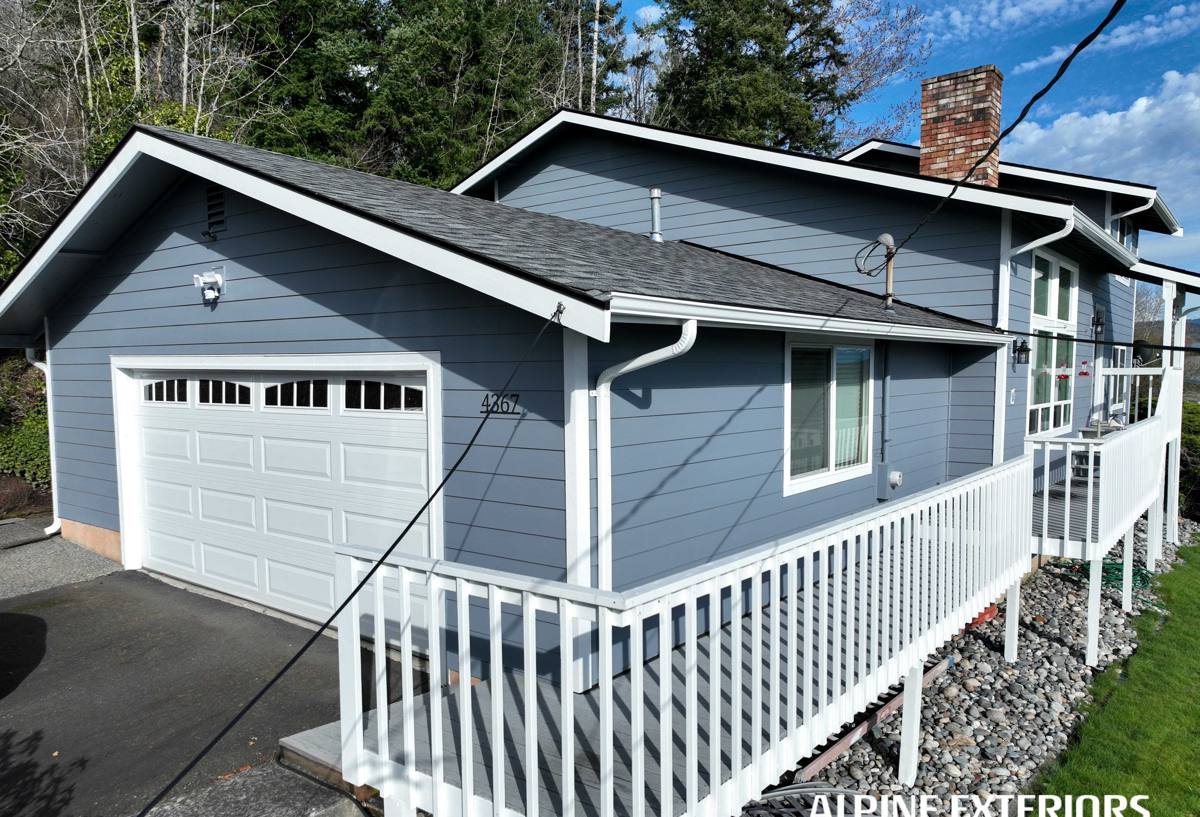
Signs a Custer Roof Needs Replacement, Not Just Repair
Repairs make sense when the damage is isolated. Replacement makes sense when the roof's overall ability to shed water has broken down. Here's what tends to separate the two out here:
- Moss mats thick enough that you can't see the shingle surface underneath, especially on north or shaded slopes
- Granule loss heavy enough that you're finding grit in the gutters every time it rains
- Shingles that are curling, cupping, or lifting at the edges — a sign wind-driven rain has been getting underneath
- Soft spots in the decking when walked, or staining on the underside of the roof deck in the attic
- Rusted or corroded flashing around chimneys, vents, and valleys
- Repeated leaks in the same general area even after prior patch repairs
- A roof that's already 20+ years old with no history of a full tear-off
If you're only seeing one or two of these, a repair may still buy you time. If you're seeing several at once, that's usually the roof telling you the underlying system — not just the surface — has given out.
Choosing a Roofing Material for This Climate
There's no single "best" roofing material for every home — it depends on your roof's pitch, how much shade it sits under, and your budget. But some materials handle Custer's combination of salt air, rain, and moss better than others.
| Material | How it handles salt air & rain | Moss resistance | Typical lifespan here |
|---|---|---|---|
| Architectural (laminate) asphalt shingles | Good when properly flashed and ventilated | Moderate — benefits from zinc/copper strips at ridges | 20-30 years |
| Standing seam metal | Very good with proper coating; sheds water fast | High — little for moss to grip | 40-50+ years |
| Cedar shake | Moderate — needs regular treatment and airflow underneath | Low without maintenance; prone to moss without upkeep | 20-30 years with upkeep |
| 3-tab asphalt shingles | Fair — thinner profile, more prone to wind lift | Moderate | 15-20 years |
We'll talk through the real trade-offs for your specific roof — steep or low slope, shaded or open, budget-conscious or built for the long haul — rather than pushing one product for every house. Cedar shake, for instance, can look great, but it demands a maintenance commitment that not every homeowner wants to take on given how much moisture this area sees.
What a Correct Tear-Off and Replacement Actually Involves
Full Tear-Off, Not Overlay
In a climate this wet, layering new shingles over old ones is a shortcut that traps moisture and hides deck damage. A proper replacement means stripping to the deck, so we can actually see what's underneath — and fix any soft or rotted sheathing before anything new goes down.
Underlayment and Ice-and-Water Shield
Synthetic underlayment across the whole roof, with self-adhering ice-and-water shield at eaves, valleys, and around penetrations — the spots where wind-driven rain is most likely to find a way in. This matters more here than in drier parts of the state.
Flashing
New flashing at every chimney, vent, skylight, and valley. Old flashing is one of the most common failure points we find on Custer roofs, and reusing it just to save a step is a false economy.
Ventilation
Balanced intake and exhaust ventilation keeps the attic and roof deck drier, which slows both wood rot and moss growth from the underside out. A roof that can't breathe properly stays damp longer after every rain.
Moss-Resistant Details
Where it makes sense, we install zinc or copper strips near the ridge, which release trace metals that discourage moss regrowth as rain washes over them — a small addition that meaningfully extends the time between moss treatments.
Ventilation and Moisture Control Deserve Their Own Attention
It's tempting to think of a roof as just the shingles, but the moisture management system underneath is what determines how long those shingles actually last in this climate. Poor attic ventilation causes condensation to build up on the underside of the deck, which rots sheathing from the inside while the shingles on top still look fine. We check existing ventilation as part of every replacement — soffit vents, ridge vents, and any gaps that have been painted or insulated shut over the years — and correct it as part of the job, not as an upsell afterward.
Cost Factors for a Custer Roof Replacement
Every roof is different, and we won't quote a number without seeing yours, but these are the factors that most often move the price up or down:
| Factor | Effect on cost |
|---|---|
| Roof size and number of facets/valleys | More complexity means more labor and material for flashing and cuts |
| Pitch and accessibility | Steep or hard-to-access roofs require more safety setup and time |
| Deck condition underneath | Rotted sheathing found during tear-off adds material and labor |
| Material choice | Asphalt is the most budget-friendly; metal costs more upfront but lasts longer |
| Layers to remove | Tearing off multiple existing layers takes more time than a single layer |
| Ventilation and flashing upgrades | Bringing older ventilation up to standard adds modest cost but pays off in lifespan |
We give a written estimate that spells out exactly what's included — material, labor, disposal, and any deck repair allowance — so there are no surprises once the tear-off starts.
Our Process, Start to Finish
- On-site inspection — we walk the roof and check the attic, not just look from the ground
- Written estimate — clear scope, material options, and price, explained in plain terms
- Scheduling around weather — we plan tear-off days around dry windows, which matters a lot in a climate like this
- Tear-off and deck inspection — full removal, with any damaged sheathing repaired before moving forward
- Underlayment, flashing, and ventilation installed correctly — the parts that determine how the roof performs long-term
- New roofing material installed — per manufacturer specs, not shortcuts
- Cleanup and final walkthrough — including magnetic sweep for stray nails and a gutter check
Why It Matters to Hire a Crew That Already Works This Area
A roofing crew that regularly works Custer and the greater Blaine area already knows how this climate behaves — which slopes hold moss longest, how much wind-driven rain a given exposure sees, and what flashing details actually hold up here versus what looks fine on paper. That's knowledge you don't get from a crew that mostly works drier, more sheltered parts of the state and treats every job the same way. It also means we're not a stranger if you need us back for a warranty check or a question a year or two down the road — we're already local, working roofs a few streets or a few miles from yours.
If your roof is showing its age, or you just want an honest read on how many years it has left, we're glad to come take a look. The estimate is free, there's no pressure attached to it, and you'll walk away with a clear picture of your options — just fill out the form below to get started.