 Blaine Siding
 Why Sandy Point's Waterfront Location Is Tough on Siding
Sandy Point sits out on the water, and that location changes what siding has to deal with compared to a house a few miles inland in Blaine. Homes here take on salt-laden air off the water, wind-driven rain that hits walls at an angle instead of just falling straight down, and a shaded, damp season that can stretch for months and grow moss and algae on anything that stays wet too long. None of that is unique to one street or one block — it's the nature of a low-lying, waterfront community in Whatcom County, and it's the baseline we plan around for every siding job out here.
Salt air is corrosive to exposed metal fasteners and trim over time. Driving rain finds gaps in flashing and caulking that would never be a problem on a more sheltered wall. And a long moss season means anything porous or slow to dry stays damp longer than manufacturers assume in their generic installation guidance. Siding that isn't matched to these conditions, or isn't installed with them in mind, tends to show problems years before it should.
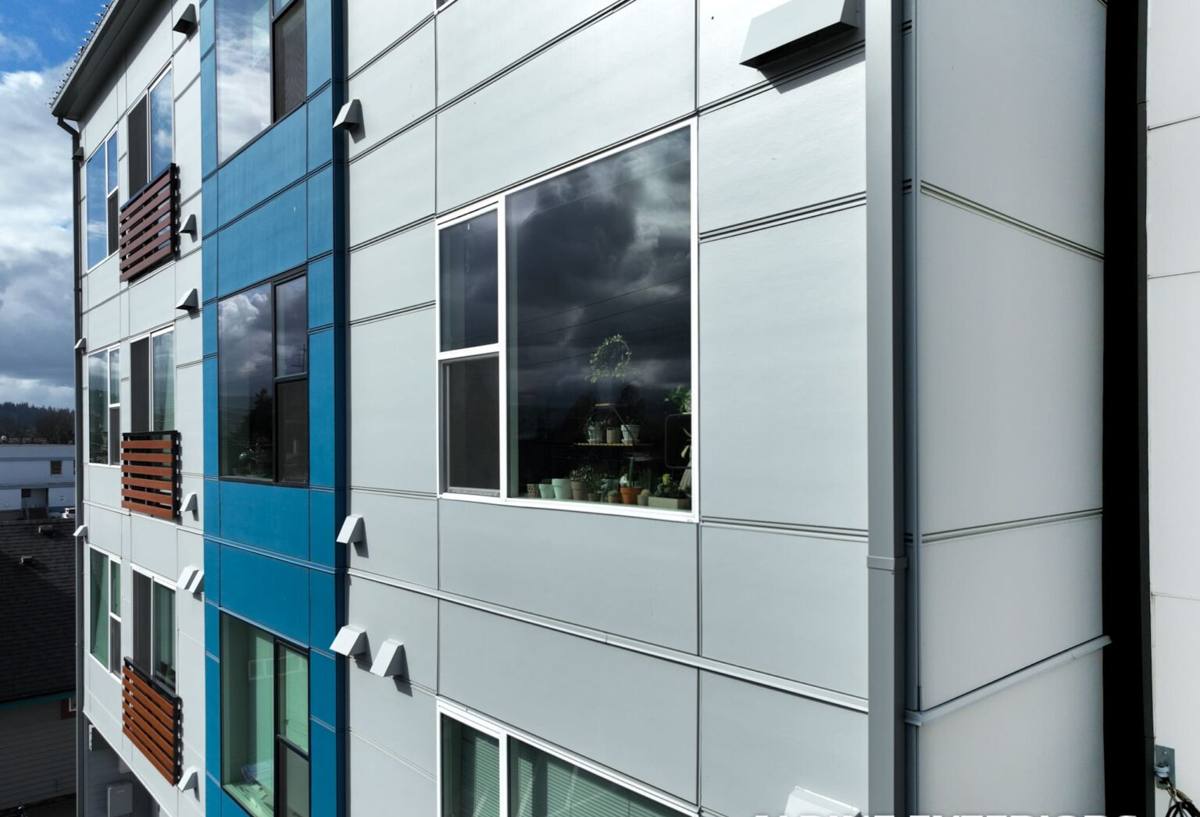
What Fiber Cement Siding Needs to Do in This Climate
Fiber cement is a good starting point for a climate like this because it's dimensionally stable — it doesn't swell, warp, or rot the way wood-based products can when they stay damp. But the material alone isn't the whole answer. In a salt air, high-rain environment, the siding system as a whole needs to:
- Shed wind-driven rain at horizontal laps, corners, and penetrations, not just on a calm, straight-down rain
- Keep water from tracking behind the siding and sitting against the wall sheathing
- Resist surface breakdown from salt exposure on fasteners, trim, and factory finish
- Dry out fully between wet stretches instead of holding moisture through a shaded, mossy winter
- Hold its factory finish without chalking, fading, or peeling from UV and salt exposure combined
That's a system requirement, not just a material requirement. It's why we treat every Sandy Point job as a full water-management install, not just a siding swap.
Why We Install James Hardie Fiber Cement — and Only James Hardie
We install James Hardie fiber cement siding exclusively. We don't install vinyl, LP SmartSide, primed spruce, cedar, or other fiber cement brands like Cemplank or Allura. That's a deliberate standard, not a sales preference, and it comes down to a few specific things that matter in a place like Sandy Point:
Built for Coastal and Marine-Layer Climates
James Hardie engineers its HardieZone system by climate region, and the Pacific Northwest falls into the HZ5 zone — formulated for wetter, milder climates with sustained moisture exposure. That's a meaningfully different product than siding engineered for a dry, hot region.
Non-Combustible
Fiber cement is non-combustible, which matters for insurance considerations and peace of mind regardless of location, and it doesn't attract the pests or rot organisms that wood-based siding can in a damp environment.
ColorPlus Factory Finish
Rather than field-painted siding, Hardie's ColorPlus finish is baked on in a controlled factory process, which gives it better UV and weather resistance than most site-applied paint jobs — a real advantage against salt air and constant marine moisture.
A Warranty That Follows the House
James Hardie backs its siding with a strong, transferable limited warranty. That matters on the water, where buyers and appraisers pay close attention to exterior condition and maintenance history.
What a Correct Fiber Cement Installation Involves
The siding material is only part of the job. Most fiber cement failures we're called to look at, in Blaine and elsewhere, trace back to installation shortcuts rather than the product itself. In a driving-rain, salt-air setting, these details matter more than usual.
Water Management Behind the Siding
Correct installation starts with a weather-resistant barrier and properly lapped, sealed flashing at every window, door, and penetration — installed shingle-style so water is always directed outward and down, never trapped behind the cladding. A rainscreen gap behind the siding, allowing a continuous air space for drainage and drying, is especially valuable on an exposed, wind-driven-rain site like Sandy Point.
Fastening and Clearances
Fasteners need to be corrosion-resistant and set to Hardie's specifications — not overdriven, not underdriven, and placed with the manufacturer's required edge and lap clearances. Siding also needs proper clearance from grade, roofing, and decks so it isn't sitting in standing water or splash-back.
Joints, Caulking, and Trim
Butt joints and trim need to be sealed with a high-quality, paintable sealant rated for exterior use, and any field-cut edges need to be primed and sealed per manufacturer instructions so raw material isn't left exposed to salt air and rain.
| Installation Detail | Why It Matters in Sandy Point |
|---|---|
| Rainscreen / drainage gap | Lets wind-driven rain that gets past the siding drain and dry instead of sitting against the wall |
| Corrosion-resistant fasteners | Salt air accelerates rust on standard fasteners, leading to staining and loosened boards |
| Shingle-lapped flashing | Directs driving rain outward at windows, doors, and trim instead of letting it track inward |
| Sealed cut edges | Prevents raw fiber cement from absorbing moisture at field cuts, a common failure point |
| Grade and deck clearance | Keeps siding out of standing water and splash-back common near low-lying, waterfront lots |
Our Process for Sandy Point Homes
Every job starts with an on-site assessment of the specific wall conditions — sun exposure, wind direction, existing moisture damage, and how the current siding or sheathing has held up. From there:
- We inspect the existing siding and sheathing for hidden moisture damage before quoting the job, since covering up a wet wall is the single biggest mistake in this climate
- We remove old siding and address any damaged sheathing, framing, or trim we find underneath
- We install a weather-resistant barrier and flashing system built for wind-driven rain, with a drainage gap where the wall assembly calls for it
- We install James Hardie siding to manufacturer specification — fastening, clearances, and lap details included, not shortcuts
- We seal joints, trim, and penetrations with exterior-rated sealant and do a final walkthrough before calling the job done
Living With Salt Air, Rain, and Moss: Ongoing Maintenance
Correctly installed James Hardie siding is low-maintenance, not no-maintenance. A little seasonal attention goes a long way on a waterfront property:
- Rinse salt residue and grime off the siding once or twice a year, especially on walls facing open water
- Keep gutters clear so overflow doesn't run down the siding face and feed moss growth
- Trim back vegetation and tree cover that keeps walls shaded and slow to dry
- Check caulking at trim and joints periodically and re-seal if it's cracked or pulling away
- Address any moss or algae on the siding surface promptly with a gentle wash rather than pressure that can drive water behind the boards
- Have flashing and caulking spot-checked every few years, since these wear out well before the siding itself does
What Affects the Cost of a Fiber Cement Siding Project
Every home and lot is different, so we don't publish blanket pricing, but these are the main factors that move the number up or down on a Sandy Point job:
| Cost Factor | Why It Matters |
|---|---|
| Condition of existing sheathing | Hidden moisture or rot found during tear-off adds repair scope before new siding goes on |
| Home size and wall complexity | More corners, dormers, and trim details mean more labor and material cuts |
| Siding profile and finish selection | Lap width, texture, and ColorPlus color options carry different material costs |
| Site access | Waterfront lots with limited driveway or staging space can affect crew logistics and time |
| Trim and accessory scope | Fascia, soffit, and trim replacement alongside siding changes total project cost |
We walk every property in person and give a written estimate based on what we actually find — not a phone-quote guess.
Why Hiring a Crew That Already Works Sandy Point Matters
A contractor who's worked this stretch of Whatcom County waterfront already knows how a wall on an exposed, salt-air lot behaves differently than one a mile inland — and adjusts the install accordingly instead of applying a one-size-fits-all approach. That local familiarity shows up in small but important ways: knowing which wall orientations take the worst of the driving rain, recognizing early moss and moisture patterns before they become structural problems, and being realistic about how the site's access and layout affect the job. It also means a crew that's still local and reachable if a warranty question or maintenance question comes up years down the road, rather than a company that worked one job in the area and moved on.
If you're thinking about siding for a home in Sandy Point, we're happy to walk the property, look at what's actually going on with your walls, and give you a straightforward, no-pressure estimate for James Hardie fiber cement siding built for this exact climate. Use the form below to get started.