 Blaine Siding
 Windows on Sandy Point Take a Different Kind of Beating
Sandy Point sits right up against the water, and that changes what a window replacement job actually needs to do. Homes a few miles inland in Whatcom County deal with plenty of rain, but they're not fighting salt-laden air moving off the water almost every day of the year. On Sandy Point, that salt air gets into everything — window hardware, aluminum trim, even the caulk lines around a frame — and it works faster than most homeowners expect. A window that would last two decades in a sheltered spot can start showing corrosion, seal failure, or wood rot in half that time if it wasn't specified and installed with this exposure in mind.
Blaine sits at the northwest corner of Washington, and waterfront neighborhoods like Sandy Point take the brunt of that exposure before it ever reaches homes further inland. We're a Blaine-based crew, and Sandy Point is part of our regular route, not a special trip. That matters more than it sounds like it should — a contractor who only sees waterfront exposure once or twice a year is guessing at details that we deal with every week.
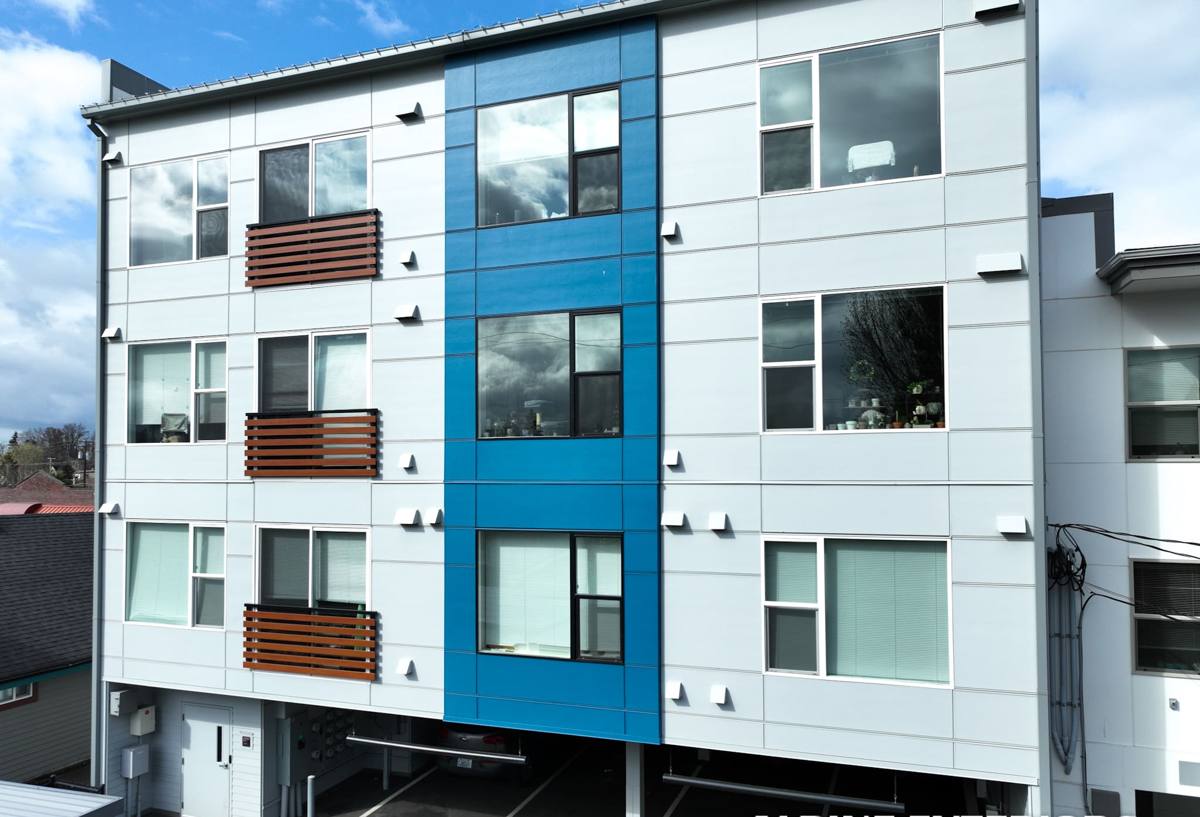
What Salt Air, Driving Rain, and Moss Season Actually Do to Windows
Salt Air and Corrosion
Salt in the air settles on metal surfaces and, combined with moisture, speeds up corrosion. On windows, that shows up first in hardware — hinges, locks, balance systems, and screen frames — long before it touches the glass itself. Aluminum-clad and vinyl windows resist this better than bare aluminum or unprotected steel components, but even good hardware needs the right finish and, in some cases, more frequent rinsing than a home set back from the water would need.
Driving Rain and Wind-Driven Water
Sandy Point catches wind straight off the water, and that means rain doesn't just fall — it drives sideways into window walls, especially on west- and north-facing elevations. A window replacement here has to treat flashing and sill pan details as non-negotiable, not optional extras. A perfectly good window installed with a lazy flashing job will leak eventually; it's just a matter of how many storm seasons it takes.
Moss Season and Sustained Moisture
The long, wet stretch of the year that Western Washington homeowners call "moss season" isn't just a siding and roof problem. Sustained dampness around window openings keeps wood trim, sills, and even some composite materials wet for days at a time, which is exactly the condition mold, rot, and moss growth need. Shaded, north-facing window trim on Sandy Point homes is particularly prone to this because it never gets enough sun to dry out between rain events.
Signs a Sandy Point Home May Need Window Replacement, Not Just Repair
Not every window problem means a full replacement. But on a marine-exposed property, some signs point clearly toward replacement rather than patching:
- Visible corrosion or pitting on hardware, hinges, or aluminum components
- Soft or spongy wood at the sill or lower frame corners
- Fogging or a visible haze between panes of double-pane glass, a sign the seal has failed
- Persistent moss, algae, or black staining on trim that keeps returning after cleaning
- Drafts or whistling during wind events, especially on the sides of the house facing open water
- Windows that are difficult to open, close, or lock, often a sign the frame has begun to warp or swell
- Visible daylight or water staining on interior drywall around the window opening
If you're seeing two or more of these on the same window, replacement is usually the more honest recommendation. Repeated repairs on a failing frame or seal tend to cost more over a few years than doing the job right once. Many of these signs also show up faster on Sandy Point than in more sheltered parts of Whatcom County, simply because the windows are working harder against salt, wind, and moisture year-round.
What a Correct Window Replacement Involves
A window replacement is not just swapping one unit for another. Done correctly, especially in a marine environment, it involves several steps that are easy to skip and hard to notice until something goes wrong:
Full Assessment of the Opening
Before ordering a single window, we check the condition of the rough opening — the framing, the sheathing, and any existing water damage — because installing a new window into a compromised opening just hides a problem instead of fixing it.
Proper Flashing and Sill Pan Details
Every opening gets flashed to shed water down and out, not into the wall cavity. On wind-exposed elevations, we pay particular attention to head flashing and side flashing laps, since that's where wind-driven rain finds its way in first.
Sealant Selection and Placement
Not all sealants hold up the same way to constant UV, salt, and moisture cycling. We use sealants rated for exterior marine exposure and apply them in the right locations, as a second line of defense rather than a substitute for proper flashing.
Glazing and Condensation Control
Cooler, damp coastal air makes interior condensation more noticeable on single-pane or aging double-pane windows. A properly glazed replacement window with a modern insulated glass unit cuts down on that condensation, which in turn reduces the moisture load on the surrounding wood trim and sills — the same trim that's already fighting moss and mildew for a good part of the year.
Insulation and Air Sealing
Gaps around a new window frame need to be insulated and air-sealed correctly. Overpacking with insulation can bow a frame; underfilling leaves drafts and condensation points. This is a detail that's easy to rush and hard to fix later without pulling the window back out.
Choosing Window Materials for a Waterfront Exposure
Frame material matters more on Sandy Point than it does a few miles inland. Here's how the common options generally hold up under sustained salt air and wind-driven rain:
| Frame Material | Salt Air Resistance | Maintenance | Typical Trade-offs |
|---|---|---|---|
| Vinyl | Good — won't corrode or rust | Low; occasional rinsing | Limited color and finish options; frames can expand and contract with temperature swings |
| Fiberglass | Very good — dimensionally stable and corrosion-resistant | Low | Higher upfront cost than vinyl |
| Aluminum-clad wood | Good on the exterior face; interior wood still needs protection | Moderate | Traditional look, but the point where clad meets wood becomes a maintenance detail to watch |
| Bare wood | Poor without diligent upkeep | High — regular repainting and sealing | We generally steer waterfront clients away from unclad wood exteriors given the upkeep required this close to the water |
None of these is universally "best." The right call depends on the home's exposure, the look the homeowner wants, and how much upkeep they're willing to commit to. We'll walk through the trade-offs honestly rather than pushing whatever happens to be sitting in stock.
Our Process, Start to Finish
- On-site assessment — we look at existing windows, framing condition, and the specific exposure of each elevation before recommending anything.
- Straight-talk estimate — a written estimate that spells out material options and honest cost ranges, with no pressure to decide on the spot.
- Scheduling around the weather — we plan installation windows with Whatcom County's rain patterns in mind, since an opening exposed to weather longer than necessary is asking for trouble.
- Removal and opening inspection — old windows come out carefully so we can check the framing and sheathing underneath before anything new goes in.
- Installation with proper flashing and sealing — done to the standard described above, not shortcuts.
- Final walkthrough — we test operation, check seals, and confirm the finished work with the homeowner before calling the job done.
Why a Crew That Already Works Sandy Point Makes a Difference
A window replacement crew that regularly works Sandy Point and the rest of Blaine's waterfront knows which elevations take the worst of the wind, which framing details tend to hide moisture problems, and which materials actually hold up rather than just looking good on a spec sheet. That's not something you can fully substitute with a crew that mostly works sheltered, inland properties.
It also means we're not guessing at permitting or inspection requirements specific to this part of Whatcom County. We already know the local process because we work through it regularly, which keeps a project moving instead of stalling on paperwork. Working this area often also means fewer surprises on materials — we know which products are built to handle marine exposure and stock accordingly, instead of special-ordering something generic and hoping it holds up.
What Window Replacement Typically Costs
Costs vary by window size, frame material, number of openings, and site access, so we'll always give you a specific number after an on-site look. In general terms, homeowners should expect the following factors to move the price:
| Cost Factor | Why It Matters |
|---|---|
| Frame material (vinyl vs. fiberglass vs. clad wood) | Material cost and expected lifespan tend to scale up together |
| Full-frame vs. pocket (insert) replacement | Full-frame costs more but is often the right call when framing or flashing needs repair |
| Number and size of openings | Larger or custom-sized windows cost more per unit than standard sizes |
| Existing water or rot damage | Repairing compromised framing adds labor and material beyond the window itself |
| Glass package (low-E coatings, gas fill, impact considerations) | Better-performing glass adds cost but can matter more on wind- and sun-exposed elevations |
We'd rather give you a broad, honest range up front and a firm number after we've actually looked at the openings than a cheap-sounding quote that grows once work starts.
If you're noticing drafts, sticking sashes, fogged glass, or trim that won't stay clean on your Sandy Point home, we're happy to take a look. Reach out for a free, no-pressure estimate — we'll walk the property, answer your questions honestly, and tell you exactly what we'd recommend and why, with no obligation to move forward.