 Blaine Siding
 Roofing on a Point of Land Surrounded by Water
Semiahmoo sits out on a narrow spit at the edge of Blaine, with water on multiple sides and very little to break the wind before it reaches a rooftop. That geography is part of what makes the area beautiful, and it's also exactly what makes asphalt shingle roofs work harder here than they do a few miles inland. Homes on this spit take on driving rain almost horizontally during winter storms, salt-laden air off the bay, and long stretches of shade and dampness that keep moss and moisture active for most of the year.
We've installed and repaired shingle roofs on homes throughout Blaine and the surrounding Whatcom County waterfront, and Semiahmoo has its own personality compared to roofs a half-mile inland. A shingle roof that's rated and installed correctly for this exposure will outperform a generic installation by years. One that isn't will show granule loss, curling, and moss buildup well ahead of schedule.
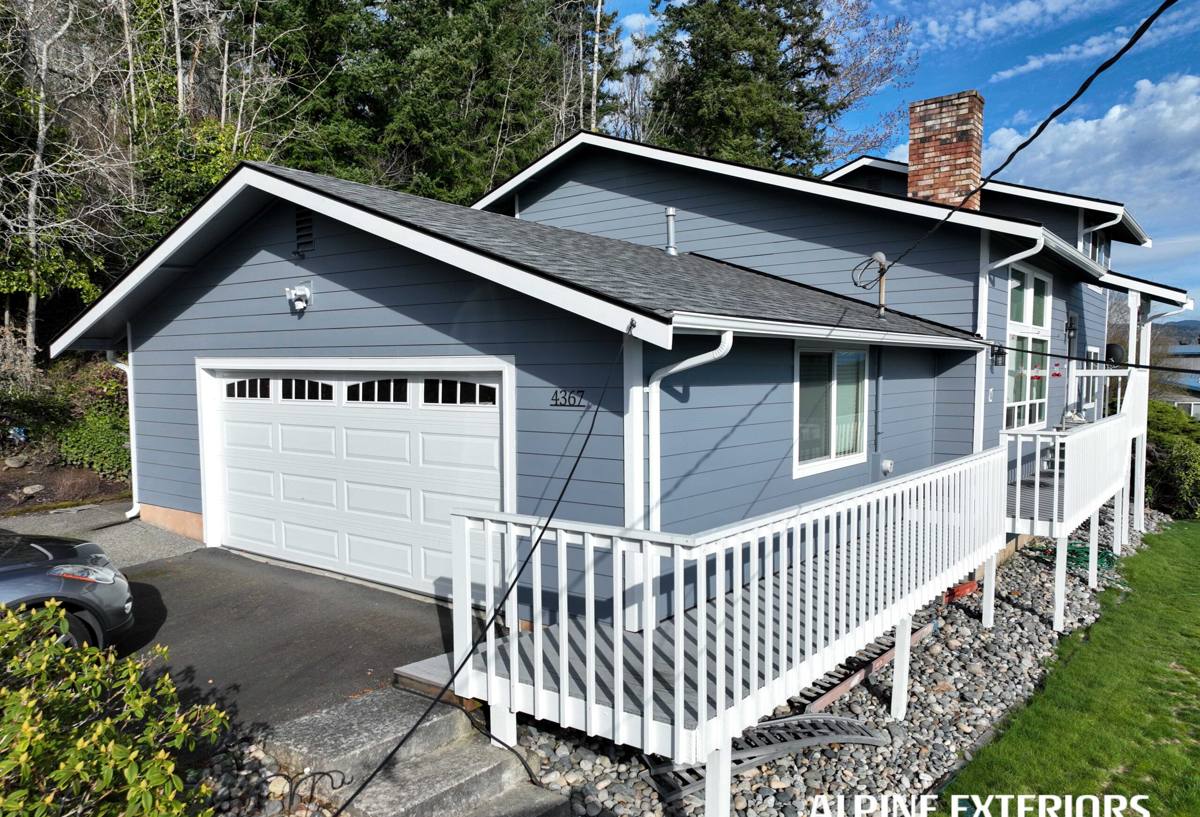
What Salt Air, Rain, and Moss Actually Do to a Roof
Salt Air and Metal Components
Asphalt shingles themselves tolerate salt exposure reasonably well, but the metal parts of a roofing system don't always fare as well. Flashing, fasteners, vents, and drip edge that aren't rated for coastal exposure can start corroding years before the shingles show real wear. Once flashing corrodes, water finds its way under the shingles at the exact spots — valleys, chimneys, roof-to-wall transitions — where a roof is already most vulnerable.
Driving Rain and Wind-Driven Water
Wind off the water doesn't just push rain sideways for a few hours — on the spit it can do it for days during a winter system. That kind of wind-driven rain tests every seam, every nail line, and every piece of flashing on a roof. A roof that was installed to a minimum standard, with standard nailing patterns and no attention to wind exposure, is far more likely to see shingles lift at the edges or water work its way under a poorly sealed valley.
Moss and the Long Wet Season
Whatcom County's moss season runs long, and shaded, north-facing, or low-slope sections of a roof in Semiahmoo can stay damp for weeks at a stretch. Moss doesn't just look bad — its root structure lifts shingle edges and holds moisture against the roof deck. Left unchecked over a few seasons, moss growth is one of the most common reasons we see otherwise sound-looking shingle roofs fail early from the inside out.
Choosing the Right Shingle for This Location
Not every asphalt shingle product is built the same way, and for a waterfront property in Semiahmoo, the differences matter more than they would on a sheltered inland lot.
| Factor | Why it matters in Semiahmoo |
|---|---|
| Wind rating | Higher wind-rated shingles resist lifting and blow-off during storms with sustained wind off the water |
| Algae/moss-resistant granules | Copper-infused granules slow moss and algae growth in shaded, damp sections of roof |
| Sealant strip quality | A strong, properly activated sealant strip keeps shingles bonded under wind-driven rain |
| Fastener and flashing material | Corrosion-resistant metal components hold up longer against salt air exposure |
| Underlayment type | Synthetic or self-adhered underlayment adds a second line of defense in wind-driven rain events |
We'll walk through these trade-offs with you directly rather than defaulting to whatever is cheapest to stock. A slightly better-rated shingle and better flashing hardware on a Semiahmoo roof is usually a smarter long-term investment than saving a little upfront and re-roofing sooner.
What a Correct Installation Actually Involves
A shingle roof is a system, not just a layer of shingles nailed to a deck. On an exposed, water-adjacent property, every layer underneath the shingles matters as much as the shingles themselves.
- Deck inspection and repair of any soft, water-damaged, or rotted sheathing before anything new goes down
- Ice-and-water barrier or self-adhered underlayment at eaves, valleys, and roof-to-wall transitions, where wind-driven rain concentrates
- Corrosion-resistant flashing at chimneys, skylights, and any wall intersections
- Proper nailing pattern and nail count matched to the shingle manufacturer's high-wind specifications
- Drip edge and starter strip installed correctly along eaves and rakes so wind can't get under the first course
- Balanced intake and exhaust ventilation so moisture from inside the attic doesn't add to what the roof is already fighting from outside
Skipping any one of these steps doesn't usually cause a failure in year one. It shows up in year four or five, as a leak that seems to come from nowhere, when really it started at a flashing detail or a ventilation gap that was never addressed.
Repair, Patch, or Full Replacement — How to Tell
Not every issue on a Semiahmoo roof means a full replacement, but the exposure here means small issues escalate faster than they might elsewhere. Here's how we typically evaluate it.
| What we find | Likely path |
|---|---|
| Isolated missing or lifted shingles, roof otherwise sound | Targeted repair |
| Moss buildup with shingles still intact underneath | Moss removal and treatment, monitor going forward |
| Corroded flashing at one valley or chimney, rest of roof in good shape | Flashing replacement, spot repair |
| Widespread granule loss, curling shingles, roof near or past its rated life | Full replacement |
| Multiple leak points or soft decking discovered during inspection | Full replacement, deck repair included |
We'll always tell you honestly when a repair is the right call. On a coastal property, though, we also won't recommend patching a roof that's clearly at the end of its service life just to delay the inevitable — that usually costs more in the long run once interior damage gets involved.
How We Handle a Semiahmoo Roofing Project
- On-site inspection of the existing roof, attic ventilation, and any visible trouble spots
- A clear written estimate that spells out materials, scope, and timeline before any work starts
- Deck inspection and repair as the old roofing comes off, with any rot or damage flagged before covering it back up
- Installation of underlayment, flashing, and shingles to manufacturer and high-wind specifications
- Daily site cleanup, with magnetic sweeps for stray fasteners and full debris removal at the end of the job
- A final walk-through so you can see the finished work and ask questions before we consider the job done
Because we already work regularly in Semiahmoo and elsewhere along the Blaine waterfront, we know what wind and moisture exposure on this stretch of coastline actually requires — not just what a spec sheet says in general terms.
Ventilation and Ongoing Moss Control
Good ventilation is one of the least visible parts of a roofing job and one of the most important on a property like this. Balanced intake at the eaves and exhaust at the ridge keeps attic moisture from condensing against the roof deck, which matters even more in a climate where the outside air is already damp for months at a time. We check ventilation as part of every inspection, not just on new installations, because a shingle roof can be installed perfectly and still underperform if the attic beneath it can't breathe properly.
For moss, the honest answer is that no shingle roof in this part of Whatcom County is permanently moss-proof. Algae-resistant granules and good sun exposure help, but shaded and north-facing sections will need periodic attention no matter what. Regular gentle cleaning and prompt treatment when moss appears is far cheaper than letting it establish and lift shingles over a few wet seasons.
Simple Maintenance That Extends a Roof's Life Here
- Keep gutters and downspouts clear so wind-driven rain has somewhere to drain instead of backing up under the eaves
- Trim back overhanging branches to reduce shade and debris buildup on north-facing roof sections
- Have moss treated or gently removed before it establishes a root structure under the shingles
- After major windstorms, do a visual check from the ground for lifted or missing shingles
- Have flashing and sealant checked every few years, since these components can fail before the shingles do in salt air exposure
- Address small leaks immediately — on a coastal property, a slow leak becomes a rot problem faster than inland homes typically experience
Why Local Experience on This Stretch of Coastline Matters
A roofing crew that's never worked on the Semiahmoo spit doesn't automatically know how much heavier the wind and salt exposure hits here compared to a roof a mile inland in Blaine. That knowledge shows up in small decisions — which fastener spacing to use, where to add extra underlayment, which flashing details need extra attention — that don't show up on a basic estimate but absolutely show up in how long the roof lasts. We've seen firsthand which shingle roofs on this coastline hold up and which ones don't, and we build every Semiahmoo project around what actually works here, not a generic inland standard.
If you'd like an honest look at your roof's condition and what it would take to repair or replace it correctly for this location, we're happy to come out for a free, no-pressure estimate — just fill out the form below.