 Blaine Siding
 Why Semiahmoo Roofs Wear Differently Than Roofs Inland
Semiahmoo sits right where the marine air off the water meets everything a Pacific Northwest winter can throw at a roof. That combination — salt-laden air, driving rain that comes in sideways more often than straight down, and a moss season that can run most of the year in the shade pockets — puts more stress on roofing materials here than a few miles inland in Blaine or elsewhere in Whatcom County. A roof spec'd for a dry climate, or even for a typical Western Washington subdivision away from the water, often falls short here within a decade.
Metal roofing, done correctly, handles this environment better than most alternatives. It sheds rain fast, doesn't hold moisture in a mat of organic material the way some roofing surfaces do, and resists wind uplift well when installed to spec. But "metal roofing" is a category, not a single product, and the difference between a metal roof that lasts thirty-plus years on Semiahmoo and one that starts showing problems in five comes down to material choice, fastening details, and flashing work — not the fact that it's metal.
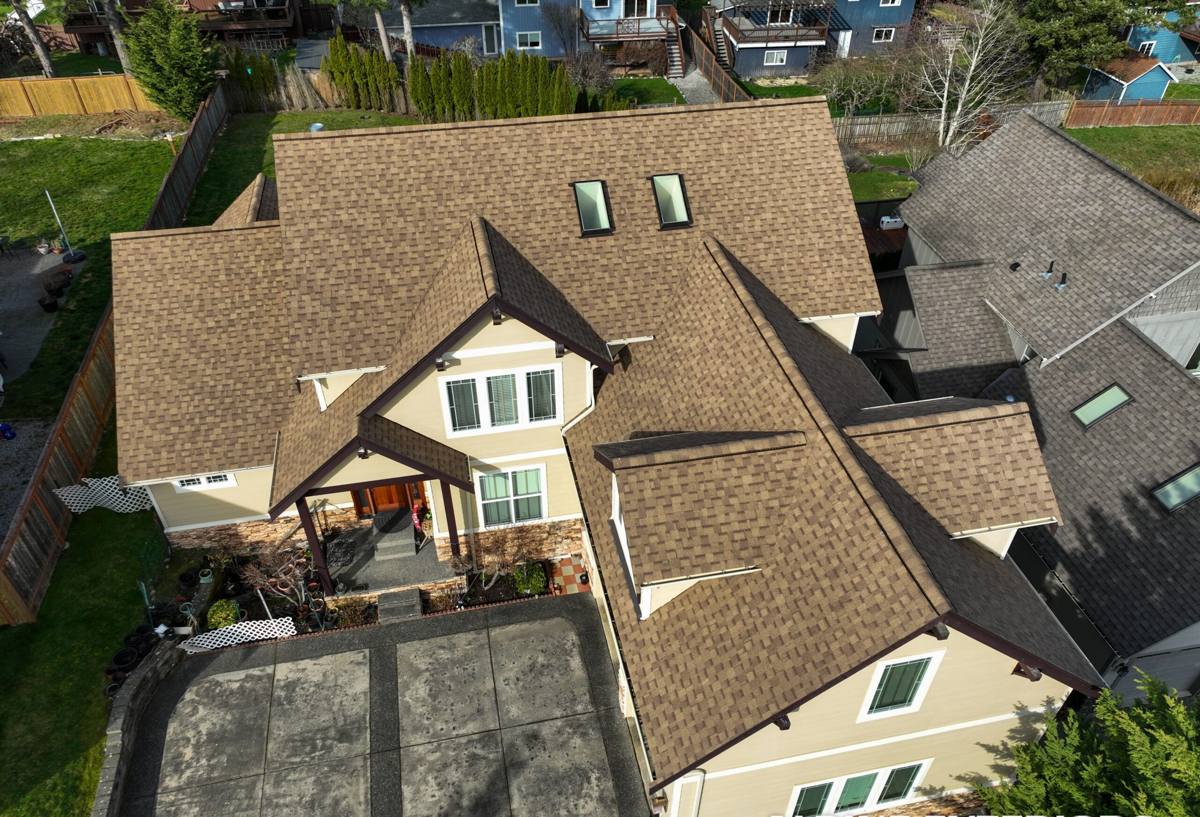
What Salt Air Actually Does to a Roof
Salt air is corrosive to exposed metal, full stop. That doesn't mean metal roofing is a bad choice near the water — it means the metal, the coating, and the fasteners all have to be selected for a marine-influenced environment rather than a standard inland spec. A few things we pay close attention to on Semiahmoo jobs:
- Panel substrate and coating — not all steel or aluminum coatings are rated the same for coastal exposure; some are simply not intended for use this close to salt water
- Fastener material — mismatched metals between panel and fastener can set up galvanic corrosion over time, which shows up as staining and eventual fastener failure
- Cut edges — every field cut exposes raw metal; those edges need to be treated or positioned so they're not sitting in standing water or direct salt spray
- Trim and flashing metal — matched to the panel system, not just "close enough"
None of this is exotic. It's a matter of not treating a Semiahmoo roof like a roof going on a house in Sumas or Ferndale. The building science is the same everywhere in Whatcom County; the exposure category is different.
Driving Rain and Why Wind Direction Matters
A lot of roofing details that work fine in a light, straight-down rain fail under wind-driven rain, and Semiahmoo gets plenty of the latter off the water. Wind-driven rain finds its way under laps, through under-sized end laps, and into fastener penetrations that weren't sealed correctly the first time. On a metal roof this mostly comes down to three things:
- Panel overlap and seam type — standing seam systems interlock and shed driving rain far better than exposed-fastener panels in high-exposure spots
- Underlayment — a synthetic or self-adhered underlayment underneath the metal is the backup layer when wind pushes water past the panel seams; skipping this or using a thin felt is a common corner cut
- Penetration detailing — every pipe boot, vent, and roof-to-wall transition is a potential entry point; these need proper flashing and sealant rated for the movement and exposure, not just a bead of caulk
On more exposed elevations facing the water, we'll often recommend upgrading panel type or underlayment even if the rest of the roof could get by with a lighter spec. It's a judgment call based on orientation and exposure, not a blanket upsell.
Metal Panel Options: What Fits a Semiahmoo Home
| Panel Type | Best For | Coastal Considerations |
|---|---|---|
| Standing seam (concealed fastener) | Homes with high wind/rain exposure, water-facing elevations | Best wind-driven rain performance; no exposed fasteners to corrode over time |
| Exposed-fastener panel | Outbuildings, sheltered roof sections, budget-conscious projects | Lower upfront cost but fastener washers age faster in salt air and need periodic checking |
| Stone-coated steel | Homes wanting a traditional shingle or shake look with metal's durability | Good option where appearance matters as much as performance; coating quality matters more near the water |
| Standard aluminum | Homes wanting reduced corrosion risk regardless of coating | Naturally corrosion-resistant, often a strong fit directly along the water |
We'll walk through which of these makes sense for your home's exposure, roof pitch, and budget rather than defaulting to one product for every job. A roof tucked behind trees on the inland side of Semiahmoo doesn't need the same spec as one facing open water.
Where We're Selective
Some lower-grade coated panels and mismatched fastener systems are marketed as coastal-ready when they aren't really built for sustained salt exposure. We don't install those systems on water-facing roofs in this area — not because the product is inherently bad everywhere, but because it's the wrong tool for this specific environment, and we'd rather tell you that upfront than have it show up as premature corrosion in a few years.
Moss: The Slower, Quieter Problem
Moss doesn't take a roof down overnight, but on a shaded, moisture-heavy site like much of the Semiahmoo area, it works steadily against whatever it's growing on. On metal roofing, moss is far less of a structural threat than it is on organic roofing surfaces, since it has nothing to root into — but it can still hold moisture against the panel surface, stain finishes, and clog valleys and gutters if it's allowed to build up unchecked.
What actually keeps moss from becoming a problem on a metal roof:
- Adequate roof ventilation so the underside of the deck isn't holding moisture that encourages growth from below
- Panel and coating selection that doesn't give moss and algae an easy surface to grip
- Clean, correctly sized gutters and valleys so debris and moss spores don't accumulate in low points
- Keeping overhanging branches trimmed back where possible — shade and standing organic debris are what feed moss growth, not the roofing material itself
This is one more reason ventilation and detailing matter as much as the panel itself. A well-installed metal roof in a shaded, moist microclimate should need only occasional debris clearing, not aggressive moss treatment.
How We Approach a Semiahmoo Metal Roof, Step by Step
1. Inspection and Exposure Assessment
We look at which elevations face the water, where the roof sits relative to tree cover, existing moss or moisture staining, and the condition of the current roof deck before recommending a panel system.
2. Tear-Off and Deck Check
Old roofing comes off and the deck gets inspected for rot or soft spots — common wherever moisture has been sitting under aging roofing for years. Any deck repair happens before anything new goes down.
3. Underlayment and Ventilation
A synthetic or self-adhered underlayment goes down as the water-resistive backup layer, and we confirm intake and exhaust ventilation is adequate for the roof design — not an afterthought.
4. Panel Installation
Panels, seams, and fasteners are installed to the manufacturer's specification for this exposure category, with particular attention to laps, end conditions, and any penetrations.
5. Flashing and Trim
Valleys, roof-to-wall transitions, chimneys, and vents get flashed with matched materials — this is where most roof leaks actually originate, metal roof or not.
6. Final Walkthrough
We walk the finished roof with you, cover basic maintenance expectations, and make sure gutters and valleys are clear before we leave the site.
What Drives Cost on a Metal Roofing Project
| Factor | Why It Matters |
|---|---|
| Panel type | Standing seam typically costs more than exposed-fastener panel due to material and labor complexity |
| Roof complexity | Valleys, dormers, and multiple roof planes add flashing and labor time |
| Deck condition | Rot or soft decking found during tear-off adds repair cost before install can proceed |
| Coastal-rated coatings/fasteners | Upgrading to salt-air-appropriate materials on exposed elevations costs more than standard inland spec |
| Ventilation upgrades | Adding or correcting attic ventilation as part of the project affects both material and labor |
We give straightforward, itemized estimates so you can see exactly what you're paying for and why — including where we're recommending an upgrade because of your home's specific exposure, not as a blanket sales tactic.
Why It Matters That We Already Work in Semiahmoo
A crew that mostly works dry, sheltered, inland jobs doesn't naturally think in terms of salt exposure, wind-driven rain angles, or moss-heavy shade patterns. Those aren't things you learn from a spec sheet — they're things you learn from doing roofs on this stretch of Whatcom County coastline and seeing, over years, what holds up and what doesn't. That local experience shows up in small decisions: which elevation gets the upgraded panel, where an extra course of underlayment is worth it, which valley design actually clears debris in a wet fall.
It also matters for permitting and code familiarity specific to Whatcom County and the City of Blaine, and for knowing realistic weather windows for tear-off and install so your home isn't sitting exposed longer than it needs to be.
Simple Maintenance Checklist for a Semiahmoo Metal Roof
- Clear gutters and valleys of debris at least twice a year, more often under heavy tree cover
- Do a visual check after major windstorms for lifted trim, loose fasteners, or debris impact
- Trim back overhanging branches that shade the roof and encourage moss
- Watch for streaking or discoloration near fasteners or cut edges, which can signal early corrosion
- Confirm attic ventilation isn't blocked by insulation or storage
- Have a professional inspection every few years rather than waiting for a visible problem
A correctly installed metal roof in this area shouldn't demand constant attention — but a little regular upkeep goes a long way toward getting the full lifespan out of it.
If you're weighing metal roofing for a home in Semiahmoo or elsewhere around Blaine, we're glad to take a look and talk through what your specific roof needs given its exposure, shape, and current condition. Reach out for a free, no-pressure estimate using the form below.