 Blaine Siding
 Siding Installation Built for Dakota Creek's Climate
Homes in and around Dakota Creek sit close to the water in Whatcom County, which means the siding on them is doing more work than siding on a house twenty miles inland. Salt-laden air off the water, wind-driven rain that finds every gap in flashing and trim, and a long, damp moss season that stretches from fall into spring — all of it pushes on exterior materials in ways that show up as callbacks, not warranty claims, when the wrong product or the wrong install goes on a house. We install James Hardie fiber cement siding exclusively, and in a neighborhood like Dakota Creek, that decision is about more than color and style. It's about what the material and the crew putting it on actually need to survive here.
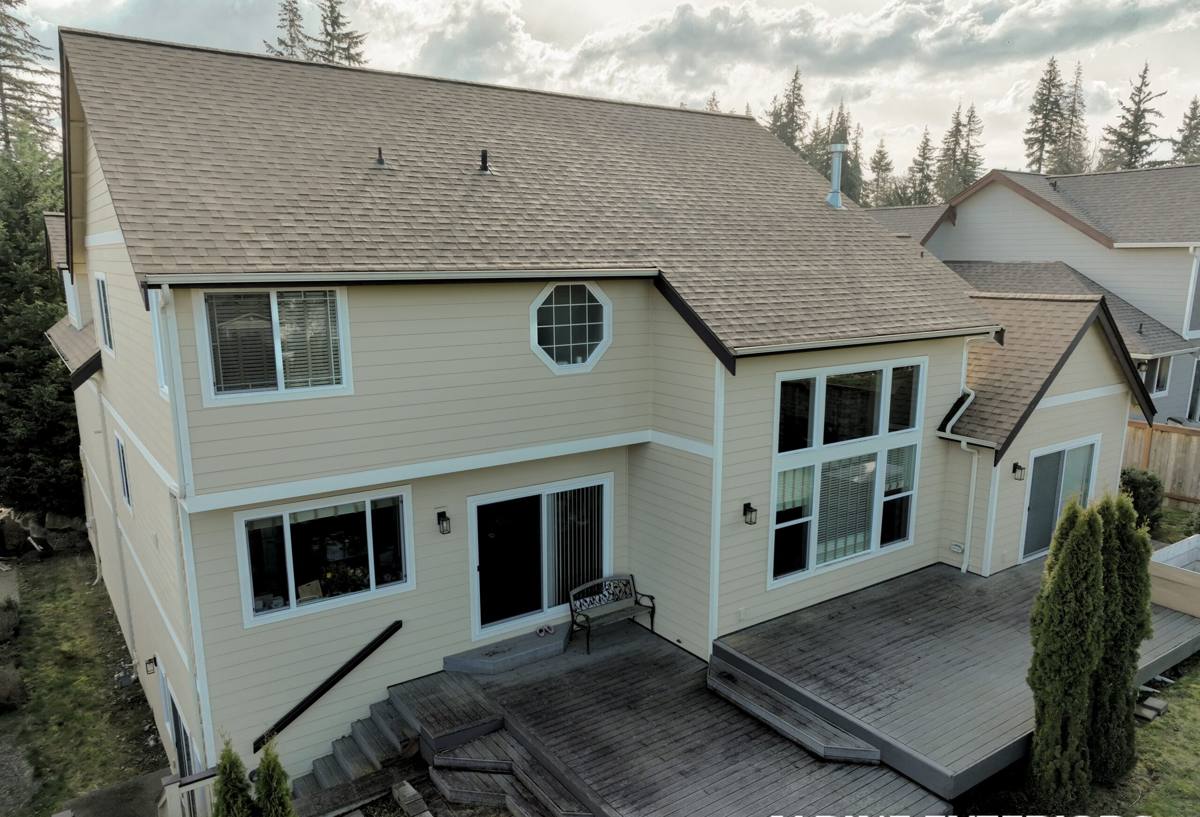
What Dakota Creek Homes Are Up Against
Blaine's proximity to the Salish Sea and the Strait of Georgia means coastal exposure isn't an occasional event — it's a constant, low-grade condition. A few specifics worth understanding before you replace siding here:
- Salt air corrosion: Airborne salt accelerates the breakdown of fasteners, trim, and any siding material that isn't dimensionally stable. Over years, it also degrades paint films that aren't formulated to hold up against it.
- Driving rain: Whatcom County storms often come with real wind behind the rain, which pushes water sideways into laps, seams, and butt joints instead of letting it run straight down and off.
- Moss and mildew season: Extended damp periods, shaded north and west elevations, and tree cover common in this area all favor moss and algae growth on exterior surfaces that hold moisture.
- Temperature swings: Cold, wet winters into milder, drier summers mean siding expands and contracts. Materials with poor dimensional stability telegraph that movement as cracking, warping, or open joints.
None of this is unique to one street or one lot in Dakota Creek — it's the baseline condition for anything built near this stretch of water. What changes house to house is exposure: how close to open water, how much tree cover, which direction the prevailing weather hits the walls.
Why We Install James Hardie and Nothing Else Here
We get asked why we don't offer vinyl, LP SmartSide, or a cheaper fiber cement alternative. The honest answer is that we've standardized on one product because it performs consistently in exactly the conditions Dakota Creek deals with, and we'd rather stand behind one system we know well than juggle several we have reservations about.
Non-combustible, moisture-resistant core
James Hardie siding is fiber cement — it doesn't rot, and it isn't a food source for moss or mildew the way wood-based products can be. That matters directly in a moss-season climate, where anything organic on a wall becomes a maintenance project within a few years.
Engineered for the Pacific Northwest specifically
Hardie's HZ5 product line is engineered for climates with significant moisture exposure and freeze-thaw cycling — which describes Whatcom County's weather well. It's not a generic national product retrofitted for coastal use; it's built for regions like this one.
ColorPlus factory finish
The factory-applied ColorPlus finish is baked on under controlled conditions, which gives it better adhesion and UV/color stability than field-applied paint — especially relevant where salt air degrades ordinary paint films faster than inland areas see.
Dimensional stability
Fiber cement expands and contracts far less than vinyl or wood with temperature swings, which keeps joints tighter and reduces the gaps that let wind-driven rain in over time.
We're not going to tell you other products are junk — vinyl and LP SmartSide both have legitimate uses and reasonable installations elsewhere. But for homes exposed to salt air, driving rain, and a real moss season, we made a professional call: Hardie is what we're willing to put our name behind, and it's the only thing we install.
What Correct Installation Actually Involves
Siding failures in this climate are rarely about the panel material itself — they're almost always about what's happening behind it. A correct James Hardie installation for a Dakota Creek home includes:
- Water-resistive barrier installed correctly — lapped shingle-style so water sheds outward, not trapped behind the siding.
- Proper flashing at every penetration — windows, doors, vents, and anywhere two planes meet, since this is where wind-driven rain actually gets in.
- Correct fastener spacing and type — under-fastening or over-driving nails is one of the most common causes of premature siding failure, and it voids Hardie's warranty.
- Minimum clearance at grade and roof lines — siding installed too close to soil, decks, or roofing traps moisture against the bottom edge, which is exactly where rot and staining start first.
- Caulking and joint treatment to Hardie spec — not every installer follows the manufacturer's actual application guide, and it shows up in joint failures within a few years.
- Ventilation behind the cladding — a rainscreen gap where appropriate helps the wall assembly dry out between the region's frequent wet spells.
Skipping or rushing any one of these doesn't usually cause a visible problem on install day. It shows up two, five, or ten years later as staining, soft trim, or a warranty claim that gets denied because the install didn't match manufacturer specs.
Our Process for a Dakota Creek Siding Job
The steps are the same on every job, but what we look for at each one shifts based on a house's specific exposure to water and weather.
1. On-site assessment
We look at existing siding condition, sheathing and framing for any signs of past moisture intrusion, elevation exposure to prevailing wind and rain, and moss or algae growth patterns that tell us which sides of the house need extra attention to drainage and airflow.
2. Tear-off and substrate check
Old siding comes off and we inspect what's underneath. Any sheathing damage or existing moisture issues get addressed before a single new panel goes up — covering a problem with new siding just delays and hides it.
3. Weather barrier and flashing
This is the step that determines whether the siding actually keeps water out for the next 30-50 years, regardless of what's on the outside. We treat it as the most important part of the job, not a formality.
4. Hardie panel installation
Installed to manufacturer spec — fastener pattern, spacing, and clearances — so the product performs as engineered and the warranty stays intact.
5. Trim, caulking, and finish work
Final joint treatment and trim detailing, done to hold up against the wind-driven rain this area sees rather than just looking clean on install day.
6. Final walkthrough
We go over the finished job with the homeowner and explain what maintenance, if any, to expect going forward.
Why a Crew That Already Works Dakota Creek Matters
Siding installation isn't one-size-fits-all across Whatcom County. A crew that's worked this specific area already knows which elevations tend to take the worst of the wind, how moss behaves on shaded north walls near the water, and where flashing details need extra attention because of how storms actually hit here — not in a textbook, but on the ground. That local pattern recognition is the difference between a crew executing a generic install and one making the small adjustments that keep a house dry for decades in this specific microclimate.
Cost Factors for Dakota Creek Siding Projects
Every home is different, but the same factors tend to drive cost up or down on jobs in this area:
| Factor | Why It Matters Here |
|---|---|
| House size and wall complexity | More corners, dormers, and roof lines mean more flashing and cutting labor |
| Existing siding removal | Tear-off and disposal of old material adds labor, especially if moisture damage is found underneath |
| Substrate repair | Rot or water damage found during tear-off must be fixed before new siding goes on |
| Exposure level | Homes with direct water exposure often need extra flashing and rainscreen detail on windward walls |
| Trim and finish selection | HardieTrim boards, corner details, and color selection affect material cost |
| Access and site conditions | Sloped lots, limited access, or landscaping close to the house can add labor time |
We won't quote a number without seeing the house — anyone who does is guessing. But these are the honest drivers behind why one Dakota Creek estimate differs from another.
Signs Your Current Siding Is Losing the Fight
- Persistent moss or algae streaking that comes back within months of cleaning
- Soft or spongy spots when you press on the siding, especially near the bottom edge
- Visible warping, bubbling, or separation at seams and joints
- Paint that's peeling or chalking faster than it should for its age
- Staining below window sills or at trim joints, a sign water is getting behind the surface
- Rising energy bills that track with drafts near exterior walls
If you're seeing more than one of these, it's worth having someone look at what's happening behind the siding, not just at the surface.
If you're in Dakota Creek and thinking about siding, we're happy to come take a look and give you a straight, no-pressure assessment of what your home actually needs. There's a form below — reach out and we'll set up a time to walk the property with you.