 Blaine Siding
 Siding Installation Built for Grandview's Coastal Conditions
Grandview homes sit close enough to the water that salt air is part of daily life, not an occasional nuisance. Add Whatcom County's long wet season, driving rain that comes in sideways off Semiahmoo Bay and the Strait of Georgia, and a moss season that can stretch from fall through spring, and you have a climate that is genuinely hard on exterior siding. A siding installation here isn't just a cosmetic upgrade — it's the single biggest factor in whether a home stays dry, holds its paint, and avoids rot damage over the next twenty years.
We install siding for homes throughout Blaine, and Grandview properties get the same attention we'd give any coastal lot: correct water management first, product selection second, and workmanship that doesn't cut corners where it's easy to hide a shortcut.
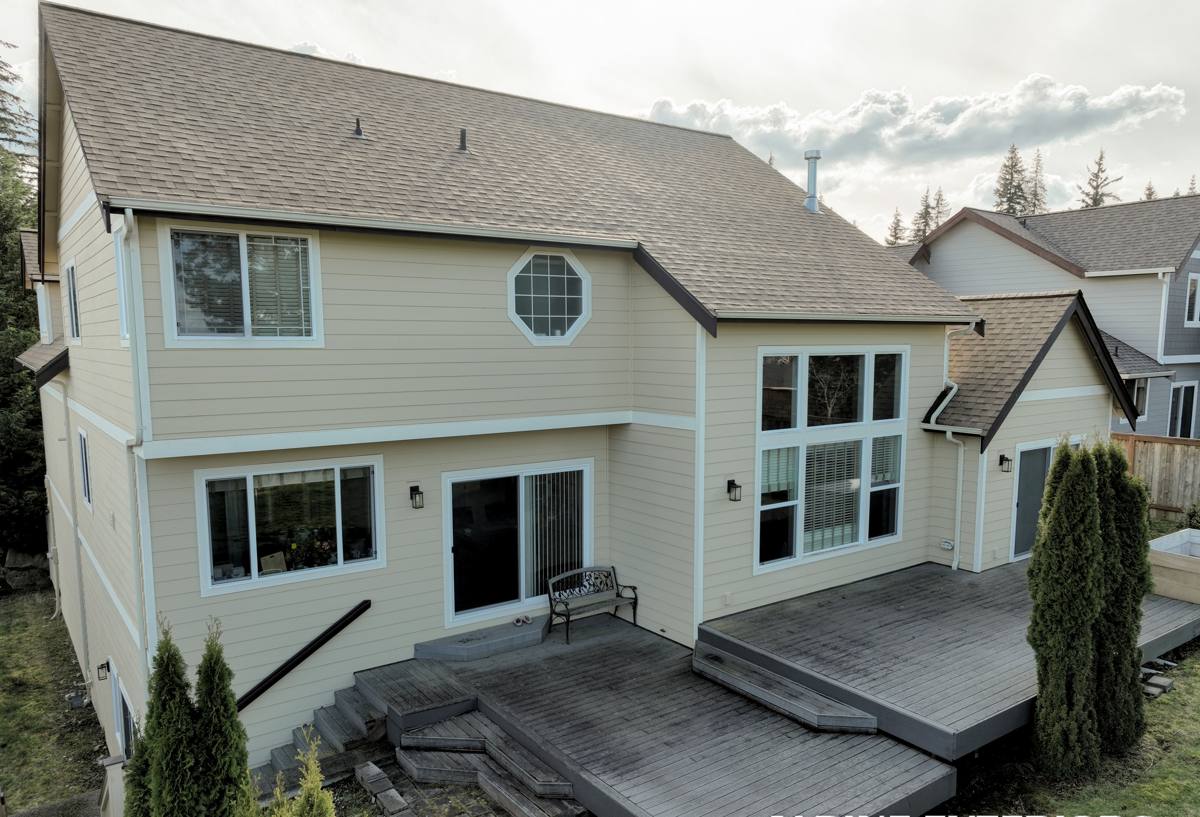
What Salt Air, Rain, and Moss Actually Do to Siding
Each of these three factors attacks siding in a different way, and a good installation has to account for all three at once.
Salt Air
Airborne salt accelerates corrosion on fasteners, flashing, and any exposed metal trim. It also breaks down cheaper paint films faster than inland exposure, which is why homes near the water tend to show chalking and fading well before their siding is actually worn out.
Driving Rain
Blaine's storms don't just fall straight down — wind-driven rain pushes water sideways into every seam, joint, and butt edge. Siding that relies on caulk alone to keep water out will eventually fail here. What keeps water out long-term is the sequence behind the siding: a properly lapped weather-resistant barrier, correctly flashed windows and doors, and siding installed with the right clearances and fastening pattern.
Moss and Sustained Moisture
A long moss season means siding surfaces, especially on shaded north- and west-facing walls, stay damp for extended stretches. Materials that absorb moisture or swell when wet are far more vulnerable to rot, delamination, and paint failure under these conditions than materials engineered to resist it.
What a Correct Installation Involves
Most siding failures we get called out to inspect aren't a product problem — they're an installation problem. The material gets blamed, but the real issue is usually one of these:
- Weather-resistive barrier installed with reversed or improperly overlapped laps, letting water track behind the siding instead of shedding off it
- Missing or undersized flashing at windows, doors, and roof-to-wall transitions
- Siding fastened tight against trim, other siding courses, or foundation with no clearance gap, trapping moisture against the material
- Butt joints not flashed or backed, leaving a direct path for wind-driven rain
- Fasteners driven at the wrong depth or spacing, which can crack fiber cement or loosen over time as the house settles
- Caulk used as the primary water seal instead of proper flashing and lap sequencing
Every one of these is preventable with the right process. It's not exotic work — it's disciplined, sequenced work that doesn't get skipped to save a day on the schedule.
Our Installation Process
1. On-Site Assessment
We walk the home and look at existing siding condition, sheathing condition where accessible, drainage patterns around the foundation, and any trouble spots — areas that stay shaded and damp, or walls that take the brunt of prevailing storms.
2. Tear-Off and Substrate Check
Old siding comes off and we inspect the sheathing underneath for soft spots, rot, or prior water damage. Any compromised substrate gets addressed before new siding goes on — installing over a damaged wall just locks the problem in.
3. Weather Barrier and Flashing
A new weather-resistive barrier goes on with correct shingle-style laps, and all penetrations, windows, doors, and transitions get properly flashed. This layer does the real water management work; the siding itself is the second line of defense, not the only one.
4. Siding Installation
Panels or planks go up with manufacturer-specified fastening, clearances, and joint treatment. On a coastal property like Grandview, we're especially careful with clearance gaps at grade, decks, and roof lines, since those are the spots where standing moisture does the most damage over time.
5. Final Inspection and Walkthrough
We check caulking, trim, and paint lines, then walk the finished job with the homeowner before calling it done.
Why We Install James Hardie Fiber Cement — And Nothing Else
We standardized our siding installs on James Hardie fiber cement products only. We don't install vinyl, LP SmartSide, Cemplank, Allura, or unfinished wood siding, and for a property like a Grandview home, the reasons come down to how each material actually behaves in this specific climate.
Fiber cement doesn't absorb water the way wood-based or engineered-wood products can, which matters directly during a moss season where siding surfaces can stay damp for days at a time. It's also non-combustible, holds paint and factory finish far longer under UV and salt exposure than vinyl, and doesn't warp or expand/contract the way vinyl does across our region's temperature swings. James Hardie's HZ product lines are specifically engineered for climate zones like ours, and the ColorPlus factory finish is baked on and warrantied — it's not relying on field-applied paint to hold up against salt air over decades.
None of that means other products are junk. Vinyl is inexpensive and low-maintenance in the right climate. Engineered wood has real fans. But for wind-driven rain, salt exposure, and sustained damp conditions, we've made fiber cement our standard, and we stand behind that choice rather than installing something we don't think will perform here.
Comparing Siding Materials for a Coastal Whatcom County Home
| Factor | James Hardie Fiber Cement | Vinyl | Engineered Wood (LP-Type) |
|---|---|---|---|
| Moisture absorption | Very low | None, but seams can trap water | Moderate — vulnerable if coating is compromised |
| Salt air / UV finish durability | Factory ColorPlus finish, long warranty | Can chalk and fade over time | Depends on field paint maintenance |
| Performance in driving rain (with correct install) | Strong — rigid, holds tight seams | Adequate, seams are a weak point | Adequate if edges stay sealed |
| Combustibility | Non-combustible | Combustible | Combustible |
| Typical maintenance | Low — occasional repaint per warranty schedule | Low, but limited repair options | Moderate — edge sealing and paint upkeep |
Cost Factors for a Grandview Siding Installation
Every home is different, so we don't quote pricing sight unseen, but the factors that move the cost of a siding installation up or down are consistent:
- Total square footage of exterior wall area
- Number of stories and roof pitch, which affect access and labor time
- Condition of existing sheathing — whether repairs are needed before new siding goes on
- Complexity of the home's trim, corners, and window/door count (more flashing detail work)
- Whether it's a full tear-off or, in limited cases, an install over sound existing substrate
- Product selection within the James Hardie lineup (lap siding, panel systems, shingle-style profiles)
An on-site walkthrough is the only way to give an accurate number, but we're upfront about the range and the reasoning behind it before any work starts.
What to Ask Before Hiring a Siding Contractor
Whether you go with us or someone else, a few questions separate a contractor who understands coastal installation from one who's just hanging panels:
- Do you install a weather-resistive barrier with proper laps and flashing at every penetration, or rely mainly on caulk?
- What clearance do you leave at grade, decks, and roof-wall intersections?
- Do you check and repair sheathing before installing new siding, or install over whatever's there?
- Are you certified or trained specifically on the manufacturer's installation specs for the product you're installing?
- What does the workmanship warranty cover, separate from the manufacturer's product warranty?
If a contractor can't answer those clearly, that's worth noting before you sign anything.
Why Local Installation Experience Matters in Grandview
Siding installation isn't one-size-fits-all across a region. A crew that mostly works drier, inland areas may not think twice about clearance gaps or flashing details that matter enormously fifteen minutes from the water. Working regularly in Blaine and the surrounding Whatcom County coastline means we plan every install around salt exposure, wind-driven rain direction, and moss-prone shaded walls as a matter of course — not as an afterthought after something goes wrong.
That local pattern recognition is part of what you're paying for with a proper installation: knowing where this climate typically causes problems and building the install to prevent them before they start.
Ready to Talk About Your Grandview Home
If your siding is showing its age, holding moisture, or you're planning ahead for a replacement, we're happy to take a look and walk you through what your home actually needs. Reach out for a free, no-pressure estimate using the form below.