 Blaine Siding
 Birch Bay Roofs Face a Tougher Climate Than Most
Birch Bay sits right on the water, which means the roofs here take on weather that inland Whatcom County homes simply don't deal with. Wind coming off the Strait of Georgia drives rain sideways into roof edges, valleys, and anywhere flashing isn't doing its job. Salt-laden air speeds up corrosion on exposed metal and fasteners. And the long, wet Pacific Northwest winter keeps roofs damp for months at a stretch, which is exactly the environment moss needs to take hold and start working its way under shingles.
None of that means every Birch Bay roof is in bad shape. It means storm damage here often shows up differently than it would in a drier, more sheltered part of the state, and repairing it right requires understanding that.
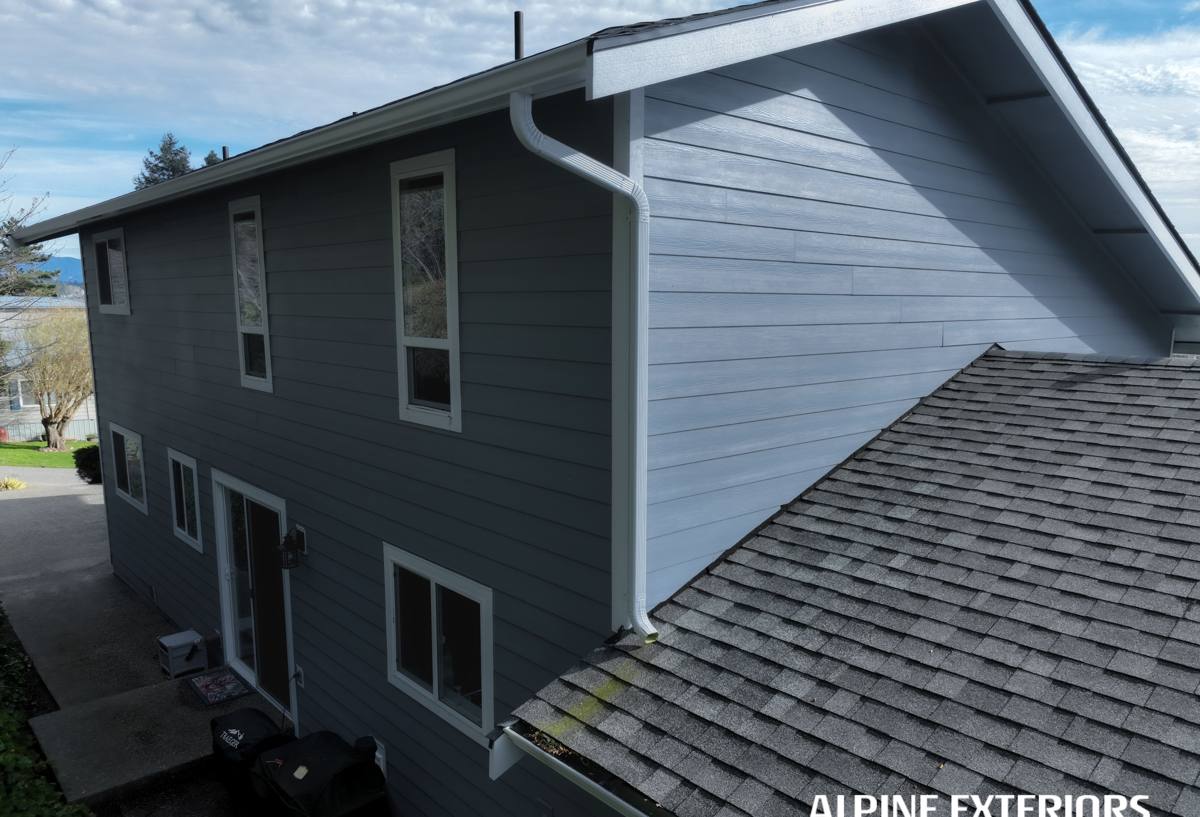
What We Mean by "Storm Damage"
Storm damage isn't always a dramatic hole in the roof after a windstorm. In this area it's more often a combination of smaller issues that add up:
- Shingles lifted, cracked, or torn loose by sustained wind or gusts
- Wind-driven rain forced up under shingle edges and around flashing
- Debris impact from falling branches during a windstorm
- Flashing pulled loose or corroded around chimneys, vents, and valleys
- Granule loss from repeated heavy rain, which thins shingles over time
- Moss and moisture intrusion that a storm exposes rather than causes outright
That last one catches a lot of homeowners off guard. A windstorm often doesn't create a new problem so much as it finds an existing weak spot — a spot where moss has already been holding moisture against the roof deck, or where flashing was already starting to separate — and turns it into an active leak.
Why Salt Air and Long Moss Seasons Change the Picture
Two things are worth understanding before any repair decision:
Salt air accelerates corrosion on exposed metal fasteners, flashing, and vent boots faster than it would inland. A roof that's ten or fifteen years old near the water can have more corrosion-related wear than a twenty-year-old roof further from the coast.
A long moss season means moisture sits on north-facing and shaded roof slopes for extended stretches through fall, winter, and spring. Moss holds water against shingles and roof decking, which slowly breaks down the shingle mat and can rot the deck underneath if it goes unaddressed. When a storm hits a roof that already has moss buildup, damage tends to be more severe than the wind alone would explain.
The Damage Homeowners Usually Don't See
Most storm damage isn't visible from the ground, and that's the biggest reason DIY inspections and quick drive-by looks miss real problems. A shingle can look intact from the driveway while its seal is broken and wind-driven rain is getting underneath it every time it storms. Flashing can look fine but have a small gap that only leaks under specific wind direction and rain intensity — exactly the conditions Birch Bay gets off the water.
Signs worth taking seriously even if the roof "looks okay":
- A new stain on a ceiling or in the attic after a windy, rainy stretch
- Granules collecting in gutters or at downspout outlets
- A shingle edge that lifts slightly in wind but lays back down
- Soft or spongy spots on the roof deck felt underfoot (for us, not you — this is not a DIY inspection item)
- Daylight visible around a chimney or vent from inside the attic
How We Handle a Storm Damage Repair
Our process is built around getting an accurate read on the damage first, then repairing it in a way that holds up to the next storm — not just patching the visible spot.
- Inspection. We walk the roof and check the attic when accessible, looking at flashing, valleys, vents, and any slopes that took direct wind exposure. We're specifically checking for the coastal issues above: corrosion, moss-related moisture, and wind-driven rain paths.
- Temporary protection, if needed. If there's an active leak or exposed decking, we get it covered before anything else — this isn't a step we skip to save time.
- Documentation. We photograph and note the damage clearly, which matters if you're filing an insurance claim.
- Repair plan. We tell you plainly what needs to be fixed now, what's worth monitoring, and what we'd recommend if this is the second or third repair in the same area.
- The repair itself. Matching materials where possible, correcting the underlying cause (not just replacing the damaged shingle), and rechecking flashing and seals in the repaired area.
- Final walkthrough. We show you what was done and why, in plain terms.
Repair or Replace? Honest Factors to Weigh
Not every storm-damaged roof needs to be replaced, and not every roof is worth repeatedly repairing either. Here's how we think through it:
| Factor | Leans toward repair | Leans toward replacement |
|---|---|---|
| Roof age | Under 10-12 years | Nearing or past expected lifespan for the material |
| Extent of damage | Localized to one area or slope | Spread across multiple slopes or repeated storm hits |
| Underlying deck condition | Solid, dry decking | Soft, rotted, or water-stained decking |
| Moss/moisture history | Minor, recently treated | Long-term moss buildup with signs of deck damage |
| Repair history | First or second repair in this spot | Same area repaired multiple times already |
We'll always give you a straight answer on which side of this table your roof falls on. If a repair is the honest recommendation, that's what we'll propose — a storm damage call isn't an automatic upsell to a full roof.
How We Build Repairs for Coastal Exposure
A repair done the same way you'd do it fifty miles inland doesn't always hold up in Birch Bay. A few things we pay specific attention to:
Flashing and Fasteners
Around chimneys, valleys, and vents, we use corrosion-resistant flashing and fasteners suited to salt-air exposure rather than whatever's cheapest. Flashing is one of the most common failure points in wind-driven rain, and it's worth doing right the first time.
Underlayment
In areas prone to wind-driven rain and ice-and-water intrusion — valleys, eaves, and around penetrations — proper underlayment matters more here than in drier climates. It's a secondary barrier that earns its keep during exactly the kind of storms Birch Bay gets.
Ventilation
Good attic ventilation helps a roof dry out between storms instead of staying damp, which matters directly for how long moss takes to establish and how quickly a wet deck can start to deteriorate.
Insurance Claims: What We Can Help With
If your storm damage is a candidate for an insurance claim, we can provide the kind of documentation adjusters typically ask for — clear photos, a written description of the damage, and our professional assessment of cause. We're not able to promise a specific claim outcome since that's between you and your insurer, but we've been through this process enough times to know what helps a claim move smoothly and what doesn't.
After a Storm: A Quick Checklist
- Check the attic and ceilings for new stains or damp spots, especially after wind-driven rain
- Look at gutters and the ground near downspouts for shingle granules or debris
- Note the date and general conditions of the storm for your records
- Avoid climbing onto the roof yourself, especially on wet or mossy sections
- Call for an inspection sooner rather than later — small leaks get worse with every additional storm, not slower
- Hold off on quick fixes like caulk or sealant over a suspected leak until it's been properly diagnosed
Why It Matters That We Already Work in Birch Bay
A crew that regularly works roofs along the Birch Bay and Blaine waterfront has already seen how salt air ages fasteners, how a specific wind direction pushes rain into a particular valley design, and how long moss takes to become a real problem on shaded, north-facing slopes in this stretch of Whatcom County. That's not something you get from general roofing experience alone — it comes from repeatedly working this specific stretch of coastline and paying attention to what actually fails here versus what holds up.
It also means a faster, more accurate diagnosis. We're not guessing at how coastal exposure affects your roof — we're checking against what we already know from working nearby homes with the same wind exposure and the same climate pattern.
Get a Straight Answer on Your Roof
If a recent storm has you wondering whether your roof took real damage or you've noticed a leak that showed up after a windy, wet stretch, it's worth having it looked at before the next storm makes it worse. We offer free, no-pressure estimates for Birch Bay and the surrounding Blaine area — use the form below to get a time on the calendar.