 Blaine Siding
 Deck Replacement in Sumas: Built for What This Climate Actually Does
Sumas sits in a part of Whatcom County that gets hit with long stretches of driving rain, heavy shade in the wet months, and the kind of persistent dampness that turns into moss before most homeowners notice it's started. Add in the salt-tinged air that moves through this corner of Washington off the Strait of Georgia during storm systems, and you've got a combination that's hard on any exterior wood structure — decks included. A deck that was built to a budget ten or fifteen years ago is usually showing it by now: soft spots, dark staining, moss creeping into the boards, and fasteners that have started to bleed rust through the wood.
Deck replacement isn't just about swapping old boards for new ones. Done right, it means rethinking the structure underneath so the next deck holds up to the same weather that wore out the last one — better drainage, better fastener choices, and a framing approach that doesn't trap moisture against the house.
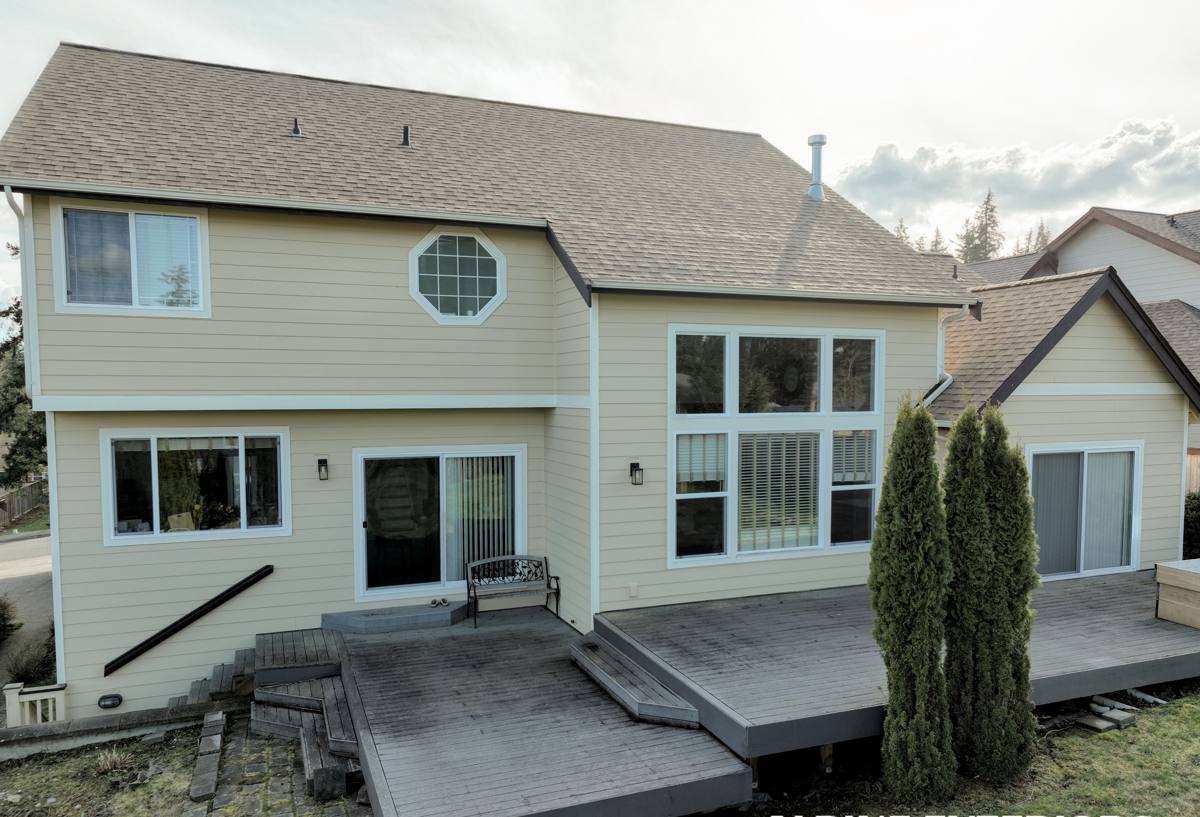
Signs a Sumas Deck Needs Replacement, Not Another Repair
Repair makes sense when the problem is isolated — a cracked board, a loose railing baluster, a single joist with rot. Replacement becomes the honest recommendation when the damage is systemic. Here's how we tell the difference on a site visit:
- Soft or spongy decking across multiple boards, not just one or two
- Rot at the ledger board where the deck attaches to the house — often hidden until flashing is pulled back
- Persistent moss or algae staining that returns within weeks of cleaning
- Posts or footings that have shifted, settled, or show visible cracking
- Fastener corrosion — rust streaks bleeding out of screw or nail heads
- A structure that predates current code for guardrail height, baluster spacing, or footing depth
If we find one or two of these, repair is usually the right call and we'll say so. If we find several, especially anything involving the ledger or footings, patching it is a short-term fix that costs more in the long run than doing the replacement once, correctly.
Why Moss Season Makes This Worse in Sumas
Whatcom County's wet season runs long, and decks with limited sun exposure — under trees, on the shaded side of the house, or tucked against a fence line — stay damp for weeks at a time. Moss doesn't just sit on top of the wood; its root structure holds moisture against the board surface, which accelerates rot from the top down instead of just the underside. A deck that looks cosmetically bad from moss is often structurally worse than it looks.
What a Correct Deck Replacement Involves
A full replacement is more than pulling up decking boards. We treat it as a structural project with a finish layer on top, not the other way around.
Framing and Substructure
Joists, beams, and posts get inspected and replaced where compromised. Given how much rain this area sees, we pay particular attention to joist spacing and any spots where standing water could collect — flat framing without a slight drainage slope is a common cause of premature rot in decks built to minimum spec.
Ledger Board and Flashing
The ledger — where the deck bolts into the house framing — is the single most common failure point on older decks in this region, because it's also the hardest spot for water to drain away from. Proper flashing (metal, installed correctly, not just caulked) keeps water from working its way behind the ledger and into the house rim joist. This is not a place to cut corners.
Footings
Footings need to sit below frost depth and bear on undisturbed soil. On older Sumas properties we sometimes find footings that are too shallow or were poured on fill dirt — both create movement over time, which shows up later as a deck that feels unstable even when the visible boards look fine.
Fasteners and Hardware
We use corrosion-resistant, code-rated hardware throughout — joist hangers, structural screws, and post bases rated for exterior exposure. Standard hardware-store fasteners corrode faster in this climate's moisture, and a rusted-out joist hanger is a hidden failure that doesn't announce itself until something gives way.
Decking Surface
The visible boards are the last decision, not the first. Material choice affects maintenance load, appearance over time, and how the deck handles the wet-dry cycling that's constant here nine months out of the year.
Decking Material Comparison for Whatcom County Conditions
| Material | How It Handles Local Rain & Moss | Maintenance | Typical Lifespan |
|---|---|---|---|
| Pressure-treated wood | Resists rot when sealed regularly; still needs airflow underneath to avoid trapped moisture | Annual cleaning and re-sealing recommended | 15-20 years with upkeep |
| Cedar | Naturally moisture-resistant, ages to gray if unsealed; can still take on moss in deep shade | Periodic cleaning, staining if a color finish is wanted | 15-25 years with upkeep |
| Composite/PVC decking | Doesn't absorb water or feed rot the way wood does; still needs surface cleaning to prevent moss and algae buildup | Occasional washing, no sealing or staining | 25-30+ years, manufacturer-dependent |
None of these materials are maintenance-free in this climate — moss and algae will grow on any surface that stays damp and shaded, composite included. The difference is what happens underneath. Wood species need the substructure to breathe and drain; composite removes rot risk from the surface but the framing underneath still needs to be built and protected correctly, since that part is still wood on most systems. We'll walk you through the honest trade-offs for your specific site — sun exposure, budget, and how much upkeep you actually want to do — rather than push one product as a default.
How Our Deck Replacement Process Works
- On-site assessment — we check framing, ledger, footings, and decking condition, and tell you plainly whether repair or replacement is the right call
- Written scope and estimate — what's being replaced, what materials are involved, and what it costs, before any work starts
- Permit handling — we pull the required permits and coordinate inspections so you're not the one navigating that process
- Demo and disposal — old decking and framing removed and hauled off
- Structural rebuild — framing, ledger flashing, and footings brought up to current code
- Decking installation — boards, railings, and stairs installed to your chosen material and layout
- Final walkthrough — we go over the finished deck with you before calling the job done
Permits and Code Requirements
Deck replacement in Whatcom County typically requires a building permit once you're beyond minor cosmetic repair, especially any work touching footings, framing, or guardrails. Requirements can vary depending on deck height, size, and attachment to the house. We handle the permit application and inspection scheduling as part of the job — it's a step homeowners often don't realize is required until a sale or refinance surfaces an unpermitted structure, which is a headache we'd rather help you avoid up front.
Why Hiring a Crew That Already Works in Sumas Matters
A contractor unfamiliar with this specific stretch of Whatcom County is working from general assumptions about weather and soil. A crew that's already done deck work in and around Sumas knows which framing details fail first here, how deep footings typically need to go on local soil conditions, and which shaded, low-airflow spots on a property are going to grow moss no matter what material goes on top. That local pattern recognition shows up in fewer callbacks and a deck that's built for the specific conditions of this property, not a generic spec sheet.
It also matters for permitting — familiarity with the local building department's process means fewer delays and fewer surprises mid-project.
Protecting Your New Deck After Installation
A correctly built deck still needs some seasonal attention in this climate. A short annual routine goes a long way toward getting the full lifespan out of the investment:
- Sweep leaves and debris off the surface regularly through fall, especially in shaded corners
- Rinse or gently wash the surface each spring to remove winter moss and algae buildup before it takes hold
- Check that gaps between boards stay clear so water can drain rather than pool
- Inspect railings and stair connections annually for looseness
- For wood decking, reapply sealant or stain on the manufacturer's recommended schedule — don't wait until it's visibly gray and dry
- Trim back overhanging branches or vegetation that keeps sections of the deck shaded and damp
None of this is complicated, but skipping it is exactly how a well-built deck ends up needing early repairs anyway.
Get a Straightforward Estimate
If your deck is showing soft spots, persistent moss, or just feels like it's on borrowed time, we're glad to take a look and give you an honest read on repair versus replacement — no pressure, no upsell. Fill out the form below to schedule a free estimate for your Sumas property.