 Blaine Siding
 Siding Replacement Built for the Sumas Climate
Sumas sits in a corner of Whatcom County where the weather doesn't do things halfway. Wet Pacific air moves in off the Sound and the Strait, gets funneled and wrung out through the valley, and drops driving rain on this area for a good part of the year. Add shaded lots, slow-drying mornings, and a long moss season, and you get siding conditions that are genuinely harder on a home's exterior than what you'd find in a drier inland climate. Salt-bearing marine air, seasonal freeze-thaw swings, and near-constant surface moisture all work on siding at the same time, which is exactly why generic, one-size-fits-all siding advice doesn't hold up well out here.
When we talk about siding replacement in Sumas, we're not talking about a cosmetic upgrade. We're talking about resetting the water-management system on the outside of your house — the layer that decides whether moisture sheds off the wall or works its way behind it. Get that wrong and you're back to another tear-off in half the time it should have lasted. Get it right and the house is protected for decades.
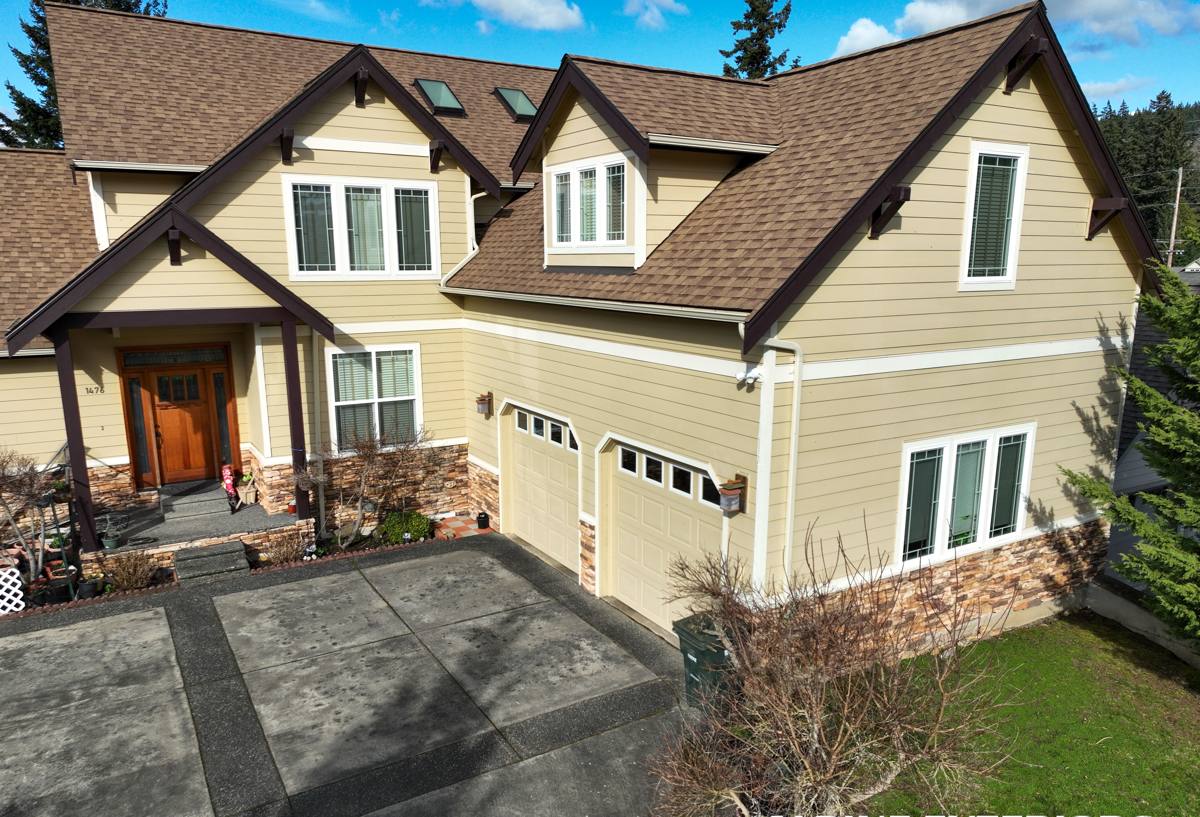
How Whatcom County Weather Wears Down Siding
A few specific mechanisms show up again and again on homes in this area:
- Prolonged moisture contact. Long stretches of overcast, damp weather mean siding surfaces stay wet longer than they do in sunnier climates, which speeds up rot in wood-based products and encourages algae and moss growth on any surface that holds moisture.
- Driving rain and wind-driven water. Storms off the water don't just fall straight down — wind pushes rain sideways into laps, joints, and trim intersections, which is where poor flashing and caulking failures show up first.
- Moss and organic growth. Shaded north sides, tree cover, and roofs that shed debris onto siding create a long moss season that traps moisture directly against the surface, which is one of the more damaging things you can do to any siding material over time.
- Freeze-thaw cycling. It's not a brutal winter climate, but the freeze-thaw swings that do happen are hardest on siding and trim that already have hidden moisture in them.
- UV combined with moisture. Summer sun exposure alternating with a wet fall and winter puts real stress on paint films and factory finishes — this is where cheaper finishes chalk, fade, and crack years ahead of schedule.
Signs a Sumas Home Needs Siding Replacement, Not Just Repair
Not every siding problem calls for a full replacement. But there's a point where patching stops making sense and a full reset is the more honest recommendation. Watch for:
- Soft, spongy, or crumbling spots when you press on the siding, especially near the bottom courses or below windows
- Visible warping, buckling, or gaps opening up between boards or panels
- Paint that's peeling, bubbling, or won't hold no matter how often it's redone
- Persistent moss or algae staining that comes back within a season of cleaning
- Siding that feels swollen or delaminated, particularly on older wood composite or hardboard products
- Interior signs — musty smells, staining on interior walls near exterior corners, or unexplained humidity in a room along an exterior wall
- Siding that's simply reached the end of its practical service life, even if it hasn't failed outright yet
If you're seeing two or more of these at once, that's usually a sign the underlying water-resistive barrier and sheathing are involved, not just the visible surface — which changes the scope of the job.
What a Correct Siding Replacement Actually Involves
Full Tear-Off, Not Overlay
We don't install new siding over old siding. Covering up a failing wall assembly just buries the problem and traps whatever moisture is already in there. A proper job strips the old material down to the sheathing so everything underneath can actually be inspected and, where needed, repaired.
Sheathing and Framing Inspection
Once the old siding is off, we check the sheathing and framing for soft spots, rot, or prior water damage. In a climate that pushes moisture the way this one does, this step is not optional — it's the difference between a replacement that lasts and one that fails again from the inside out.
Water-Resistive Barrier and Flashing
This is the layer most homeowners never see and most cut-rate jobs skip corners on. Correct window and door flashing, properly lapped house wrap, and careful detailing at every penetration and trim intersection is what actually keeps driving rain out of the wall — the siding itself is really the second line of defense, not the first.
Manufacturer-Spec Installation
Fastener type and spacing, clearances at grade and roof lines, joint treatment, and caulking all have to match manufacturer installation requirements. Installing to spec is also what keeps a manufacturer's warranty valid — a detail that gets skipped more often than homeowners realize.
Why We Only Install James Hardie Fiber Cement
We install one siding system: James Hardie fiber cement. Not vinyl, not LP SmartSide, not Cemplank or Allura, not primed spruce or cedar. That's a deliberate standard, not a lack of options.
Vinyl is inexpensive and low-maintenance, but it's a thin plastic product that can warp in heat, crack in cold, and fade over time — and in a climate with real UV-to-rain cycling, that trade-off shows up faster than people expect. Wood-based composite and engineered wood products can perform well when perfectly maintained, but they're more sensitive to the sustained moisture and moss exposure this area sees, and the maintenance burden of keeping them sealed and painted never really ends. Natural cedar is a beautiful, honest material, but it demands ongoing refinishing and is genuinely vulnerable to the rot and moss conditions common on shaded Whatcom County lots.
James Hardie fiber cement is non-combustible, dimensionally stable in wet-to-dry cycling, and available in HZ product lines engineered specifically for wetter, harsher climates like this one. The factory-applied ColorPlus finish is baked on under controlled conditions rather than field-painted, which means better fade and moisture resistance than most site-applied paint jobs — and it carries a strong transferable warranty when installed correctly. It's the product we're willing to put our name behind on every home we work on.
| Factor | James Hardie Fiber Cement | Vinyl / Wood-Based Alternatives |
|---|---|---|
| Moisture resistance | Engineered for wet-dry cycling; won't rot or swell | Vinyl can warp; wood-based products absorb moisture and rot |
| Fire resistance | Non-combustible | Combustible |
| Finish durability | Factory-baked ColorPlus finish | Field-applied paint or thin cap layer, fades faster |
| Maintenance | Occasional wash and caulk check | Regular repainting or sealing typically required |
| Typical lifespan when installed correctly | Multiple decades | Shorter, especially in wet climates |
Our Process, Start to Finish
- Walkthrough and assessment. We look at the current siding, trim, flashing, and any moisture or moss patterns specific to your lot and its exposure.
- Written estimate. A clear scope and price, with the reasoning behind it — what's driving the cost, not just a number.
- Tear-off and inspection. Old siding comes off, sheathing gets checked, and we flag anything that needs repair before moving forward.
- Water management first. House wrap, flashing, and trim detailing get installed and inspected before a single piece of siding goes up.
- James Hardie installation to manufacturer spec. Correct fasteners, clearances, and joint treatment, done by a crew that installs this product regularly.
- Final walkthrough. We go over the finished work with you before calling the job done.
What Drives the Cost of Siding Replacement in Sumas
| Cost Factor | Why It Matters |
|---|---|
| Home size and wall complexity | More corners, gables, and trim detail mean more labor and cut waste |
| Condition of the sheathing underneath | Hidden rot or water damage found during tear-off adds repair scope |
| Siding profile and finish chosen | Lap width, texture, and color selection within the Hardie lineup affect material cost |
| Trim and accessory work | Window and door trim, corner boards, and fascia detailing add scope beyond the flat wall area |
| Site access | Shaded, tight, or sloped lots common in this area can affect setup and staging time |
We don't quote a job without seeing the house — anyone offering a firm number sight unseen is guessing, and on a climate-driven job like this, guessing is how corners get cut later.
Why It Matters That We Already Work in Sumas
A crew that's replaced siding on homes throughout this part of Whatcom County already knows what the moisture and moss patterns look like here, which sides of a house tend to take the worst weather, and where flashing failures typically start. That's not something you get from a crew passing through the area once. It also means we're familiar with local permitting expectations and building department requirements, so the job moves without avoidable delays.
There's also accountability in staying local. We're not disappearing after the invoice clears — if a question comes up two years from now, we're still the same company down the road, not a name you have to track down.
Maintaining Your Siding After Replacement
James Hardie fiber cement is genuinely low-maintenance compared to the alternatives, but "low-maintenance" doesn't mean "no maintenance" in a climate like this one. A few habits go a long way:
- Rinse the exterior once or twice a year to keep moss, pollen, and organic buildup from taking hold, especially on shaded walls
- Keep gutters clear so overflow doesn't run down the siding face
- Trim back vegetation and tree limbs that keep a wall shaded and damp
- Check caulking at trim joints and penetrations periodically and touch up as needed
- Address any impact damage or chips promptly so moisture can't get behind the surface
If your siding is showing its age, or you just want an honest read on whether repair or replacement makes more sense for your home, we're glad to take a look. The estimate is free, there's no pressure attached to it, and you'll get a straight answer about what your house actually needs.