 Blaine Siding
 Window Installation for Sumas Homes
Sumas sits out at the far edge of Whatcom County, on the flat farmland of the Sumas Prairie against the Canadian border, a different setting than the coastal stretch around Blaine and Semiahmoo Bay where our crew is based. It doesn't take the same direct salt spray a waterfront property does, but it isn't spared the weather that defines this corner of the state either. Storm systems that move through push driving rain sideways into wall assemblies and window openings, valley damp lingers longer here than it does on higher or more exposed ground, and a moss season that can run most of the year settles into shaded trim and north-facing sills. We work window installation jobs in Sumas regularly as part of our regional service area, and the approach we bring reflects what that specific mix of conditions actually does to a window opening over time.
This page is about window installation specifically — new units going into an existing or reframed opening — rather than repair or reglazing. Installation is where the real decisions get made: frame material, full-frame versus insert, and above all, how the flashing ties into the surrounding wall. Get those right and a window can perform cleanly for decades. Get them wrong and the problems tend to surface as hidden moisture long before anyone traces it back to the window itself.
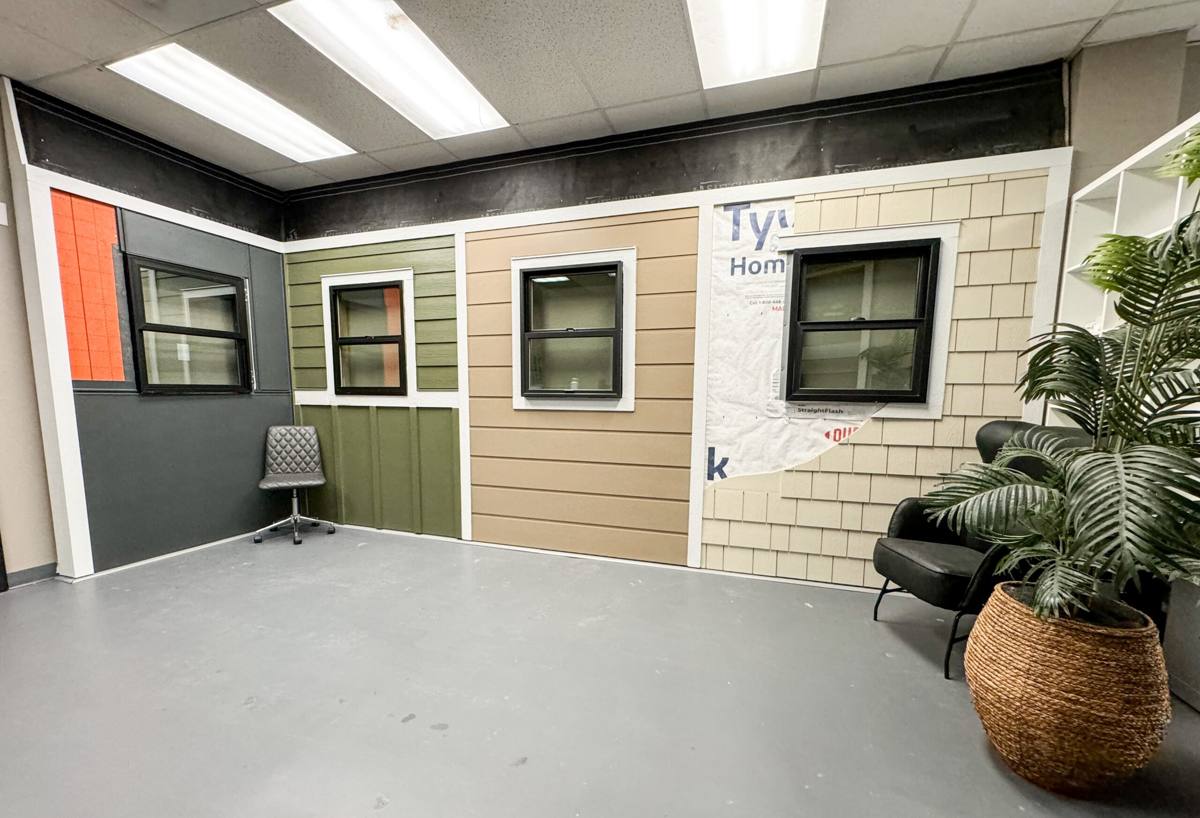
What Sumas's Climate Does to a Window Installation
Driving Rain and Wind-Driven Moisture
Rain in this part of Whatcom County rarely falls straight down. Wind pushes it sideways into wall assemblies and directly at window openings, which is a harder test on flashing and sealant than a simple annual rainfall total suggests. A window installed with flashing that's lapped correctly sheds that sideways-driven water before it reaches the rough opening; one installed with caulk standing in for real flashing tends to leak eventually, just not on install day when anyone's watching.
Marine Air That Still Reaches This Far Inland
Sumas sits well back from open water compared to Blaine, so it doesn't take a constant coastal salt load. But storm systems moving across Whatcom County still carry marine-influenced, salt-laden air this far inland, and it's enough over years to accelerate corrosion on lower-grade window hardware, fasteners, and trim fixings. It's a slower version of the same problem a waterfront home deals with faster, not a different problem entirely.
A Moss Season That Runs Most of the Year
Mild temperatures and near-constant moisture add up to a moss and mildew season that stretches across much of the year on shaded and north-facing surfaces, and window sills and surrounding trim are common places it takes hold on older Sumas homes. It shows up first as staining or green growth, and it holds moisture directly against wood trim and sill material longer than a dry surface would — which is exactly the condition that leads to soft or rotted trim around a window opening if it isn't caught early.
Freeze-Thaw and Cold-Snap Stress
Because of its position near the head of the valley toward the border, Sumas sees more frequent hard frosts and outflow wind events than towns closer to the coast. That adds a freeze-thaw dimension on top of the moisture — water that's worked its way into a poorly sealed frame or sill and then freezes expands, which accelerates cracking and seal failure faster than a purely wet-but-mild climate would. It's also one more reason installation quality matters more here than in a milder inland setting.
Signs a Sumas Home Is Overdue for Window Work
- Fogging or visible moisture trapped between the panes of a double-pane window
- Drafts or cold spots near the frame even with the window fully latched, especially during a winter outflow wind event
- Soft, discolored, or visibly rotted wood trim or sill material
- Difficulty opening, closing, or locking a window that used to operate smoothly
- Visible daylight or gaps where the frame meets the siding
- Paint or finish on the surrounding trim peeling or chalking faster than the rest of the exterior
- Moss or dark staining on sills and trim that returns quickly after cleaning
Full-Frame Replacement vs. Insert Replacement
A lot of Sumas housing stock includes older farmhouses and outbuildings-turned-homes where original openings were framed to whatever made sense at the time, long before manufacturers standardized common window sizes. That history makes the full-frame-versus-insert decision come up more often here than it might on a newer subdivision home, and it's worth understanding before you start pricing anything.
| Factor | Insert Replacement | Full-Frame Replacement |
|---|---|---|
| What it involves | New window fits inside the existing frame, which stays in place | Old frame is removed down to the rough opening and replaced entirely |
| Best fit | Existing frame is square, dry, and structurally sound | Frame or sill shows rot, water damage, or is out of square |
| Flashing access | Limited — existing flashing behind the old frame is reused, not replaced | Full access to re-flash the opening correctly from the wall assembly out |
| Glass area | Slightly reduced, since the new unit sits inside the old frame | Can match or increase original glass area |
| Typical cost | Lower labor, faster install | Higher labor and material cost, longer install time |
| Common Sumas scenario | Newer construction with sound, square openings | Older farmhouses, additions, or any opening with a history of water intrusion |
We won't default to the cheaper option just because it's faster. If a sill has already taken on water, or the frame shows any rot, an insert replacement just seals a bad flashing job behind a new window — it looks finished but doesn't fix what's actually failing. We check the condition of the existing opening before recommending either approach.
What a Correct Installation Actually Involves
Flashing Sequence
This is the detail that determines performance more than the window brand does. Flashing needs to lap correctly with the surrounding water-resistive barrier and siding, directing water out and away from the rough opening rather than trapping it behind the frame. Every seam gets sealed with material rated for sustained moisture exposure — not caulk used as a substitute for real flashing, which is one of the more common shortcuts we find on older Sumas homes when a window finally gets opened up for replacement.
Frame Material
We install vinyl and fiberglass window systems suited to a wet, temperature-swinging Pacific Northwest climate, and we'll walk through the honest trade-offs for your specific project rather than pushing one option as the only right answer. Vinyl performs well in this climate at a lower cost; fiberglass holds dimensional stability better across the wider temperature swings and freeze-thaw cycling Sumas sees compared to milder coastal spots, and it can take paint if a homeowner wants a specific color down the road. Both resist rot in a way an uncladded wood frame doesn't, which matters given how much moisture this region carries through most of the year.
Glazing and Sealing
Double or triple-pane glazing with a low-E coating helps on both ends — less heat loss during cold, damp stretches and less interior condensation on cold glass, which is a common complaint in older single-pane Sumas homes during winter. Field cuts, sill pans, and every seam around the unit get sealed to spec before trim goes back on, not patched over at the end of the day once problems are harder to see.
Clearances and Sill Slope
The sill needs to slope outward so water sheds away from the opening instead of pooling against the frame, and clearances around the unit need to leave room for the flashing and sealant to actually do their job rather than being crammed in as an afterthought. On older Sumas farmhouses especially, this is often where a rough opening needs correction before a new window goes in cleanly.
Our Process, Start to Finish
- On-site assessment — we check each opening's frame condition, squareness, and how the current flashing ties into the siding around it
- Honest recommendation — insert or full-frame replacement, explained with the reasoning specific to that opening
- Material and glazing selection — frame material and glazing package matched to the home and budget, not a default upsell
- Ordering and lead time — a realistic timeline, since non-standard sizes common on older Sumas homes are built to order and take longer than stock sizes
- Removal and opening prep — the old unit comes out carefully, and any hidden rot or flashing issues get addressed before the new window goes in
- Installation and flashing — the new unit is set, shimmed, and flashed to a sequence built for this climate's wind-driven rain
- Trim and finish — exterior trim is integrated to match the surrounding siding and architecture
Cost Factors for Window Installation in Sumas
| Factor | What It Affects | Why It Matters in Sumas |
|---|---|---|
| Insert vs. full-frame | Labor scope and access to flashing | Older farmhouse openings more often need full-frame correction than newer builds |
| Frame material | Upfront cost and long-term maintenance | Freeze-thaw cycling favors dimensional stability over the cheapest option |
| Number and size of openings | Overall project cost and lead time | Non-standard sizes on older homes are built to order, not pulled from stock |
| Existing opening condition | Repair scope before the new unit goes in | Long-term moisture exposure can leave rot in sills and framing that isn't visible until the old window comes out |
| Site access | Labor time and staging | Rural and agricultural properties in the Sumas area can have longer driveways or wider staging needs than an in-town lot |
Exact costs depend on the specific home and what we find once an opening is actually exposed, which is why we walk the property and look at the openings in person rather than quoting off a generic price list.
A Practical Checklist Before You Hire
- Ask specifically how flashing will tie into your existing siding, not just what window brand is being sold
- Confirm current Washington contractor licensing and active liability insurance
- Get a written scope that separates the manufacturer's product warranty from the installer's labor warranty
- Ask whether your openings are standard sizes or will need to be custom ordered, and get a realistic lead time in writing
- Ask how they handle rot or water damage found once an old window comes out, before you commit to a fixed price
Why a Crew That Already Works Sumas Matters
Manufacturer installation guidance is written for average conditions in a moderate climate, and Sumas doesn't quite match that description — not as exposed as waterfront Blaine, but dealing with its own combination of driving rain, valley damp, and harder freeze-thaw cycling than the coast sees. A crew that installs windows across this part of Whatcom County regularly, not just occasionally between jobs elsewhere, makes different calls on install day: how much lap a flashing detail needs on a rural farmhouse opening, when a sill needs a sloped composite cap instead of relying on caulk, and which fastener grade actually holds up against wind-driven cold. Those are the decisions that determine whether a window installation is still performing cleanly in fifteen years or showing drafts and soft trim in five.
If you're weighing window installation for a Sumas home — an older farmhouse with non-standard openings, a newer build needing its first replacement, or anything in between — it's worth having someone look at the actual openings before you start pricing units. We offer free, no-pressure estimates for window installation in Sumas and the surrounding area — use the form below to get a time on the schedule.