 Blaine Siding
 Why Window Installation in Semiahmoo Calls for a Different Approach
Semiahmoo sits right at the water's edge, wrapped by Drayton Harbor and Semiahmoo Bay, in the far northwest corner of Whatcom County. That location is part of what makes it beautiful, and it's also exactly why windows here take more abuse than windows a few miles inland. Salt-laden marine air corrodes hardware and dulls finishes faster than a typical Blaine neighborhood. Wind off the water drives rain sideways into wall assemblies instead of letting it fall straight down. And the long, wet moss season that defines a Pacific Northwest winter keeps trim and sills damp for weeks at a stretch, which is exactly the environment moss, algae, and wood rot need to take hold.
None of that means window replacement in Semiahmoo has to be a headache. It means the install has to account for those conditions from the start — the flashing details, the sealant choices, the hardware, and even the fasteners all matter more here than they would on a sheltered inland lot.
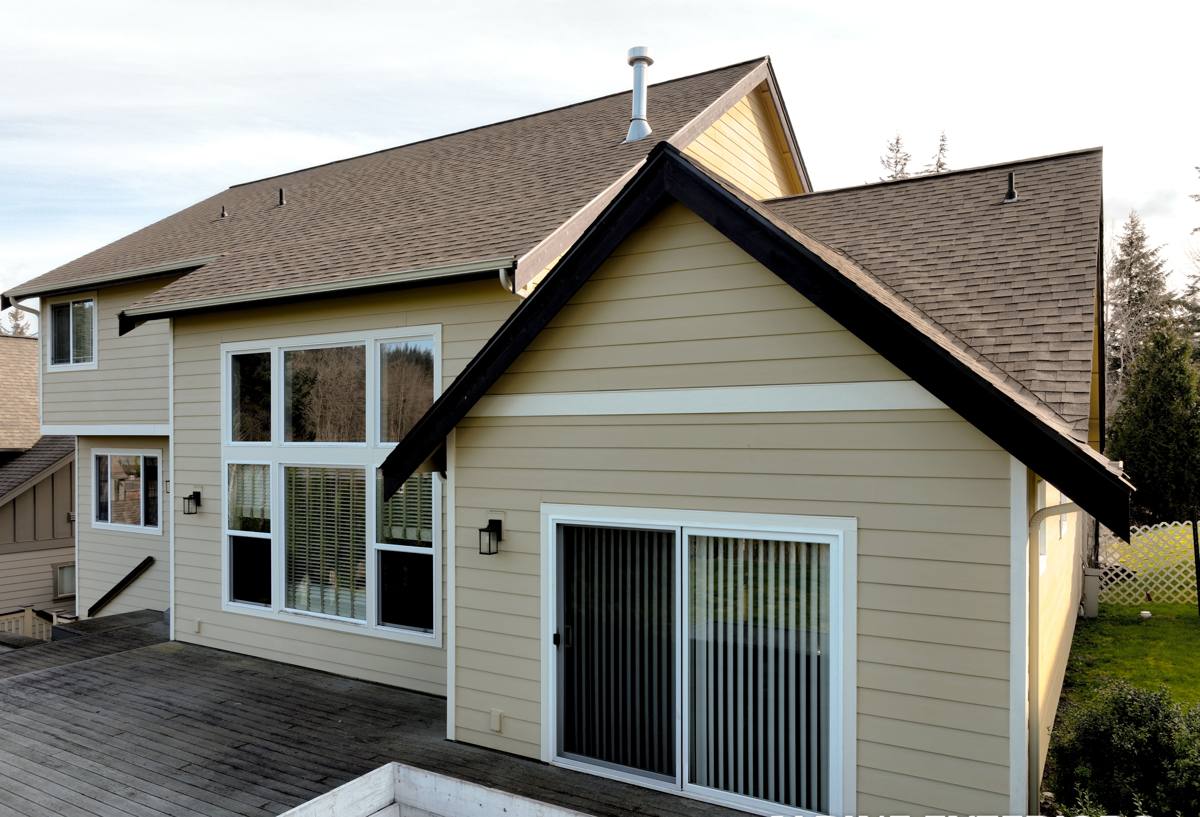
Signs Your Current Windows Are Losing the Fight
Windows rarely fail all at once. They fail slowly, and the early signs are easy to write off as "just an old house." In a salt-air, high-rain environment like Semiahmoo, these signs tend to show up earlier than the manufacturer's warranty timeline suggests they should.
- Frame or sill wood that feels soft or spongy when you press on it, especially at the bottom corners
- Fogging or a hazy film trapped between the panes of a double-pane window — a sign the seal has failed
- Noticeable drafts or a cold spot near the window even with it fully latched
- Hardware — locks, cranks, hinges — that's stiff, corroded, or won't hold the sash tight
- Paint bubbling or peeling on interior sills, often a sign moisture is getting into the wood from outside
- Moss, algae, or black staining building up on exterior trim or the sill
- Condensation forming on the inside of the glass regularly, not just on the coldest mornings
- Difficulty opening, closing, or locking a window that used to operate smoothly
Any one of these on its own might just mean a caulking touch-up. Several of them together, especially on a window facing the water or prevailing wind, usually means the window assembly itself is past the point of a simple repair.
What a Correct Window Installation Involves
Prep and Removal
A correct installation starts before the new window ever shows up. That means removing the old unit carefully, checking the surrounding framing and sheathing for rot or water damage, and dealing with anything found before it gets covered back up. Skipping this step is one of the most common ways a "new window" ends up leaking within a year or two — the new frame goes in on top of a problem that was never fixed.
Flashing and Water Management
This is the part that matters most in Semiahmoo's climate. Every window opening needs a sloped sill pan so water that gets past the outer seal drains back outside instead of pooling in the framing. The flashing at the head, jambs, and sill has to integrate correctly with the home's weather-resistive barrier, in the right shingled order, so water moving down the wall sheds over each layer instead of behind it. Wind-driven rain off Semiahmoo Bay will find any gap in that sequence eventually — it's not a corner worth cutting.
Sealing and Insulating
Once the window is set, shimmed level and plumb, and fastened per the manufacturer's schedule, the gap between the frame and the rough opening gets insulated — not packed solid, which can bow the frame, but filled enough to stop air movement. Backer rod and a quality exterior sealant close the perimeter joint. Interior and exterior trim goes back on last, sealed at the joints so water can't track behind it.
Choosing Materials for a Marine Environment
Every major window material can work in Semiahmoo. The honest answer is that some hold up with less maintenance than others once salt air and constant moisture are part of the equation.
| Material | Corrosion / Moisture Resistance | Maintenance | Typical Cost Tier |
|---|---|---|---|
| Vinyl | Good — won't rust or rot, but hardware quality varies by manufacturer | Low — occasional rinse and hardware check | Lower |
| Fiberglass | Very good — dimensionally stable, resists salt exposure well | Low | Mid to upper |
| Aluminum-clad wood | Good exterior protection, but any breach in the cladding exposes wood beneath to rot | Higher — cladding seams and wood interior need periodic inspection | Upper |
| Bare wood | Poorest in this climate without diligent upkeep — most exposed to rot and swelling | Highest | Varies |
We're straightforward with Semiahmoo homeowners about this: a beautiful bare-wood window on a waterfront elevation is going to demand a maintenance schedule most people underestimate. That's not a knock on wood as a material — it's a fact about what constant salt air and rain do to any exposed, unprotected wood surface over time. If you want that look, a clad or fiberglass option with a wood interior often gets you close with far less upkeep on the weather side.
Our Installation Process
- On-site assessment. We look at each opening, the surrounding wall condition, and the exposure — a window facing open water or prevailing wind gets treated differently than one on a sheltered side of the house.
- Measuring and ordering. Exact measurements per opening, since older Semiahmoo homes rarely have perfectly uniform openings.
- Site protection. Interior and landscaping around the work area are protected before anything is removed.
- Careful removal. Old windows come out without unnecessary damage to the surrounding trim or siding, and we inspect the framing as we go.
- Repair as needed. Any rot or water damage found in the opening is repaired before the new window goes in — not covered over.
- Flashing and installation. Sill pan, shingled flashing sequence, and correct fastening per the window manufacturer's instructions.
- Insulating and sealing. Perimeter gap insulated, backer rod and sealant applied at exterior joints.
- Trim and finish. Interior and exterior trim reinstalled or replaced, sealed at the joints.
- Final walkthrough. Every window is operated, checked for square, level, and a clean seal before we call the job done.
What Affects the Cost of Window Installation in Semiahmoo
Costs vary enough by project that we don't quote sight unseen, but the factors that move the number are consistent. A single vinyl replacement window typically lands in the low-to-mid four figures installed; fiberglass and clad-wood units run higher. The table below covers what actually drives that range up or down.
| Factor | Why It Matters |
|---|---|
| Number of windows | Per-window cost usually drops when several openings are done in the same visit |
| Size and style | Large picture windows, bays, or custom shapes cost more than standard double-hung or slider sizes |
| Material | Vinyl, fiberglass, and clad-wood carry different price tiers, as shown above |
| Condition of the existing opening | Rot repair or framing work found during removal adds labor and material |
| Access and exposure | Second-story or hard-to-reach openings, especially on wind-exposed elevations, take more time and equipment |
| Glass package | Upgraded glass for energy performance or sound reduction adds cost but can be worth it this close to open water |
Permits and Energy Code Considerations in Whatcom County
Washington's state energy code sets minimum performance requirements for replacement windows, including U-factor limits, and those requirements apply whether the job is in downtown Blaine or out on the Semiahmoo waterfront. Whether a permit is required generally depends on the scope of the work — a straightforward like-for-like replacement is often treated differently than a job that changes the size of the opening or involves structural work around it. We handle this conversation up front so there are no surprises mid-project, and we won't cut corners on code compliance to save a step.
Maintaining Windows After Installation in a Salt Air, Moss-Prone Climate
A correctly installed window in Semiahmoo will still need more attention than the same window installed twenty miles inland. That's the trade-off of living on the water, and a little routine care goes a long way toward protecting the investment.
- Rinse exterior glass and frames periodically to clear salt film before it etches or dulls the finish
- Keep weep holes at the base of the frame clear of dirt, moss, or debris so water can drain as designed
- Clean moss and algae off surrounding trim and sills promptly rather than letting it sit and hold moisture
- Check exterior sealant joints once a year for cracking or separation, especially after a hard winter
- Keep gutters and downspouts clear so roof runoff isn't sheeting down across window heads
- Operate locks and hardware periodically even on windows you don't open often, so corrosion doesn't set in unnoticed
Why Hire a Crew That Already Works Semiahmoo
A window installer who mostly works dry, sheltered, inland sites can still do a technically fine install and have it underperform here — not because the workmanship was sloppy, but because the details that matter most in a marine environment aren't the same ones that matter most everywhere else. Knowing which elevations in Semiahmoo take the brunt of the wind off the bay, how aggressively salt air and moss actually behave on this stretch of Whatcom County coastline, and which flashing and sealant choices hold up under that pressure is the kind of thing that comes from doing the work here repeatedly, not from a manufacturer's install manual alone.
That local familiarity also means fewer surprises during the job itself — we're not guessing at how a particular exposure or opening condition on a waterfront home is going to behave.
If your windows are showing their age, or you're planning ahead for a home on or near the water in Semiahmoo, we're happy to take a look and give you a straight, no-pressure assessment. Use the form below to request a free estimate, and we'll walk the property with you and talk through what your windows actually need.