 Blaine Siding
 Why Window Replacement in Custer Comes With Its Own Checklist
Custer sits in the open, agricultural stretch of Whatcom County between Blaine and Ferndale, close enough to the Salish Sea that homes here still catch salt-carried air off Birch Bay and Drayton Harbor on windy days. Add in the long wet season that runs from fall through spring, and you've got a combination that's harder on windows than most homeowners realize until they're dealing with a fogged-over pane or a sill that's gone soft. A window replacement job done right in Custer isn't just a swap-out — it has to account for the salt, the rain, and the moss that comes with living this close to the water and under this much tree cover.
This page covers what that actually means for a Custer home: what the climate does to windows over time, what a correct installation looks like, how we approach the job, and why it's worth hiring a crew that already understands this stretch of Whatcom County rather than one that's guessing.
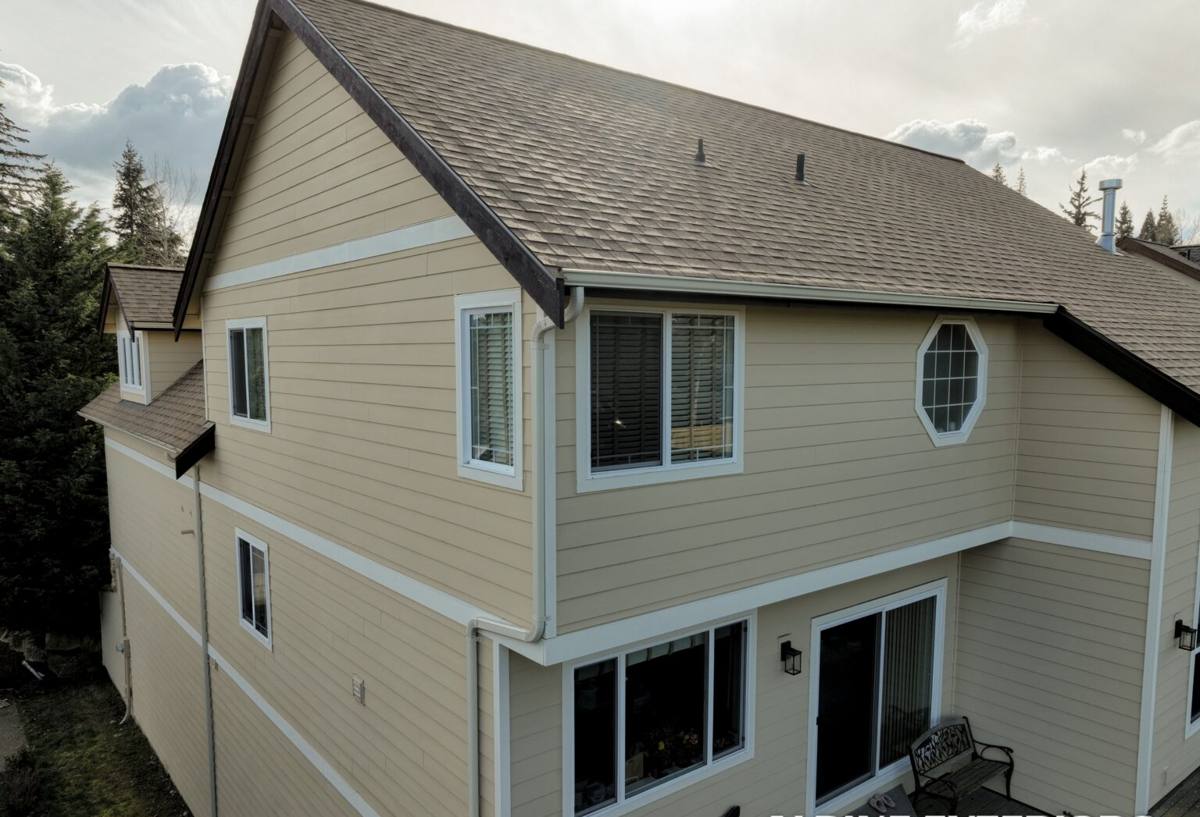
What the Local Climate Actually Does to a Window
Salt Air and Hardware
Even a few miles inland from the water, salt-laden air corrodes exposed metal faster than most people expect. Window hardware — hinges, locks, balance mechanisms, and fasteners — is usually the first thing to go. Once corrosion sets in, windows get harder to open and close, locks stop seating properly, and the weatherstripping around a stuck sash stops sealing the way it should. This isn't a cosmetic issue; it's the start of an air and water infiltration problem.
Driving Rain and Failed Seals
Whatcom County doesn't just get a lot of rain — it gets a lot of wind-driven rain, especially on west- and south-facing walls that take the brunt of storms coming off the water. That kind of rain finds any gap in old caulking, worn weatherstripping, or degraded flashing and pushes water in rather than letting it run off. Older windows that were fine in a calm rain often leak specifically during the sideways, wind-pushed storms this area gets several times a year.
Moss, Shade, and Trapped Moisture
Custer's mix of tree cover and consistently damp conditions means moss and algae take hold on sills, trim, and cladding wherever moisture lingers. Moss itself doesn't destroy wood, but it holds water against the surface for weeks at a time, and that constant dampness is what leads to rot in sills and jambs. A window that looks fine from a distance can have a sill that's been slowly breaking down underneath a patch of moss for years.
Signs Your Custer Home Needs Replacement, Not Just a Repair
Some window problems can be fixed without a full replacement. Others are signs that the unit itself has failed and a repair would just be a temporary patch. Here's what tells us which category a window is in:
- Fogging or a visible haze between the panes of a double-pane window — the seal has failed and can't be restored
- A sill or lower jamb that feels soft, spongy, or crumbles slightly under light pressure
- Windows that are difficult to open, close, or lock because hardware has corroded or seized
- Noticeable drafts near the frame even when the window is fully closed and latched
- Interior condensation or water staining on the wall below the window during colder months
- Visible gaps, cracked caulk, or peeling paint around the frame where flashing may have failed
- Original single-pane aluminum-frame windows still in place — common in older Custer-area homes and long past their useful life for this climate
What a Correct Installation Actually Involves
Full-Frame Replacement vs. Insert Replacement
Not every window needs to come out down to the studs. If the existing frame is square, dry, and structurally sound, an insert (or "pocket") replacement — where the new window is fitted into the existing frame — can be a faster, less invasive option. But if there's any rot in the sill or jamb, if the frame has shifted out of square, or if the flashing behind the frame has already failed, an insert replacement just buries the problem behind a new window. In those cases, a full-frame replacement is the honest recommendation, even though it costs more and takes longer, because it's the only way to actually fix the water damage instead of covering it up.
Flashing and Water Management
Given how much wind-driven rain this area sees, flashing detail is where a window replacement succeeds or fails long-term. That means a proper sill pan to direct any water that gets past the window back outside instead of into the wall cavity, correctly lapped house wrap or building paper integration above and around the window, and a drip cap or head flashing that sheds water away from the top of the frame. Skipping or rushing this step is the single most common reason a "new" window ends up leaking within a few years.
Insulation and Air Sealing
The gap between the new window frame and the rough opening needs to be filled with an appropriate low-expansion foam or insulation — not stuffed with fiberglass and left loose, and not overfilled with foam that can bow the frame. Done correctly, this step is what actually stops the drafts homeowners are trying to get rid of in the first place.
Choosing a Frame Material That Holds Up in This Climate
Frame material matters more here than in a drier, inland climate, because of the combined exposure to salt air and constant moisture. Here's how the common options compare for a Custer home:
| Frame Material | Salt Air / Moisture Resistance | Maintenance | Typical Lifespan |
|---|---|---|---|
| Vinyl | Good — won't corrode or rot; seams and hardware are the main wear points | Low — occasional cleaning | 20–30 years |
| Fiberglass | Very good — dimensionally stable, resists both moisture and salt exposure | Low | 30-plus years |
| Wood (unclad) | Poor in this climate without diligent upkeep — prone to rot and moss growth | High — regular painting/sealing required | Varies widely with maintenance |
| Wood-clad (vinyl or aluminum exterior) | Good on the exterior face; interior wood still needs normal care | Moderate | 20–30 years |
We don't push one material on every job. A wood-clad window can be the right call for a home where the interior wood trim matters to the owner; a straightforward vinyl or fiberglass unit is often the more practical, lower-maintenance choice for a rental, a rural property, or anywhere upkeep time is limited. Our job is to lay out the honest trade-offs — maintenance burden, moisture behavior, and warranty structure — so the decision fits the house and the owner, not a sales quota.
Our Process, Start to Finish
- On-site assessment. We look at each window from both inside and outside, check sills and jambs for soft spots, and note which units are candidates for insert replacement versus full-frame.
- Measurements and product selection. We measure every opening individually — older homes in this area are rarely perfectly square — and walk through frame material and glass options based on your budget and the exposure of each wall.
- Scheduling around the weather. Given how much of the year sees rain, we plan installs to minimize the time any opening sits uncovered, and we protect the interior and landscaping during the work.
- Removal and inspection. Once the old window is out, we check the rough opening and sill for hidden rot or moisture damage before anything new goes in — this is often where problems that weren't visible from outside get found.
- Installation, flashing, and sealing. The new window is set, shimmed level and square, flashed to shed water properly, insulated around the frame, and sealed on the exterior.
- Final walkthrough. We test operation and locks on every window and go over care and warranty coverage before we consider the job finished.
Why Hiring a Crew That Already Works in Custer Matters
A contractor who works this part of Whatcom County regularly knows which walls on a typical Custer home take the worst of the driving rain, how fast salt air corrodes hardware compared to a more inland job, and what moss buildup around a sill usually means once you get the trim off. That local pattern recognition shortens the guesswork and helps us flag problems — like a sill that's further gone than it looks — before they turn into a change order mid-project. It also means we're familiar with Whatcom County permitting requirements and the mix of home types common out here, from older farmhouses to manufactured homes to newer construction, so the approach fits the house rather than a generic playbook.
What Affects the Cost of Window Replacement
Every home is different, but the same handful of factors drive most of the cost variation we see on Custer jobs:
| Factor | Why It Matters |
|---|---|
| Full-frame vs. insert replacement | Full-frame costs more but is required when there's rot or a shifted frame |
| Frame material | Fiberglass and wood-clad typically cost more upfront than vinyl |
| Number of windows | Per-window cost usually drops somewhat as the total count on a job goes up |
| Access and story height | Second-story or hard-to-reach windows take more time and equipment |
| Hidden damage | Rotted sills or sheathing found during removal add material and labor |
| Glass package | Upgraded low-E coatings or gas fills add cost but improve comfort and efficiency |
We give straight, itemized numbers up front and flag anywhere a price could move once we see behind the old trim — no vague allowances that turn into surprises later.
Ready When You Are
If you're dealing with a window in your Custer home that's fogged, drafty, hard to operate, or just original to a house that's been through a lot of Whatcom County winters, we're glad to take a look. Reach out for a free, no-pressure estimate using the form below — we'll walk the windows with you, give you a straight read on what needs replacing versus what can wait, and lay out honest options for your home and budget.