 Blaine Siding
 Sumas Windows Face a Different Kind of Wear
Sumas sits in the Nooksack River valley, tucked against the Canadian border in eastern Whatcom County. It's a different setting than the coastal exposure you get closer to Blaine, but the moisture problem is just as real — sometimes worse. Cold air pools in the valley overnight, morning fog lingers longer here than it does along the water, and the low, flat terrain means humidity has nowhere to go. Add in Whatcom County's long stretch of driving rain each fall and winter, and you've got a climate that finds every weak point in a window: soft glazing putty, a tired seal, a flashing detail that was never done right in the first place.
Homes here also deal with the region's signature moss season. Moss doesn't just grow on roofs — it colonizes window sills, frame tracks, and the gaps around trim where wind-blown moisture and organic debris settle and stay wet for months at a time. Over years, that constant dampness works into wood frames, swells vinyl components at the joints, and breaks down the seals that keep double-pane glass from fogging. None of this is unique to any one house — it's just what the regional climate does to windows that were installed without it in mind, or that have simply reached the end of their service life.
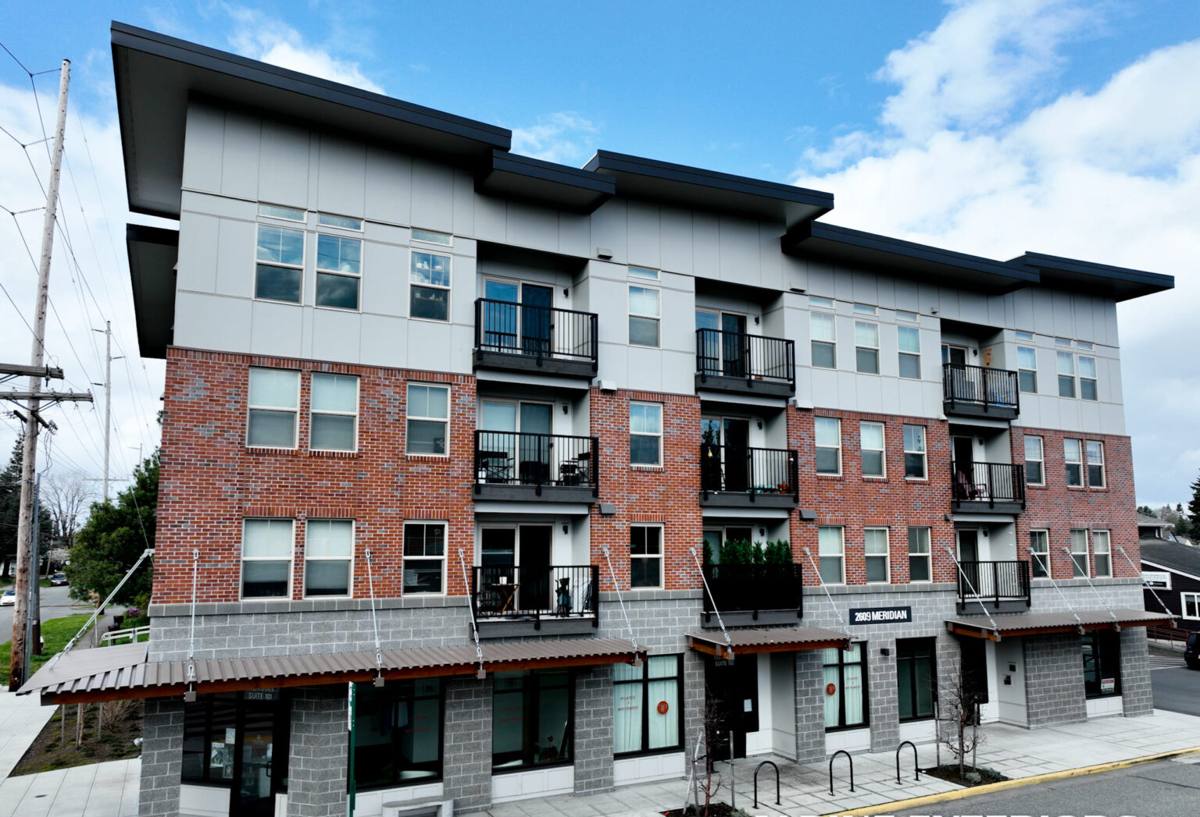
Signs Your Sumas Home's Windows Are Failing
Window failure in this climate is usually gradual, which is exactly why it gets missed until a heating bill or a rot repair forces the issue. Here's what we tell Sumas homeowners to watch for between now and their next scheduled maintenance check:
- Fogging or a visible haze between the panes — the seal has failed and the gas fill is gone
- Soft or spongy wood at the sill, especially on north- and west-facing walls that stay shaded and wet longer
- Windows that are hard to open, stick in the track, or won't latch flush anymore
- Visible daylight, a draft, or whistling around the frame when wind picks up
- Moss or green growth building up in the sill channel or exterior trim joints
- Condensation forming on the inside of the glass during cold snaps, even with normal indoor humidity
- Paint or finish peeling specifically around the window opening rather than the wall in general
Any one of these on its own might just mean a repair. Several at once, especially on a house that's original to its build or hasn't been touched in fifteen-plus years, usually means the windows have reached the point where replacement costs less over time than continuing to patch them.
What a Correct Window Replacement Job Actually Involves
Window replacement gets sold as a simple swap, but the work that actually protects a Sumas home happens at the rough opening, not at the glass. A window is only as good as the flashing and sealing details around it — get those wrong and you've installed a brand-new window that will let water into the wall cavity anyway.
Full-Frame Replacement vs. Insert (Pocket) Replacement
There are two honest approaches, and which one is right depends on the condition of your existing frame:
- Insert replacement fits a new window inside the existing frame, leaving your exterior trim and siding undisturbed. It's faster and less invasive, and it's the right call when the surrounding frame and sill are still structurally sound.
- Full-frame replacement removes the window down to the rough opening, exposing the sheathing, sill, and framing underneath. This is the only option when there's already rot, soft wood, or evidence that water has been getting behind the old unit — which we see often on older Sumas homes that have gone through more than one wet season with a failing seal.
We won't recommend a full-frame tear-out when an insert will do the job honestly, and we won't hide rot behind a quick insert swap just to save a day of labor. We open things up, look at what's actually there, and tell you which approach it needs.
The Details That Actually Stop Water
Once the opening is exposed or the old unit is out, the sequence matters more than the window itself:
- Inspect the sill and framing for existing moisture damage or rot before anything new goes in
- Install a sloped sill pan so any water that does get past the window drains back out, not into the wall
- Apply flashing tape and building paper in the correct shingle-lap order — top layer over the one below, always
- Set the window level, plumb, and square, then fasten per the manufacturer's schedule
- Insulate the gap between the frame and rough opening with a low-expansion foam or backer rod, never packed tight enough to bow the frame
- Seal the exterior with a compatible, paintable sealant rated for the siding material
- Finish interior trim and confirm smooth operation before we consider the job done
Skip the sill pan or reverse the flashing lap, and the window will look fine for a year or two before moisture starts showing up inside the wall — usually discovered only when siding or trim comes off for an unrelated repair.
Choosing the Right Window for Sumas's Climate
Material choice matters as much as installation quality here, because whatever you pick will sit through repeated wet-dry cycles, valley fog, and seasonal moss growth for the next twenty-plus years.
| Frame Material | How It Handles Local Moisture | Maintenance | Best Fit |
|---|---|---|---|
| Vinyl | Won't rot; performs well against sustained damp and driving rain | Low — occasional cleaning of tracks and sills | Most Sumas homes, especially where budget and low upkeep matter |
| Fiberglass | Excellent stability across temperature and humidity swings; very low expansion/contraction | Low | Homes wanting a longer-term investment with minimal movement over time |
| Wood-clad | Handsome interior look, but the exterior clad has to be perfectly sealed or moisture finds the seams | Higher — exterior joints need regular inspection | Homeowners prioritizing a specific interior wood aesthetic, aware of the added upkeep |
| Aluminum | Conducts cold and can condense heavily in this climate unless thermally broken | Moderate | Generally not our first recommendation for valley conditions unless thermally broken |
On glass, we default to a double-pane unit with a low-E coating and argon fill for most Sumas homes — it's a proven balance of cost and performance in this climate. Triple-pane is worth discussing for a north-facing wall, a home right along an open field with more wind exposure, or anyone chasing the lowest possible heating bill, but it's not always the automatic upgrade it's marketed as. We'll walk through the actual difference for your specific walls rather than defaulting to the more expensive option.
Our Process, Start to Finish
1. On-Site Assessment
We look at each window from both sides — glass, seals, frame, sill, and the wall condition around it — and tell you honestly which units need replacing now and which can wait.
2. Straightforward Estimate
You get a written estimate that spells out material, labor, and scope per window. No vague allowances, no pressure to sign same-day.
3. Scheduling Around Sumas Weather
We plan installation days around the forecast, not just the calendar. Openings don't sit exposed to driving rain longer than necessary, and we stage materials so each opening is closed back up the same day whenever possible.
4. Installation
Full-frame or insert, done to the sequence described above — sill pan, correct flashing lap, proper insulation, compatible sealant.
5. Walkthrough and Cleanup
We test operation on every window, clean up the job site, and walk through the work with you before we consider it finished.
What Window Replacement Costs in Sumas
Every home is different, but the factors that move the price are consistent. This is meant as a planning guide, not a quote — your written estimate will reflect your actual windows and opening conditions.
| Factor | Why It Affects Cost |
|---|---|
| Insert vs. full-frame replacement | Full-frame involves more labor, materials, and often exterior trim or siding repair |
| Frame material | Vinyl is typically the most economical; fiberglass and wood-clad cost more upfront |
| Glass package | Double-pane low-E/argon vs. triple-pane changes both material cost and expected energy performance |
| Existing damage | Rot or water intrusion found during tear-out adds repair scope beyond the window itself |
| Number of windows | Doing a whole house at once is generally more cost-efficient per window than one at a time |
| Access and window size | Second-story, oversized, or hard-to-reach windows take more labor |
As a general rule, budget more for full-frame work than insert replacement, and expect fiberglass or wood-clad to run above vinyl. We'll break down where your money is going on every estimate, not just hand you a bottom-line number.
Why Hiring a Crew That Already Works in Sumas Matters
A contractor who mainly works in drier or more moderate parts of Washington can still install a window correctly on paper and still get it wrong for this climate — wrong sealant for the temperature swings, a flashing detail that assumes less standing moisture than a Whatcom County valley actually produces, or a material choice that looks fine in a showroom and struggles here after a few wet seasons. Working windows and siding across Blaine and the surrounding communities means we've already seen how the local conditions play out over years, not just at install day.
That local track record also means we know what building departments in the area expect for permitting on full-frame replacement work, and we're not learning the region's weather patterns on your project. It's the difference between a crew that installs windows and a crew that installs windows built to last through Whatcom County winters specifically.
Protecting Your New Windows After Installation
A correct install buys you years of trouble-free performance, but a little seasonal attention protects that investment:
- Clear moss and debris from sills and tracks before it has a chance to hold moisture through winter
- Check exterior caulk lines each spring and fall for cracking or separation
- Keep gutters and downspouts clear so water isn't sheeting down across the wall near window openings
- Vacuum out window tracks a couple times a year to keep drainage weep holes from clogging
- Watch for condensation between panes as an early sign of seal failure, even years down the road
None of this takes much time, but skipping it is how a well-installed window ends up with a preventable problem a decade early.
If your Sumas home's windows are showing any of the signs above, or you're simply ready to stop fighting drafts and fog every winter, we're happy to take a look. Reach out for a free, no-pressure estimate — we'll tell you honestly what your windows need, and what they don't.