 Blaine Siding
 Asphalt Shingle Roofing in Sumas: What This Climate Demands
Sumas sits within the stretch of Whatcom County we cover regularly out of Blaine, and even though it sits a bit further back from open water than some of the towns closer to the bay, the same weather systems that move through the county reach roofs here too. Salt-tinged coastal air, driving rain that arrives with real wind behind it, and a moss season that can run most months of the year all put steady pressure on a roof over time. Asphalt shingle roofing is the most common roof system on homes in this area, and for good reason — it's a proven, cost-effective option when it's specified and installed correctly for the conditions it actually has to handle. The problem is that "correctly" means something different in Sumas than it does in a drier, more sheltered part of the country, and a lot of the roofs we get called out to inspect are struggling not because asphalt shingles were the wrong choice, but because the installation didn't account for this climate.
Salt Air and Fastener Corrosion
Coastal-influenced air moving through this part of Whatcom County carries enough salt content to accelerate corrosion on exposed metal — nail heads, flashing, vent stacks, and any lower-grade hardware left uncoated. On a roof, that shows up first at flashing points and fasteners, well before the shingles themselves show their age. Hardware choice and metal type matter more here than they would further inland or away from any coastal influence.
Driving Rain and Wind-Driven Moisture
Rain moving through this part of Washington rarely falls straight down. Wind pushes it sideways and up under shingle edges, into valleys, and against every flashing transition on the roof. A shingle roof that isn't detailed for wind-driven rain can look fine from the ground for years while water is already finding its way past the surface layer at the edges, valleys, and penetrations.
A Moss Season That Doesn't Let Up
Mild temperatures and near-constant moisture add up to a moss and algae season that can run close to year-round on shaded or north-facing roof planes around Sumas. Standard asphalt shingles offer little resistance to that growth, and once moss takes hold, it holds moisture against the shingle surface and works its way under tabs and around fasteners, shortening the roof's usable life well before it would otherwise need replacing.
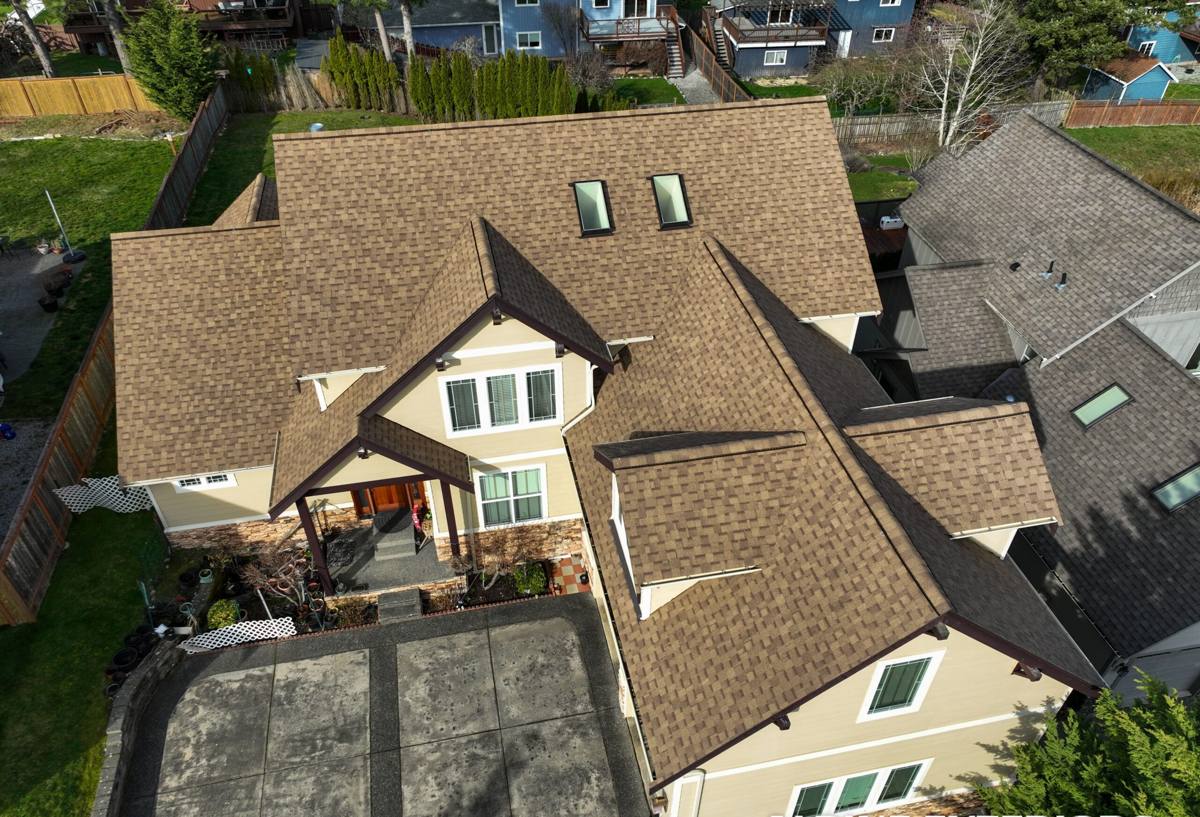
What a Correctly Installed Asphalt Shingle Roof Includes
A roof is a system, not just a layer of shingles. Every part of that system has to work together to keep this climate's rain, wind, and moisture out of the house.
Ice and Water Barrier at Vulnerable Areas
Self-adhering ice and water membrane goes down first at eaves, valleys, and around every penetration — chimneys, vents, and skylights — before any shingle is installed. These are the spots where driving rain and wind-driven water are most likely to find a way in, and this layer is the backup that keeps a small gap in the shingle field from becoming a leak.
Flashing at Every Roof-to-Wall Transition
Step flashing at wall intersections, counter-flashing at chimneys, and properly lapped valley flashing are what actually stop water at the places a roof is most likely to fail. We don't reuse old flashing on a reroof — it's inexpensive relative to the rest of the job and it's not worth the risk of leaving corroded or improperly lapped metal in place under new shingles.
Balanced Attic Ventilation
Intake at the eaves and exhaust at the ridge let an attic breathe, which keeps the underside of the roof deck dry and helps the shingles themselves shed heat and moisture properly. In a climate where the roof stays damp longer between storms, a poorly ventilated attic traps that moisture underneath the shingles instead of letting it dry out, which shortens shingle life and can encourage rot in the deck below.
Choosing the Right Asphalt Shingle for a Sumas Roof
Not every asphalt shingle product is built for the same conditions, and the difference matters more here than it would in a drier, calmer climate. We walk homeowners through the real trade-offs rather than defaulting to whatever is cheapest per square.
| Shingle Type | What It Offers | Consideration for This Climate |
|---|---|---|
| Three-tab asphalt | Lowest upfront cost, flat single-layer look | Lower wind ratings and less algae resistance; more prone to lifting in driving wind-driven rain |
| Architectural (laminate) | Thicker, dimensional profile, higher wind ratings | Our standard baseline for Sumas roofs given the wind and rain this area sees through fall and winter |
| Algae-resistant (AR) | Copper- or zinc-infused granules that resist algae and moss staining | Directly addresses the long moss season that affects shaded and north-facing roof planes |
| Premium/designer laminate | Heaviest profile, strongest wind ratings, longest warranty terms | Worth considering on exposed roof planes or homes with a history of repeat moss or wind damage |
For most Sumas homes, we specify algae-resistant architectural laminate shingles from an established manufacturer as the practical baseline — not the cheapest option, but the one that holds up against this specific combination of rain, wind, and moss without asking the homeowner to gamble on it.
Our Roofing Process, Start to Finish
Inspection and Honest Assessment
Every job starts with a real look at the existing roof — shingle condition, flashing condition, ventilation, and any signs of moisture already working its way into the deck. That assessment is what drives the estimate, not a flat per-square guess.
Tear-Off and Deck Inspection
Once the old shingles come off, we check the roof deck itself for soft spots, rot, or water staining before anything new goes down. Covering a damaged deck with new shingles just hides a problem that keeps getting worse underneath — we'd rather find it now and address it as part of the job.
Installation to Manufacturer Spec
Shingle manufacturers publish specific requirements for nailing pattern, exposure, and underlayment for their warranties to apply. We install to that spec as the baseline on every job, not as an upgrade.
Cleanup and Final Walkthrough
We clear the site of old material and debris, including a magnetic sweep for stray nails, then walk the finished roof with the homeowner to cover what was done and what maintenance to expect going forward.
Repair or Replace? What We Actually Look At
Not every roofing problem in Sumas means a full replacement. We look at the age of the existing roof, how widespread the damage is, and whether the underlying deck and flashing are still sound before recommending anything.
- Isolated missing or damaged shingles on an otherwise sound, properly ventilated roof are usually a repair.
- Widespread granule loss, curling, or shingles nearing the end of their rated lifespan point toward replacement.
- Recurring leaks at the same spot after a prior repair usually mean the underlying flashing or deck needs attention, not another patch.
- A roof with poor ventilation or no ice-and-water protection is worth upgrading to current standards at replacement time, even if the shingles alone still had some life left.
We'll say plainly when a repair is the honest answer. A full replacement isn't the right call just because it's more work.
Signs a Sumas Roof Needs Attention
- Granules collecting in gutters or at the base of downspouts
- Shingles that are curling, cupping, or visibly cracked
- Moss or dark algae streaking that returns quickly after cleaning
- Missing or lifted shingles after a windy winter storm
- Daylight visible through the roof deck from inside the attic
- Soft spots, sagging, or ceiling staining below the roof
- Rusted or deteriorating flashing around chimneys, vents, or skylights
Why a Crew That Already Works Sumas Matters
A roofing crew that works across Whatcom County day in and day out, from Blaine's shoreline neighborhoods out to communities like Sumas, sees how driving rain, moss, and coastal-influenced air actually affect roofs over a full year rather than how a shingle performs on a manufacturer's spec sheet. That experience shapes practical decisions — how much ice-and-water protection a given roof plane really needs, where moss pressure tends to build fastest, and which flashing details are worth the extra time on install day so a homeowner isn't dealing with a callback two winters later. It also means we're not learning this area's weather pattern on someone's dime; we've already seen how it treats a roof.
Get a Free, No-Pressure Estimate
If your Sumas home needs a roof inspection, a repair, or a full asphalt shingle replacement built for what this climate actually does to a roof, we're glad to take a look and give you a straightforward, honest assessment. Reach out using the form below to schedule a free estimate — no pressure, no upsell script.