 Blaine Siding
 Building Near the Border, Building for the Weather
Peace Arch sits close enough to Semiahmoo Bay and the Strait of Georgia that salt-laden air is a daily fact of life, not an occasional nuisance. Add Whatcom County's long wet season, driving rain off the water, and the shade and moss growth that come with mature tree cover in this part of Blaine, and you have a climate that is genuinely tougher on new windows than most manufacturers' marketing brochures assume. When we install new-construction windows for a home going up or being fully re-sided in this neighborhood, we're not just following the plan set — we're building in margin against conditions the window itself will face for the next 20-30 years.
New-construction windows are different from replacement windows in one important way: they have a nailing fin and get set into a rough opening before the siding or trim goes on, which means the flashing and water management details are done once, correctly, with no shortcuts available later. Get that sequence wrong on a Peace Arch build and the mistake gets sided over — invisible until it isn't.
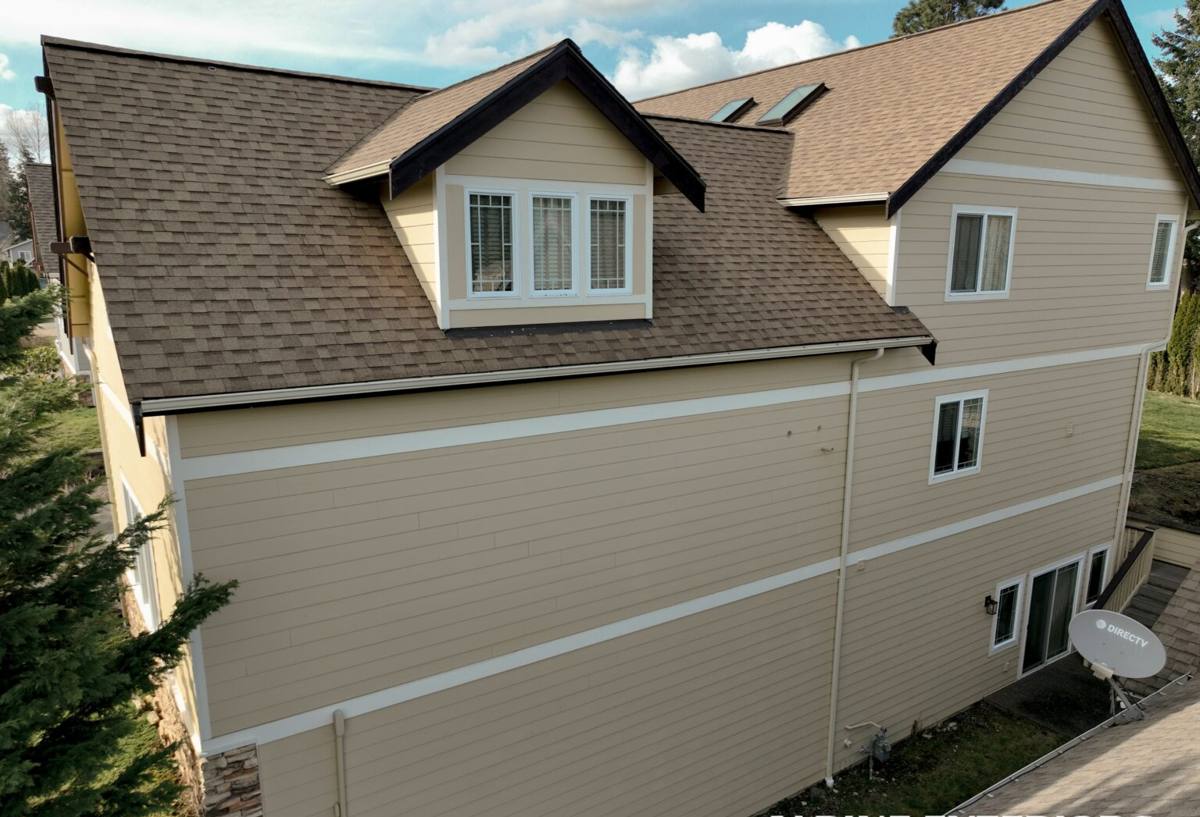
What Peace Arch Homes Actually Need From Their Windows
Salt Air and Corrosion
Homes within a few miles of the water see accelerated corrosion on unprotected fasteners, hinges, and cheap cladding. This isn't unique to oceanfront property — salt carries inland on wind, especially with the exposure many Peace Arch lots have toward the water and open fields. We spec corrosion-resistant fasteners and hardware as standard on installs in this area, not as an upcharge.
Driving Rain
Wind-driven rain off the Strait doesn't fall straight down — it hits window assemblies at an angle and tests every lap and seal in the flashing system. A window that's watertight in a still-air test can still leak under real Blaine weather if the sill pan, head flashing, and side flashing weren't installed in the correct shingle-lap order.
Moss and Shaded Exposures
Many lots in and around Peace Arch carry mature fir and cedar cover, which means shaded wall sections that stay damp for days after a storm passes. Moss and algae growth on sills and trim isn't just cosmetic — it holds moisture against the window frame and surrounding trim far longer than a sun-exposed wall would. Detailing that sheds water fully, with no flat ledges for moss to colonize, matters more here than in a drier neighborhood.
What a Correct New-Construction Window Install Involves
A new-construction window is only as good as the opening it's set into and the flashing sequence around it. The frame itself is rarely where problems start.
- Rough opening check. We verify the opening is square, plumb, and sized correctly before the window ever gets set — a window forced into an out-of-square opening will bind, rack, or leak at the corners regardless of quality.
- Sill pan flashing. A sloped, sealed sill pan directs any water that gets past the window back outside the wall assembly instead of down into the framing.
- Weather-resistive barrier integration. The house wrap or WRB gets cut and lapped in the correct order — bottom to top, side flashing over the sill pan, head flashing over the side flashing — so water always sheds outward and downward, never inward.
- Window setting and fastening. The unit is set plumb, level, and square in the opening, shimmed correctly, and fastened per the manufacturer's schedule so the frame isn't stressed and the operating hardware works smoothly for decades.
- Insulation and air sealing. The gap between the frame and rough opening gets sealed with a low-expansion foam or backer rod and sealant rated for window applications — never packed tight enough to bow the frame.
- Exterior trim and final flashing. Trim goes on with details that shed water off the top and sides, avoiding flat horizontal surfaces where moisture and moss can sit.
Window Types and Trade-Offs for This Climate
There's no single "best" window for every Peace Arch home — the right call depends on wall orientation, budget, and how much upkeep the homeowner wants to take on. Here's how the common frame materials actually perform in this specific climate.
| Frame Material | Salt Air / Coastal Exposure | Moisture & Moss Resistance | Maintenance |
|---|---|---|---|
| Vinyl | Good — won't corrode or rust | Good; won't rot, but sills need periodic cleaning | Low — occasional washing |
| Fiberglass | Very good — dimensionally stable, resists pitting | Very good — low expansion/contraction reduces seal fatigue | Low |
| Aluminum-clad wood | Fair — cladding protects wood but exposed fasteners need corrosion-resistant hardware | Good on exterior; interior wood needs a sound seal | Moderate — exterior low, interior finish needs occasional attention |
| Bare wood | Poor without diligent upkeep near salt air | Requires consistent refinishing to resist moisture and moss staining | High |
We don't push bare wood windows on new construction this close to the water — not because wood can't perform, but because the maintenance schedule needed to keep it performing is a real, ongoing commitment most homeowners underestimate when they're focused on the build. Vinyl and fiberglass carry that burden far better in a Peace Arch exposure, and clad-wood is a reasonable middle ground for owners who want a wood interior look with less exterior upkeep.
Glass Package Considerations
Double-pane, low-E glass with argon fill is the practical standard for new construction in this climate — it manages Whatcom County's mix of damp cold and occasional summer heat without the added cost of triple-pane, which usually isn't necessary unless the home has an unusually noisy or exposed elevation. We'll talk through glass options honestly based on the specific wall and budget, not upsell a package the house doesn't need.
Our Process for Peace Arch New-Construction Jobs
1. Site Walk and Plan Review
Before ordering a single window, we walk the site (or review plans on a pre-build project) and note wall orientation, exposure to prevailing wind and rain, roof overhangs, and any shaded, moss-prone sections that need extra attention in the flashing detail.
2. Product Selection
We help select frame material and glass package based on that exposure — not a one-size-fits-all spec sheet. A north-facing wall under fir cover gets different detailing priorities than a south-facing wall in open sun.
3. Coordinated Install
We sequence window setting with the WRB, flashing, and siding trades so there's no gap in the water management plan — the most common source of new-construction leaks is a handoff problem between trades, not a bad window.
4. Final Walkthrough
Every opening gets checked for operation, seal, and trim before we call the job done. We'd rather catch an issue on our punch list than have the homeowner find it during the first fall storm.
Why a Crew That Already Works Peace Arch Matters
Flashing details that work fine in a drier inland climate can fail here. A crew that hasn't installed windows near this kind of coastal and shaded exposure may build to code minimum and still end up with a window that lets moisture in during a sideways Strait of Georgia storm two winters later. We've done new-construction window work throughout Blaine and Whatcom County, and the details we build in — sill pan flashing, corrosion-resistant hardware, trim geometry that sheds water instead of holding it — come from knowing what actually shows up as a callback in this specific area, not from a generic install checklist.
Local also means faster response. If a question comes up mid-build about a window detail or an unexpected framing condition, we're not driving in from out of the area to sort it out.
Questions to Ask Before You Hire Anyone for This Work
- Do you flash the sill pan on every window, or only "as needed"?
- What fastener and hardware spec do you use for homes with coastal salt exposure?
- How do you sequence window installation with the house wrap and siding trades?
- Can you walk me through your trim detail for shaded, moss-prone wall sections?
- What's your punch list and final inspection process before you call a window install complete?
- Are you licensed and insured to do this work in Washington State?
What to Expect on Cost
New-construction window pricing depends on window count, size, frame material, glass package, and how much flashing and trim detail the specific wall conditions require. A straightforward vinyl window package runs less than a full fiberglass or clad-wood spec, and homes with more shaded, moisture-exposed walls may need extra flashing detail that adds modest labor time. We'd rather give you a real number based on your actual plans and site conditions than a broad estimate that doesn't hold up once we're on-site.
If you're building or fully re-siding a home in Peace Arch and want new-construction windows installed correctly for this climate the first time, we're happy to take a look and walk you through it. Fill out the form below for a free, no-pressure estimate — no obligation, just straight answers about what your project needs.