 Blaine Siding
 Deck Replacement in Bellingham: A Horizontal Surface in a Climate That Punishes Them
A deck takes a different kind of beating than a wall does. Siding is mostly vertical, so rain runs off it and gravity does some of the work of keeping it dry. A deck is horizontal, low to the ground in most cases, and often sits partly in shade from the house or nearby trees. In Bellingham, where marine air off Bellingham Bay and the Salish Sea keeps humidity high and a long moss season covers most of the calendar year, that horizontal surface holds water, holds shade, and holds moss longer than almost anything else on the outside of a house. We work across Bellingham and the rest of Whatcom County's coastline regularly, and decks are one of the clearest examples we see of a system that was built to a generic national spec instead of to the climate it actually has to survive in.
This page is specifically about replacing a deck that's reached the end of its service life in the Bellingham area, not general deck maintenance or a first-time build on a new structure. If your existing deck is soft, sagging, or showing rot at the framing rather than just the surface boards, replacement is usually the more honest answer than another round of patching.
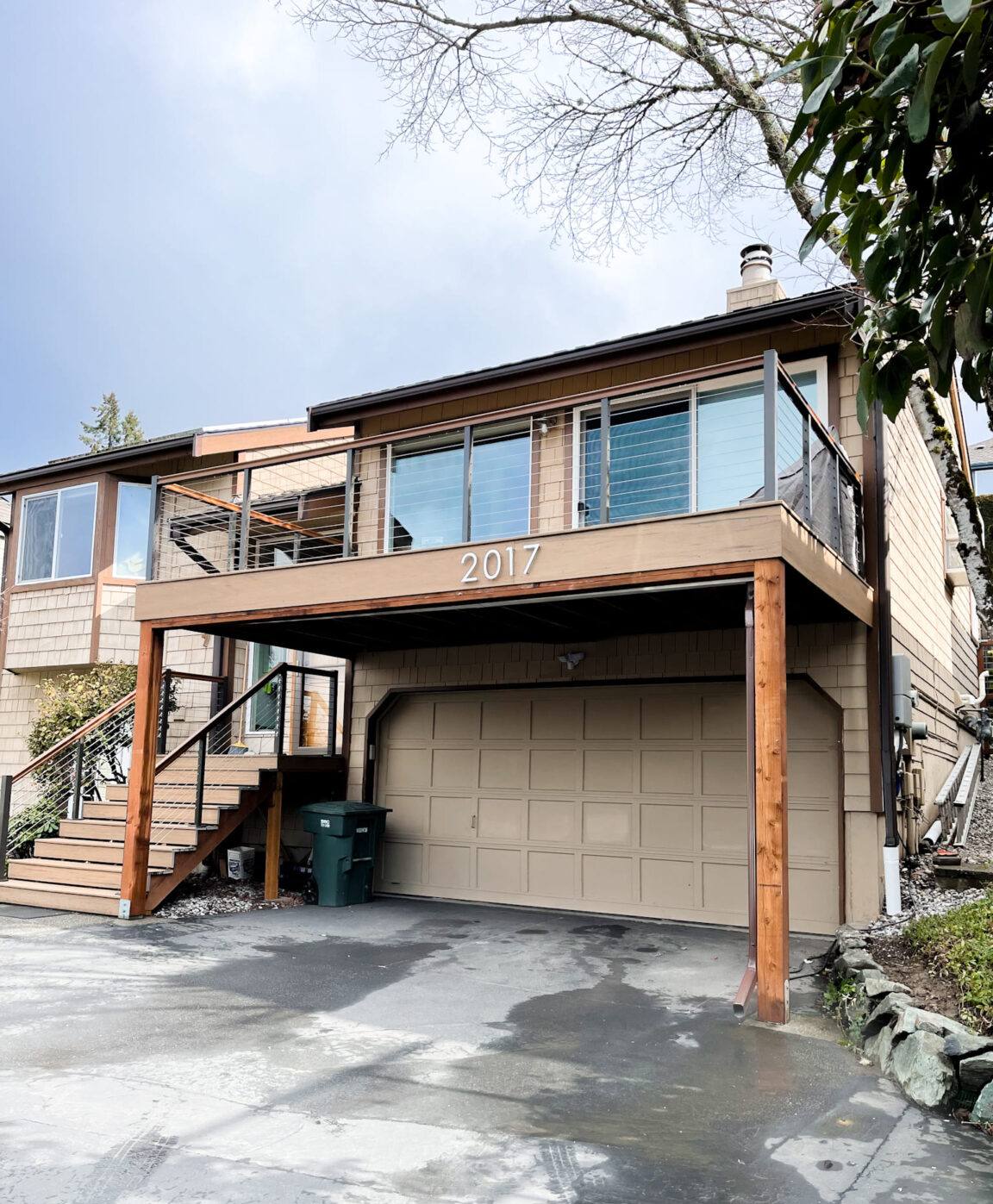
What Bellingham's Climate Does to a Deck Over Time
Marine Air and Fastener Corrosion
Bellingham's setting on the bay means a steady flow of moisture-laden, salt-tinged air moving through the area, and a deck's structural hardware sits right in the path of it. Nails, screws, and joist hangers that aren't rated for this kind of exposure corrode from the inside of the connection outward, which means the failure is often invisible until a board flexes or a railing loosens. It's a slower, quieter kind of damage than a rotted board, and it's frequently the real reason an otherwise decent-looking deck needs to come down.
Standing Water and Wind-Driven Rain
Rain in this part of Whatcom County doesn't just fall straight down; wind off the water pushes it sideways and up under railings, against ledger boards, and into any gap where two pieces of decking meet. Because a deck surface is flat and low, water that would run off a wall instead pools between boards or sits against framing members that were never meant to stay wet as long as they do here. Over years, that standing moisture is what turns a structurally sound frame into a soft one.
A Moss Season That Runs Most of the Year
Mild temperatures and near-constant dampness give moss a long growing season on any deck surface that doesn't get much direct sun, which describes a lot of decks tucked under eaves or shaded by mature trees on Bellingham's hillside lots. Beyond the cosmetic issue, moss holds moisture against the board surface and becomes genuinely slick underfoot, which is a real safety concern on stairs and ramps, not just an appearance one.
Signs a Bellingham Deck Needs Replacement, Not Another Repair
Not every aging deck needs to be torn out. The distinction that matters is whether the problem is cosmetic, on the surface, or structural, in the framing and connections underneath.
- Soft or spongy decking boards that flex noticeably underfoot, especially near the house or in shaded areas
- Rot at the ledger board where the deck attaches to the house, often the single most common point of hidden failure
- Post bases showing rot or crumbling at or near ground contact
- Railings that have loosened from their posts even after re-tightening
- Visible gaps or separation between framing members that weren't part of the original design
- A deck that sways or bounces more than it used to under normal use
Graying, weathered-looking boards on an otherwise solid frame are usually a cosmetic issue and can often be addressed short of full replacement. Soft framing, ledger rot, or failing post connections are structural, and at that point a repair is usually just delaying a bigger job while the framing underneath keeps getting worse.
What a Correct Deck Replacement Involves Here
Ledger Board and Flashing
The ledger board, where the deck ties into the house, is the single most common source of hidden rot on any deck in this climate, because it's the one structural connection where water can get trapped between the deck and the wall behind it. A correct replacement includes proper flashing at this connection so water sheds away from the house rather than tracking behind the ledger and into the wall framing above it.
Framing, Footings, and Fasteners
Footings need to sit at the correct depth for local frost and soil conditions, and joist spacing and hardware need to match the actual load and span, not just the minimum the lumber will technically hold. Given the marine air this close to the water, we use corrosion-resistant fasteners and connectors throughout rather than standard hardware that looks fine for the first few years and then starts failing quietly at the joints.
Decking Material Selection
The decking surface itself is where homeowners have the most real choice, and it's worth making deliberately rather than defaulting to whatever's cheapest at the moment. Wood, composite, and capped composite or PVC decking all perform differently once they're exposed to this much sustained moisture and shade, and the right choice depends as much on how much upkeep you actually want to do as it does on upfront cost.
Decking Material Comparison for This Climate
| Material | Moisture & Moss Resistance | Maintenance | Typical Upfront Cost |
|---|---|---|---|
| Pressure-treated wood | Moderate; needs sealing to perform well | Annual cleaning and re-sealing to resist moss and rot | Lower |
| Cedar | Naturally rot-resistant but still absorbs moisture | Regular sealing or staining to hold color and resist moss | Mid-range |
| Composite (uncapped or lightly capped) | Better than wood; can still absorb moisture at cut edges | Low; periodic cleaning to keep moss from taking hold | Mid-range |
| Capped composite / PVC | High; fully encapsulated surface resists moisture and staining | Lowest; mostly rinsing off moss and debris | Higher |
None of these is automatically the right answer for every homeowner. A homeowner who wants the traditional wood look and doesn't mind an annual sealing routine can get good results from cedar in this climate as long as the maintenance actually happens on schedule. A homeowner who wants to spend their weekends doing something other than deck upkeep is usually better served by capped composite, even at a higher upfront cost, because the moisture and moss resistance holds up with far less attention.
Our Deck Replacement Process
- On-site assessment: We look at the existing deck's framing, ledger connection, and post bases, not just the surface boards, to see what's actually driving the need for replacement.
- Tear-off and structural inspection: Once the old decking is off, we can see the framing directly and check for rot or damage that wasn't visible from the top.
- Framing and ledger correction: Any framing, footing, or flashing issues get addressed before new decking goes down, not covered over.
- Decking, rail, and stair installation: New material goes in to manufacturer spec, with fastener and hardware choices matched to this climate.
- Final walkthrough: We cover what maintenance the specific material you chose actually needs and confirm the finished job matches what was estimated.
Permits and Practical Considerations for Bellingham Homes
Whether a deck replacement needs a permit generally depends on the deck's height, size, and whether the footprint or structural connection to the house is changing, and requirements can vary by jurisdiction within Whatcom County. We handle the documentation a permit process typically requires as part of the job rather than leaving a homeowner to sort that out separately. Framing also needs to meet local snow and wind load requirements, which matters on a coastal property that sees more sustained wind exposure than a sheltered inland lot.
Maintenance That Actually Matters After Replacement
A correctly built deck still needs some ongoing attention in this climate, but it's a short list, not a constant chore, especially with the lower-maintenance decking materials.
- Sweep debris and clear moss from board surfaces and the gaps between boards before it has a chance to take hold
- Confirm gutters and downspouts near the deck are directing water away from posts and footings, not onto them
- Reseal or stain wood decking on a regular schedule if that's the material you chose; skipping a cycle is when moisture problems start
- Check the ledger board area after major storms for any new staining or softness
- Keep nearby vegetation trimmed back so the deck surface gets more airflow and dries out faster between rains
Why a Crew That Already Works Bellingham Matters
A crew that works this stretch of Whatcom County regularly sees how marine air, wind-driven rain, and a long moss season actually affect a deck's framing and hardware over real years, not just how a product is rated on paper. That shapes practical decisions on a Bellingham job: where extra flashing attention at the ledger pays off, which fastener grade is worth the extra cost given how close the property sits to the water, and which decking material actually fits how much maintenance a homeowner wants to take on. We also handle siding, roofing, and windows, so if a deck's ledger connection points to a moisture issue in the wall above it, we can trace that back to its source instead of building a new deck onto a wall that's still got a hidden problem.
If your Bellingham deck is showing soft boards, a spongy ledger connection, or just isn't safe to stand on the way it used to be, we're glad to come take a look and give you a straightforward, no-pressure estimate. Reach out using the form below to get started.