 Blaine Siding
 Why Birch Point Decks Wear Out Faster Than You'd Expect
Birch Point sits close enough to the water that homes here take a different kind of beating than a deck built a few miles inland. Salt-laden air moves through fasteners and hardware, driving rain gets pushed sideways into ledger boards and railing joints, and a long stretch of damp, low-sun months each year keeps everything green and slick longer than most homeowners expect. A deck that would hold up for fifteen or twenty years in a drier part of Whatcom County can start showing real structural problems in half that time out here if it wasn't built with this exposure in mind.
We replace decks throughout the Blaine area, and Birch Point jobs get treated differently from the start. The framing choices, fastener grade, flashing details, and even the decking material itself are all selected with salt air, wind-driven rain, and moss growth as the baseline assumption — not an afterthought.
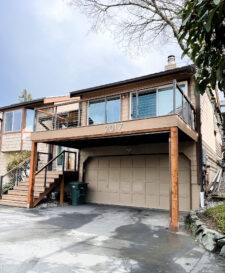
What Salt Air, Driving Rain, and Moss Season Actually Do to a Deck
Salt Air and Corrosion
Airborne salt accelerates corrosion in anything metal — nails, screws, joist hangers, bolts, and railing brackets. Standard galvanized fasteners can start rusting from the inside of a connection long before any surface rust is visible on the deck itself. Once a joist hanger corrodes, its holding strength drops well before the wood around it shows any damage, which is part of why deck failures near the water can seem sudden even though the deterioration was gradual.
Driving Rain and Hidden Rot
Rain that comes in sideways behaves differently than a straight-down downpour. It gets pushed up under railing caps, into the gap where a ledger board meets the house, and behind fascia boards that would stay dry in a calmer climate. That means the wettest, slowest-drying parts of a Birch Point deck are often the ones you can't see without pulling boards or checking behind trim — exactly where rot tends to start.
Moss, Algae, and the Slip Hazard No One Talks About
A long damp season with limited direct sun keeps moss and algae established on deck surfaces for much of the year. Beyond the cosmetic issue, moss holds moisture against the decking material, and a moss-covered surface gets dangerously slick when wet. Homes that get regular shade from trees or sit lower relative to prevailing wind tend to see this worse than more exposed lots.
Signs a Deck Needs Replacement, Not Just Repair
Not every aging deck needs a full rebuild. But in a climate like this, a few warning signs usually mean the structure has moved past the point where patching makes sense.
- Soft or spongy spots in the decking, especially near the house or along the perimeter
- Visible rust staining bleeding out from screws, bolts, or hardware connections
- A ledger board that looks discolored, swollen, or separated from the house siding
- Railings or posts that flex or feel loose when you lean on them
- Persistent moss or algae that returns within weeks of cleaning
- Gaps or cupping in boards that have gotten noticeably worse year over year
- Any deck built without proper flashing at the house connection, regardless of age
If you're seeing two or more of these, it's worth having someone check the substructure before spending more money on surface-level fixes.
What a Correct Deck Replacement Involves
The Ledger and House Connection
This is the single most important detail on any deck attached to a home, and it's the spot most prone to hidden rot in a wet climate. A proper replacement means flashing the ledger board correctly so water is directed away from the house rather than trapped behind it, using corrosion-resistant fasteners rated for the connection, and confirming the ledger is bolted — not just nailed — into solid framing.
Framing and Substructure
Joists, beams, and posts need to be sized correctly for the span and load, and in this environment we favor pressure-treated or naturally resistant framing lumber paired with hardware rated for coastal or high-moisture exposure. Every joist hanger and structural connector should be stainless steel or a coating specifically rated for corrosive environments — standard galvanized hardware is often not enough this close to the water.
Drainage and Airflow Underneath
A deck that can't shed water and dry out underneath will rot from below no matter how good the surface material is. Correct grading, gaps between boards, and clear airflow under the structure all matter more here than they would on a drier, more inland lot.
Fasteners and Hardware
Every screw, nail, and bracket is a potential entry point for corrosion. We use fasteners and connectors rated for coastal or salt-air exposure throughout the build, not just on the parts that are visible.
Decking Material Options for This Climate
Every decking material has trade-offs, and the right choice depends on your budget, how much upkeep you're willing to do, and how close your lot sits to direct salt exposure and shade.
| Material | How It Handles This Climate | Maintenance |
|---|---|---|
| Pressure-treated wood | Affordable, but needs consistent sealing to resist moisture and moss in shaded, damp spots | Annual cleaning and periodic re-sealing |
| Cedar or other naturally resistant wood | Naturally more rot- and insect-resistant, but still needs upkeep in constant dampness | Regular cleaning, occasional oiling |
| Composite decking | Resists rot and doesn't absorb moisture like wood, though moss and algae can still grow on the surface | Periodic washing, no sealing needed |
| PVC/capped polymer decking | Fully sealed surface holds up well against salt air and standing moisture | Low — occasional washing |
We'll walk through these options honestly during your estimate, including where a given product's warranty structure or installation requirements might not be a good fit for your specific lot conditions.
Our Deck Replacement Process
- On-site assessment: We inspect the existing deck, ledger connection, and substructure to confirm what's actually failing and why.
- Design and material selection: We go over decking, railing, and fastener options based on your budget, sun/shade exposure, and how the deck is used.
- Permitting: We handle the permit application and coordinate any required inspections with the local jurisdiction.
- Demolition and disposal: The old deck is removed and hauled off, with the substructure checked as it's exposed.
- Rebuild: Framing, flashing, and ledger work are completed first, followed by decking, railing, and stairs.
- Final walkthrough: We review the finished deck with you, including care and maintenance specific to your material choice.
Permits and Local Code Considerations
Most attached decks above a certain height, and many freestanding decks over a given size, require a permit in Whatcom County jurisdictions. Requirements can also touch on railing height, guard spacing, and setback from property lines, and these details vary depending on exactly where your Birch Point property falls relative to city and county lines. We handle the permit process as part of the job rather than leaving it for the homeowner to sort out, and we won't cut corners on inspections to save time.
Why Hiring a Crew That Already Works Birch Point Matters
A contractor who mostly works drier, inland jobs can still build a technically sound deck — but they may default to fastener grades, flashing details, or material recommendations that are fine for a typical lot and undersized for one sitting in salt air with a long moss season. Knowing which corners of a Birch Point property tend to stay damp longest, which exposures see the worst wind-driven rain, and which hardware actually holds up here comes from having done this work in this specific area repeatedly — not from a general specification sheet.
We're a Blaine-based crew, and Whatcom County's coastal conditions are the baseline we build around, not an exception we adjust for.
Cost Factors to Expect
| Factor | Why It Affects Price |
|---|---|
| Deck size and shape | More square footage and complex layouts (multiple levels, angles) increase material and labor time |
| Decking material | Composite and PVC products typically cost more upfront than wood but require less long-term maintenance |
| Substructure condition | Rotted framing or a compromised ledger connection found during demolition adds repair scope |
| Railing and stairs | Custom railing styles, glass panels, or multiple stair runs add cost beyond basic decking |
| Hardware grade | Coastal-rated fasteners and connectors cost more than standard galvanized hardware but last considerably longer here |
Exact pricing depends on your deck's size, material choice, and what we find once the old structure comes off — we'll give you a clear, itemized number before any work begins.
If your deck is showing rust stains, soft spots, or moss that won't stay gone, it's worth having it looked at before another wet season sets in. We offer free, no-pressure estimates for Birch Point homeowners — use the form below to get one scheduled.