 Blaine Siding
 Siding That Has to Hold Up in Custer's Marine Climate
Custer sits inland from the immediate shoreline of northern Whatcom County, but a house doesn't need to be on the beach to feel what the Salish Sea does to exterior materials. Wind moving off the water carries salt-laden moisture across open farmland and through the tree lines that break up the area's rural lots, and it settles on exterior walls whether a home is a half mile from the water or five. Add the long, wet Pacific Northwest stretch that runs from fall through spring, plus the shaded north- and east-facing walls common on wooded and forested lots around Custer that rarely get a full day of drying sun, and you have a combination that ages ordinary siding materials faster than most homeowners expect. This page covers one job, done right: installing fiber cement siding on Custer homes, built around what this specific climate does to a wall system over 10, 20, and 30 years.
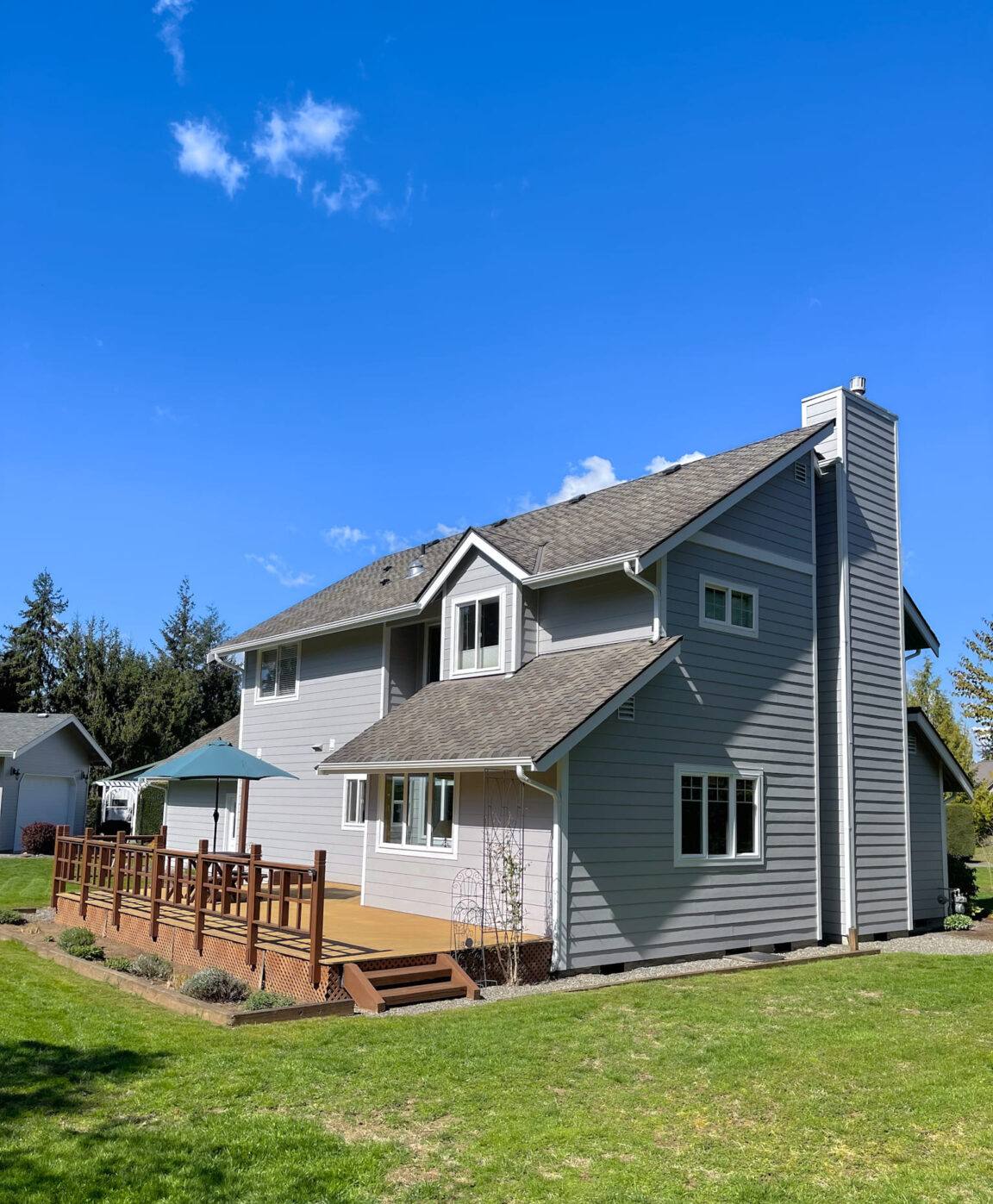
What Salt Air, Driving Rain, and Moss Season Actually Do to a Wall
These three conditions don't act alone — they compound each other, and understanding how helps explain why the installation details below matter as much as the siding product itself.
Salt Air and Corrosion
Airborne salt is conductive and mildly corrosive. Over years, it accelerates rust on exposed or poor-quality fasteners, trim screws, and metal flashing. A siding job that looks fine for a few years can start showing rust streaks and loosening panels once corrosion reaches the fastener heads — which is why fastener choice and placement is not a detail to skip on a Custer property.
Driving Rain and Wind-Driven Moisture
Whatcom County storms frequently bring rain sideways, not straight down. Wind-driven rain finds any gap in flashing, caulking, or overlap and pushes water behind the siding rather than letting it run off the face. Once moisture gets behind a wall plane, it doesn't dry quickly in this climate — it sits, and that's when sheathing and framing damage starts, often invisibly, for years before a homeowner notices anything on the surface.
Moss and Sustained Dampness
Long moss season isn't just a roof problem. On shaded siding surfaces that stay damp for extended stretches, moss and mildew take hold in seams, under trim, and in any spot where water lingers instead of draining. Beyond appearance, sustained dampness against a siding surface slowly breaks down materials that aren't built to tolerate it, and it telegraphs through paint faster on some products than others.
Why We Install Only James Hardie Fiber Cement Siding
We standardized on James Hardie fiber cement for every siding installation we do, including here in Custer, and we don't install vinyl, LP SmartSide, or other fiber cement brands. That's a deliberate professional standard, not a sales pitch. Fiber cement is non-combustible, dimensionally stable in swings of moisture and temperature, and resists the swelling, rot, and edge deterioration that engineered wood products can be prone to in sustained wet climates. James Hardie's ColorPlus factory-applied finish is baked on under controlled conditions rather than field-painted, which gives it more consistent adhesion and UV resistance than a product painted on-site after installation — a real advantage in a climate where the finish is exposed to salt air and moisture nearly year-round. James Hardie also engineers specific product lines for different climate zones, including the HZ5 line built for regions like ours. We install one system because we can guarantee the installation details, warranty terms, and long-term performance of that one system — rather than juggling trade-offs across several products with different moisture behaviors and installation requirements.
What a Correct Fiber Cement Installation Involves
Fiber cement siding performs exactly as well as it's installed — the product does its job when the installation details are right, and underperforms quickly when they're skipped. On a Custer home, these are the details we don't compromise on.
Clearances and Flashing
Siding needs proper clearance from grade, roof lines, decks, and walkways — typically several inches — so that splash-back and standing water don't wick into the bottom edge of the panel. Every window, door, and penetration needs correctly lapped flashing so wind-driven rain sheds outward instead of behind the cladding. This is the single most common failure point we see in older installations around Whatcom County, and it's invisible until moisture damage shows up.
Fastening
Corrosion-resistant fasteners, placed at the manufacturer-specified pattern and depth, matter more here than in a dry inland climate. Over-driven or under-driven nails compromise the panel's ability to move slightly with temperature and moisture changes, and the wrong fastener material shortens the life of the connection well before the siding itself would fail.
Joints, Caulking, and Finish
Butt joints, corners, and trim transitions are where water intrusion starts if they're rushed. We follow manufacturer-specified gaps, backer material, and sealant so joints stay flexible through seasonal movement instead of cracking open after a year or two. Because ColorPlus finish is factory-applied, field touch-up is limited to what's specified by the warranty — another reason cut corners during install show up as problems later, not immediately.
Choosing the Right Siding Profile for a Custer Property
Custer's mix of rural acreage, wooded lots, and more traditional neighborhood homes means there isn't one "right" look — but there is a right way to match a profile to a home's exposure and style. The table below outlines the common options.
| Profile | Best Fit | Climate Notes |
|---|---|---|
| HardiePlank Lap Siding | Most home styles, especially traditional and farmhouse-influenced exteriors common around Custer | Widely used HZ5 product; performs well on both sun-exposed and shaded elevations when installed with correct overlap |
| Board & Batten | Barns, outbuildings, and homes wanting a rural or modern-farmhouse look | Vertical joints need careful flashing behind battens to shed wind-driven rain |
| HardieShingle | Accent gables, dormers, or full shingle-style homes | More seams than lap siding, so joint and fastener detailing matters even more in high-moisture areas |
Our Process, Start to Finish
Every project follows the same sequence, whether it's a full re-side or a targeted repair-and-replace on a Custer home.
- On-site inspection of the existing wall assembly, including a check for hidden moisture damage behind current siding, not just a visual estimate from the driveway.
- Removal of failing siding and inspection of sheathing and framing underneath, with any rot or damage addressed before new siding goes on — covering a compromised wall doesn't solve the problem.
- Correction or installation of house wrap, flashing at all penetrations, and proper clearances at grade, roofline, and trim.
- Installation of James Hardie siding to manufacturer fastening and joint specifications, in the HZ5 product line engineered for this climate zone.
- Final trim, caulking, and a walk-through so the homeowner understands the maintenance schedule and warranty coverage going forward.
Cost Factors for a Custer Fiber Cement Project
Every home is different, but these are the variables that most often move a project's price up or down. We provide detailed, itemized numbers after an on-site look — not a generic square-footage guess.
| Factor | Why It Matters |
|---|---|
| Existing siding removal | Tear-off and disposal add labor time, especially if multiple layers exist underneath |
| Hidden moisture or rot repair | Sheathing and framing repairs found once old siding comes off aren't optional — they're part of doing the job right |
| Home height and access | Two-story walls, steep grades, and limited equipment access increase labor and staging needs |
| Trim and architectural detail | Gables, dormers, and multiple roof lines mean more flashing and cut work per square foot |
| Siding profile and color | ColorPlus factory finishes and premium profiles carry different material costs than standard lap in a stock color |
Maintenance Checklist for Custer Homeowners
Fiber cement is low-maintenance compared to wood, but "low-maintenance" isn't "no-maintenance," especially with this much moss and moisture in the annual cycle.
- Rinse siding annually to clear salt residue and organic buildup before it holds moisture against the surface
- Check caulked joints at trim, windows, and corners for cracking or separation each year
- Trim back vegetation and tree cover that keeps shaded wall sections from drying out
- Look for moss or dark staining in shaded corners and low-airflow areas, and address it before it spreads
- Inspect flashing above windows, doors, and decks after major storms for any sign of water tracking
- Watch for loose or popped fasteners, which are often the first visible sign of a fastening issue
Why a Crew That Already Works Custer Matters
Siding installation isn't one-size-fits-all across Whatcom County. A crew that regularly works Custer and the surrounding areas already knows how local exposure — wind direction, shade patterns, salt air, and the length of the wet season — tends to show up in aging siding, because they've opened up enough walls in this specific area to see it firsthand. That translates into better judgment on flashing details, clearance decisions, and where to spend extra attention on a given home, instead of applying a generic installation approach that was built for a drier climate. It also means a crew that's accountable locally — not a company that installs once and moves on, but one that's positioned to stand behind the warranty and the workmanship in the same community it worked in.
If you're weighing a siding replacement or repair on a Custer property, we're glad to take a look and give you a straightforward, no-pressure estimate — no invented urgency, just an honest read on your home's condition and what correct installation would involve. Use the form below to get started.