 Blaine Siding
 Windows Built for Life Near Blaine Harbor
Homes around Blaine Harbor sit in one of the more demanding window environments in Whatcom County. You've got open water a short walk away, wind that comes straight off Drayton Harbor and Semiahmoo Bay with nothing to slow it down, and a wet season that stretches for months at a time. Windows here don't just have to look good and keep the heat in — they have to hold up against salt-laden air, wind-driven rain that hits the glass sideways, and the kind of persistent damp that grows moss and mildew on anything that stays shaded and wet long enough. A window that would be perfectly fine twenty miles inland can start failing early out here if it wasn't chosen or installed with this specific exposure in mind.
This page is about one job, done right, in one place: energy-efficient window replacement and installation for homes in and around Blaine Harbor. Not a general overview of every window option on the market — just what actually matters for houses sitting this close to the water.
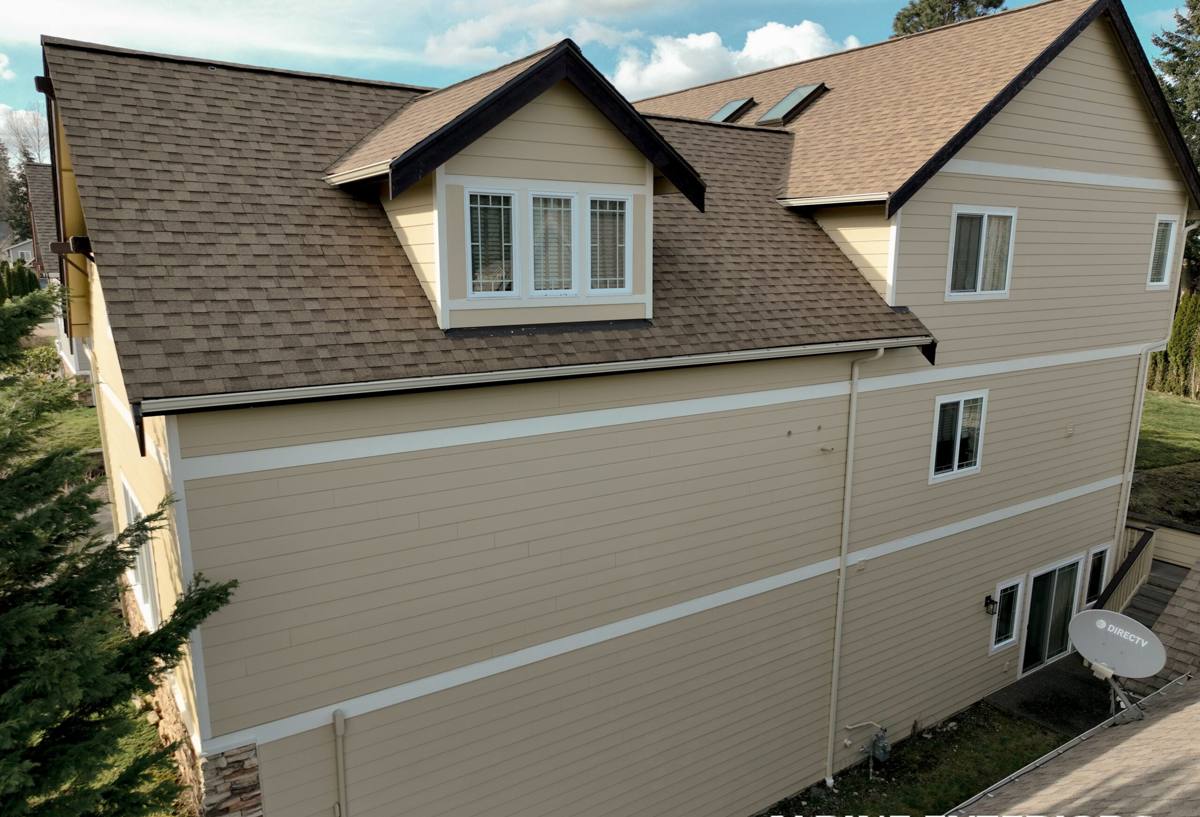
What This Climate Does to Windows Over Time
Salt Air and Hardware
Salt in the air doesn't need direct ocean spray to do damage — it travels on the wind and settles on everything, including window frames, hinges, locks, and screen hardware. Over years, that salt film accelerates corrosion on lower-grade metal components and can pit or discolor certain finishes. This is why hardware quality and finish matter more here than in a typical inland install. It's also why we pay attention to how a window's moving parts and fasteners are protected, not just how the glass is rated.
Wind-Driven Rain and Water Intrusion
Blaine Harbor gets rain that doesn't fall straight down — it's pushed sideways by wind off the water, and it finds any gap in flashing, sealant, or trim. Most window failures we see near the harbor aren't glass failures at all. They're water intrusion problems: rot in the framing around the window, staining on interior sills, or soft spots in the wall below a window that's been letting moisture in slowly for years. A window can have excellent glass and still fail the home if it wasn't flashed and sealed correctly for this kind of weather.
Moss, Mildew, and Shaded Sills
The long moss season in this part of Whatcom County isn't just a roof and siding issue. Window sills, especially on north-facing walls or under eaves that stay shaded most of the year, hold moisture longer than the rest of the house. That constant damp encourages mildew growth on sills and trim and can soften wood components that aren't properly sealed or that use lower-grade materials. It's a slow problem, which is exactly why it gets ignored until a sill is already compromised.
What "Energy-Efficient" Actually Means Out Here
Energy efficiency for a Blaine Harbor home isn't just about a U-factor number on a sticker. It's about three things working together: the glass package, the frame material, and how well the window is sealed into the wall.
Glass Packages
Double-pane, low-E, argon-filled glass is the standard baseline for this climate and handles the vast majority of homes well. Triple-pane adds another layer of insulation and can help with sound — worth considering on homes closer to Blaine's harbor traffic or busier roads — but it adds weight, cost, and isn't always necessary depending on the wall assembly and exposure. We'll talk through whether it's worth it for your specific house rather than upselling it by default.
Frame Material
Frame choice affects both energy performance and how the window handles years of salt air and moisture. We'll cover the trade-offs in detail below, but in short: the frame has to resist moisture and corrosion as well as it insulates, or the energy savings get undone by air leaks once seals and hardware start to degrade.
Installation and Air Sealing
A high-performance window installed with gaps in the flashing or insulation around the frame will underperform a mid-grade window installed correctly. This is the part of the job that's easiest to rush and hardest to inspect after the fact — which is exactly why it deserves the most attention during install, not after.
Signs Your Current Windows Are Working Against You
A lot of homeowners near the harbor live with window problems for years before connecting them to the windows themselves. Some things worth checking:
- Cold drafts near the window frame even when it's fully closed and locked
- Condensation or fogging between the panes (a sign the seal has failed)
- Visible corrosion, pitting, or stiffness in the locks and hinges
- Soft or discolored trim and sills, especially on shaded or water-facing walls
- Mildew or a musty smell concentrated near specific windows
- A noticeable jump in heating costs without other explanation
- Difficulty opening or closing that wasn't there a year or two ago
Any one of these can be a minor fix. Several together, especially on the harbor-facing side of the house, usually points to a bigger moisture or seal problem behind the window itself.
Frame Material Comparison for This Climate
There's no single "best" frame material for every home — it depends on your exposure, your budget, and how the house is built. Here's how the common options hold up specifically against salt air, wind-driven rain, and Whatcom County's wet winters.
| Frame Material | Salt Air / Corrosion Resistance | Moisture Handling | Maintenance |
|---|---|---|---|
| Vinyl | Good — won't corrode or rust | Good, doesn't rot, but seals and hardware need periodic checking | Low |
| Fiberglass | Very good — dimensionally stable, resists pitting | Excellent, handles moisture cycling well | Low |
| Wood-clad | Depends on cladding integrity — exposed wood is vulnerable | Requires intact cladding and sealant to avoid rot | Higher — needs regular inspection |
| Aluminum | Prone to corrosion unless properly finished/anodized | Conducts cold, more prone to condensation | Moderate |
For most homes directly around the harbor, we lean toward vinyl or fiberglass because they shrug off salt air and moisture cycling without the ongoing maintenance that wood-clad or bare aluminum frames demand in this exposure. That said, if your home's architecture calls for a wood-clad look, it's still a workable option — it just needs to be specified and installed with that maintenance reality in mind, not treated the same as an inland install.
What Affects the Cost of a Window Project Here
Every home is different, but a few factors consistently move the price on window projects near Blaine Harbor:
| Cost Factor | Why It Matters |
|---|---|
| Number and size of windows | Straightforward — more glass, more labor and material |
| Frame material chosen | Fiberglass and higher-end vinyl cost more than builder-grade vinyl or basic aluminum |
| Glass package | Triple-pane and specialty coatings add cost over standard double-pane low-E |
| Condition of existing framing | Water-damaged framing found during removal adds repair work before the new window can go in |
| Exposure and flashing complexity | Harbor-facing walls and windows under complicated rooflines need more careful, more time-intensive flashing work |
| New construction vs. replacement | Replacement into existing openings is generally faster than a full re-frame |
We're not going to quote a number without seeing the house — anyone who does hasn't actually looked at your framing or exposure — but these are the variables that tend to matter most on Blaine Harbor homes specifically.
How Our Process Works
- On-site assessment. We look at each window opening, the condition of the surrounding framing and trim, and how exposed each wall is to wind and rain.
- Honest recommendation. We tell you what actually needs replacing versus what can wait, and which frame and glass options make sense for your exposure and budget — no upselling triple-pane on a sheltered wall that doesn't need it.
- Careful removal. Old windows come out cleanly, and we check the framing underneath for any hidden water damage before anything new goes in.
- Correct flashing and sealing. This is the step that determines whether a window lasts 20 years or leaks in five. We flash and seal to handle wind-driven rain, not just a light shower.
- Precision installation. The window is set level, shimmed correctly, and insulated around the frame so there are no gaps working against the glass's energy rating.
- Final inspection and walkthrough. We check operation, seals, and finish work with you before considering the job done.
Why a Crew That Already Works Blaine Harbor Matters
Window installation isn't a one-size-fits-all trade, and this stretch of Whatcom County isn't a one-size-fits-all climate. A crew that mostly works drier, more sheltered inland areas may not think twice about flashing details that are non-negotiable on a harbor-facing wall, or about specifying hardware that can handle years of salt air without seizing up. Working this neighborhood regularly means we've seen how these houses age, which walls take the worst of the weather, and where corners get cut on jobs that don't hold up. That's not something you can fully substitute with a product spec sheet — it comes from doing the work here, repeatedly, and paying attention to how it holds up afterward.
If your windows are drafty, fogging, sticking, or just older than the rest of the house's upgrades, it's worth having someone look at them who understands what Blaine Harbor's salt air, wind, and rain actually do to a window over time. We're happy to come take a look, tell you honestly what we find, and put together a free, no-pressure estimate using the form below.