 Blaine Siding
 Why Blaine Harbor Roofs Wear Differently Than Roofs Inland
Homes near Blaine Harbor sit right where Whatcom County's marine air meets whatever weather rolls in off Semiahmoo Bay and the Strait of Georgia. That combination is harder on a roof than most homeowners realize until they're dealing with the results. Salt-laden air corrodes unprotected metal fasteners and flashing faster than it would a few miles inland. Driving rain, often pushed sideways by wind off the water, finds every weak seam and under-lap that a calmer climate would never expose. And the long gray stretch of fall through spring gives moss and algae months to take hold on anything that stays damp and shaded.
None of this means metal roofing is a bad fit for Blaine Harbor — it's actually one of the better-suited materials for this exact climate, when it's specified and installed correctly. The problems we get called out to fix are almost never about the metal itself. They're about fastener choice, flashing detail, and underlayment decisions that didn't account for what a harbor-adjacent roof actually has to survive.
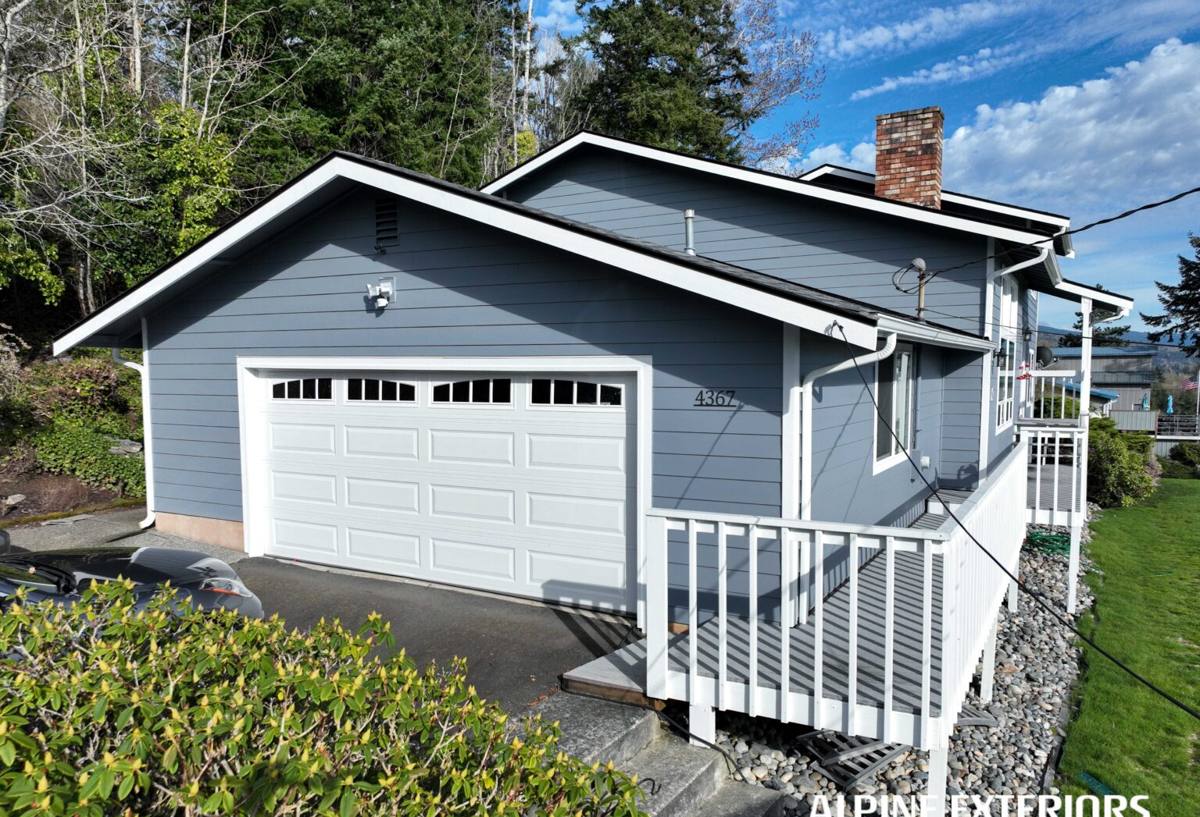
What a Metal Roof Needs to Handle Here
Salt Air and Corrosion
Bare or poorly coated steel components will show rust streaks and pitting well before a roof's rated lifespan is up if they're within a mile or two of saltwater exposure. This shows up first at cut edges, exposed fastener heads, and any spot where a coating got scratched during installation and never touched up. It's a slow problem, which is exactly why it gets ignored — by the time it's visible from the ground, it's already been working for years.
Wind-Driven Rain
A roof that would shed a straight-down rain just fine can leak under wind-driven rain if laps, seams, and penetrations weren't detailed for horizontal water pressure. Blaine Harbor's exposure to open water means gusts off the strait aren't rare — they're a normal part of the weather pattern, especially in fall and winter.
Moss and Organic Growth
Whatcom County's damp season runs long. On shaded slopes, north-facing planes, and anywhere debris collects, moss and algae get a real foothold. On a roof they don't damage as fast as they discolor, but moss holds moisture against seams and fasteners, and that moisture is what eventually causes trouble underneath.
Choosing the Right Metal Roofing System
Not every metal roofing product performs the same way in a coastal environment. The panel profile, the fastening method, and the coating all matter more here than they would in a drier, calmer part of the state.
| System | Fastener Exposure | Best Fit for Blaine Harbor | Trade-Off |
|---|---|---|---|
| Standing seam (concealed fastener) | None — fasteners are hidden under the seam | Strong choice near the water; no exposed screw heads to corrode or back out | Higher upfront cost than exposed-fastener panels |
| Exposed-fastener panel | Screws penetrate the panel face | Workable on outbuildings or lower-exposure roof planes | Fasteners and gaskets need inspection and occasional replacement over time |
| Standard-grade steel with basic coating | Varies | Not our first recommendation this close to saltwater | Coating and fastener corrosion shows up sooner in marine air |
| Marine-rated coated steel or aluminum | Varies | Preferred for direct harbor exposure | Costs more but holds up against salt air far longer |
For most Blaine Harbor homes, we lean toward standing seam in a coating rated for coastal exposure. It's not the cheapest option on the table, but it's the one that keeps fasteners protected and keeps you from revisiting the roof every few years to check on hardware.
What a Correct Installation Actually Involves
The panel itself is only part of a metal roof's performance. Most of the leaks and premature wear we see trace back to what's underneath and around the panels, not the panels themselves.
Underlayment and Deck Prep
We use a high-temperature, self-adhering underlayment suited to metal roofing, not a generic felt product. In a wet climate like this, the underlayment is your backup plan if wind ever drives water past a seam — it needs to actually be capable of doing that job.
Flashing at Every Transition
Valleys, sidewalls, chimneys, and roof-to-wall transitions are where wind-driven rain gets in. Each of these needs flashing sized and lapped correctly for the direction water and wind actually move on that specific roof — not a one-size template applied without thinking about exposure.
Fastener and Sealant Choice
On any exposed-fastener sections, we use corrosion-resistant fasteners with proper gaskets, and we don't rely on sealant as the primary defense against leaks — sealant fails eventually; correct lapping and fastening don't.
Ventilation
A roof deck that can't breathe traps moisture underneath the metal, which defeats the point of installing a durable roof in the first place. We check existing ventilation and correct it where the current setup isn't moving air the way it should.
Living With Moss Season
Metal roofing sheds moss more easily than shingles do — there's no rough surface for spores to grab onto the way there is with asphalt — but it isn't moss-proof, especially on shaded or low-slope sections. A few habits keep a metal roof looking and performing the way it should through a Blaine Harbor winter:
- Keep overhanging branches trimmed back so shaded areas dry out between rains
- Clear gutters and valleys of needles and debris before the fall rains settle in
- Have seams, flashing, and fastener points checked periodically rather than waiting for a visible leak
- Address any moss growth early with a gentle, non-abrasive approach rather than pressure washing, which can damage coatings
- Watch for granule-free debris buildup at low-slope transitions, where standing moisture does the most damage
Signs Your Current Roof Is Struggling With This Climate
- Rust streaking below fastener heads or panel seams
- Green or black growth concentrated on north-facing or shaded slopes
- Water stains on interior ceilings after wind-driven storms specifically, not calm rain
- Loose or backed-out fasteners on exposed-fastener panels
- Flashing that's visibly separated, curled, or gapped at valleys and wall transitions
- A roof approaching or past its coating's rated service life for coastal exposure
Any one of these on its own isn't necessarily an emergency, but they're worth a look before the next storm season rather than after.
Our Process for a Blaine Harbor Metal Roof
We start with an on-site inspection of the existing roof and deck, not just a measurement from the ground. That's where we catch ventilation problems, deck rot, or flashing issues that a satellite estimate would miss entirely. From there:
- We walk the roof and attic (where accessible) to assess deck condition, existing ventilation, and any moisture already trapped in the system
- We recommend a panel system and coating matched to that specific roof's exposure — a harbor-facing slope and a sheltered back slope don't always need identical specs
- We detail flashing and underlayment plans for every valley, wall, and penetration before installation starts, not on the fly
- We install with corrosion-resistant fasteners and correct laps, checking wind and water direction for that roof's actual orientation
- We walk the finished roof with you and explain what maintenance, if any, it'll need going forward
Cost Factors Worth Understanding Upfront
Metal roofing costs more upfront than asphalt shingles, and coastal-grade systems cost more than standard-grade ones. That's a real trade-off, not a sales pitch — here's what actually drives the number on a Blaine Harbor project:
| Factor | Why It Matters Here |
|---|---|
| Panel system (standing seam vs. exposed-fastener) | Concealed fasteners cost more but remove a long-term maintenance item near saltwater |
| Coating grade | Marine-rated coatings cost more but resist salt-air corrosion far longer than standard grades |
| Roof complexity | More valleys, walls, and penetrations mean more flashing labor — and more places wind-driven rain can test the work |
| Deck and ventilation condition | Repairs discovered during tear-off add cost but prevent moisture problems from being sealed in under new metal |
| Roof pitch and access | Steeper or harder-to-access roofs near the water take more time and safety equipment |
Why Local Experience in Blaine Harbor Matters
A crew that only occasionally works this close to the water will spec a roof the way they'd spec one twenty miles inland — because that's what they know. We work Whatcom County's coastal properties regularly enough to know which slopes on a given lot take the worst of the wind, where moss actually becomes a problem versus just a cosmetic annoyance, and which fastener and coating combinations hold up under years of salt air rather than just the first one or two. That's the difference between a metal roof that looks right on installation day and one that still performs correctly a decade in.
If you're weighing a metal roof for a home near Blaine Harbor, or want a second opinion on one that's already showing wear, we're happy to take a look. Fill out the form below for a free, no-pressure estimate — we'll walk the roof, give you a straight assessment, and let you decide from there.