 Blaine Siding
 Roof Repair Built for Blaine Harbor's Coastline
Blaine Harbor sits right where the roofs take the worst of what Whatcom County's weather has to offer. You've got salt-laden air coming off Semiahmoo Bay and the Strait of Georgia, wind-driven rain that doesn't fall straight down so much as it gets pushed sideways under shingle edges and flashing laps, and a wet, shaded moss season that runs longer here than it does further inland. None of that is unusual for this stretch of coastline — it's just what a roof has to live with, year after year. The homes that hold up best aren't the ones with the fanciest materials. They're the ones that got repaired correctly the first time, by someone who understood what was actually failing and why.
This page is about roof repair specifically — patching, replacing damaged sections, resealing flashing, and fixing the small problems before they become big ones. If your roof needs a full tear-off and replacement, that's a different conversation, but a surprising number of roofs in Blaine Harbor just need targeted, well-executed repair work to get another decade or more out of them.
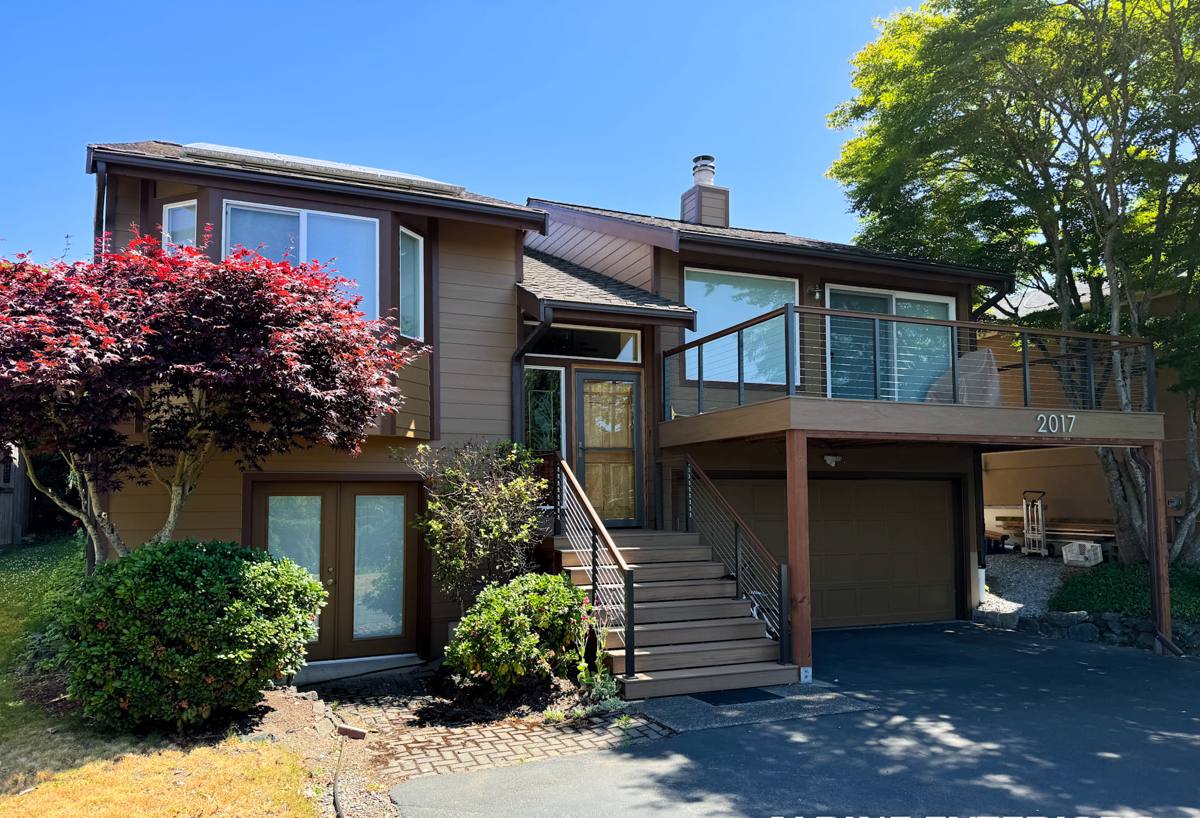
What Salt Air, Driving Rain, and Moss Actually Do to a Roof
Salt Air
Salt in the air isn't just a nuisance smell near the water — it's corrosive. Metal flashing, nail heads, gutter fasteners, and vent caps all take a beating from airborne salt, especially on roofs facing the water or exposed to prevailing wind off the bay. Corrosion at a flashing seam or a fastener doesn't announce itself; it just slowly opens a path for water to get underneath materials that are supposed to be sealed.
Driving Rain
Whatcom County rain rarely falls straight down for long. Wind off the water pushes it sideways, which means it finds every underlap, every gap at a step flashing, every spot where a shingle tab has started to curl. A roof that would shed water fine in a calm, straight-down rain can leak in the same storm if the wind angle is wrong and a seam wasn't sealed with that in mind.
Moss and Debris
Blaine Harbor's tree cover and marine-layer humidity keep roofs damp longer than drier inland areas, and that's exactly what moss needs to take hold. Moss isn't just cosmetic — it lifts shingle edges as it grows, holds moisture against the roofing material, and creates channels that redirect water in ways the roof wasn't designed for. Left alone through a full moss season, it accelerates wear on shingles, shakes, and even metal roofing at the seams.
Signs a Blaine Harbor Roof Needs Repair
- Curling, cracked, or missing shingle tabs, especially on the side of the roof facing prevailing wind
- Rust streaks or green-black moss buildup concentrated on north-facing or shaded slopes
- Soft or discolored ceiling spots inside, especially after a windy rainstorm rather than a calm one
- Flashing that looks lifted, gapped, or corroded around chimneys, vents, and skylights
- Granules collecting in gutters or at downspout outlets
- Daylight visible through the roof deck from inside an attic or crawlspace
- Sagging or spongy-feeling sections when walked (we check this, not something to test yourself)
Any one of these on its own might be minor. Several together, or any sign paired with an active interior leak, means it's time for a proper inspection rather than a guess.
What a Correct Repair Actually Involves
A lot of roof "repairs" fail within a year or two because they treat the symptom instead of the cause. Slapping sealant over a visible gap without finding where water is actually entering just buys a little time. A correct repair follows a sequence:
- Find the real entry point. Water often travels along the underside of the deck before it shows up as a stain, so the visible damage inside is rarely directly below the actual leak. We trace it back.
- Assess the surrounding material, not just the failure point. If shingles near a bad flashing seam are also brittle or moss-damaged, patching the flashing alone won't hold.
- Replace what's actually compromised. Damaged decking, rotted sheathing, corroded flashing, and worn underlayment get replaced — not just covered.
- Reseal and re-lap correctly for wind-driven rain. Every overlap and flashing detail is set up to shed water even when it's coming in sideways, not just straight down.
- Match materials appropriately. Patch materials are matched to the existing roof's age, material, and exposure so the repair doesn't stand out or age at a different rate.
Repair Approaches by Roof Type
| Roof Type | Common Blaine Harbor Issue | Repair Approach |
|---|---|---|
| Asphalt composition shingle | Wind-lifted tabs, granule loss near the coast, moss on shaded slopes | Replace damaged shingle courses, reseal exposed nail heads, moss treatment and removal |
| Cedar shake/shingle | Moss and moisture retention, accelerated weathering from salt air | Selective shake replacement, improved ventilation, moss and debris clearing |
| Metal roofing/flashing | Fastener and seam corrosion from salt exposure | Corroded fastener replacement, reseal seams, corrosion-resistant hardware |
| Flat or low-slope sections | Ponding water, membrane seam failure | Seam repair or membrane patching, drainage correction |
Our Process for Blaine Harbor Repairs
1. Inspection and Honest Diagnosis
We walk the roof (weather permitting) and check the attic or crawlspace from the inside, since that's often where the real story is. You get a straight answer about what's actually wrong — not an upsell toward a full replacement if a repair will genuinely do the job, and not a patch-and-hope if the damage is more extensive than it looks from the ground.
2. A Clear Scope Before Any Work Starts
You'll know what's being repaired, why, and roughly what it involves before we're on the roof with tools. No surprise add-ons discovered halfway through and sprung on you at the end.
3. The Repair Itself
We work section by section, replacing compromised material, resealing for wind-driven rain conditions specific to this coastline, and matching flashing and fastener hardware that can stand up to salt air rather than corroding again in a couple of years.
4. Cleanup and Debris Removal
Old material, moss debris, and any replaced flashing or shingles get hauled off. We don't leave granules and shake fragments in your gutters for the next rain to wash into your downspouts.
5. A Straightforward Walkthrough
Before we call it done, we walk you through what was repaired and what to watch for going forward — including realistic notes on moss regrowth timing given how shaded or exposed your particular roof is.
Repair vs. Replacement: How We Help You Decide
Not every roof problem needs a full replacement, and not every roof is a good candidate for another round of patching. A few honest factors go into that call:
| Factor | Leans Toward Repair | Leans Toward Replacement |
|---|---|---|
| Age of roof | Well within expected lifespan for the material | At or past typical service life for the material |
| Extent of damage | Isolated to one section or detail (flashing, one slope) | Widespread across multiple slopes or systemic underlayment failure |
| Deck condition | Solid decking under the damaged area | Soft, rotted, or repeatedly repaired decking |
| History of leaks | First occurrence or a known, fixable cause | Recurring leaks in different spots each season |
| Moss/algae staining | Surface-level, treatable | Deep granule loss and shingle lifting across large areas |
We'll tell you honestly which side of that table your roof falls on. A repair that's likely to fail again in a year isn't a favor to you — it just delays the real fix and costs more in total.
Keeping a Repaired Roof Ahead of the Next Moss Season
- Have gutters and downspouts cleared before the fall rains start, so water actually leaves the roof instead of backing up
- Trim back overhanging branches where practical — shade and damp leaf litter are what moss wants most
- Address small moss patches early rather than waiting for a full slope to green over
- Check flashing around chimneys and vents after any major windstorm off the water
- Get an inspection after any repair's first full wet season to confirm everything held up as expected
Why a Crew That Already Works Blaine Harbor Matters
Roof repair here isn't the same problem as roof repair in a dry inland town. A crew that mostly works elsewhere in Whatcom County or further from the water may not think to account for wind-driven rain angles specific to a bay-facing slope, or may default to standard fasteners instead of hardware that holds up against salt air. We work this coastline regularly, which means we're not guessing at what fails here first — we've already seen the patterns in flashing corrosion, moss buildup on shaded northern exposures, and where wind-driven rain tends to find its way in. That local familiarity shows up in fewer repeat callbacks, not in a fancier sales pitch.
Get a Straight Answer About Your Roof
If you're dealing with a leak, visible moss, lifted flashing, or just want a second opinion before committing to a full replacement, we're happy to take a look. We'll give you a clear, no-pressure estimate and an honest read on whether repair or replacement makes sense for your situation. Fill out the form below to get started.