 Blaine Siding
 Why Ferndale Windows Need More Than a Standard Order
Ferndale sits close enough to the water and to Whatcom County's marine weather pattern that windows here take a different kind of beating than windows fifty miles inland. Salt-laden air off the Strait works into hardware and finishes over time. Driving rain off Bellingham Bay finds any gap in flashing or sealant within a season or two. And the long, wet moss season that runs from fall through spring keeps trim, sills, and siding around window openings damp for weeks at a stretch. None of that is dramatic on its own, but stacked together year after year, it's exactly the combination that causes standard, off-the-shelf window installs to fail early — usually starting at the corners, the sill, and wherever the window meets the wall.
A custom window job means the unit itself is built to the actual rough opening (which on older Ferndale homes is rarely a clean, standard size), and the installation is detailed to manage water the way this climate demands, not the way a generic install manual assumes.
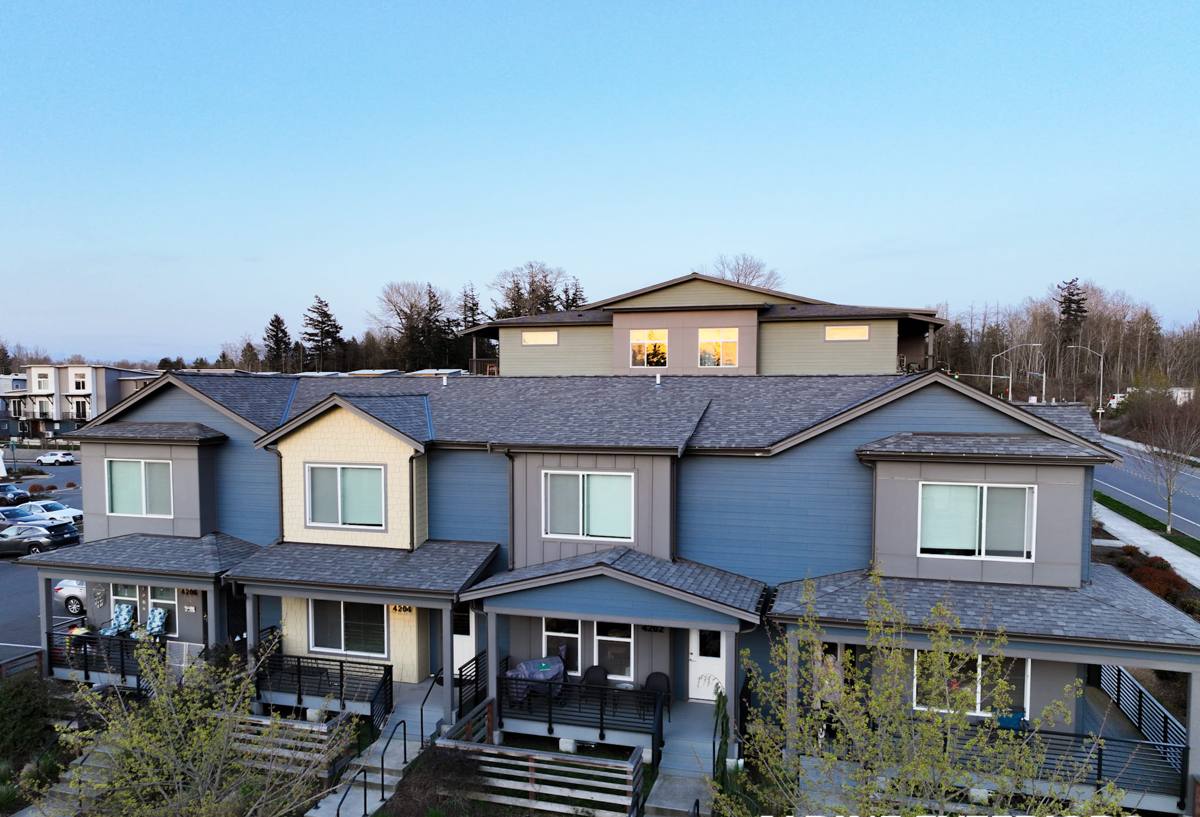
What "Custom" Actually Means on a Ferndale Job
"Custom" gets used loosely in this trade. On our jobs it means a few concrete things:
- The window is manufactured to the exact opening dimensions after we measure — not selected from a limited stock-size chart.
- Odd shapes, bay and bow configurations, and mismatched openings from additions or remodels are handled without forcing a compromise size.
- Older Ferndale homes, especially ones built before modern energy codes, often have openings that have shifted slightly with settling — a custom unit accounts for that instead of leaving gaps to be caulked over.
- Trim, casing, and interior finish work are matched to the home rather than defaulting to a generic profile.
This matters more here than in a dry climate, because any gap between window frame and rough opening becomes a path for wind-driven rain, and a path for salt-laden moisture to sit against wood framing.
Older Homes vs. Newer Construction
We see two different starting points on Ferndale projects. Older homes, including a fair number of farmhouses and older in-town properties around Whatcom County, often have single-pane or early double-pane windows original to the house, with wood sills that have absorbed decades of moisture cycling. Newer builds are more likely to have a builder-grade vinyl window that was never intended to be a twenty-year product. Both situations call for custom measurement and a full look at the opening's condition — not just a swap of glass for glass.
Materials That Actually Hold Up in This Climate
Material choice matters more here than the marketing on any given brand's box. Salt air and constant moisture cycling are hard on hardware, finishes, and anything that relies on paint film to stay sealed.
| Material | How It Handles Salt Air & Rain | Maintenance Burden |
|---|---|---|
| Vinyl | Doesn't corrode or rot; performs well against salt air; can chalk or fade over many years of UV exposure | Low — occasional cleaning, no repainting |
| Fiberglass | Very stable dimensionally, resists corrosion, holds paint finishes well if a color change is wanted later | Low to moderate |
| Wood-clad | Attractive, but the cladding seams and any exposed end grain are where moisture gets in if installation isn't tight | Higher — finish and seal need attention over time |
| Aluminum | Conducts cold and can show condensation issues in this climate; hardware exposed to salt air needs monitoring | Moderate |
We don't push wood-clad windows as a default in Ferndale unless a homeowner specifically wants that look and understands the upkeep. It's not that wood-clad is a bad product — it's that in a marine climate, the cladding seams and sill details are unforgiving of anything less than a precise install, and the maintenance schedule needs to actually happen. Vinyl and fiberglass give most Ferndale homeowners a lower-maintenance result with fewer ways for water to find a way in.
Flashing and Water Management — The Part Most Failures Trace Back To
Almost every early window failure we get called out to inspect in this area isn't a defective window — it's a flashing or sealant detail that didn't account for wind-driven rain. Ferndale's exposure to storms coming off the Strait means water doesn't just fall straight down here; it drives sideways into wall assemblies.
A correct install includes:
- A sloped sill pan that directs any water that does get past the window back outside the wall, not into the framing.
- Properly lapped flashing tape at the sides and head, integrated with the home's existing weather-resistive barrier rather than just taped over it.
- Head flashing that sheds water over the window, not one that traps it against the top of the frame.
- Sealant used at the right joints only — over-sealing can trap moisture just as easily as under-sealing lets it in.
This is the part of a window job that isn't visible once trim goes back on, which is exactly why it's worth asking a contractor to walk you through it before work starts.
Our Process for a Ferndale Custom Window Project
1. On-Site Assessment
We look at each opening individually — sill condition, any existing water staining or soft wood, siding type around the window, and how exposed that side of the house is to prevailing weather.
2. Precise Measurement and Ordering
Each window is measured to the actual opening, not a nominal size. This is where "custom" starts paying off, especially on older homes where openings aren't perfectly square.
3. Removal and Opening Prep
Old windows come out carefully so we can inspect the framing and sill underneath before anything new goes in. Any soft or water-damaged wood gets addressed at this stage — installing a new window over a compromised sill just hides the problem.
4. Flashing, Sill Pan, and Weather Barrier Integration
This is the step described above, and it's non-negotiable regardless of how tight the schedule is.
5. Setting, Shimming, and Insulating
The window is set level and plumb, shimmed correctly so it isn't stressed by the frame, and insulated around the perimeter without overpacking, which can bow the frame.
6. Interior and Exterior Finish
Trim, casing, and exterior detailing are finished to match the home, and every install gets a final check for square operation and a clean seal.
Signs Your Current Windows Are Already Failing
Salt air and constant moisture don't always announce themselves with an obvious leak. Watch for:
- Fogging or moisture between panes on a double-pane window (seal failure)
- Soft or discolored wood trim around the window, inside or out
- Difficulty opening, closing, or locking a window that used to operate smoothly
- Visible gaps where caulk or sealant has pulled away from the frame
- Moss or dark staining building up on the sill or surrounding siding
- A noticeable draft near the window on windy, rainy days
- Corroding or stiff hardware, especially on windows facing prevailing weather
Any one of these on its own isn't an emergency, but several together usually mean the window and its surrounding wall assembly have been taking on moisture for a while.
What Drives Cost on a Custom Window Project
| Factor | Why It Matters |
|---|---|
| Number and size of openings | More straightforward pricing driver — larger or more numerous windows cost more materials and labor |
| Material choice | Vinyl is typically the most budget-friendly; fiberglass and wood-clad cost more upfront |
| Condition of existing framing/sills | Rot repair found during removal adds cost but prevents a much bigger problem later |
| Window shape and configuration | Bay, bow, and non-standard shapes require more custom fabrication than a straightforward rectangle |
| Glass package | Upgraded low-E coatings or gas fills add cost but improve comfort and moisture performance |
| Trim and finish scope | Matching existing trim profiles or doing full interior finish work adds labor time |
We give straightforward, itemized estimates so homeowners can see exactly where the money is going, and we flag any framing or sill repair as a separate line item so it's never a surprise mid-project.
Why a Crew That Already Works Ferndale Matters
Whatcom County's coastal exposure isn't uniform — a home a few blocks from open water deals with different wind and salt exposure than one set back and sheltered by trees. A crew that regularly works this specific area already knows which details to overbuild for a given exposure, rather than applying a one-size-fits-all install standard from a manual written for a different climate. We're based out of Blaine and work Ferndale routinely, which means we're familiar with the moss patterns, the typical age and construction of homes in the area, and the weather this region actually throws at a wall assembly — not just what a spec sheet assumes.
If you're comparing contractors, it's fair to ask directly how much of their work is in this specific area versus elsewhere in the county. Local, repeat experience with this climate is worth more here than a lower bid from a crew unfamiliar with what salt air and driving rain do to an install over time.
Living With Custom Windows in a Salt-Air, Moss-Prone Climate
Even a well-installed window benefits from basic upkeep in this environment. A quick rinse of exterior frames a couple of times a year removes salt residue before it can work into hardware and finishes. Keeping gutters and nearby siding clear of moss buildup prevents chronic moisture from sitting against window trim. And a yearly look at exterior caulk lines — checking for cracking or separation — catches small sealant failures before they become water intrusion. None of this is a heavy maintenance schedule; it's the kind of routine check that keeps a properly installed window performing for its full expected lifespan in a climate that doesn't give windows any breaks.
If you're weighing a window project for a Ferndale home, we're glad to take a look and put together a straightforward, no-pressure estimate — just fill out the form below and we'll go from there.