 Blaine Siding
 Blaine Harbor's Marine Climate Is Hard on Exterior Siding
Homes around Blaine Harbor sit close to open water, and that changes what "good siding" needs to do. Salt-laden air off Semiahmoo Bay and Drayton Harbor works differently than the dry inland weather most siding products were originally designed around. Add in wind-driven rain coming off the water, long stretches of overcast Whatcom County winters, and shaded, moisture-retaining lots common near the harbor, and you get a climate that finds every weak point in a siding system faster than most parts of the country.
This isn't a page about siding in general. It's about what Siding Installation actually needs to look like on a home in Blaine Harbor specifically — the material choice, the installation details, and the crew doing the work.
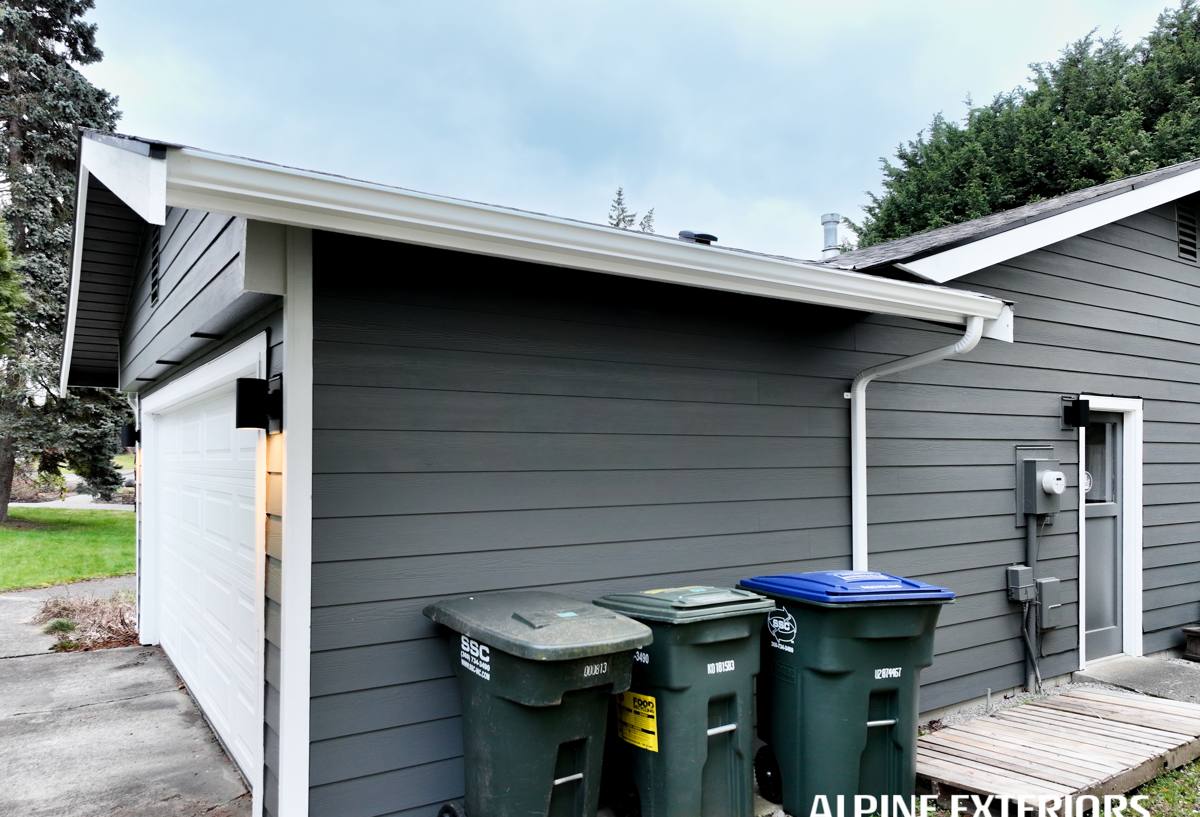
What Salt Air, Driving Rain, and Moss Actually Do to a Wall
Three things drive most of the siding problems we see on harbor-adjacent homes:
- Salt air accelerates corrosion on exposed fasteners and metal trim, and it breaks down cheaper paint and coating systems faster than inland exposure would.
- Wind-driven rain doesn't just run down a wall the way a normal downpour does — it gets pushed sideways and upward into laps, joints, and any gap in the flashing. A siding system that only handles vertical water shedding isn't enough here.
- A long moss season means constant low-level moisture sitting on north- and west-facing walls, shaded eaves, and anywhere airflow is blocked. Moss and algae don't just look bad — they hold water against the siding surface for weeks at a time.
None of this is unique to Blaine, but the harbor-adjacent lots feel it more directly than homes set back further inland, simply because they're closer to the source of the salt and catch more of the wind coming off the water.
Why We Install Only James Hardie Fiber Cement Siding
We standardized on James Hardie fiber cement siding for every job we do, including here in Blaine Harbor, and we don't install vinyl, LP SmartSide, Cemplank, Allura, primed spruce, or cedar. That's a deliberate call based on how these materials perform over decades in a wet, salt-exposed coastal climate — not a claim that other products can't be installed correctly by someone else.
| Material | Salt air / moisture behavior | Maintenance in this climate | Why it matters here |
|---|---|---|---|
| Vinyl siding | Can warp or become brittle with UV and temperature cycling; seams are a moisture entry point | Low, but repainting isn't an option if it fades or chalks | Wind-driven rain finds vinyl's lap seams over time |
| LP SmartSide (engineered wood) | Wood-based substrate is vulnerable if moisture gets past the coating at cut edges or laps | Requires diligent caulk and paint upkeep to stay sealed | A long moss/wet season punishes any gap in the seal |
| Cedar / primed spruce | Natural wood swells, cups, and checks with repeated wet-dry cycling | Highest — regular staining or painting, moss removal | Salt air and shade shorten the interval between refinishing |
| James Hardie fiber cement | Dimensionally stable, non-combustible, engineered for wet climates | Occasional rinse; factory finish holds color without repainting | Built to handle exactly this combination of salt, rain, and shade |
James Hardie's HZ5 product line is engineered specifically for the wetter, more humid climate zones the Pacific Northwest falls into, and the ColorPlus factory finish is baked on in multiple coats under controlled conditions — a more consistent, durable bond than a field-applied paint job can generally match, which matters when the finish is fighting UV bounce off open water and constant salt exposure. Hardie also backs the product with a strong transferable warranty, which carries real weight on a coastal home where premature failure isn't hypothetical.
What This Means in Practice
We're not telling homeowners that vinyl or wood siding will fail immediately, or that every home with it is in trouble. We're saying that after years of installing and repairing siding on homes exposed to conditions like Blaine Harbor's, fiber cement is the product we're willing to put our name behind — and it's the only one we install.
What Correct Siding Installation Requires in a Coastal Environment
The product matters, but installation quality is what actually determines whether a home stays dry. Most siding failures we get called out to repair aren't material failures — they're installation shortcuts that a wetter, windier climate exposed faster than it would have inland.
The Details That Actually Keep Water Out
- A continuous weather-resistive barrier behind the siding, lapped correctly at every seam so water sheds outward rather than working its way in
- Proper flashing at every window, door, and roof-to-wall intersection — including kickout flashing where a roof line meets a wall, a spot that's easy to skip and expensive to ignore
- Correct fastener type, spacing, and depth per James Hardie's installation specifications, since over- or under-driven fasteners are one of the most common causes of early siding problems
- Proper clearance between the bottom edge of the siding and grade, decks, and roof lines, so splashback and pooled moisture don't sit against the material
- Minimal reliance on caulking at butt joints — flashing and correct overlap should be doing the water-shedding work, not a bead of sealant that will eventually fail
- Painted or sealed cut edges on every piece, since a factory finish only protects the surface it was applied to
None of this is exotic. It's the difference between following the manufacturer's installation instructions to the letter and taking shortcuts that won't show up as a problem until a few winters of driving rain have had time to find them.
Our Installation Process for Blaine Harbor Homes
- Exterior assessment. We look at the existing siding, sheathing, and any signs of moisture intrusion, paying particular attention to north- and west-facing walls and areas with heavy shade or moss buildup.
- Tear-off and substrate check. Once the old siding is off, we inspect the sheathing underneath for rot or soft spots before anything new goes up — covering a compromised substrate just hides the problem.
- Weather barrier and flashing. We install a continuous weather-resistive barrier and flash every penetration, window, door, and transition point before a single piece of siding goes on.
- Hardie installation to manufacturer spec. Panels or lap siding go up following James Hardie's fastening, clearance, and overlap requirements, adjusted for the specific exposure of each elevation.
- Finish work. Cut edges get sealed, trim and caulking are finished cleanly, and we do a final walkthrough so you understand what was done and why.
Choosing the Right Hardie Product and Color for This Setting
Most Blaine Harbor homes we work on end up with HardiePlank lap siding, HardiePanel for a more modern or board-and-batten look, or a mix of the two with HardieTrim accents — the right choice depends on the home's style and exposure, not a one-size-fits-all answer. What matters more than the specific profile is the ColorPlus finish: it's factory-applied and cured under controlled conditions, which holds up to sun and salt exposure far more consistently than site-applied paint, and it eliminates the repainting cycle that wood and some engineered products require.
On color, there's no universal "best" choice for a harbor-adjacent home — darker tones can show dust and pollen less but may show water spotting differently than lighter tones, and every color in the ColorPlus lineup carries the same factory-finish durability. We walk through the actual samples with you rather than guessing from a screen, since color reads differently against Whatcom County's grey-sky light than it does in full sun.
Maintenance and What to Expect Over Time
Fiber cement isn't maintenance-free, but it's low-maintenance relative to what a coastal climate demands from other materials. A homeowner near Blaine Harbor should expect to:
- Rinse the siding periodically to clear salt film, pollen, and the early stages of moss or algae growth before it takes hold
- Do a quick annual walk-around to check caulking, flashing, and trim for any gaps that have opened up
- Trim back vegetation and tree cover that's keeping a wall shaded and damp longer than it needs to be
Installed to spec, James Hardie siding is built to hold up for decades in exactly this kind of climate, and the factory finish means you're not budgeting for a repaint every several years the way you would with wood siding.
Why Hiring a Crew That Already Works Blaine Harbor Matters
A crew that hasn't worked this specific stretch of coastline doesn't automatically know which elevations catch the worst wind-driven rain, how aggressively moss establishes itself on shaded harbor-side walls, or how the local permitting process runs through Whatcom County and the City of Blaine. None of that is complicated, but it's the kind of local knowledge that shows up in fewer callbacks and a job that's specified correctly the first time — not generic instructions applied to a climate they weren't written for.
Cost Factors for a Siding Installation Project
| Factor | Why it affects cost |
|---|---|
| Home size and number of stories | More square footage and height mean more material, labor, and equipment (lifts, staging) on multi-story homes |
| Tear-off vs. installing over existing siding | Full tear-off allows sheathing inspection and repair but adds labor; it's rarely appropriate to cover over an unknown substrate |
| Trim, window, and roofline complexity | More corners, gables, and transitions mean more flashing and cutting time |
| Existing moisture or rot damage | Any compromised sheathing found during tear-off needs repair before new siding goes on |
| Product profile (lap, panel, shingle, trim mix) | Different Hardie profiles and accent trim carry different material and labor costs |
We give a firm, itemized estimate after seeing the home in person — broad ranges without a site visit tend to be wrong in one direction or the other, and we'd rather give you an accurate number.
Checklist: What to Ask Any Siding Contractor Before You Hire
- Are you a certified James Hardie installer, and can you explain their fastening and clearance specs?
- Will you inspect and, if needed, repair sheathing before installing new siding?
- What's your plan for flashing at windows, doors, and roof-to-wall transitions?
- Is the estimate itemized, in writing, and specific to this home rather than a rough square-footage guess?
- Have you worked on homes in this immediate area, and do you understand the exposure this lot gets?
If your Blaine Harbor home's siding is showing its age — or you're planning ahead before the next wet season sets in — we're happy to take a look and walk you through what correct installation looks like for your specific home. Reach out for a free, no-pressure estimate using the form below.